Paikea and the Whale Myth Meaning & Symbolism
A man, betrayed and cast into the sea, is saved by a great whale who carries him to a new land, becoming the sacred ancestor of a people.
The Tale of Paikea and the Whale
Listen. The sea is not empty. It is a memory, a road, a womb. In the time when the world was younger and the gods walked closer, there lived a man named Paikea. He was of the people of Hawaiki, a place of warmth and conflict. Paikea had a brother, Ruatapu, whose heart was a vessel for a dark and jealous tide.
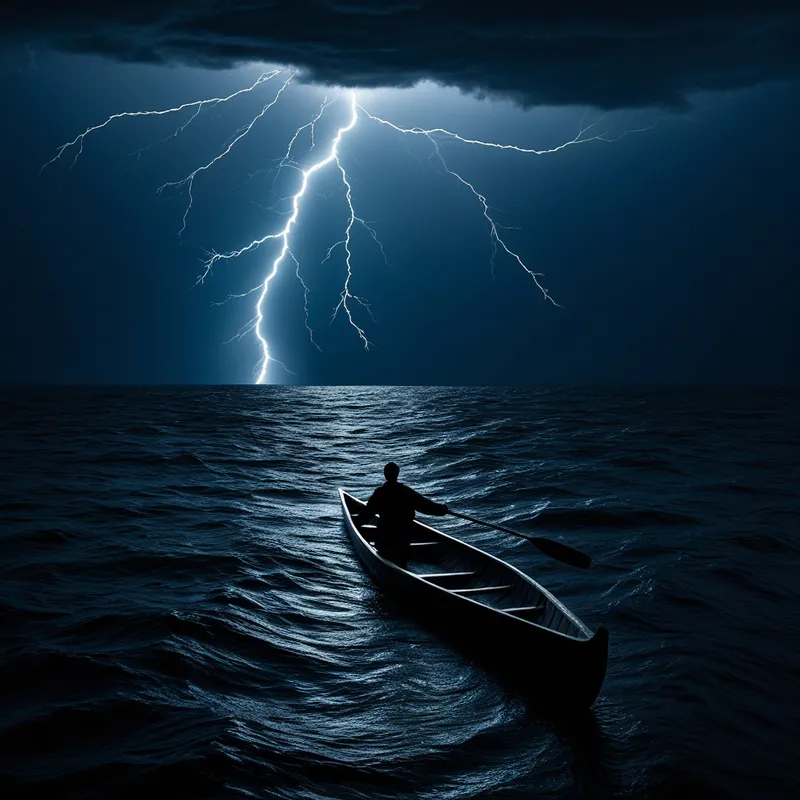
Ruatapu, consumed by a rage as deep as the ocean trenches, conceived a terrible plan. He would drown all the first-born sons of the tribe, Paikea among them, to erase the line of precedence and claim power for himself. He lured the young men onto his great canoe, the Māhina-a-rangi, and sailed far from the sight of land. There, in the heart of the boundless Moana, he struck. With a cunning violence, he smashed the hull of the vessel. The sea rushed in, cold and hungry. One by one, the sons of chiefs were swallowed by the waves, their cries lost to the wind.
But Paikea did not die. As the dark water closed over him, he called out. Not a scream of terror, but a chant—a karakia to the ancient powers of the deep. He sang to his ancestors, to the mana that flowed in his blood. His voice was a thread of life in the crushing dark.
And the deep listened.
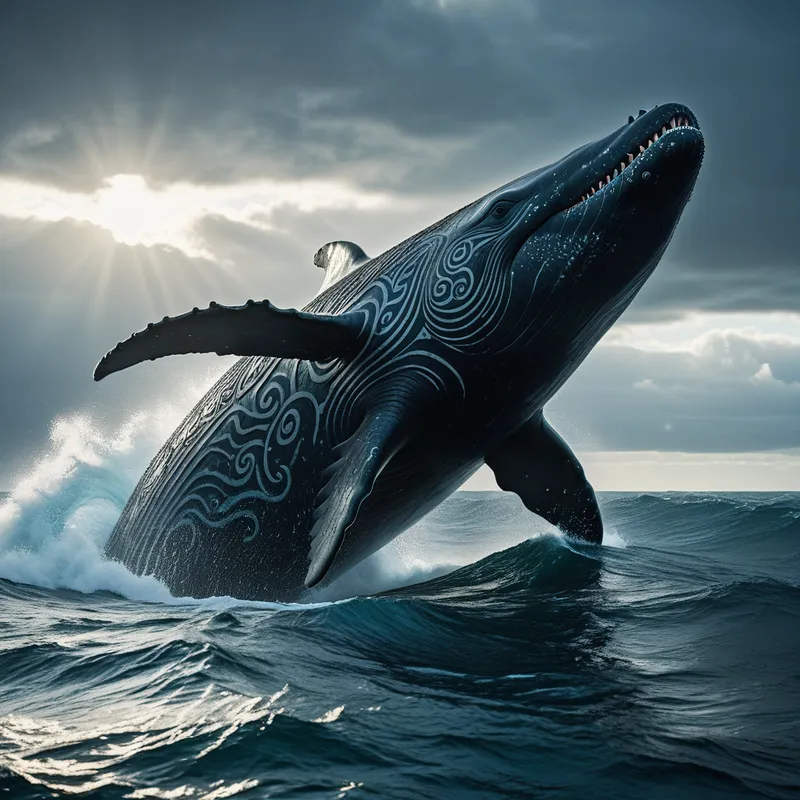
From the abyss, a presence stirred. A shadow vaster than any island rose beneath him. It was a Tohorā, a whale of immense age and wisdom. It felt the vibration of the sacred chant, the pulse of a life meant to continue. Gently, with a power that could shatter cliffs, the whale lifted Paikea from the drowning depths and bore him onto its broad, living back.
For days and nights uncounted, man and whale became one entity. Paikea clung to the whale’s skin, feeling the immense heartbeat through his own bones. They traveled the hidden paths of the ocean, the whale diving into silent, starless depths and rising again into the storm-lashed air. Paikea drank rain and ate what the sea provided, his human spirit forged anew in the company of this leviathan. The whale was his vessel, his protector, his kin.
Finally, on the horizon, land appeared—Aotearoa, the long white cloud. The great whale carried Paikea to the eastern shore, to a place now called Whāngārā. With a final, tender nudge from its giant head, the whale delivered its charge to the sandy beach. Paikea stepped onto the new earth, a man reborn from the sea. He became the founding ancestor of the Ngāti Porou and other East Coast tribes, his lineage forever marked by the miracle of his salvation. He was no longer just Paikea; he was Paikea-nui-a-Ruangātea, Paikea the Great, the Whale Rider.
Cultural Origins & Context
The story of Paikea is not merely a folktale; it is a whakapapa, a foundational pillar of identity for the Ngāti Porou iwi and related tribes. It is an pūrākau that connects the people directly to their migratory history, from Hawaiki to Aotearoa. Traditionally, this history was preserved and transmitted orally by tohunga and skilled orators. It was recited on the marae, woven into formal speeches (whaikōrero), and sung in waiata.
The myth served multiple vital functions. It explained the tribe’s right to their territory (their tūrangawaewae, their "place to stand"), granted by the whale’s divine delivery. It established a sacred, custodial relationship with the ocean and its creatures, particularly whales, which were seen as kaitiaki. Most profoundly, it modeled the core Maori values of resilience (manawanui), the power of ancestral connection, and the belief that destiny (āhua) can intervene through the natural world to preserve a sacred lineage.
Symbolic Architecture
At its heart, this is a myth of the Hero who does not conquer through strength of arms, but through faith and symbiosis. He is cast into the ultimate abyss—the chaotic, formless sea—and is saved not by his own power, but by aligning with a greater, instinctual power. The whale represents the unconscious itself, the vast, ancient, intelligent psyche that resides beneath the surface of ego-consciousness.
The whale is the embodied psyche of the world, an intelligence older than humanity, that chooses to save consciousness from drowning in its own fratricidal conflicts.
Paikea’s Journey on the whale’s back is the archetypal night-sea voyage, a period of incubation and profound transformation. He is neither in his old world nor yet in his new one; he is in a liminal state, physically and psychically sustained by the creature of the deep. This symbolizes the necessary period of withdrawal and reliance on unconscious resources during a psychic crisis. The betrayal by the brother (Shadow) forces this descent, but from it emerges a new, more complete identity. Paikea arrives not as a survivor, but as a founder, his individuality now carrying the immense weight and wisdom of the archetypal world that saved him.
The Dreamer's Resonance
When this myth stirs in the modern Dream, it often manifests during periods of profound betrayal, loss of foundation, or a feeling of being cast adrift. To dream of being in a vast, dark ocean is to feel the ego’s structure dissolving. The appearance of a whale—especially one that approaches with gentle, deliberate intent—signals the activation of a deep, somatic self-preservation instinct from the psyche’s core.
The dreamer may feel awe, not just fear. This is the somatic marker of encountering the Self, the central archetype of wholeness, which often appears in dreams as a vast, benevolent, but utterly non-human animal. The process underway is one of being "carried." The conscious mind is not in control; it must surrender to a larger rhythm, a deeper knowing. The psyche is orchestrating a Rebirth, transporting the individual from a doomed psychological situation (the sinking canoe of old identities and loyalties) to a new inner landscape where a fresh start is possible. The whale’s breath—the spout—can be seen as the animating spirit, the pneuma, that keeps the dreamer alive in the transitional darkness.
Alchemical Translation
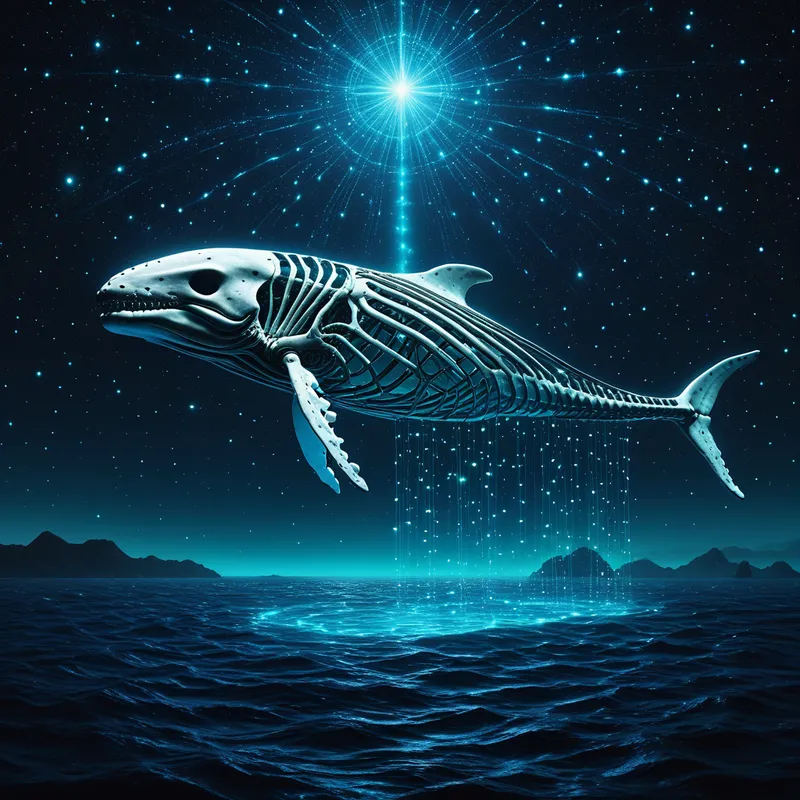
The alchemy of Paikea’s story is the transmutation of victimhood into ancestral authority. The initial state is one of Chaos and betrayal (the shattered canoe). The prima materia is the drowning man, the ego facing annihilation. The agent of change is the whale, the lapis philosophorum or philosopher’s stone of the unconscious—the transformative substance that is contacted not by will, but by invocation (the karakia).
Individuation is not a journey we make alone on a ship we built; it is a voyage we undertake on the back of the ancient, living psyche that has always been within us.
The long voyage is the nigredo, the blackening—the necessary period of confusion, disorientation, and reliance on inner, non-rational guidance. Arrival on the new shore is the albedo, the whitening—the emergence of a clarified, renewed consciousness. Paikea does not just survive; he becomes a source of life for others, a progenitor. This is the ultimate goal of psychic alchemy: the individual does not merely heal themselves but becomes a vessel for new life, new meaning, and new culture. The modern individual undergoing this process moves from "Why did this happen to me?" to "What ancestral wisdom in me survived this, and what new world must I now build from its promise?"
Associated Symbols
Explore related symbols from the CaleaDream lexicon:
- Whale — The vast, intelligent unconscious that saves and carries the conscious ego through a crisis, representing deep instinct, memory, and the Self.
- Ocean — The primordial, chaotic realm of the unconscious and the unknown, both a place of death and the medium for a miraculous journey.
- Journey — The archetypal process of transformation, moving from a state of destruction through a liminal passage to a new foundation.
- Rebirth — The core outcome of the myth, where the individual does not merely survive but is fundamentally remade and begins a new lineage of being.
- Shadow — Represented by the betraying brother Ruatapu, the repressed or hostile elements within the psyche that force a necessary, if traumatic, descent.
- Hero — Paikea as the figure who endures the ultimate trial and, through alignment with a greater power, secures a future for his people.
- Death — The symbolic death of the old identity and social position, cast into the sea, which is the prerequisite for transformation.
- Destiny — The guiding force that orchestrates the whale’s intervention, suggesting a fate or purpose greater than individual will or circumstance.
- Spirit — The animating life force, invoked through Paikea’s karakia and embodied in the whale’s breath and living presence.
- Sacrifice — Implicit in the myth; the old self and old loyalties are sacrificed to the sea to make way for the new.
- Ancestor — Paikea becomes the sacred ancestor through his ordeal, linking the people directly to the miraculous power of the natural and spiritual world.
- Chaos — The stormy sea and the act of betrayal that destroys the old order, creating the fertile void from which new life emerges.