Natyashastra Myth Meaning & Symbolism
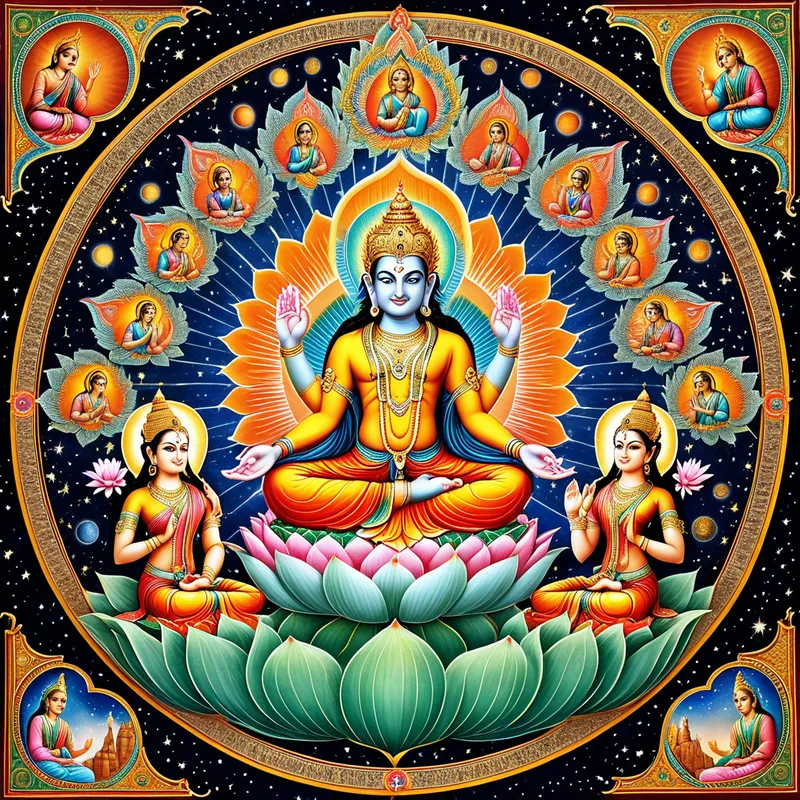
The myth of the Natyashastra tells how the god Brahma created the fifth Veda, a cosmic art form to enlighten humanity through the sacred synthesis of all knowledge.
The Tale of Natyashastra
In the time when the world was young, and the rhythms of the universe were still finding their perfect pitch, a great unease settled over the hearts of the gods. Humanity, blessed with the four sacred Vedas—the hymns of Om, the rituals of fire, the knowledge of the stars—had grown restless. The wisdom was profound, but it was locked in language, reserved for the high-born, a distant thunder heard but not felt in the marrow of the soul. The people yearned for a wisdom they could see, a truth they could feel in the shudder of a limb and the catch of a breath.
The creator, Brahma, seated upon his lotus that blooms from the navel of the dreaming Vishnu, perceived this longing. He heard it as a discordant note in the symphony of creation. A resolve, calm and deep as the cosmic ocean, filled him. He would compose a new scripture, a fifth Veda, but one unlike any other. It would not be merely recited; it would be enacted. He closed his eyes, and in the silence of his meditation, he drew from the very essence of existence.
From the Rigveda, he took the power of the word, the sacred recitation. From the Yajurveda, he took the gesture, the meaningful action. From the Samaveda, he took the song, the soul-stirring melody. And from the Atharvaveda, he took the rasa, the essential emotional flavor, the very juice of experience. Weaving these together, he manifested the Natyashastra—the holy treatise of dramatic art.
But a scripture of such potency needed a vessel, a performance. Brahma summoned the wise sage Bharata and commanded him to learn this new Veda and stage its first divine play. Bharata, with his hundred sons as his troupe, immersed himself. They practiced until their bodies became living scripts, their voices instruments of the gods. The first play was to be the Samudra Manthan, the churning of the cosmic ocean.
The celestial theatre was prepared. The gods assembled in their splendor. Yet, as the performance began—with demons portrayed by Bharata’s sons—a profound disturbance shook the heavens. The asuras, the demons, felt insulted, mocked. Their rage was a tangible force, a dark wind that froze the actors mid-gesture. They cast a terrible curse upon the art: henceforth, those who practiced it would be of low social standing.
A shadow fell over the newborn art. Brahma, foreseeing this, had already woven the solution into the fabric of the Natyashastra itself. He turned to the great god Shiva, the cosmic dancer. Shiva, who contains the universe in his whirling limbs, smiled. He sent his disciple, the sage Tandu, to teach Bharata the Tandava, the dance of cosmic energy and destruction. Then, the goddess Lakshmi bestowed the art of graceful expression, and Ganesha blessed it to always overcome hurdles. Hanuman gifted it with strength and Saraswati with melody.
Thus, the curse was not removed, but alchemized. The art was made whole, complete in its sacred imperfection. It descended to earth, a gift not of easy grace, but of transformative power. It was no longer merely entertainment; it was darshan in motion, a mirror held up to the cosmos, reflecting all of life—the noble and the base, the divine and the human, the joyous and the tragic—and in that reflection, offering not judgment, but liberation.
Cultural Origins & Context
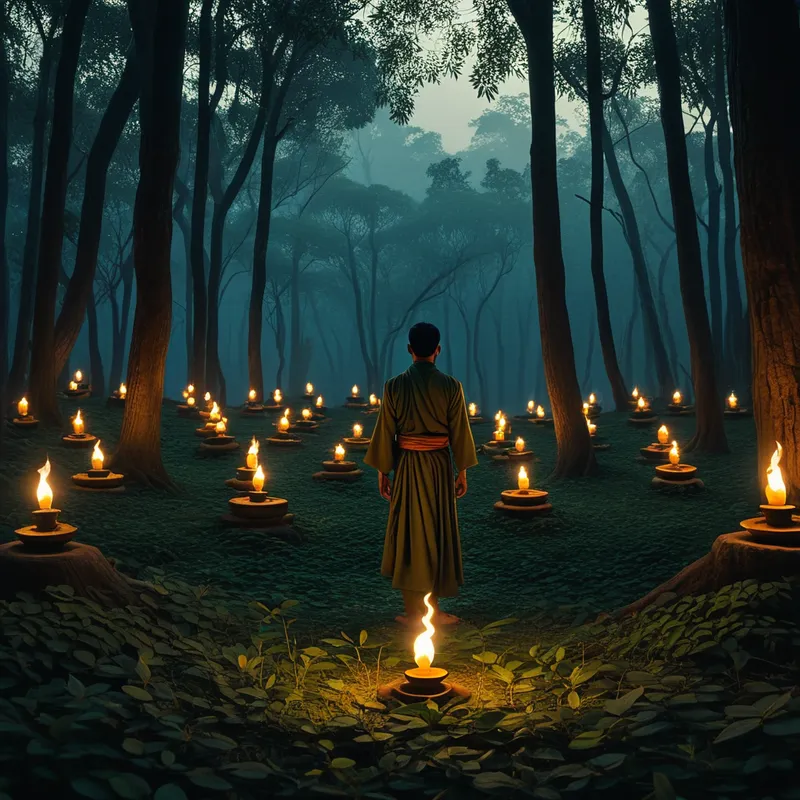
The Natyashastra is attributed to the sage Bharata Muni, a figure shrouded in the mists of antiquity, likely compiling and systematizing existing performative traditions between 200 BCE and 200 CE. This was not a text born in a royal court, but one that synthesized the living, breathing practices of ritual, storytelling, music, and dance that permeated ancient Indian society. It functioned as the ultimate shastra—a scientific treatise—for the natyam, or dramatic art.
Its societal function was profound and multifaceted. In a culture deeply stratified by caste and literacy, the Natyashastra democratized spiritual experience. It translated the esoteric wisdom of the Vedas into a sensory, communal ritual accessible to all. It was passed down through rigorous guru-shishya parampara (teacher-disciple lineages), where knowledge was not just read but embodied, muscle memory fused with sacred text. The performer, though often of a lower social stratum as per the mythic curse, became a vital conduit between the human and the divine, a vessel for the gods to walk among men, teaching dharma (righteousness) through the captivating power of story and spectacle.
Symbolic Architecture
The myth of the Natyashastra is a grand allegory for the creation of a conscious, integrated psyche. Brahma’s act is not mere invention; it is a sacred synthesis.
The stage is the cosmos, the actor is the individual soul, and the performance is the drama of existence itself, witnessed by the divine audience of one's own higher consciousness.
The four Vedas represent the fragmented faculties of the human being: intellect (Rig), action (Yajur), emotion (Sama), and primal instinct or vitality (Atharva). In their separated state, they create a disjointed, unfulfilled life. The Natyashastra is the unifying principle, the Atman, that orchestrates these disparate elements into a harmonious performance. The initial demonic curse symbolizes the inevitable shadow that accompanies any act of profound creation—the resistance, the shame, the societal judgment, the internal critic that seeks to degrade the artist and the art. The subsequent blessings from Shiva, Lakshmi, and others represent the integration of this shadow. The art becomes whole not by being purely "good" or "divine," but by incorporating the destructive (Tandava), the prosperous, the obstructive, and the heroic. It becomes a complete mirror of reality.
The Dreamer's Resonance
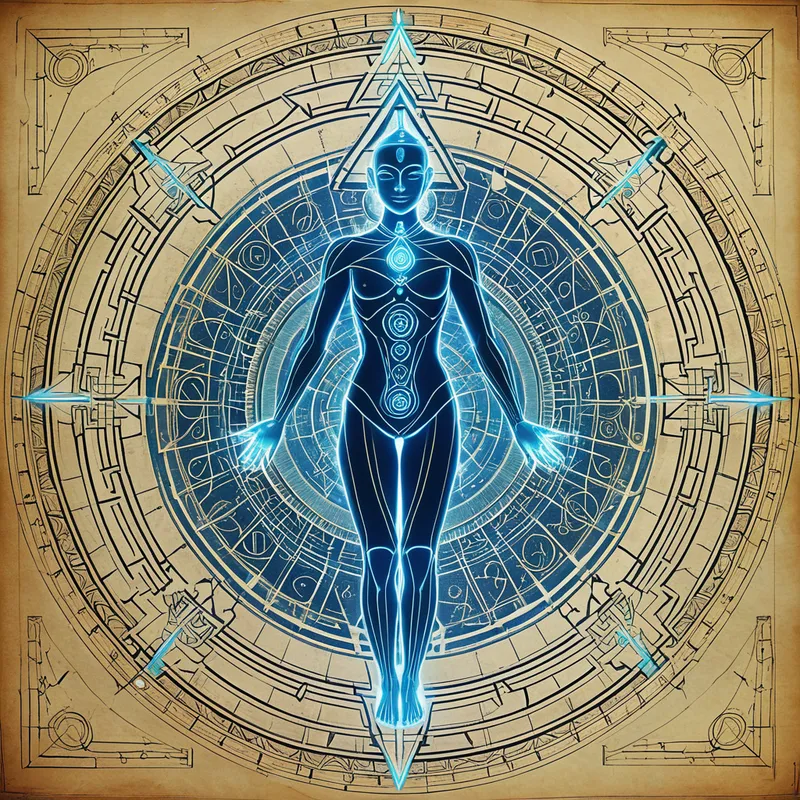
When this mythic pattern stirs in the modern dreamer, it often manifests as dreams of frantic, disjointed preparation for a crucial performance—a play, a speech, a recital—where the script is missing, the co-actors are hostile, or one’s own body refuses to cooperate. This is the somatic echo of the "curse," the feeling of being an impostor, of one’s creative expression being fundamentally flawed or socially unacceptable.
Alternatively, one might dream of discovering a forgotten, ancient book of immense power, or of being taught a complex, beautiful dance by a mysterious, divine figure. These dreams signal the emergence of the inner Bharata—the part of the psyche capable of receiving and organizing a new, more holistic mode of being. The psychological process is one of synthesis. The dreamer is being called to gather their scattered talents, memories, emotions, and instincts (the four Vedas) and forge from them a coherent "performance"—a way of living that is authentic, expressive, and integrated, even in the face of inner and outer criticism.

Alchemical Translation
The individuation journey modeled by the Natyashastra is the alchemy of turning the raw, chaotic material of one’s life into a conscious work of sacred art. The first step is Brahma’s meditation: withdrawing from the world to consult the inner blueprint, the Self. One must identify the core "texts" of one’s being—one’s values, passions, traumas, and joys.
The goal is not to perform a perfect, flawless life for an external audience, but to stage an authentic one for the inner witness, where every emotion, even grief or rage, is honored as a valid rasa contributing to the whole.
The crucial alchemical fire is the confrontation with the "demonic" curse—the internalized shame, the familial expectations, the cultural norms that say "this expression is beneath you" or "you are not an artist." This shadow must be faced, not exiled. Like Shiva’s Tandava, one must learn to dance with one’s own destructive energies, to channel them into transformative power. The final blessing is the realization that the integrated Self is a collaborative masterpiece. It requires the grace of Lakshmi (self-worth), the obstacle-clearing wit of Ganesha (problem-solving), the strength of Hanuman (resilience), and the wisdom of Saraswati (clarity of expression). One becomes both the playwright, the actor, the stage, and the audience of one’s own existence, achieving not a static perfection, but the dynamic, liberating state of rasa—the tasted essence of being fully alive.
Associated Symbols
Explore related symbols from the CaleaDream lexicon:
- Dance — The central action of the myth, representing the dynamic, embodied expression of cosmic order and personal transformation, as taught by Shiva.
- Mask — The fundamental tool of the actor in Natyashastra, symbolizing the archetypal roles we all play and the art of revealing truth through persona.
- Temple — The theatrical space becomes a mobile temple where the divine is invoked and made visible through performance, a sacred enclosure for transformation.
- Ritual — The entire performance is a meticulously codified ritual, designed not just to tell a story but to effect a spiritual change in both performer and witness.
- Synthesis — The core action of Brahma, weaving the four Vedas into one, representing the psychological process of integrating disparate parts of the self.
- Shadow — Embodied by the demonic curse and its integration, representing the rejected, "lowly" aspects of self and creativity that must be acknowledged and included.
- Circle — The cyclical nature of performance, the samsara depicted on stage, and the mandala of the stage itself as a microcosm.
- Fire — The sacrificial fire of the Vedas, transmuted into the inner fire of artistic passion and the transformative heat of tapas (austerity) in practice.
- Ocean — The source of the first play, the churning of the milky ocean, representing the unconscious from which all archetypal stories and emotions emerge.
- Mirror — The stated purpose of natya is to hold a mirror up to the world, reflecting all of life's conditions for the purpose of self-reflection and understanding.
- Drama