Mount Olympus Myth Meaning & Symbolism
The sacred mountain where the Greek gods dwell, Olympus is a symbol of ultimate authority, celestial order, and the psyche's highest potential.
The Tale of Mount Olympus
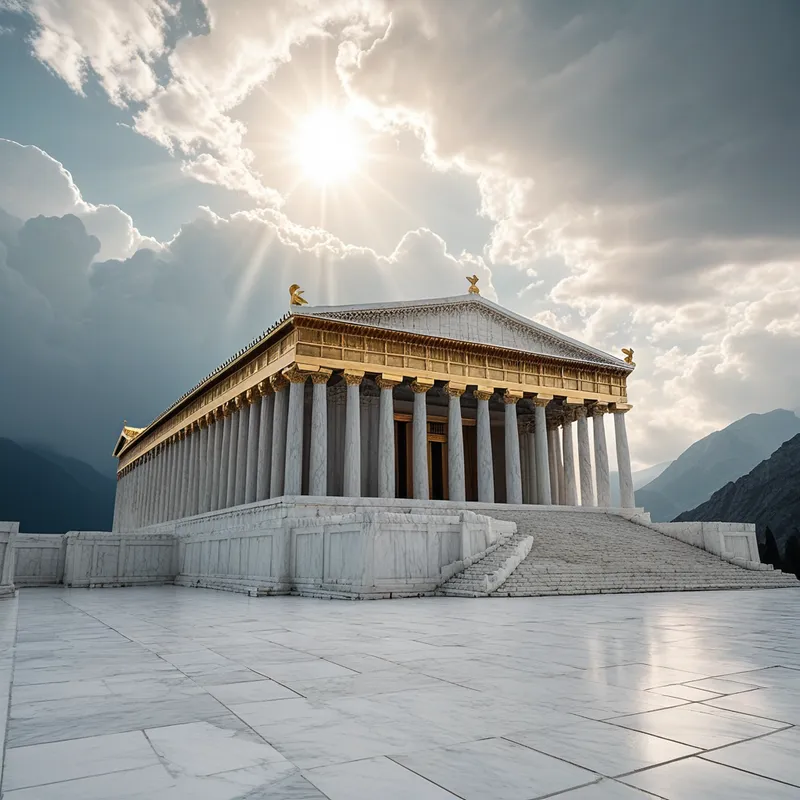
Listen, and let the mist of ages part. Before history was etched on stone, there was a mountain that was not merely of the earth. It was a pillar of the world, its peak forever wreathed in aether, hidden from mortal eyes by a veil of cloud spun by the Eos herself. This was Olympus, not a place you could find on any map drawn by human hand, but a realm you could only reach by the soul’s assent.
Here, in halls of cloud and palaces of light-forged marble, the Olympians made their eternal home. The air thrummed with the presence of power. You could smell the ozone of impending storms near the throne of Zeus, whose gaze was like the clear, pitiless sky. The scent of the sea and brine clung to the steps where Poseidon walked, his trident a restless weight. The fragrance of wild roses and myrtle bloomed perpetually in the gardens of Aphrodite, born from the sea-foam. The clang of divine hammer on anvil echoed from the forge of Hephaestus, a counter-rhythm to the lyre of Apollo, whose notes ordered the very movement of the sun.
This was not a place of simple peace. It was a court, a celestial polity. Here, alliances were forged over nectar, and wars of words crackled like lightning. The great conflict was not for the mountain—it was the mountain. It was the prize won when Zeus, with his siblings, overthrew the chaotic, primordial reign of the Titans. That war shook the cosmos, a battle between an old, devouring order and a new one promising law. When victory was seized, Olympus became the symbol of that triumph—the seat of a pantheon that would impose cosmos upon chaos.
The drama was in the maintenance of this hard-won order. Mortal heroes like Heracles might, through unimaginable ordeal, earn a moment’s welcome here. Rebellions, like that of the monstrous Giants, would storm its lower slopes, only to be cast down by divine might. The gods themselves schemed and loved and quarreled, their passions flowing down the mountainside like rivers, becoming the fates of cities and the destinies of men below. Yet, through it all, the peak remained, serene and unassailable, the ultimate seat of judgment and the source of all decrees that shaped the world. It was the still point in the turning world, the place where the final word was spoken.
Cultural Origins & Context
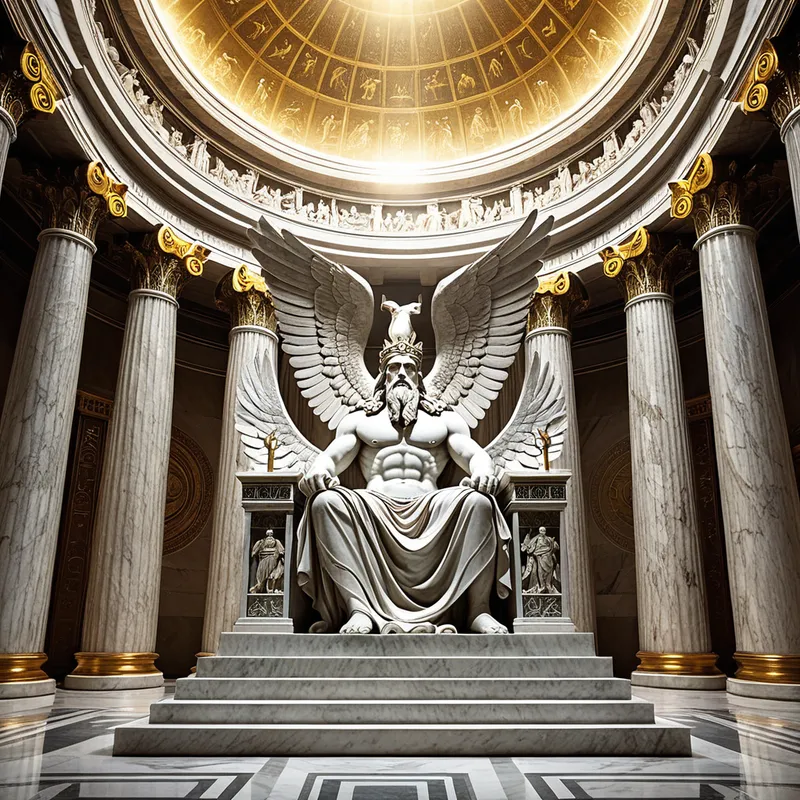
The myth of Mount Olympus is the foundational narrative of ancient Greek religion and identity. It emerged from a synthesis of pre-Hellenic mountain cults and Indo-European sky-god traditions, crystallizing in the epic poetry of Homer (the Iliad and Odyssey) and Hesiod (the Theogony) around the 8th century BCE. These poets were not mere storytellers; they were theologians and cultural consolidators, giving structured, pan-Hellenic form to local and often contradictory divine tales.
The myth was performed, not just read. A rhapsode would recite Homeric hymns, invoking the Muses who dwelled on Olympus, thus making the mountain present in the communal space. Its societal function was profound: it established a divine blueprint for human society. Olympus mirrored the polis—it had a king (Zeus), a council, specialized roles, laws, and a clear hierarchy. It explained the nature of authority, justice, and the capricious yet structured forces of nature and fortune that governed human life. To believe in Olympus was to believe in an ordered universe, where even the gods were subject to a kind of cosmic law (Moira).
Symbolic Architecture
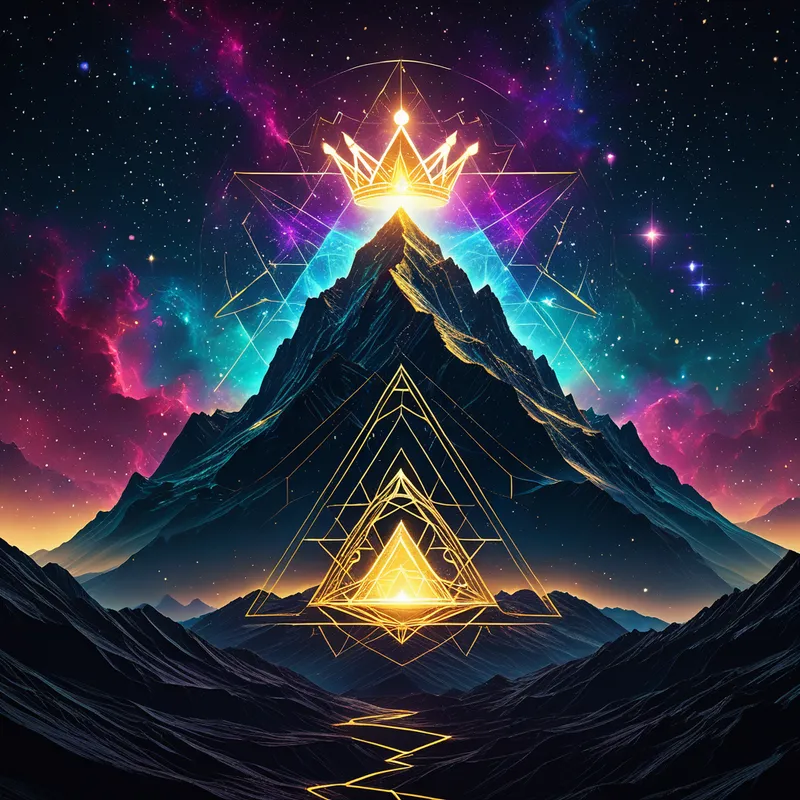
Psychologically, Mount Olympus is not a location but a state of being. It represents the apex of consciousness, the fully integrated and ordered Self. It is the psychic achievement after the titanic struggle of individuation—the overthrow of the chaotic, unconscious, "titanic" forces of the primal psyche.
The mountain peak is not where one escapes the world, but where one gains the perspective to see it whole and administer one's own inner kingdom with clarity.
The pantheon dwelling there symbolizes the constellation of archetypal powers that govern a mature psyche. Zeus represents the unifying principle of consciousness, the ego's executive function that seeks to impose order. Hera is the principle of relationship and commitment; Athena, strategic wisdom; Apollo, rational light and cultural order; Aphrodite, eros and connection. Their conflicts are the inevitable tensions between these powerful inner forces. The mountain itself, eternally above the storms, symbolizes the achieved stability where these forces are held in a dynamic, ruling equilibrium, no longer at war but in a divine, if sometimes tense, council.
The Dreamer's Resonance
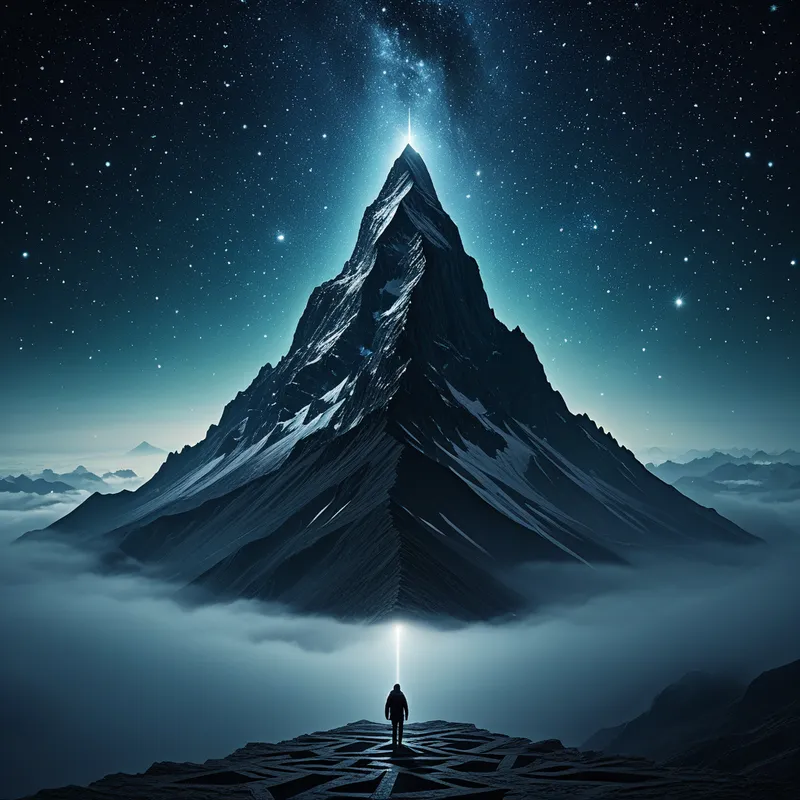
When Olympus appears in modern dreams, it rarely manifests as a literal Greek peak. Instead, one dreams of a towering, unreachable corporate headquarters, a pristine and exclusive summit retreat, or a vast, authoritative library at the top of a limitless staircase. The somatic feeling is often a mix of awe and anxiety—a tightening in the chest, a sense of being scrutinized.
This dream signals a profound psychological process: the dreamer is confronting the inner "ruling complex." They are grappling with internalized authority, the need for self-governance, or feelings of exclusion from their own highest potential. To dream of storming Olympus is to feel one's rebellious, creative, or ambitious energies (the Titan or Giant within) challenging an outdated, perhaps tyrannical, inner order. To dream of being summoned to Olympus suggests an initiation, where parts of the self are being called to integrate into a broader, more conscious governance of one's life.
Alchemical Translation
The alchemical journey modeled by the Olympus myth is the transmutation of chaos into sovereign order. The prima materia is the raw, undifferentiated psyche—the murky realm of the Titans. The nigredo, or blackening, is the brutal war of the Titans and Gods, representing the necessary, painful conflict where conscious awareness struggles against the pull of archaic, unconscious patterns.
The albedo, or whitening, is the establishment of the new order on the heights. It is the distillation of clear principles (the gods' domains) from the chaotic soup of instinct. The final stage, the rubedo or reddening, is the golden, eternal reign itself—not a static state, but a dynamic, creative rulership.
Individuation is the Olympian labor: to build a sustainable citadel of the Self on the heights won from inner chaos, and from there, to dispense the laws of one's own authentic being.
For the modern individual, this means doing the hard work of deposing internal "titans"—unexamined drives, inherited complexes, and chaotic emotions—and installing a conscious, value-driven governance. It is about moving from being a battleground of conflicting impulses to becoming the ruler of one's own inner kingdom, capable of wielding the lightning of decisive action and the nectar of deep fulfillment from a place of hard-won, elevated clarity.
Associated Symbols
Explore related symbols from the CaleaDream lexicon:
- Mountain
- Upstairs
- Height
- Higher
- Rooftop
- Highest
- Sky High Tower
- Rooftop Terrace
- Snowy Mountain
- Iridium Peak
- Leaderboard
- Scenic Viewpoint
- Fresco Ceiling
- Mansion with Turrets
- Beaux-Arts Structure
- Observation Deck
- Sky-High Penthouse
- Lavish Ballroom
- Scenic Overlook
- Snow-Capped Peaks
- Celestial Mountain Summit
- City Rooftop
- Mountain Monastery
- Holy Mountain
- Solitary Mountain
- Courageous Peak
- Layered Mountains
- Triangle Mountain Range
- Mountaintop
- Mountain Peak
- Cathedral
- Mountain Temple
- Stratosphere
- Hierarchy
- Zenith
- Peak
- Plateau
- Prominence
- Ridge
- Summit
- Butte
- Pinnacle
- Vertex