Minka farmhouses Myth Meaning & Symbolism
A myth of a humble farmhouse built with sacred intent, becoming a vessel for ancestral spirits and a living covenant between the human and spirit worlds.
The Tale of Minka farmhouses
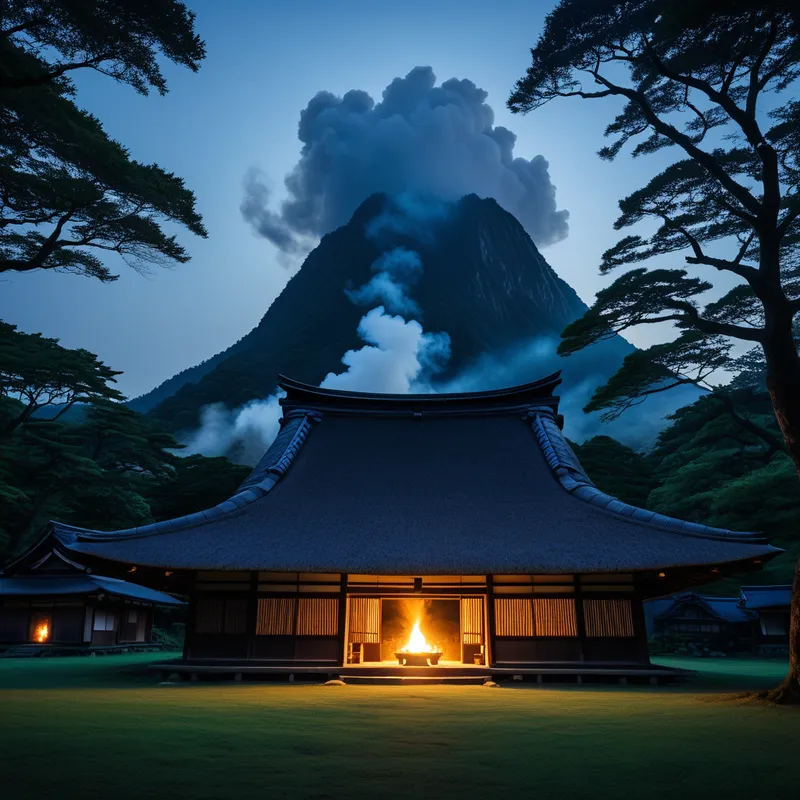
Listen. Before the first stone of the castle was laid, before the first shrine gate marked the sacred from the profane, there was the clearing. And in the clearing, a need. Not for glory, but for shelter. Not for a monument, but for a home.
The people came to the foot of the mountain, where the river sang and the cedar stood tall. They were weary from wandering. "Here," said the eldest, her voice like dry leaves. "Here we will meet the land." But the land was not empty. It was watched. The kami of the stone slept in the riverbed. The kodama whispered in the grove. The mountain itself breathed, a slow, deep sigh that stirred the pines.
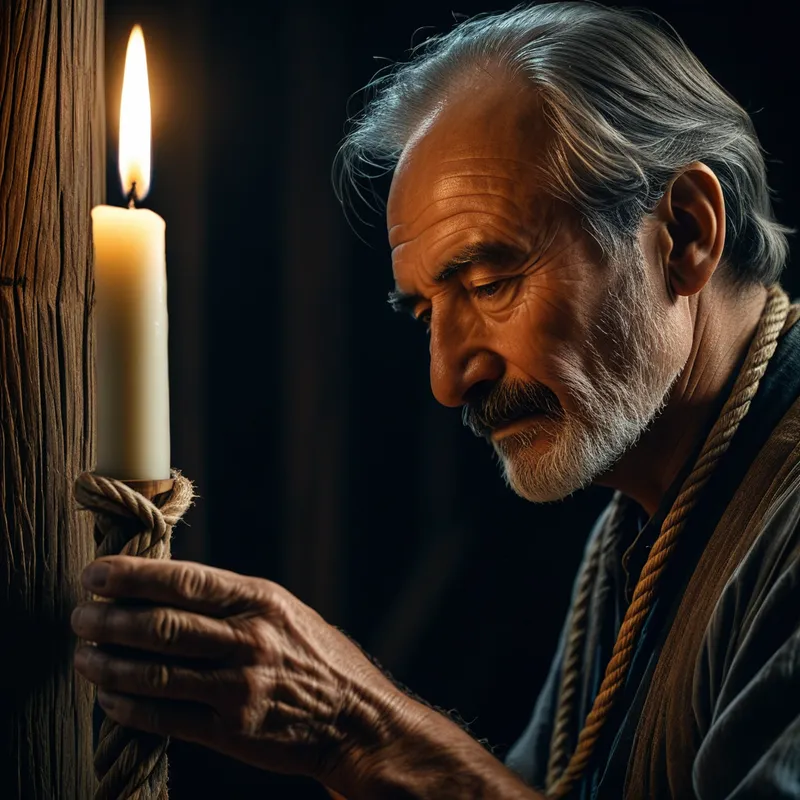
To build was to ask permission. To cut a tree was to take a life. The master carpenter, his hands reading the grain like a blind man reads a face, went into the forest alone. He did not bring an axe, but an offering of rice and salt. He sat at the base of the mightiest cedar, the one that would become the heart-post, the daikoku-bashira. He waited through the night, the cold seeping into his bones, listening to the voice of the wind in the branches. As dawn bled grey into the sky, he felt it—a consent, a transfer of spirit. The tree’s essence agreed to live on in a new form.
Then the raising. Not with shouts of labor, but with rhythmic chants, each heave of the massive beam synchronized like a heartbeat. The frame rose against the sky: a skeleton of wood, an echo of the forest it came from. They thatched the roof with kaya grass, layer upon layer, until it was a thick pelt that would sweat in the summer sun and bear the weight of winter snow. They dug the irori into the earth floor, a square pit of perpetual fire, its smoke rising to cure the beams above, weaving itself into the very fabric of the house.
On the night the house was complete, they lit the irori for the first time. The family gathered in the dim, smoky warmth. But they were not alone. As the fire crackled, shadows danced on the walls—long, graceful shapes that were not their own. The scent of the cedar heart-post mingled with woodsmoke and the smell of stew. A profound silence settled, a listening. Then, a feeling. Not of being watched, but of being joined. The spirits of the felled trees, the kami of the clearing, the memories of ancestors carried in the people’s bones—all drew close. They flowed into the posts, settled in the rafters, gathered around the hearth’s warmth. The house was no longer just wood and grass. It had become a vessel. A living pact. A threshold where the breath of the family and the breath of the world mingled in the smoky air. It was born. It was awake.
Cultural Origins & Context
The story of the minka is not a single, codified myth from a sacred text, but a living narrative embedded in the practice of Shinto and folk belief. It was passed down not by bards, but by the master carpenters (miya-daiku and sukiya-daiku) and the families who inhabited these structures for generations. The "myth" is the ritual of construction itself.
In agrarian Japan, the minka was the center of the universe for a family line. Its construction was a cosmological act, mirroring the creation of the world. The site was purified. The orientation was carefully considered to harmonize with local topographical spirits. The selection and preparation of materials were sacred acts, acknowledging the yaoyorozu no kami—the "eight million" myriad spirits residing in all things. The societal function was one of integration and sustainability. The myth taught that humans are not separate from nature, but participants in a reciprocal relationship. The house was the physical covenant of that relationship, a constant reminder that one’s shelter, livelihood, and family continuity were gifts sustained by a respectful dialogue with the seen and unseen world.
Symbolic Architecture
Psychologically, the minka is a profound symbol of the constructed Self—not as an egoic fortress, but as a permeable, living system in dialogue with its inner and outer environments.
The daikoku-bashira is the axial mundi, the world pillar of the personal psyche. It represents the core, unwavering principle around which a life is structured. It is the connection between the earthly foundation (the unconscious, the body, instinct) and the lofty, protective roof (the higher ideals, spiritual aspirations, and the embracing "container" of the personality).
The true hearth is not where the fire is lit, but where the shadow and the light agree to share the same warmth.
The massive, enveloping thatched roof symbolizes the Great Mother archetype in its most nourishing form: protection, containment, and the ability to transform and compost what falls upon it (rain, snow, the "weather" of emotional life) into the structural integrity of the whole.
The irori, the sunken hearth, is the heart center. It is the transformative fire of consciousness itself—digested experience, shared stories, the warmth of relationship. Its perpetual nature signifies the ongoing process of psychic metabolism, and its smoke, which cures and preserves the entire structure, represents how lived experience slowly seasons and strengthens the fabric of the self.
The Dreamer's Resonance
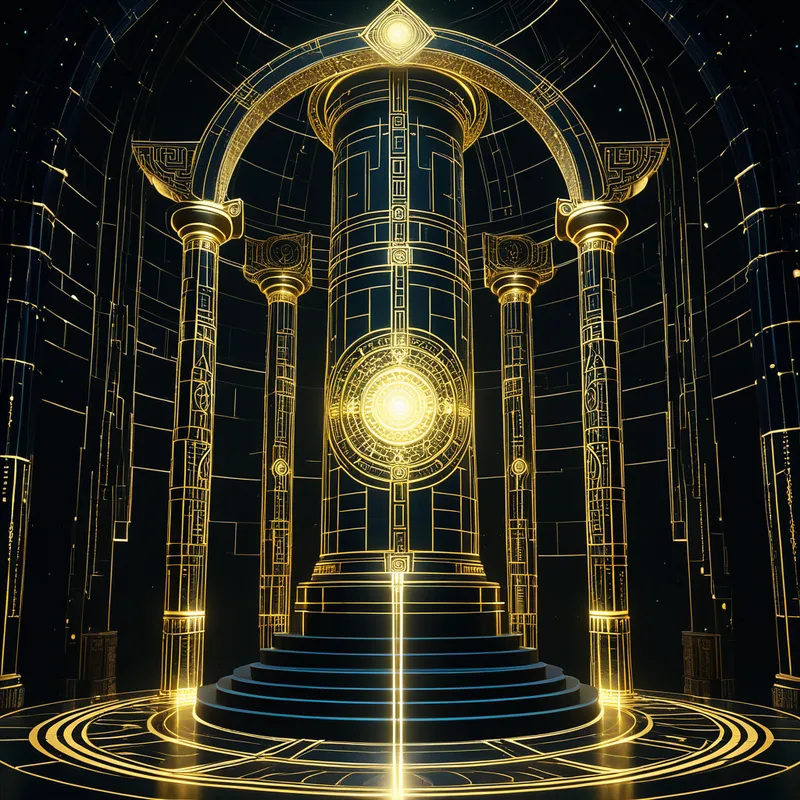
To dream of a minka is to dream of the psyche’s own architecture. A modern dreamer wandering through such a space is navigating the structure of their inner life.
Finding a hidden, dusty room in a minka dream may speak to discovering a neglected talent or a buried childhood memory. A feeling of profound peace by the irori suggests a recent successful integration of conflicting emotions, finding one’s "heart’s hearth." Conversely, a dream of a leaking roof or a cracked daikoku-bashira is a somatic alarm. It signals a failure of containment—emotional overwhelm, a crisis of core values, or a rupture in one’s sense of foundational security. The dream may present the house as empty, indicating a feeling of alienation from one’s own history or ancestral roots, or as overcrowded with unseen presences, pointing to unprocessed familial patterns or autonomous complexes that have taken up residence.
The somatic process is one of haptic grounding. The dream invites the dreamer to feel the texture of the straw, the solidity of the wood, the warmth of the hearth. It is a call to return from abstract anxiety to the tangible, constructed reality of one’s own being, to take inventory of what shelters you and what you have invited to dwell within.
Alchemical Translation
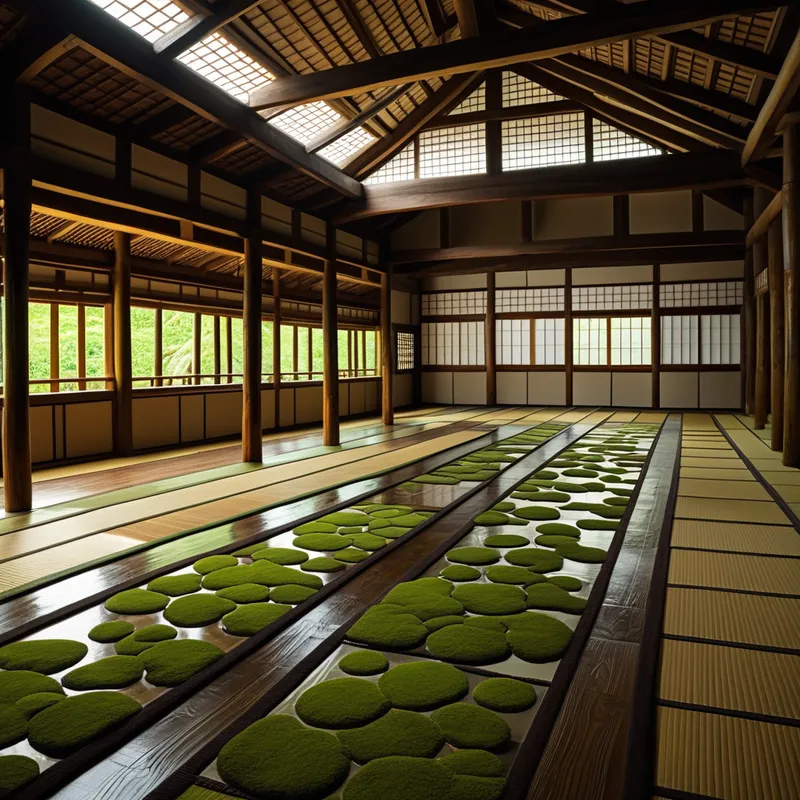
The myth of the minka models the alchemical process of individuation as the careful, sacred construction of a durable and permeable self. The modern individual, often feeling spiritually homeless or constructed from flimsy, prefabricated identities, is the wanderer coming to the clearing.
The first operation is Negotiatio (Negotiation). This is the carpenter’s vigil before the great tree. Psychologically, it is the difficult, respectful dialogue with one’s own primal nature, instincts, and the autonomous complexes (the inner "kami"). One cannot simply cut down and use one’s raw material without acknowledging its inherent spirit and gaining its consent. This is shadow work.
The raising of the frame is Coagulatio (Coagulation). The fluid chaos of potential solidifies into a defining structure. Values, boundaries, and core beliefs (the posts and beams) are erected. This requires communal effort—the integration of various sub-personalities into a cooperative whole.
The house becomes a home only when the ghosts of the forest are welcomed to sit by the fire.
The thatching and the lighting of the irori represent Coniunctio (Conjunction). This is the sacred marriage of opposites. The roof marries sky and earth. The hearth marries fire (spirit, consciousness) with the earth floor (the body, the unconscious). Smoke—the product of this union—permeates everything. Psychically, this is the stage where insight (fire) metabolizes lived experience (fuel) to produce a wisdom that seasons and unifies the entire personality.
Finally, the house’s awakening is the Rubedo (the Reddening), the culmination of the alchemical work. The constructed self becomes a vas, a vessel, no longer an empty shell but a living system. It is inhabited not just by the ego, but by the integrated Self. The ancestral patterns are acknowledged, the instincts are honored, the spirits of place (one’s unique context and history) are cherished guests. The individual is no longer building a shelter from the world, but a home with the world, a true sanctuary where every breath is an exchange between the inner and the outer, the personal and the transpersonal.
Associated Symbols
Explore related symbols from the CaleaDream lexicon: