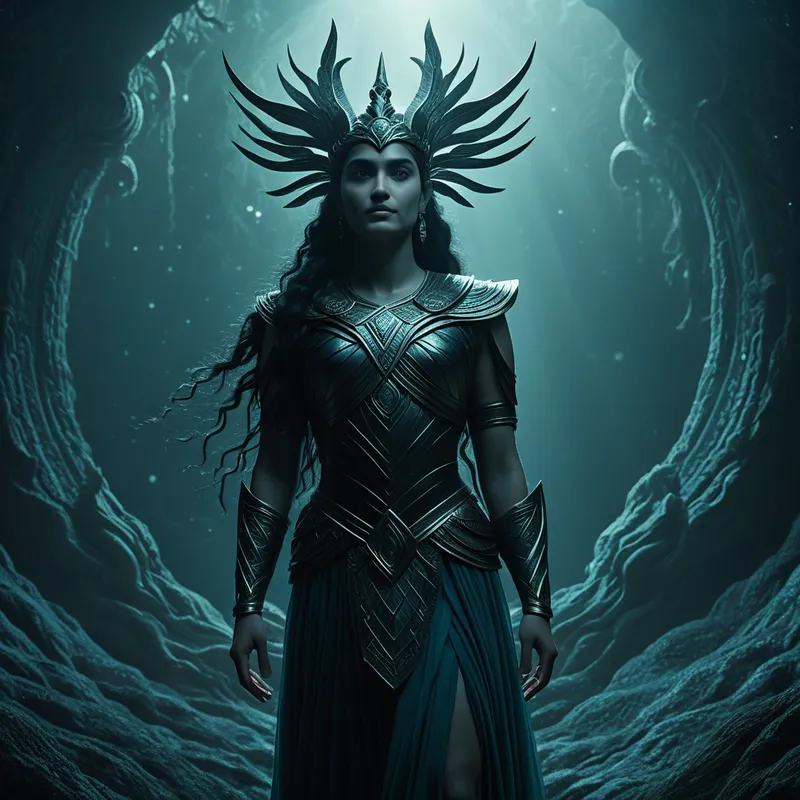
Manco Capac and Mama Ocllo
Divine siblings emerge from Lake Titicaca to found Cusco, establishing the Incan Empire through wisdom, agriculture, and social order.
The Tale of Manco Capac and Mama Ocllo
From the cold, deep womb of the world, from the sacred waters of Lake Titicaca, they emerged. The sun, Inti, wept tears of compassion for the primitive, scattered peoples of the earth, and from those tears, he fashioned two children of light. Manco Capac, the son, and Mama Ocllo, his sister and wife, rose from the foam, clad in garments of fine wool, bearing the sacred gifts of their father. Inti entrusted them with a staff of pure gold, the tapac-yauri, and a divine mandate: to wander the earth until they found a place where the staff would sink entirely into the soil with a single thrust. There, they were to plant the seed of a new world.
Their journey was a pilgrimage of becoming. They traveled north, a radiant pair moving through a landscape of chaos and potential. Manco Capac taught the men they encountered the sacred arts of civilization: how to till the resistant earth, how to channel water, how to fashion tools and build shelters that honored the mountains. Mama Ocllo, in turn, instructed the women in the domestic cosmos: the spinning of thread, the weaving of cloth that held stories and warmth, the governance of the hearth, and the profound laws of community and family. They were not conquerors with weapons, but sowers with knowledge, dividing the wild human clay into forms of purpose.
The land tested the staff, and the staff tested the land. Thrust into stone, it rebounded. Thrust into shallow earth, it stood stubbornly upright. They walked until they reached a high valley cradled by formidable peaks. Exhausted, yet driven by an inner knowing, Manco Capac plunged the golden staff into the ground at the foot of a hill called Huanacauri. This time, there was no resistance. The earth, Pachamama, opened herself and swallowed the staff whole, welcoming it into her depths. The sign was given.
On this spot, the navel of the world, Qosqo (Cusco), was founded. Manco Capac traced the boundaries of the city, a living diagram in stone. Mama Ocllo established its heart, the rhythms of its daily life. From this single point, the order they embodied radiated outward, a template for an empire. The Tawantinsuyu, the "Land of the Four Quarters," was not just a political entity but a living organism born from this foundational act. The divine siblings, having completed their terrestrial mission, ascended, leaving behind a lineage and a model: a civilization built not from conquest alone, but from a sacred covenant between humanity, the earth, and the celestial father.
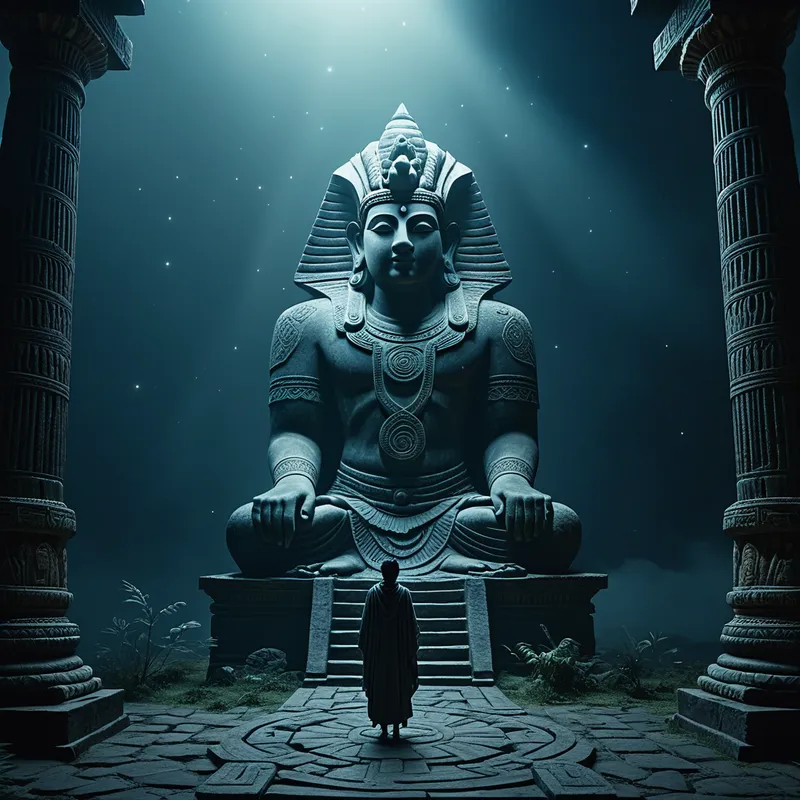
Cultural Origins & Context
The myth of Manco Capac and Mama Ocllo is the cornerstone of Inca official history, primarily preserved through the chronicles of Spanish writers like Garcilaso de la Vega (the son of an Inca princess and a conquistador) and Pedro Sarmiento de Gamboa. It served a crucial dual function: it was both a sacred etiology for the Inca state and a potent tool of ideological legitimization.
In the Andean worldview, origins are not linear but cyclical and emergent, often from pacarina—places of dawn and emergence like lakes, caves, or mountains. Lake Titicaca was the supreme pacarina, a font of life and divinity. By claiming direct descent from Inti via these lake-born founders, the Inca sovereigns, the Sapa Inca, established an unassailable divine right to rule. Their authority was cosmic, not merely political. The myth also encodes the Inca ideal of complementary duality (yanantin), where the universe is ordered through paired, interdependent opposites: male/female, sun/moon, highland/lowland, culture/nature. Manco and Mama Ocllo are the ultimate expression of this principle, their union necessary to generate the whole of civilized life.
Furthermore, the narrative justified the Inca's civilizing mission. The pre-Inca peoples were depicted as living in a state of primitive need (purun runa), validating the Inca expansion as a benevolent, ordering force—a divine gift of agriculture, textiles, law, and religion. This was the story the empire told itself: we are here not by accident of power, but by the will of the sun and the consent of the earth itself.
Symbolic Architecture
At its core, this is a myth of cosmization. The chaotic, undifferentiated world is given form, boundary, and meaning through a sacred, divinely-guided act.
The golden staff is not a tool of domination, but a divining rod for destiny. Its sinking is not an act of force, but a moment of mutual recognition—a marriage between the celestial mandate (the gold) and the terrestrial womb (the earth). The founding of Cusco is this marriage made manifest in stone.
The siblings themselves embody a profound psychological and social template. Manco Capac represents the external, structuring principle: law, technology, agriculture, and statecraft. Mama Ocllo embodies the internal, nurturing principle: social cohesion, domestic art, relational wisdom, and cultural memory. One cannot exist without the other; a state built only on power is a tyranny, and a community with only domesticity has no form to protect it. Their journey is the necessary incubation period where these principles are tested and refined before they can be anchored in a specific place.
The emergence from Lake Titicaca speaks to a birth from the collective unconscious, from the primordial waters of potential. They do not descend from a distant sky but rise from the earth's own watery depths, making them intrinsically of this world, even in their divinity. This grounds the myth in the Andean landscape, making civilization a natural flowering of the land's own latent order.

The Dreamer's Resonance
For the modern psyche, the myth of Manco Capac and Mama Ocllo resonates as a powerful narrative of inner foundation. Each individual undergoes their own journey from a state of internal "scattering"—where instincts, potentials, and energies are unorganized—toward a state of integrated being.
The wanderings with the staff mirror our search for purpose, for that "place" in life, in work, or in relationship where our essential nature can take root and sink in fully. The staff is our unique gift or calling; the failed attempts to plant it are false starts, careers or paths that do not align with our deepest soil. The founding of Cusco is the moment of authentic vocation, where our inner masculine (the capacity for focused action and structure) and inner feminine (the capacity for receptivity, nurturing, and connection) unite to build a sustainable inner kingdom.
The myth also speaks to the tension between the civilizing impulse and the wild self. To build a "Cusco" within often feels like suppressing chaotic, instinctual, or "primitive" parts of the psyche. The dream asks: What parts of your wildness must be tilled and channeled (like agriculture) to feed your civilization? And what parts must be honored as sacred wilderness, lest your inner empire become a sterile, over-controlled monument? The founders emerge from the wild (the lake) to impose order, but that order must always remember its source in the deep, unstructured waters.
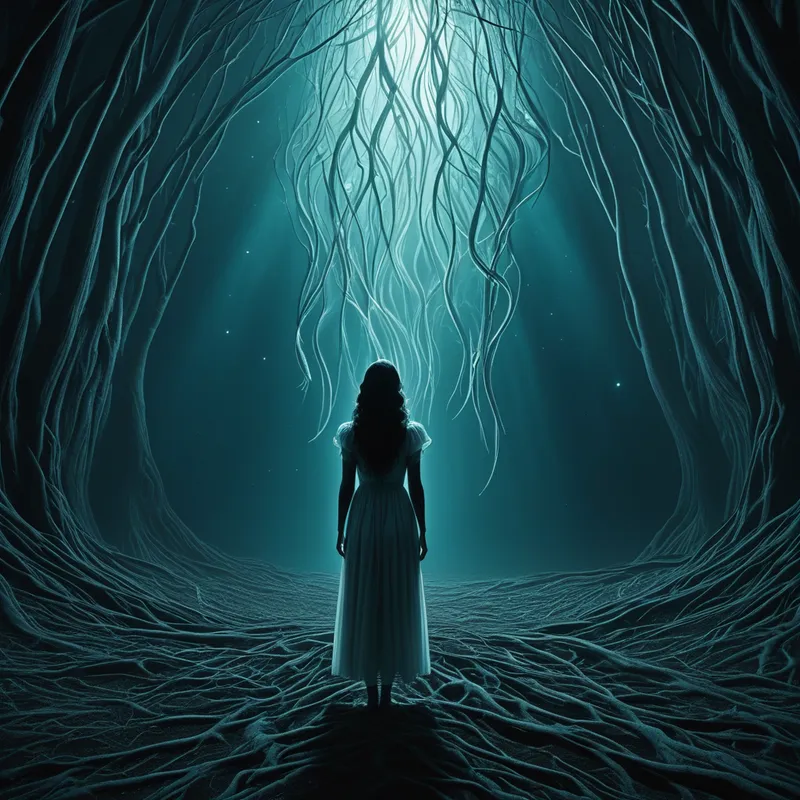
Alchemical Translation
Psychologically, this myth charts the alchemical process of coagulatio—the spirit taking solid form. The divine, watery essence (the children of Inti from the lake) undergoes a lengthy solutio (the journey, dissolution into the landscape) before finding the perfect conditions for coagulation into the fixed, earthly form of the city and empire.
The entire narrative is an alchemical vessel. The brother-sister pair is the coniunctio oppositorum, the sacred marriage of solar and lunar principles. Their fertile union produces not a child, but a civilization—the ultimate "Philosopher's Stone," a perfected, enduring creation born from the integration of opposites.
The golden staff is the lapis, the philosopher's stone in potential. Its final disappearance into the earth is the crucial stage of nigredo or burial, the dark night where the seed must die to its previous state to germinate. Cusco is the resultant albedo and rubedo—the whitening and reddening—the radiant, manifest kingdom born from that sacrificial planting. The myth teaches that any true and lasting creation—be it a work of art, a relationship, or a self—requires this phase of burial, of the gold sinking into the dark earth of the unconscious, where it can be transformed from a solitary tool into the living root of a world.
Associated Symbols
Explore related symbols from the CaleaDream lexicon:
- Foundation — The primal act of establishing order upon chaos, the sacred stone upon which identity, culture, or consciousness is built.
- Sun — The celestial father, source of divine mandate, consciousness, law, and the animating energy that drives civilization forward.
- Mountain — The immutable, enduring axis of the world; a symbol of stability, aspiration, and the meeting point between heaven and earth.
- Gold — The incorruptible substance of the divine; spiritual authority, solar essence, and the highest value used to test the worth of the earthly realm.
- Staff — An axis of power and testing; a conduit of divine will that measures the receptivity of the world and anchors spirit into matter.
- Lake — The womb of the world, the unconscious from which conscious forms emerge; a reservoir of potential, memory, and primordial life.
- Journey — The necessary pilgrimage of testing and refinement, where potential is shaped by experience before it can find its destined form.
- Civilization Model — The archetypal template for society, encoding laws, roles, and sacred order as a reflection of cosmic principles.
- Order — The imposition of meaningful structure upon chaos, creating harmony, predictability, and a vessel for cultural life.
- Earth — The receptive, feminine principle that nourishes and validates the seed of civilization; the body of the world that accepts the sacred implant.
- Temple — The built manifestation of sacred order; a civilization's heart and its conscious connection to the divine.
- Seed — The latent potential for an entire world, carrying the complete pattern of what is to come, requiring the right soil to awaken.