The Dream of Foundation: The Alchemy of Inner Architecture
The Somatic Echo
It begins not as a thought, but as a tremor in the gut. A low, silent hum of wrongness, a tectonic unease. You feel it in the soles of your feet when you stand on solid ground that suddenly feels like a membrane stretched over a chasm. It’s a vertigo that has nothing to do with height and everything to do with depth—the suspicion that the floor of your being is not stone, but ice. Your body knows the truth before your mind can formulate the fear: something foundational is in motion. This is the somatic echo of a psyche preparing to rebuild its home from the ground up. It is the visceral premonition of a necessary collapse.
The Dreamer's Log
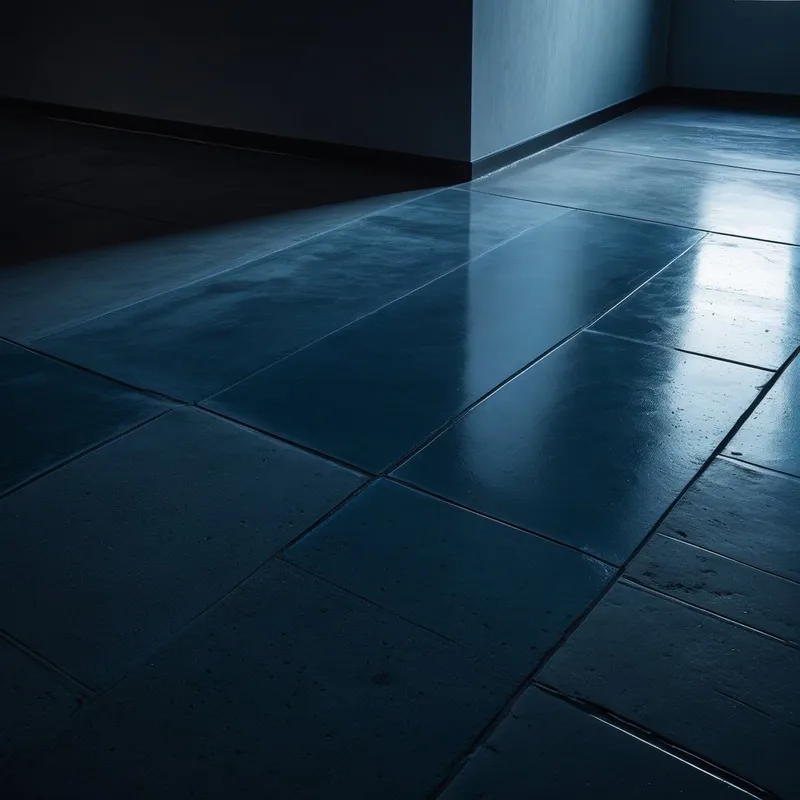
You are in your modern apartment, everything clean and in its place. You kneel and run your hand over the polished concrete floor. Your fingers find a hairline crack. With gentle pressure, a perfect square section of the floor lifts away like a trapdoor, revealing not subfloor, but an infinite, silent darkness. A cold blue light glows from depths you cannot fathom.
This dream is not about a faulty apartment. It is the psyche’s stark revelation: the conscious persona’s orderly world is built directly over the unintegrated abyss of the unconscious. The alchemical task is not to seal the crack, but to learn to live with the opening.
The False Lead
This theme is not about circumstantial instability—a lost job, a ended relationship, a change of address. Those are events that happen on the stage. The dream of Foundation is about the stage itself. It is not the script going awry; it is the discovery that the boards beneath the actors are rotten, the proscenium is leaning. To mistake this profound, structural call for mere “bad luck” or anxiety is to try to repaint a wall that is buckling from a sinking cornerstone. The terror here is ontological, not situational. It questions not what you are doing, but what you are standing on while you do it.
Psychological Architecture
When the foundation dream arrives, it announces that a core agreement you made with reality—often in childhood, for survival—has reached its expiration date. This agreement was the bedrock: I must be perfect to be safe. Love is conditional. My worth is tied to what I produce. The world is a hostile place. For decades, your entire psychic structure—your relationships, your ambitions, your self-image—was engineered upon this single, often invisible, premise.
The Shadow work here is the archaeology of the self. It is the grueling, granular process of descending into that dark sub-basement not with a flashlight to banish the dark, but with a delicate brush to uncover the original blueprints. You will meet the exiled parts there: the child who decided to build a fortress, the adolescent who poured the concrete of cynicism, the young adult who designed the elegant but airless rooms. This is Individuation in its most literal sense: becoming the individual who can consciously choose their own ground, rather than living on inherited, unquestioned land.
Mythic Resonance
Consider the myth of Atlas, tasked with holding the celestial heavens upon his shoulders for eternity. We often mistake the Foundation dream for an Atlas complex—the crushing weight of responsibility. But the deeper resonance is in the ground upon which Atlas stands. What is his foundation? His own strength, which must eventually falter. The myth whispers the terrifying truth: to found your world upon a single point of endurance is to build on a body, and all bodies tire. The alchemical question becomes: what if the sky does not need to be held, but integrated? What if the foundation is not separation, but connection?
Or recall the biblical tale of the wise and foolish builders. The lesson is not merely about hard work versus laziness. It is about the nature of the ground itself. The foolish builder hears the teachings (the rain of insight, the flood of emotion) and builds upon them as if they were sand—a superficial, quick foundation of intellectual agreement without embodied change. The wise builder digs down, through layers of persona and cultural sediment, until they hit the bedrock of direct, unshakable experience. The storm tests not the house, but the depth of the excavation.
Symbolic Nodes
- Crumbling or Cracked Foundations: The active failure of an old, outgrown structure of belief.
- Shifting or Quaking Ground: The felt experience of a paradigm losing its solidity.
- Excavation Sites: The conscious, often messy, work of delving into the personal and ancestral past.
- Unstable Floors (Trampolines, Waterbeds, Ice): The unsettling realization that what felt solid is actually flexible, responsive, or perilously thin.
- New Cornerstones or Pilings Being Driven: The first conscious acts of choosing a new, authentic principle to build upon.
- Architectural Plans or Blueprints: The emerging vision of a new, more authentic psychic structure.
Archetypal Resonance
The Magician Archetype is the master architect of this domain. Not the stage illusionist, but the deep alchemist who understands that to change the world, one must first change the fundamental substance of the self. The somatic echo of wrongness is the Magician’s signal that the current "reality" is built on a spell that has worn thin—a consensus trance of who you are supposed to be. The core energy here is transformation through knowledge of hidden principles. The alchemical potential is profound: the Magician does not merely repair the crack; they learn the secret language of the stone and the void, and from that knowledge, transmute the entire relationship between structure and space. The shadow, the Manipulator, is the part that tries to use willpower alone to force the foundation to be solid, to plaster over the cracks with positive affirmations, creating a more perfect—and more fragile—illusion.
The Alchemical Process
The transmutation here is from inherited ground to chosen ground. The raw, leaden material is the grief and terror of the collapse—the feeling that everything you are is falling away. The intense heat and pressure are supplied by the conscious, unwavering commitment to feel that collapse fully, without rushing to rebuild on the same old fault line. This is the solve: the dissolution of the old form.
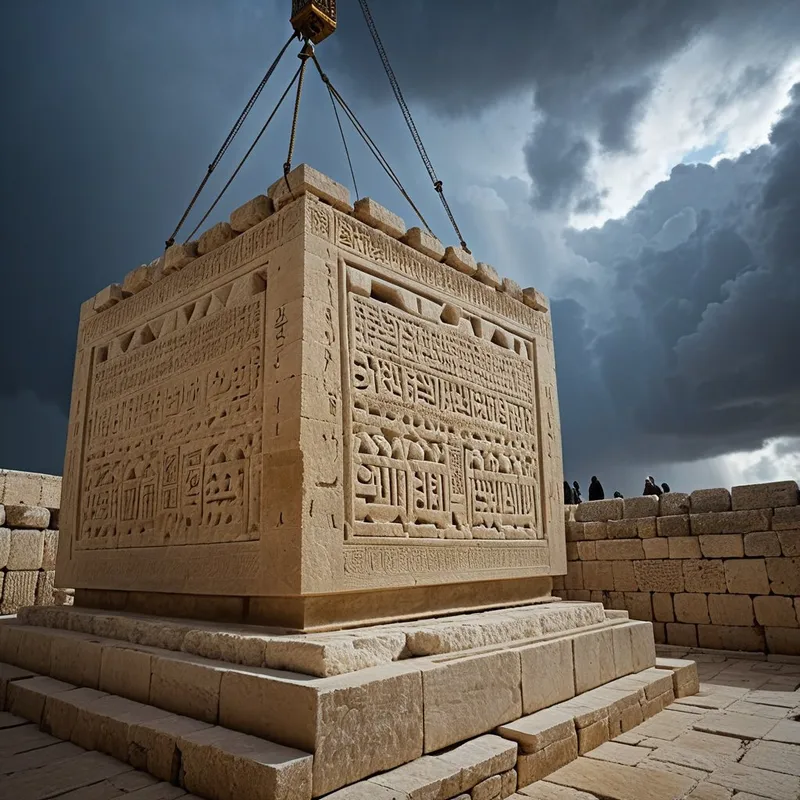
You must sit in the rubble. You must let the identity that was built on that old foundation be dismantled. This is the nigredo, the blackening, where all seems lost. Only from this utter dissolution can the new substance arise. The coagula—the re-forming—begins not with grand actions, but with a single, clear question: "What is true for me, now, in this emptiness?" The answer, however small, is your first grain of authentic cornerstone. The process is one of sacred geology, patiently crystallizing a new base from the magma of raw, unfiltered experience.

The Integration Protocol
Question 1: What is one unquestioned "truth" I have built my adult life upon that, if I am brutally honest, no longer feels like my own?
Question 2: When I feel that somatic tremor of instability, what is the oldest part of me that is being activated? What is it afraid will happen if the ground gives way?
Question 3: If my current sense of self were a building, what single, beautiful room have I never been allowed to enter, or have walled off? What would it mean to build a foundation strong enough to house it?
Action 1 (Ground Sensing): For five minutes each day, stand barefoot on the actual earth, floor, or grass. Do not think. Simply feel the sensation of support. Imagine roots descending from your feet, not to grip or control the ground, but to feel its true nature—its solidity, its give, its composition. This is not about anchoring to the old, but developing a sensitive dialogue with the very concept of "support."
Action 2 (Blueprint of the Unlived): Take a large sheet of paper. Draw no existing buildings. Instead, draw the floor plan for a impossible, ideal structure—a home for your soul. Let it be irrational: rooms that are forests, corridors that slope into starfields, a foundation made of a material you invent. This creative act bypasses the logical mind and allows the psyche to sketch the architecture it is yearning toward.
Action 3 (The Cornerstone Ritual): Find a small, solid stone. Hold it and consciously imbue it with one simple, foundational principle you are choosing for your new phase (e.g., "My worth is inherent," "I am allowed to rest," "I trust my own rhythm"). Take it to a significant place—a crossroads, a riverbank, the base of a tree—and bury it or place it securely. This physical act marks a covenant with your deeper self, laying the first stone of the new.
Final Validation
To dream of a failing foundation is to be chosen for a terrifying and sacred task. It means you are ready—or are being made ready—for a depth of sovereignty that cannot be borrowed, inherited, or faked. The fear is not a sign you are doing it wrong; it is the inevitable companion of touching the bedrock of your own being. This is not a repair job. It is a revelation. The ground was always going to shift. The gift of the dream is the chance to feel it move, and in that feeling, to discover you are not the building that might fall. You are the awareness that can choose, at last, what to build upon.