
Jaci Moon Goddess Myth Meaning & Symbolism
The luminous Jaci, a creator goddess of the Tupi-Guarani, weaves life with moonlight and governs the tides of time, fertility, and the human soul.
The Tale of Jaci Moon Goddess
Listen. Before the first breath of the wind, before the first root sought the deep earth, there was only Tupã’s thunder in the vast, starless dark. And then… a sigh. A soft, silver sigh that parted the black veil of the world. It was Jaci. She opened her eyes, and the first light was not the harsh glare of day, but the gentle glow of the moon, spilling like milk across the formless waters.
She saw the sleeping earth, a great, dark body curled in upon itself. With a whisper that was the first law of rhythm, she began to dance. Her feet did not touch the water, but where her silver light fell, the waters stirred. They began to breathe, to rise and fall in a slow, sleeping pulse—the first tide. From her fingertips, luminous drops fell. Where they struck the dark, still rivers, the waters quickened. Fish with scales of polished obsidian darted into being. Where the drops fell upon the bare, muddy banks, tender green shoots unfurled, reaching for her cool caress.
But the world was silent. It was a painting of exquisite beauty, yet asleep. Jaci’s heart, a luminous pearl in her chest, ached for a sound to answer her light. She leaned over the great River of the Mother, and sang. Her voice was the sound of water over smooth stone, the rustle of leaves in a night breeze. And from the mud, from the water, from the very sap of the new-grown trees, creatures emerged. Not with roars, but with chirps, croaks, and humming whispers. The night choir was born.
Yet, her greatest creation yearned for a different form. The people, the Tupi-Guarani, emerged from the shadows of the great trees. They were dark like the rich earth, but their eyes held the reflection of her light. Jaci saw their fear of the encompassing dark, their confusion in the endless day that sometimes followed. So, she wove a covenant with the world. She would retreat, painting herself anew each night—a slender crescent, a pregnant circle, a wise waning sliver—to teach them of time, of growth, of decay, and of return. She would draw the waters to nurture the land, and her light would guide the seeds within the fruit, the child within the womb, the dream within the sleeper. She became the rhythm of life itself, the gentle, inevitable pull on the soul of the world, forever dancing her silent, silver dance across the star-strewn sky.

Cultural Origins & Context
The myth of Jaci originates from the cosmogony of the Tupi-Guarani peoples, whose ancestral domains span vast regions of the Amazon basin and beyond. Unlike a static text, this living narrative was breathed into existence and sustained through oral tradition. It was shared by pajés and elders around nighttime fires, its telling timed to the very lunar cycles it describes. The story was not mere entertainment; it was a functional cosmology, an agricultural guide, and a social charter.
Jaci’s narrative provided an elegant, observable model for the world. Her phases explained the passage of time and the optimal moments for planting and harvesting, as her light was believed to influence the sap of plants and the fertility of the land. Societally, her role as a benevolent, creative mother figure reinforced values of nurturing, community growth, and respect for the natural cycles of life and death. She was the celestial counterpart to the earthly Cy, together forming a divine duality that structured reality. The myth was a map of the universe, with Jaci’s gentle authority ensuring order, fertility, and the continuous, rhythmic renewal of all life.
Symbolic Architecture
At its core, the myth of Jaci is a profound allegory for the principle of indirect creation and cyclical sustenance. She is not a deity of forceful will, but of magnetic influence. Her light does not command; it invites. It does not burn; it reveals.
The Moon does not create the seed, but coaxes it from its shell. It does not fill the river, but teaches it to breathe. True creation is often an act of gentle persuasion, not violent imposition.
Psychologically, Jaci represents the anima in its most creative and rhythmic aspect. She symbolizes the unconscious itself—a dark, fertile medium from which conscious life (the creatures, the people) is drawn forth through the illuminating power of awareness (moonlight). Her phases mirror the natural cycles of the human psyche: the waxing of inspiration and energy, the fullness of conscious realization, the waning into introspection and release, and the dark moon of unknowing from which new potentials emerge. The anaconda of the rivers and the dark forest are not her enemies, but the necessary shadows within which her light gains meaning. She is the governing principle of pattern, rhythm, and the fertile darkness that precedes all form.
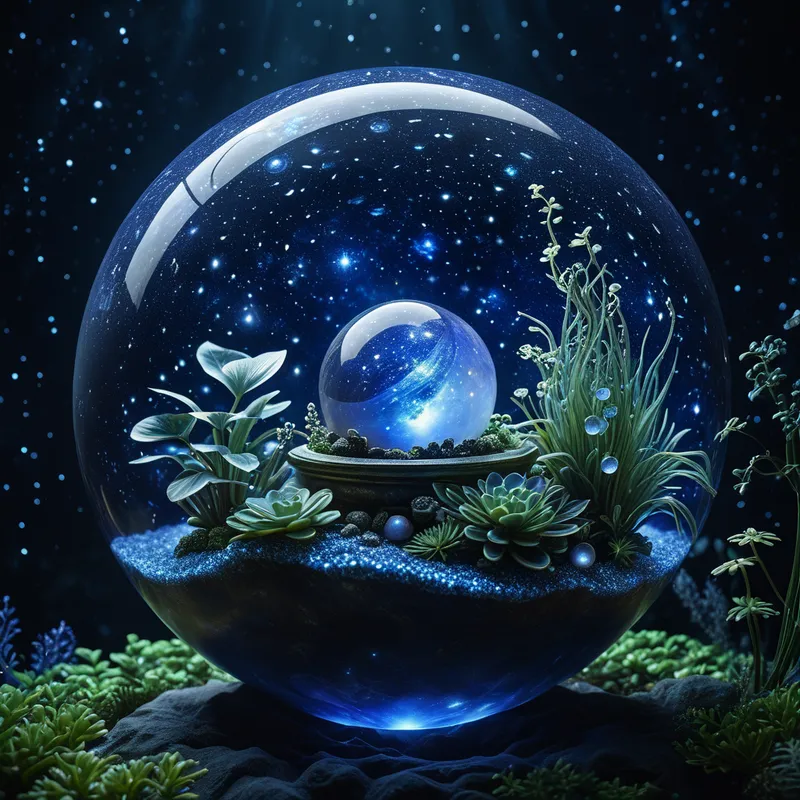
The Dreamer's Resonance
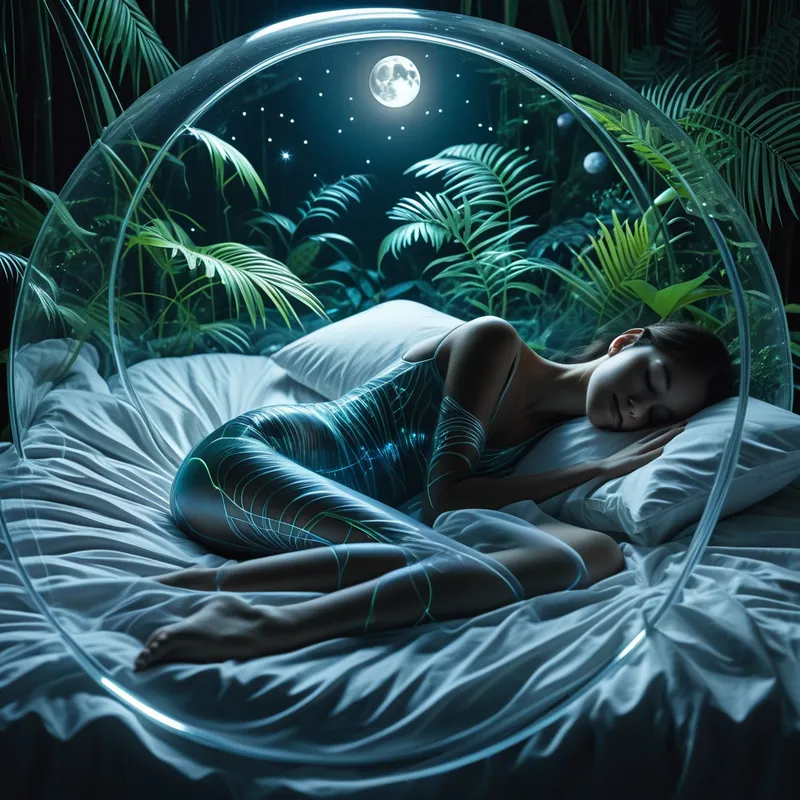
When the pattern of Jaci emerges in modern dreams, it often signals a profound engagement with the creative and cyclical processes of the psyche. To dream of a moonlit lake within a jungle, or of silver light causing plants to grow rapidly, is to experience the somatic truth of inner fertility. The dreamer may be on the cusp of a new creative project, a psychological insight, or a shift in life phase, where forces feel ripe and waiting to be “sung” into being.
Conversely, dreaming of a waning or absent moon over a familiar landscape can reflect a somatic sense of depletion, a creative dry spell, or a feeling of being out of sync with one’s natural rhythms. The body dreams of tides it cannot see. The psyche is processing a necessary fallow period, the dark moon phase where energy consolidates underground. These dreams ask the dreamer to honor the cycle, to trust the pull of an invisible, nurturing rhythm within, and to understand that not all creation is born of daylight striving. Some of the most vital growth occurs in the cool, reflective glow of lunar consciousness.
Alchemical Translation
For the modern individual navigating a world obsessed with solar consciousness—achievement, constant visibility, and linear progress—the myth of Jaci offers a vital alchemical recipe for psychic wholeness. The process of individuation is not a relentless march toward a goal, but a rhythmic dance of expansion and contraction, expression and introspection.
The alchemical work begins in the nigredo, the formless dark before Jaci’s sigh. This is the unrecognized potential, the unformed grief or desire. Jaci’s first light is the albedo—the moment of insight, the gentle awareness that falls upon the inner chaos, not to eradicate it, but to organize it into flowing tides and growing forms. The singing of life from the mud is the citrinitas, where conscious understanding gives form to unconscious content—perhaps through art, through a new relationship pattern, or through a healed emotion.
The ultimate gold, the rubedo, is not a static state of perfection. It is the embodied ability to live in rhythm. It is the Self that can wax with creative power, shine in full relational connection, wane into restorative solitude, and rest in the fertile dark without fear, knowing the light will return on its own schedule. To integrate Jaci is to become both the dancer and the dance, the moon and its faithful, life-giving light.
Associated Symbols
Explore related symbols from the CaleaDream lexicon:
- Moon — The primary symbol of Jaci herself, representing cyclical time, gentle influence, reflective consciousness, and the rhythmic pull on the waters of the unconscious.
- Water — The primordial, formless medium of life that Jaci animates with her light, symbolizing the unconscious, emotion, fertility, and the flow of psychic energy.
- Goddess — The archetypal feminine creative principle, embodied by Jaci as a nurturer who brings forth life through indirect means and magnetic presence.
- Forest — The dark, fertile, and mysterious realm that Jaci illuminates, representing the unknown depths of the psyche where growth and transformation begin.
- River — The flowing, life-giving artery of the rainforest that responds to Jaci’s pull, symbolizing the journey of the soul, the passage of time, and emotional currents.
- Creation — The core action of the myth; Jaci’s act of bringing form from void through light and song, symbolizing psychological birth, inspiration, and the manifestation of potential.
- Cycle — The essential teaching of Jaci’s phases, governing tides, growth, decay, and rebirth, representing the natural, inescapable rhythms of psychological and physical life.
- Seed — The latent potential within the dark earth that Jaci’s moonlight coaxes into growth, symbolizing nascent ideas, possibilities, and the beginnings of psychic development.
- Dream — The realm governed by moonlight, where Jaci’s influence is strongest, representing the nocturnal activity of the unconscious that processes and creates.
- Moonlight — The active, gentle, illuminating agent of Jaci’s power, representing intuitive insight, soft awareness, and the revealing of hidden truths without harsh judgment.
- Fertility — The abundant result of Jaci’s harmonious influence on water and land, symbolizing psychic creativity, emotional richness, and the capacity for new life in all its forms.
- Rhythm — The fundamental law established by Jaci’s dance, the pulse of the tides and seasons, symbolizing the innate temporal patterns of the psyche that must be honored for health.