Household Gods Myth Meaning & Symbolism
A myth of protective spirits dwelling within the home, embodying the sacredness of daily life and the divine presence in the ordinary.
The Tale of Household Gods
Listen, and let the smoke of the hearth carry you back. The sun, Ra, has sunk beneath the western mountains, and the world is painted in the deep indigo of night. In the mudbrick house, the air is thick with the scent of baking bread and the earthy perfume of the Nile’s gift. This is no empty space. It is a kingdom in miniature, a cosmos of four walls.
Here, in the dim light of a flax-wick lamp, the divine does not dwell on distant mountain tops or in towering stone pylons. It lives here. It stirs in the corner where the grain is stored. It watches from the lintel above the door. It rests its head beside the sleeping mat.
Feel the presence first as a coolness near the water jar—a coiled, silent wisdom. This is the agathos daimon, the serpent of the house, its scales the color of the fertile silt, its eyes holding the patience of the deep earth. It asks for no altar, only a drop of milk upon the floor, a recognition of its vigil.
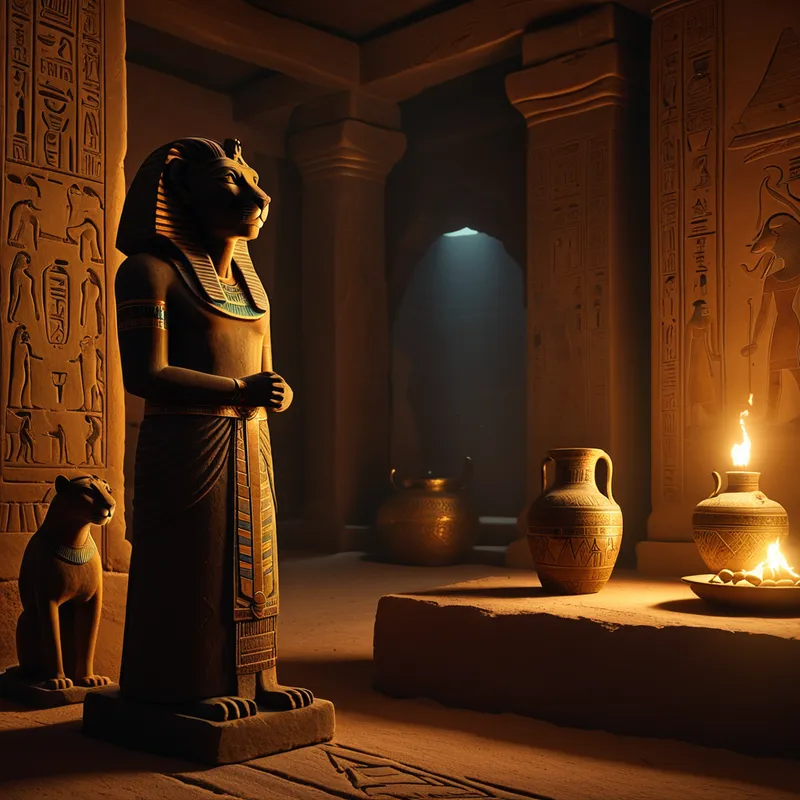
Hear a rustle, a low, protective growl that is not a threat but a promise. In the shadows by the children’s corner, the form of a lioness seems to melt from the wall. This is Sekhmet in her gentlest aspect, her fury banked to a warm ember, her claws sheathed. She is the fire that guards the hearth, the fierce love that bares teeth at the darkness outside the door.
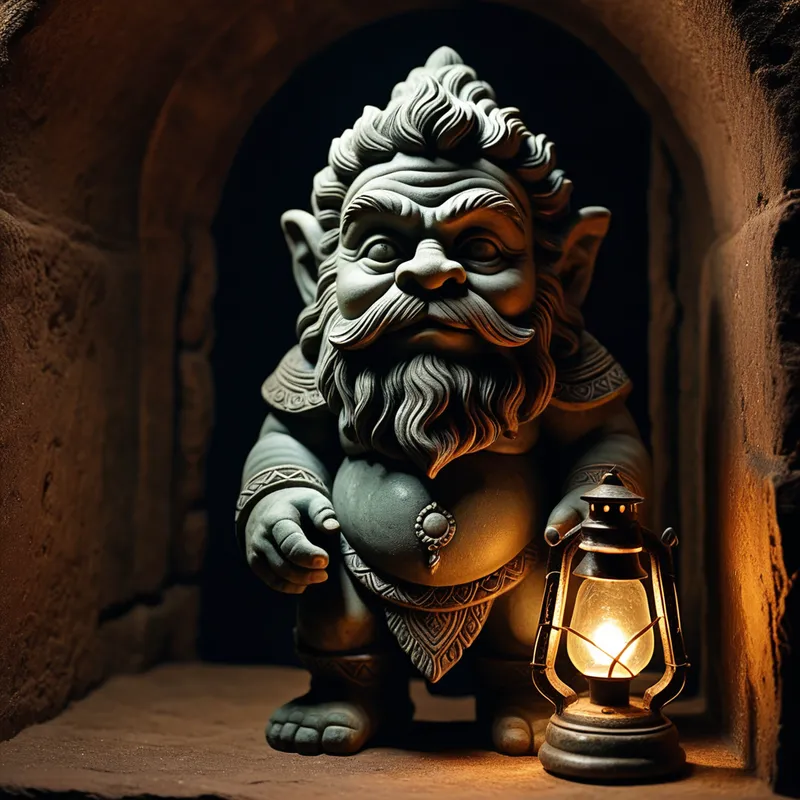
And then, a figure steps from the very laughter of the family. Bandy-legged, bearded, his tongue stuck out in a perpetual grimace of joyful defiance. This is Bes. He dances a silent, shuffling dance by the bedside, his grotesque and wonderful face a shield against nightmares. He is the spirit of music that ends sorrow, the guardian of the threshold between waking and dreams.
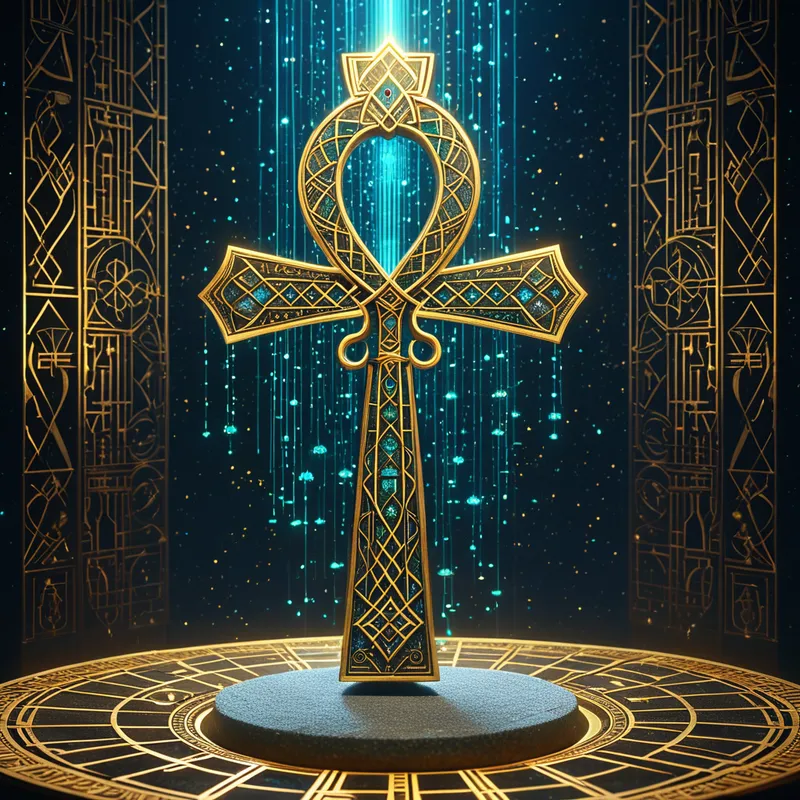
The conflict is not with monsters of chaos, but with the silent creep of emptiness, the chill of misfortune, the unseen blight that can wither joy. The rising action is the daily ritual: the sweeping of the floor, a hymn hummed while grinding grain, the careful placement of a ankh amulet. Each act is an invitation, a reinforcement of the sacred pact.
The resolution comes with each dawn undisturbed, each child’s peaceful breath, each successful birth. The household gods do not bring epic victories; they ensure the continuity of the world, one home, one night, one protected heartbeat at a time. Their triumph is the simple, profound sound of the mortar and pestle at sunrise, the work of life continuing, guarded and blessed.
Cultural Origins & Context
This was not a single, codified myth recited in temples, but a living, breathing stratum of belief that permeated every level of ancient Egyptian society, from the pharaoh’s palace to the humblest farmer’s dwelling. While the state religion focused on the cosmic order (ma'at) and the cults of great gods like Osiris and Isis, the cult of the household gods was the religion of the hearth, passed down not by priests but by mothers and fathers, by grandparents showing a child where to place a figurine.
Archaeology reveals their presence everywhere: small statues of Bes and Taweret found in homes; magical stelae showing Horus triumphing over dangerous animals, used to sanctify water for protection; painted images of protective serpents on pots and walls. Their societal function was paramount: to create a microcosm of ma'at within the home. They mediated the terrifying vastness of the cosmos and the chaotic forces of the unseen world, making the domestic space a sanctuary of predictable, benevolent power. They protected the most vulnerable moments—sleep, childbirth, infancy—and sanctified the most mundane acts of cooking and storage.
Symbolic Architecture
The household gods represent the immanent divine—the sacred that is not transcendent and far away, but embedded, intimate, and immediate. They are the psychological archetypes of protection, nurture, and the sanctification of daily life.
The most profound magic does not reside in the distant star, but in the well-swept floor and the guarded threshold.
The serpent spirit symbolizes the chthonic, instinctual wisdom of the home—the deep, non-verbal knowing of a place, its memories and rhythms stored in the very walls. Sekhmet’s presence embodies the transformative, protective fury of the maternal instinct, the energy that defines and defends the boundary of the self and the family unit. Bes, perhaps the most profound, represents the coincidentia oppositorum—the union of opposites. His frightening visage wards off terror; his grotesque form elicits comfort. He is the guardian of liminal spaces (doorways, beds), showing that true protection often requires embracing the seemingly ugly or chaotic aspects of existence to integrate and neutralize fear.
The Dreamer's Resonance
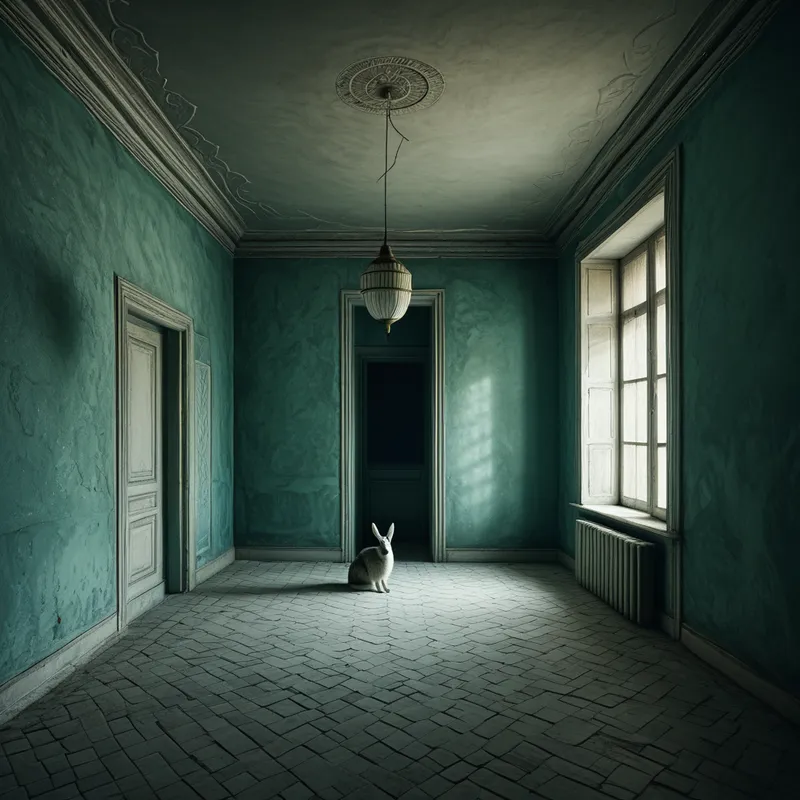
When this mythic pattern stirs in the modern unconscious, it often manifests in dreams of discovering new rooms in one’s house, of feeling a peaceful, animal presence in a corner, or of finding ancient, comforting artifacts buried in the garden of a contemporary home. These are not dreams of grand adventure, but of profound homecoming.
The somatic process is one of settling, of a deep, visceral sigh. Psychologically, the dreamer is often in a process of building or repairing their inner sanctuary—their sense of psychic safety and integrity. The dream may surface during times of external chaos, transition, or vulnerability, when the ego feels exposed. The appearance of these protective, domestic deities in dream imagery signals the Self’s innate capacity to generate inner guardians, to establish sacred boundaries, and to find the divine not by seeking outwardly, but by tending to the inner hearth. It is the psyche declaring, “Here, within you, is a protected space. You are not undefended.”
Alchemical Translation
The alchemical work modeled by the household gods is the transmutation of the ordinary into the sacred, and the integration of protective instincts. The modern individuation journey often involves a heroic, outward-facing quest. This myth complements it with an inward, grounding operation.
Individuation is not only about becoming who you are, but about creating a psychic home where that self can safely reside.
The first stage is Recognizing the Inner Sanctum: identifying what in your inner world constitutes your "home"—your core values, your private joys, your vulnerable child-self. The second is Inviting the Guardians: consciously cultivating the inner forces that protect this space. This might be the fierce discernment (Sekhmet) that says "no" to psychic invasions, the deep, instinctual wisdom (the serpent) that guides you to rest, or the joyful, boundary-defying spirit (Bes) that laughs in the face of anxiety.
Finally, it is the Daily Ritual of Maintenance: the alchemical fire is the attention paid to this inner household. Through journaling, meditation, creating art, or simply mindful domesticity, one performs the modern equivalent of pouring the libation of milk. You affirm the sacredness of your own existence. You move from seeking salvation externally to realizing you are already dwelling in a temple, guarded by gods of your own deepest nature. The triumph is not a slain dragon, but a lived life of sustained, protected, and sanctified presence.
Associated Symbols
Explore related symbols from the CaleaDream lexicon: