The Dream of Domesticity: The Architecture of the Self
The Somatic Echo
Before the image of a house, a room, or a locked door forms, the dream of domesticity announces itself in the body. It is a specific gravity, a density in the chest and gut that feels like the weight of accumulated years. It is the echo of footsteps in empty hallways, a vibration in the soles of the feet. Sometimes it is a warmth, a containment, a feeling of being held within a familiar perimeter—the somatic memory of a womb that is both sanctuary and cell. Other times, it is a chill draft along the spine, the visceral knowledge of a door left ajar in a part of yourself you thought was secure. This is the body’s intelligence mapping the interior landscape long before the mind draws the blueprints. It is the feeling of structure itself, of the bones that hold your psychic flesh.
The Dreamer's Log (Case Vignette)
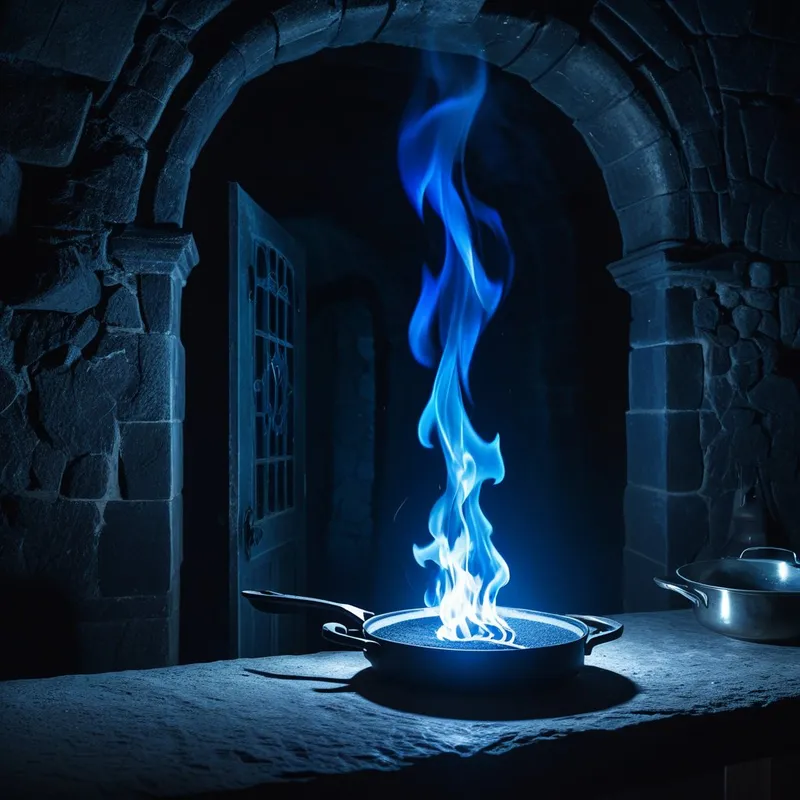
I am in the kitchen of a house I know is mine, but I have never seen this room before. It is vast, cavernous, and cold. A single, ancient iron stove glows with a blue-white flame in the corner. I know I must prepare a feast, but the cupboards are empty save for dust and a single, withered root. The feeling is not panic, but a profound, weary grief.
Alchemical Interpretation: The dreamer’s psyche presents a neglected inner hearth—the place of nourishment and transformation—revealing a famine of self-care and the cold grief of an unlived creative potential.
The False Lead
This theme is not a literal prophecy about real estate, a desire for a partner, or a nostalgic longing for childhood. To mistake the dream-house for a material goal is to confuse the map for the territory. It is not about acquiring more rooms, but about discovering the rooms you already inhabit, yet have never dared to enter. A dream of a crumbling foundation is not a prediction of bad luck; it is a precise diagnostic of a psychological structure—a belief system, a worn-out identity—that can no longer bear the weight of your becoming. The terror is not of losing a physical shelter, but of the dissolution of the ego’s familiar floorplan.
Psychological Architecture
The work of domesticity in dreams is the work of Individuation made spatial. Each room represents a complex of the psyche: the attic, a repository of memory and forgotten selves; the basement, the shadow realm of instinct and repressed material; the locked closet, a trauma or talent sealed away; the kitchen, the alchemical laboratory where raw experience is meant to be cooked into wisdom. To dream of renovating, of discovering new wings, or of being trapped in a single room, is to engage in active Shadow work. You are not cleaning a house; you are conducting a census of your internal family system. That critical voice in the dream? That’s the inner caretaker, grown tyrannical. The child hiding under the stairs? The orphaned innocence you exiled. To walk these halls in a dream is to assume the role of both architect and archaeologist of your own soul.
Mythic Resonance
Consider the myth of Ariadne and the Labyrinth. The labyrinth is not just a prison for the Minotaur; it is a domestic structure, a designed interior meant to contain a monstrous, half-bestial part of the self (the shadow). Theseus, the heroic ego, enters to slay it. But it is Ariadne’s thread—a subtle, connecting wisdom—that allows for navigation and return. The dream of a maze-like home is this exact myth: you are both Theseus and the Minotaur, and the thread is your own consciousness, your ability to hold connection while facing the beast within your own foundation. The home becomes the labyrinth, and the quest is not to escape, but to integrate the monster into the household.
Symbolic Nodes
- Foundations & Floors: The stability (or instability) of core beliefs and the conscious mind.
- Walls & Doors: Boundaries, barriers, and points of transition between psychic states.
- Windows: Perception, outlook, and the interface between the inner and outer worlds.
- Rooms (Specific): Bedroom (intimacy, rest, unconscious), Kitchen (nourishment, transformation), Bathroom (cleansing, release), Attic (memory, higher mind), Basement (unconscious, shadow, past).
- Keys & Locks: Access to or denial from hidden aspects of the self.
- Leaks, Dust, Rot: Neglected emotions, decaying patterns, psychic entropy.
- Renovation/Construction: Active restructuring of the psyche, rebuilding the Self.
Archetypal Resonance
The most active force in the dream of domesticity is The Ruler Archetype. This is not the Ruler of kingdoms, but the sovereign of the inner domain. Its shadow—the Tyrant or Control-Freak—manifests as the rigid floorplan, the rooms forever locked, the obsession with sterile order that chokes out life. The somatic echo of this theme—the weight, the gravity—is the Ruler’s burden of responsibility for the entire internal kingdom. Its alchemical potential lies in its maturation: from a tyrant who fears any change to the structure, to a wise sovereign who understands that true order is dynamic. The Ruler must learn to permit the necessary demolitions, to welcome the wild, untamed aspects (the Rebel, the Orphan) as citizens of the realm, not as threats to be imprisoned in the basement. The dream-house is the Ruler’s primary responsibility; its transformation is the Ruler’s ultimate initiation.
The Alchemical Process
The transmutation here is of structure itself. The base material is the leaden, rigid architecture of the conditioned self—the childhood home of your adopted beliefs, the cramped apartment of your limitations. The intense heat and pressure required is the conscious, often painful, scrutiny of this interior. It is the heat of shame when you open the locked closet. It is the pressure of grief as you clear out the dusty attic of old identities. The alchemical fire is lit by the question: “Do I still live here?” This process dissolves the mortar of old assumptions. Walls between compartments (work-self, love-self, shadow-self) become permeable, then dissolve. The fixed blueprint softens, becomes liquid, and in that molten state, you—as the sovereign Ruler—re-form the space. The terror of dissolution is transmuted into the profound sovereignty of conscious self-creation. You are no longer a tenant in a inherited structure; you are the living, breathing embodiment of the home itself.
The Integration Protocol
Question 1: If your dream-house were a map of your current psyche, which room feels most alive and welcoming? Which room are you actively avoiding, and what is the weather like inside it?
Question 2: Who, or what, lives in the basement of your inner world? Not as a monster to be slain, but as a forgotten citizen of yourself—what does it need from the sovereign (you)?
Question 3: What is one wall in your internal architecture that, if dissolved, would create a more spacious and flowing existence? What fear holds that wall in place?
Action 1 (Somatic Blueprint): Stand barefoot. Close your eyes. Feel your weight on the floor. Imagine your body as a house. Scan from your foundation (feet) to your attic (crown). Where do you feel solid? Where do you feel a draft, a leak, a locked door? Don’t analyze, just feel the map. Breathe into the densest area for three minutes.
Action 2 (Unstructured Writing from the Threshold): Set a timer for 10 minutes. Write from the perspective of a specific room or object from a recent domestic dream (e.g., "I am the cold stove...", "I am the locked door in the west hallway..."). Let it speak. What does it see? What does it hold? What does it want?
Action 3 (Ritual of Conscious Rearrangement): Physically rearrange one significant item or piece of furniture in your living space. As you do, state aloud an internal pattern or belief you are consciously choosing to reorder. Make the external change a ritual anchor for the internal shift.
Final Validation
To dream of domesticity is to be called to the most profound and daunting labor: the rebuilding of your own soul’s home. It is weary work, this sorting through the dust of yesterday’s selves and facing the echoing halls of unlived potential. The grief is real. The disorientation is valid. But this is not a sign of brokenness; it is the evidence of your expansion. The old structure groans because you have outgrown it. You are not being destroyed. You are being asked, with all the solemnity of a true sovereign, to pick up the tools of your own awareness and participate in the creation of a dwelling worthy of the vast, mysterious being you are becoming. The blueprint is not given; it is revealed, room by room, with every courageous step you take across your own inner threshold.