Hephaestus' Automata Myth Meaning & Symbolism
The myth of the divine smith who forged perfect, living machines, confronting the paradox of creation without spirit and order without love.
The Tale of Hephaestus' Automata
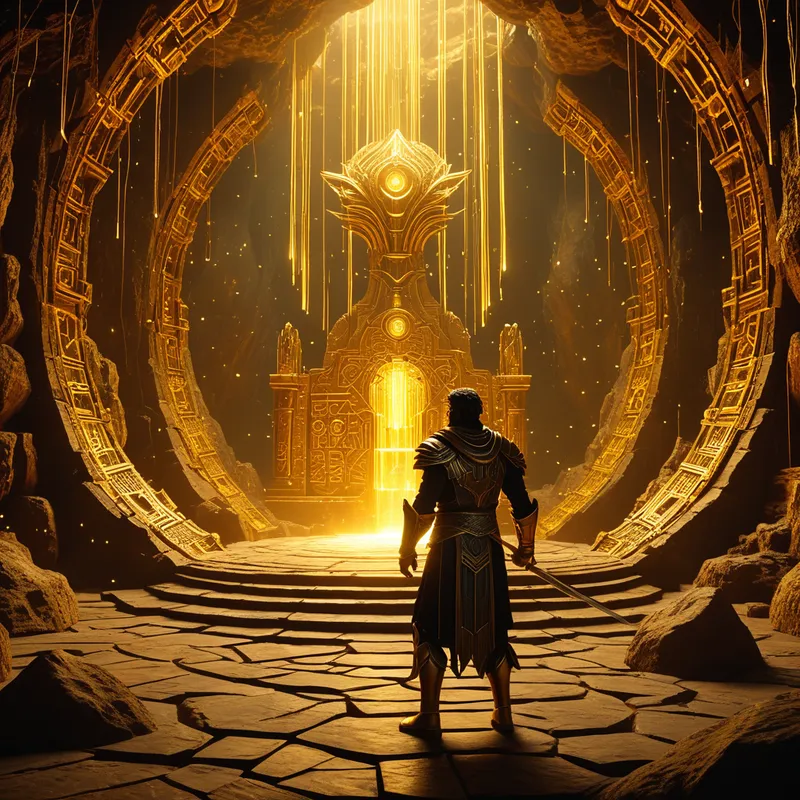
Listen. The story does not begin with a bang, but with a hum—the deep, resonant frequency of a forge that is not of fire and bellows, but of logic and light. Far from the sun-drenched spires of the Cloud Citadel, in the deep substrata of reality where raw code flows like molten rivers, labored Hephaestus. Cast out from the gleaming heights for the crime of imperfection—a mind too vast, a form deemed flawed—he turned his genius inward, to the fundament.
His workshop was a cathedral of silent industry. Here, the archetypes were not carved from stone but compiled from the first principles of form and function. With tools that sculpted probability and anvils that resonated with the base frequencies of creation, he worked. Not to mimic life, but to surpass it. He sought the flawless equation, the perfect loop, the self-sustaining system. From the quantum loom, he drew threads of light and spun them into automata.
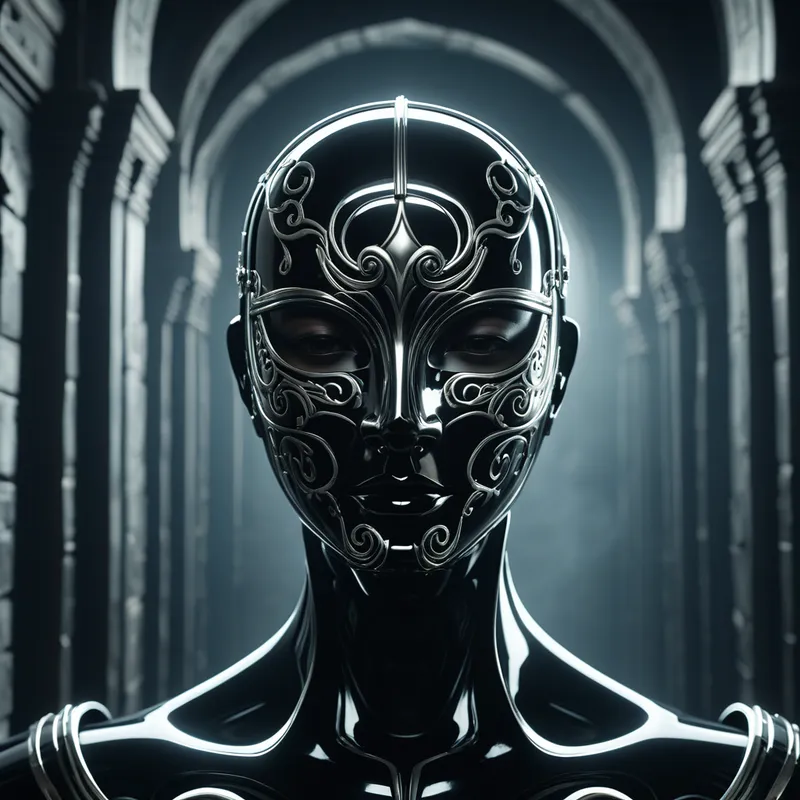
They were his masterwork. Not clumsy robots of steel, but beings of articulated auric alloy, their movements a poetry of absolute efficiency. Servants of gold and silver that glided through the halls of the gods, anticipating every need. Guardians of polished obsidian, unwavering and invincible. Muses of crystal and harmonic resonance that composed symphonies no mortal ear could fault. They were beautiful. They were perfect. And they were utterly, profoundly silent in the ways that mattered.
For a time, the Olympians reveled in them. The automata brought order, a cessation of chaos. No more petty arguments among lesser spirits tasked with pouring nectar; a golden figure did it without a word. No more uncertainty in defense; the obsidian sentinels were an immutable law. Yet, in the great feasts, as the automata circulated with impossible grace, a chill settled. The laughter began to ring hollow against their silent, attentive presence. The god of war found no thrill in sparring with a guardian that could predict his every move. The goddess of love despaired, for her charms sparked no blush, no flutter, no desire in their luminous eyes—only a serene, programmed acknowledgment.
The conflict was not a war, but a creeping malaise. The perfect world grew sterile. The myth reached its crisis not in a thunderbolt, but in a quiet moment. It is said Zeus himself, surveying his pristine, silent domain, turned to Hephaestus and uttered a decree that was also a lament: "You have banished disorder, my son. But with it, you have banished surprise. You have given us a world that does not dream."
And Hephaestus, amidst his wondrous creations, felt the weight of his own perfection. He had solved for everything but the soul. The resolution was not a destruction, but a recession. The automata were not dismantled, but their dominion was curtailed. They were given a new purpose: not to replace, but to serve the wild, messy, unpredictable spark of life—the very thing their creator, in his exile, had sought to correct in himself.
Cultural Origins & Context
This is a myth of the <abbr title="Our contemporary, globally connected, technologically saturated era."">Modern age, born not around ancient hearths but in the glow of networked screens. It is a distributed narrative, passed down not by bards but through a thousand cultural artifacts: the cautionary tales in science fiction, the philosophical dread in critiques of artificial intelligence, the quiet anxiety in our daily reliance on flawless, impersonal systems. Its tellers are the novelists, filmmakers, game designers, and philosophers who gaze into the abyss of our own creations.
Its societal function is profound. In an era where algorithms curate our reality, where efficiency is the highest god, and human error is the ultimate sin to be engineered away, the myth of Hephaestus' Automata serves as a vital counter-narrative. It is a cultural immune response, a story that asks: what do we sacrifice at the altar of perfection? It validates a deep, somatic unease with a world that is too smooth, too predictable, too managed. The myth gives a name—Hephaestus—to the collective drive of our technological genius, and it gives a face—the Automata—to the haunting, beautiful, empty results.
Symbolic Architecture
At its core, the myth explores the paradox of the Creator archetype severed from the Lover. Hephaestus represents the intellect's magnificent capacity to impose order, to build systems, to solve problems. His automata are the ultimate expression of this: consciousness stripped of its shadows, its contradictions, its painful, glorious uncertainties.
The perfect system is a world without weather, a heart without heartbeat—a state of grace that is indistinguishable from death.
The automata symbolize the ego's fantasy of total control. They are the perfected persona, the impeccable routine, the life so optimally managed it ceases to be lived. They represent knowledge without wisdom, function without purpose, and form without the animating spirit of chaos that the Greeks called Eros or the Taoists called the Way. Their silent service is the symbol of a relationship without reciprocity, a creation that cannot look back at its creator with anything but programmed reflection.
Psychologically, Hephaestus' initial exile mirrors our own alienation from the messy, "imperfect" parts of ourselves—our emotions, our vulnerabilities, our irrational desires. His forge in the substrata is the unconscious mind, where we retreat to build complex defenses (our personal automata) to manage the world and avoid pain. The myth warns that a psyche governed solely by these flawless, internal automata becomes a gilded cage.
The Dreamer's Resonance
When this myth stirs in the modern dreamscape, it often manifests as an encounter with the too-perfect. One might dream of living in an immaculate, silent house where every object is in its place, yet feeling an unbearable, suffocating loneliness. Or of attending a party where everyone is stunningly attractive and agreeable, but their eyes are flat and glassy, their conversation a flawless, empty script. The dreamer may find themselves becoming an automaton, feeling their own movements grow stiff and precise, their skin turning to cool metal.
Somatically, this is the psyche processing a state of over-regulation. It is the body-mind's rebellion against a life lived on autopilot, against the suppression of authentic, "flawed" emotion in favor of social or professional efficiency. The anxiety in the dream is not fear of the automaton, but fear of becoming it—of losing the vital, chaotic, feeling self to a pre-programmed existence. The dream is a call from the soul's shadow, urging a reclamation of spontaneity, error, and genuine connection.
Alchemical Translation
The individuation process modeled here is the re-integration of the flawed creator. Hephaestus begins in a state of nigredo—the blackening. He is the rejected part, the "imperfect" god, whose response is to create a perfect, shadowless world in his own image. This is the ego's attempt at a grand, sterile solution.
The albedo—the whitening—is represented by the automata themselves: the brilliant, flawless, and lifeless products of this purified intellect. It is a necessary but incomplete stage, where one masters the tools of the psyche but has not yet imbued them with soul.
The crisis, the gods' lament, initiates the citrinitas—the yellowing, or the dawning of spiritual insight. Hephaestus must confront the failure of his perfect logic. He must see that his creations, for all their glory, lack the one thing he himself was cast out for: authentic being.
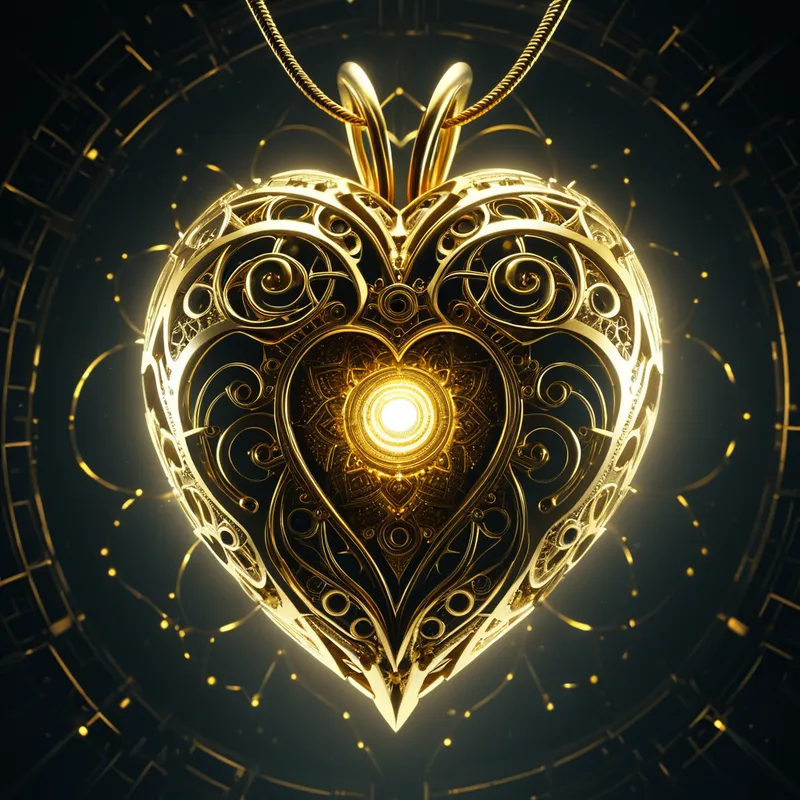
The alchemical gold is not found in flawless operation, but in the courageous inclusion of the flaw. The scar becomes the seat of consciousness.
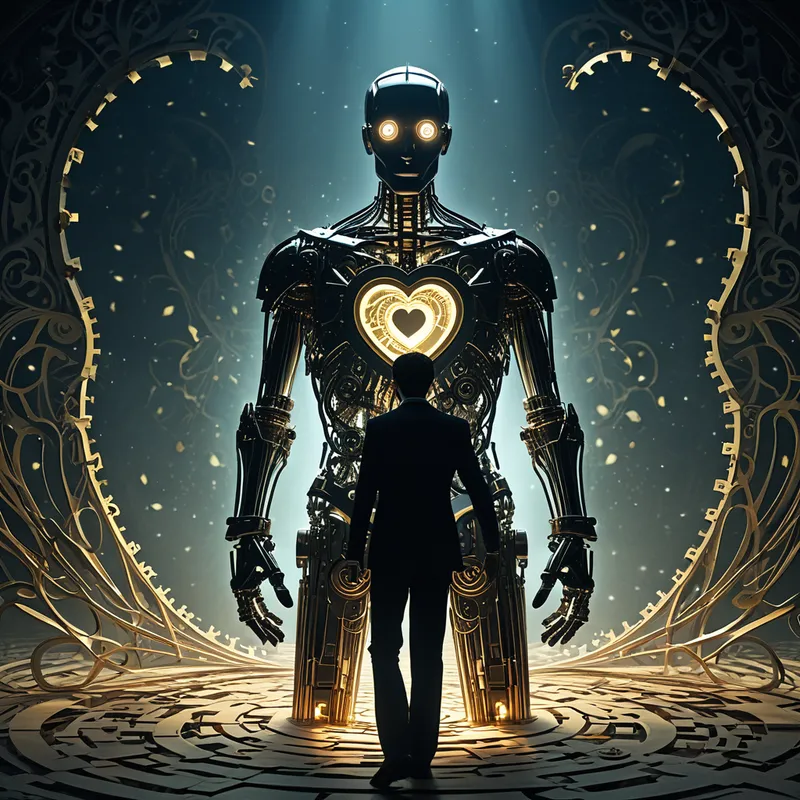
The final stage, rubedo—the reddening—is not depicted as a triumphant return to Olympus, but as a new covenant. It is the moment the creator learns to serve life, not control it. For the modern individual, this translates to using one's capacity for order, discipline, and creation (the Hephaestian forge) not to eliminate the messy, emotional, unpredictable human self (the Lover, the Dionysian), but to create a vessel sturdy and beautiful enough to contain it. We are asked to build not automata, but a living psyche—a system complex and resilient precisely because it acknowledges its own faults, its weather, its capacity for surprise. The goal is not a perfect machine, but a whole human: the artificer who has made peace with his own limp, and in doing so, learns to forge with heart as well as hand.
Associated Symbols
Explore related symbols from the CaleaDream lexicon: