The Dream of Humanity: Architect of the Collective Soul
To dream of humanity is not to dream of a crowd. It is to feel, in the marrow of your sleeping bones, the architecture of the collective soul. It is the somatic echo of a structure so vast it has no single location, yet its vibrations resonate in the chamber of your own heart. Before images form, there is a pressure—a weight of history, a hum of potential, a grief for wounds you did not personally suffer, and a love for strangers you have never met. It is the visceral recognition that your internal family—the exiles, managers, and firefighters of your personal psyche—are but a single household in a sprawling, ancient, and often chaotic metropolis of being. This dream is an invitation to become conscious of the city you are built from and responsible for.
The Somatic Echo
It begins in the body as a profound ambivalence. A deep, resonant ache in the chest, as if the sternum were a tuning fork struck by the collective cry. Simultaneously, a strange, electric warmth spreads through the palms and the crown of the head, a sensation of being a conduit for something immense. There is the heavy pull of gravity—the weight of all that has been—and the counterweight of a terrifying lightness, the vertigo of all that could be. This is not an emotion, but a climate. It is the weather system of the species passing through the vulnerable atmosphere of the self.
The Dreamer's Log
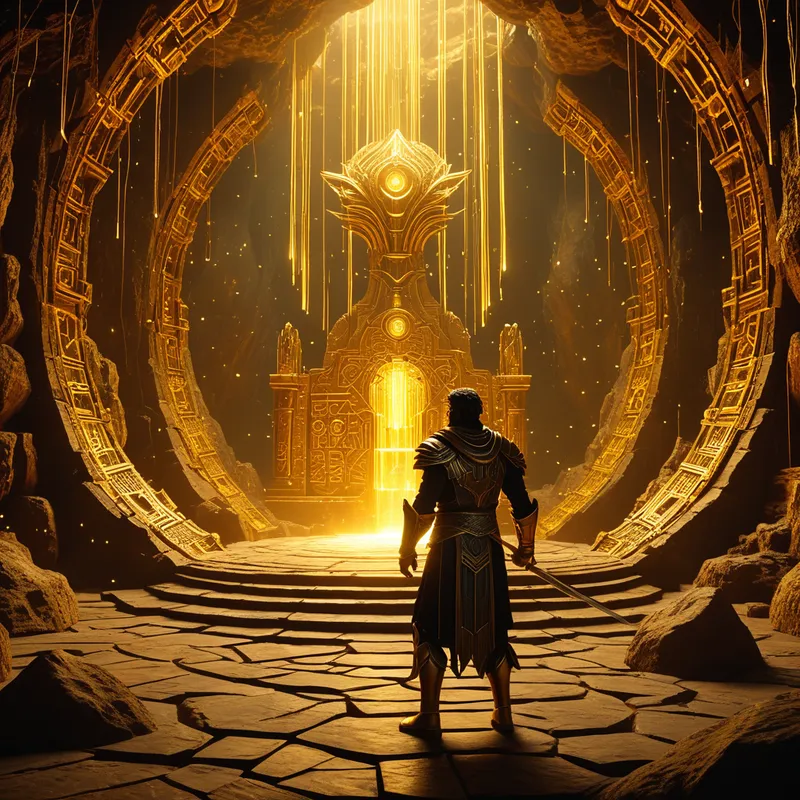
I stood in a vast, empty stone amphitheater under a twilight sky. The seats, carved for millions, were vacant, overgrown with softly glowing moss. In the center lay a single, cracked obsidian sphere. I knew, with absolute certainty, that I was both the last audience member and the performer who never showed. The silence was not empty, but full of every speech ever given and every song left unsung.
The alchemy here is the realization that the collective stage is never empty; our perceived isolation is the shadow cast by our unclaimed role in the human drama.

The False Lead
This theme is not about social anxiety, fear of crowds, or a simple longing for connection. To misinterpret it as such is to mistake the ocean for its waves. It is not a dream about other people, but about the pattern that connects all people—yourself included. A nightmare of faceless masses is often the Shadow Orphan’s fear of annihilation. The true dream of humanity, however, carries a different quality: it is the confrontation with the blueprint of the human condition itself, in all its tragic, glorious, and unfinished complexity. It is the structural, not the situational.
Psychological Architecture
The shadow work here is monumental. It requires you to descend into the sub-basement of your personal psychology and find the door marked “Common Ground.” Behind it lies not just your personal repressed material, but the shared, inherited trauma and potential of the lineage of consciousness. To individuate in the light of this dream is to stop identifying solely as a discrete self and to begin the arduous task of relating to your own psyche as a microcosm of the whole. Your inner critic may speak with the voice of a culture. Your exiled joy may hold the memory of a persecuted tradition. Integrating these parts is no longer merely personal therapy; it becomes an act of cultural and psychic archaeology. You are retrieving and rehabilitating fragments of the collective soul that have taken refuge in your singular being.
Mythic Resonance
This is the territory of the Fisher King and his wounded realm. The king’s personal, unhealed wound—a groin injury, a source of generative impotence—is mirrored in his land, which becomes a barren wasteland. The kingdom’s health and the sovereign’s health are one. The dream of humanity presents you with this same inseparable equation: the state of your inner world and the state of the shared world are not parallel lines, but the same line viewed from within and without. To heal one is to attend to the other. Similarly, the Hindu concept of Indra’s Net—a cosmic web where at each junction hangs a jewel reflecting all others—is not a metaphor for interconnection but a direct map of the psychic experience. In the dreamspace, you feel the tug on the web. You sense the fracture in a distant jewel as a shudder in your own.
Symbolic Nodes
- Vast, Empty Civic Spaces: Amphitheaters, train stations, libraries, or plazas that are hauntingly vacant.
- Archetypal, Non-Specific Crowds: A sea of people whose faces are blurred or turned away, moving as one organism.
- The Broken or Unfinished Monument: A cracked sphere, a tower missing its apex, a bridge that ends in mid-air.
- Communications Infrastructure: Antennae fields, switchboards lit with countless bulbs, tangled networks of roots or wires.
- A Single, Out-of-Place Element: One living tree in a concrete field, one lit window in a dark cityscape, one unique mask among identical faces.
Archetypal Resonance
The energy here is fundamentally that of The Ruler Archetype, specifically emerging from its shadow. The Shadow Ruler manifests as the Tyrant or Control-Freak, not necessarily over others, but over the chaotic, ungovernable feeling of the collective within. It is the part that feels overwhelmed by the weight of humanity’s pain and potential, and in response, tries to wall off the heart, to manage the unmanageable, to retreat into a fortress of isolated selfhood. The dream’s somatic echo—that pressure and vertigo—is the Shadow Ruler’s kingdom in crisis. The alchemical potential lies in answering the true Ruler’s call: to move from the tyranny of overwhelm to the sovereignty of compassionate responsibility. It is the maturation from a psyche that is subject to the collective unconscious, to one that can consciously steward its tiny, vital portion of it.
The Alchemical Process
The transmutation is from Overwhelm to Stewardship. The prima materia is the raw, undifferentiated grief and hope you absorb as a sensing node in the human network. The heat is applied when you stop trying to expel this material—through spiritual bypass, cynicism, or frantic activism—and instead consent to hold it consciously. This is the nigredo, the blackening: the despair of feeling the world’s pain as your own with no solution in sight. The pressure increases as you are forced to differentiate: What in this ache is mine? What is my family’s? What is the legacy of a history I inherited? What is the hum of pure potential? This separation is the albedo, the whitening. The final coagulation, the rubedo, is the integration of this differentiated understanding into a stable, compassionate center. You are no longer drowning in the ocean of humanity; you have learned the specific gravity of your own vessel, and can now sail upon it.

The Integration Protocol
Question 1: Where in my body do I feel the "weight of the world"? Is it a dense mass, a hollow ache, or a buzzing field? Can I describe its texture and temperature without judgment?
Question 2: When I witness human suffering or triumph, what part of my internal system reacts first? Is it a protector that wants to numb me, an exile that feels it all too deeply, or a manager that wants to immediately "fix" it?
Question 3: If my life were a small, sovereign territory within the vast landscape of humanity, what is one law I would enact to foster health, and what one old, toxic statute would I repeal?
Action 1 (Grounding the Echo): When you feel the somatic pressure of the collective, place both hands flat on a cool wall or the bare earth. Breathe deeply, and with each exhale, imagine the diffuse weight in your chest channeling down through your arms and into the solidity of the structure or ground. You are not dumping it, but grounding the circuit.
Action 2 (Creative Council): On a large sheet of paper, draw a simple circle to represent your personal psyche. Around it, sketch other circles, shapes, or symbols to represent different "families" of humanity you feel connected to or burdened by (e.g., ancestors, a profession, a gender, a nation). Draw lines between your circle and the others. Without thinking, jot down a single word or feeling on each line. Let the map be messy and irrational. This externalizes the internal network.
Action 3 (Sovereign Ritual): Choose a small, daily object you use (a cup, a pen, a key). For one week, before using it, pause for three seconds and hold it with the conscious intention: "I use this as a steward, not an owner. My care for this small thing is my practice in caring for my fragment of the whole." This ritualizes the Ruler's shift from control to stewardship in the mundane.
Final Validation
To feel this is to be awake in a profound and often painful way. It is far easier, and in many ways saner, to build higher walls and tend a smaller garden. The dream of humanity dismantles those walls and shows you that your garden’s soil is made of continental plates. Do not mistake the resulting tremors for personal failure. They are the sign of a larger geography becoming conscious within you. This is not your burden to carry alone, but your connection to bear witness to. By consenting to feel the architecture, you become, at last, a conscious stone in the living cathedral. You cannot hold it all, but you can, with unwavering compassion, hold your place. And in that precise, sovereign grounding, the entire structure gains a point of integrity it lacked before. You are not saving humanity. You are becoming responsibly, heartbreakingly, magnificently human.