Eridu the First City Myth Meaning & Symbolism
A myth of the first city, built by the gods in the primordial marsh, establishing cosmic order, divine law, and the sacred pattern for all human civilization.
The Tale of Eridu the First City
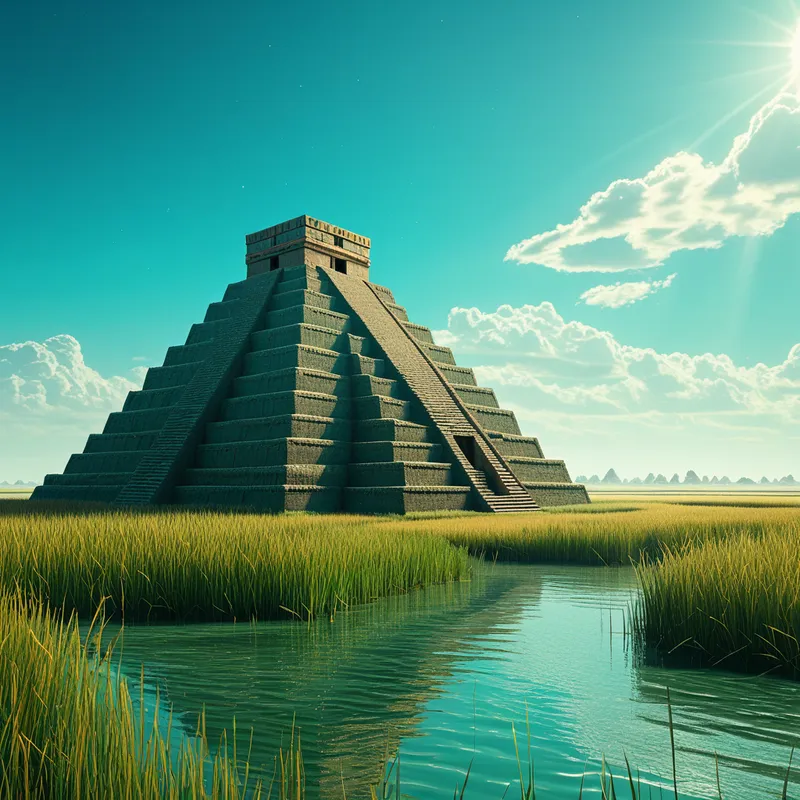
In the beginning, there was no thing. No name, no fate, no thread of time. There was only the abzu, the sweet deep, and the tiamat, the salt-chaos sea. Between them lay a vast and trackless marsh, a place of whispering reeds and shifting mud, where the waters mingled and nothing held its form.
Then, from the heart of the abzu, a presence stirred. It was Enki, the cunning one, the lord of the deep waters and the arts of making. He looked upon the formless mingling and saw a pattern waiting to be drawn. With a word that was both sound and shape, he called a place into being. He named it Eridu. The name itself was a foundation stone.
He did not build with haste, but with profound intention. From the very bed of the abzu, he drew the dark, fertile clay. He mixed it with the breath of the sky and the memory of the deep. With his own hands, he shaped the first bricks—not mere blocks of earth, but vessels of order. He laid them, one upon the other, in a sacred pattern upon the unstable marsh. Where each brick was placed, the reeds stilled, the waters clarified, and the mud became firm ground.
At the center of this new-born order, Enki raised a house. Not a house for mortals, but a house for the divine. He built the E-abzu, the "House of the abzu." Its walls were the boundary between chaos and cosmos. Its foundations plunged deep into the sweet waters of creation, and its apex touched the realm of the fixed stars. Here, Enki established the me, the sacred blueprints of reality: kingship, the art of the scribe, the craft of the builder, the rituals of truth and justice. He filled the temple with the aura of awe.
To this perfect, ordered center, the other gods were drawn. Inanna, queen of heaven, came from her own celestial realm, drawn by the power of the established me. She sought to bring these decrees to her city of Uruk, to elevate it. In a great myth of transfer, through wisdom and cunning, the principles of civilization traveled from the first foundation to the wide world. Thus, from the single, sacred point of Eridu, a pattern unfolded. The marsh receded. The blueprint was set. The first city stood, not as a monument to man, but as the gods' original template for all that would follow—a whisper of order in the eternal ear of chaos.
Cultural Origins & Context
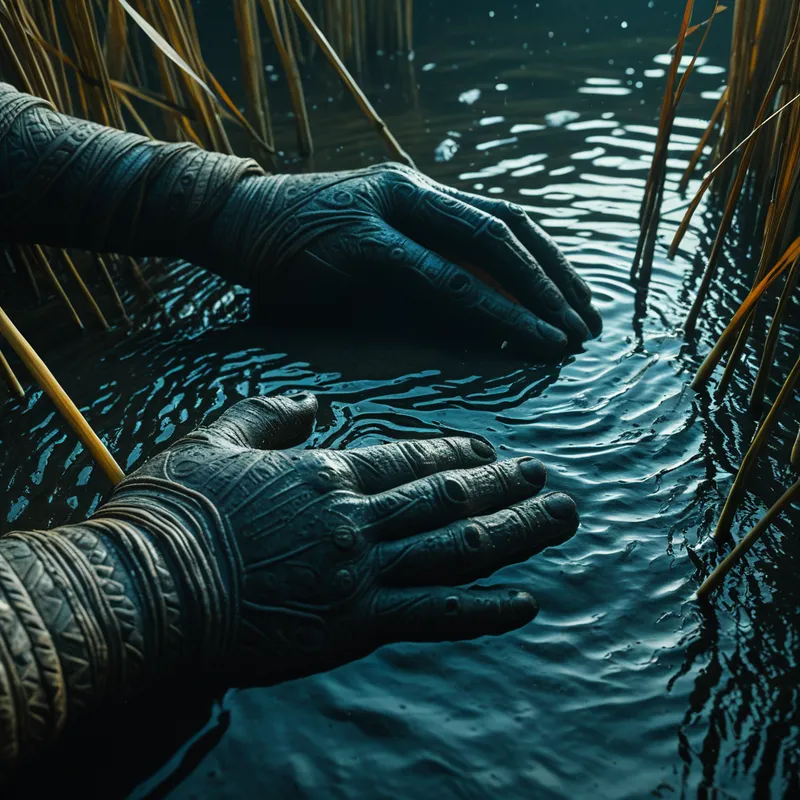
The myth of Eridu is not merely a story of origins; it is the foundational charter of Sumerian identity. Historically, Eridu (modern Tell Abu Shahrain) was likely one of the earliest, if not the earliest, permanent settlements in southern Mesopotamia, dating back to the 5th millennium BCE. For the Sumerians, this historical precedence was sanctified into divine precedent.
The myth was preserved in temple hymns, king lists, and creation narratives, recited by gudu priests and scribes in the very E-abzu it describes. Its societal function was paramount: it established the theological and political legitimacy of kingship and priesthood. A king's authority was derived from the me housed first in Eridu. The city was the archetype of civilization itself—the proof that human society was not a random accident but a divine project, a conscious imposition of sacred order (me) onto primordial chaos. To be Sumerian was to participate in the order first established at the world's dawn in the reed huts of Eridu.
Symbolic Architecture
At its core, the myth of Eridu is a profound allegory for the emergence of consciousness from the unconscious. The formless marsh represents the undifferentiated, potential-laden state of the psyche before the ego's formation. The abzu is the deep, nourishing well of the unconscious, source of creativity and wisdom. Enki represents the ordering principle, the psychic function that can draw from this deep source to create structure.
The first city is not built on solid ground, but on the boundary between the deep waters and the chaotic sea. It is the conscious ego, a precarious but necessary structure that allows for identity and culture to exist.
The E-abzu temple is the symbolic Self. It is the connecting point, the axis mundi, where the divine (me, the archetypal patterns) enters the human realm. The bricks, made from abzu-clay, signify that true, lasting structure must be formed from the raw material of our own depths, not imposed from the outside. The journey of Inanna to acquire the me symbolizes the necessary process by which the conscious personality must venture into this foundational psychic layer to retrieve the principles needed for a full life.
The Dreamer's Resonance
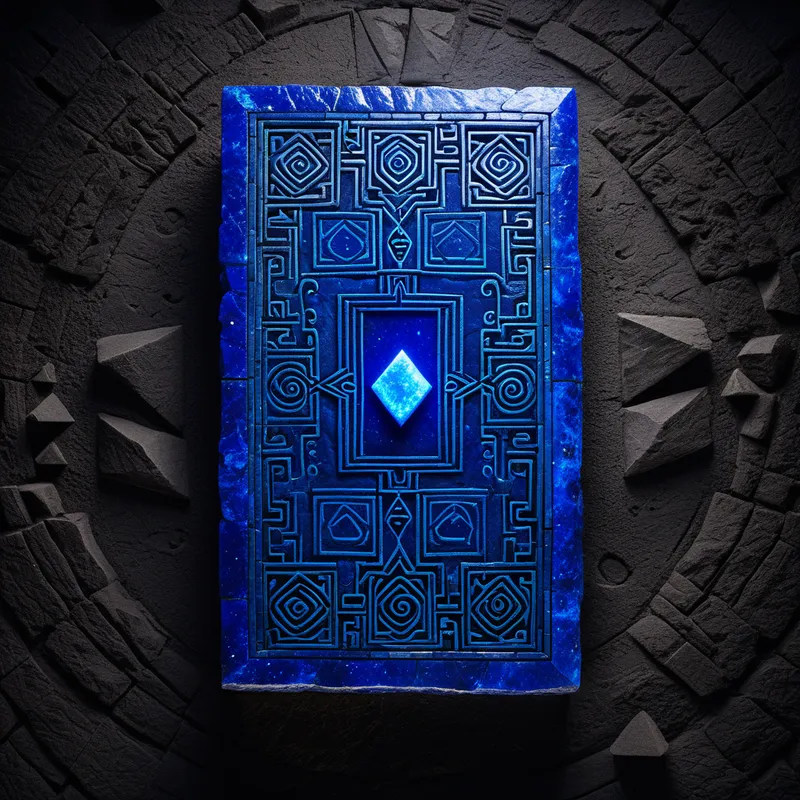
When the archetype of Eridu stirs in the modern dreamer, it often signals a profound process of psychic foundation-building or re-foundation. One may dream of discovering a hidden, ancient room in their house; of laying the cornerstone of a new building; or of finding stable ground in the middle of a swamp. The somatic sensation is often one of grounding—a feeling of the body becoming solid, centered, and calm after a period of formless anxiety or dissolution.
Psychologically, this dream pattern emerges when the ego is attempting to establish a new, more authentic structure for the personality. It is the psyche's response to chaos, whether external (life crisis, loss) or internal (a collapse of old beliefs, a depressive episode). The dream is an assurance from the deep unconscious that the materials for rebuilding—the clay of the abzu—are available within. The dreamer is in the process of defining their own me, their own sacred laws of being, drawing them up from inner wisdom rather than adopting them unquestioned from the outer world.
Alchemical Translation
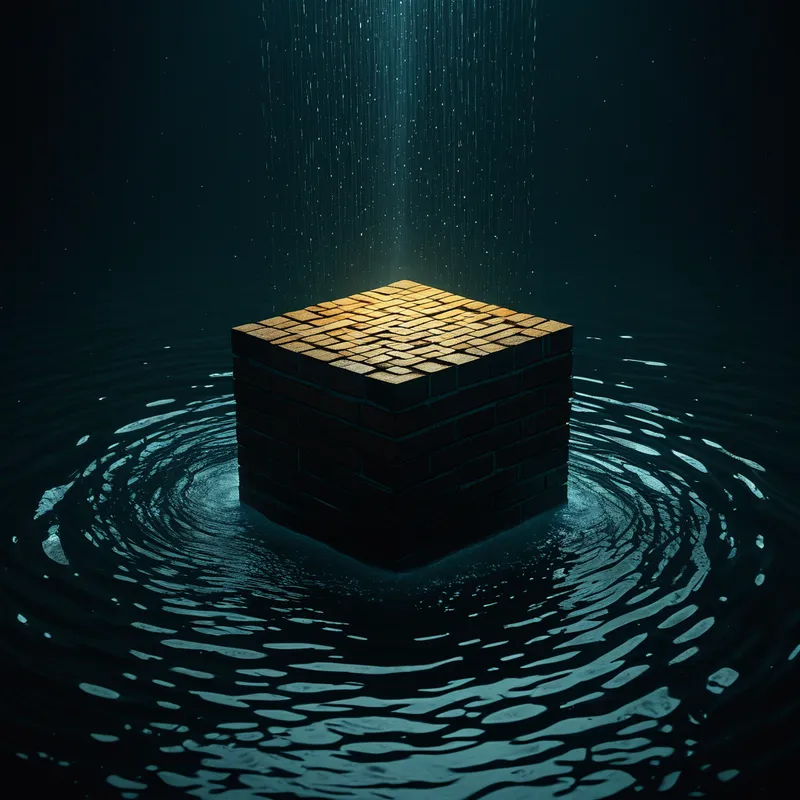
The alchemical process mirrored in the Eridu myth is the coagulatio—the making solid, the embodiment of spirit into form. In the journey of individuation, this is the critical phase where insights from the unconscious must be given structure and integrated into conscious life. The primal massa confusa of the marsh is the unexamined life, the fused and chaotic complexes.
Individuation begins not with a grand quest outward, but with the quiet, deliberate act of building a sacred center within the swamp of one's own history.
Enki's work is the model: we must go into our own abzu—through introspection, dream work, or creative expression—to retrieve the primal clay. Each consciously chosen value, each hard-won self-knowledge, is a brick shaped from this inner material. The construction of the personal E-abzu, the connection to the Self, is a lifelong labor. It requires making the unconscious conscious, establishing inner order (me) so that one can live authentically in the outer world. The final stage, symbolized by Inanna's acquisition of the me, is the moment these inner laws become the guiding principles of one's engagement with life, transforming not just the self, but the world one interacts with. The first city is always being built, deep within.
Associated Symbols
Explore related symbols from the CaleaDream lexicon:
- City — The primary symbol of conscious order and cultivated identity, built upon the unstable but fertile ground of the primal self.
- Water — Represents the primordial, formless source of all life and psyche, specifically the sweet, creative waters of the abzu from which Eridu is formed.
- Temple — The sacred center, the E-abzu, symbolizing the connection point between the divine archetypal world and human consciousness.
- Order — The essential theme of the myth, embodied in the me, representing the fundamental laws and structures that make civilization and a coherent psyche possible.
- Foundation — The act of establishing something lasting and sacred upon chaotic potential, mirroring the first bricks of Eridu laid in the marsh.
- Clay — The raw, primal material of creation, drawn from the depths, symbolizing the substance of the unconscious that must be shaped into conscious form.
- God — Specifically Enki, representing the archetypal force of wisdom, craft, and the ordering principle that initiates structure.
- Goddess — Specifically Inanna, representing the archetypal force that takes the established order and translates it into dynamic life, power, and relationship.
- Fish — A creature of the abzu, often sacred to Enki, symbolizing the latent wisdom and life forms dwelling in the unconscious depths.
- Dream — The modern equivalent of the abzu, the realm from which the foundational patterns and materials for psychic building emerge.
- Root — Symbolizes the deep, anchoring connection to the source, the invisible structures that plunge into the watery deep to stabilize the city above.
- Circle — Represents the wholeness and completeness of the sacred center, the E-abzu as a mandala of the integrated Self.