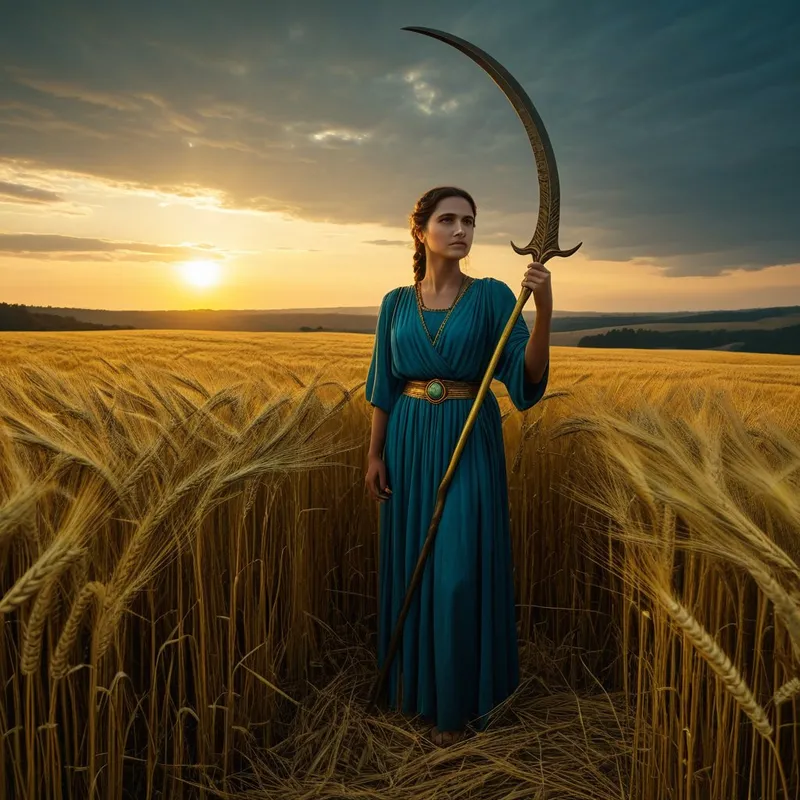
The Cultivation of the Self: Agriculture in the Dreamscape
The Somatic Echo
Before the image of a field forms, before the dream-logic names it agriculture, the body knows. It is a deep, resonant hum in the bones—a feeling of being both heavy and hollow, like fertile soil. There is a pressure in the palms, a phantom memory of gripping a tool. The breath slows, syncing to a rhythm older than thought: the inhale of potential, the exhale of release. In the gut, a slow churn, not of anxiety, but of patient, cellular processing. This is the somatic ground from which the dream of cultivation grows. It is the psyche announcing a season of work, where something must be buried, tended, and left alone in the dark until it is ready to break the surface on its own terms.
The Dreamer's Log (Case Vignette)
The dreamer stands in a vast, silent field at dusk, holding a single, obsidian-black seed. The soil is not earth, but a dark, metallic substance that feels both cold and alive. They kneel, press the seed into the ground, and immediately a ghostly, holographic projection of a giant, withered tree flickers above the planting site—its leafless branches cracking like static. They know, without being told, that this is the seed’s potential past, not its future. They cover it anyway, and a slow, warm rain begins to fall.
Alchemical Interpretation: The act of planting the "obsidian seed"—a core grief or frozen potential—while witnessing its withered ghost, is the psyche’s radical commitment to nurture a future different from the patterns of the past.

The False Lead
A dream of agriculture is not a simplistic metaphor for "career growth" or "planting an idea." To reduce it to a productivity hack is to mistake the sacred cycle for a transaction. This theme is not about forcing a harvest on demand; it is not the ego’s spreadsheet of effort and reward. The barren field does not signify mere "bad luck," nor does the abundant crop simply mean "success is coming." The terror here is deeper, more existential: it is the possibility that the soil of the Self has become fallow, or that we have been sowing seeds from a poisoned packet for decades, mistaking the familiar weed for a desired crop. The grief is for seasons lost, for harvests we were not present to gather.
Psychological Architecture
Here, Shadow work is the unglamorous task of composting. It requires gathering the fallen, rotting things—the failed projects, the humiliations, the unspoken regrets—and allowing them to decompose in the dark cellar of attention. You do not arrange this material; you surrender it to process. This is the antithesis of the curated self. The Individuation process at play is one of becoming the conscious steward of your own inner landscape. You are no longer a passerby, complaining of the weather or the quality of the fruit. You are the one who learns the acidity of your own soil, who recognizes which seeds are native to your soul and which are invasive species planted by others. It is a shift from being acted upon by internal seasons to participating in them with discernment. The fence you build is not to keep the world out, but to define the sacred ground where your own essence is allowed to grow wild and true.
Mythic Resonance
We see this eternal drama in the myth of Demeter and Persephone. It is not merely a story of spring’s return, but a precise map of the agricultural psyche. Demeter, the goddess of the harvest, does not simply protest her daughter’s abduction; she stops the world. She lets all growth die, forcing a negotiation with the deepest, most unseen realms (Hades). The myth shows us that true cultivation has a non-negotiable relationship with the underworld—with depression, fallow periods, and the nourishing dark. The harvest above is contingent on the sacred agreement with what is held below. Persephone herself becomes the embodied cycle: the seed-girl who descends and the queen who returns, integrating the knowledge of both worlds to make the grain grow.
Symbolic Nodes
- Barren/Parched Fields: Exhaustion of a psychic function; a call for fallow rest, not frantic effort.
- Rich, Dark, Tilled Soil: The psyche prepared and receptive; fertile unconscious material available.
- Sowing Seeds: Conscious investment of energy, intention, or a part of oneself into a potential.
- Waiting/Watching for Growth: The necessary, agonizing surrender of control during incubation.
- Harvest (Bountiful or Failed): The tangible results of inner work, or the consequences of neglected cycles.
- Rotted or Unharvested Fruit: Wasted potential, gifts not recognized or integrated.
- Agricultural Tools (Rusty or Sharp): The state of one's psychological tools—skills, disciplines, coping mechanisms.
- Rain/Irrigation: The influx of emotion, nourishment, or grace that enables growth.
- Weeds/Invasive Species: Unconscious patterns or foreign values that choke native growth.
Archetypal Resonance
The most active archetype in this theme is The Caregiver Archetype. This is not its shadow manifestation of smothering or martyrdom, but its essential, grounded core: the Nurturer and Protector of potential.
The Caregiver’s energy resonates perfectly with agriculture’s core because both are founded on a paradox: fierce protection paired with patient surrender. The somatic echo—the heavy, fertile hum—is the Caregiver’s embodied knowing, the "gut feeling" for what the land (the psyche) needs. This archetype does not force the seed to germinate; it creates the conditions—the right soil, the consistent moisture, the defended space—and then trusts the intelligence within the seed itself. Its alchemical potential lies in this transmutation of anxiety into attentive stewardship, and of ownership into sacred responsibility. It teaches that the highest form of power is not control over growth, but a profound commitment to its process.
The Alchemical Process
The alchemical transmutation here is Composting into Humus. The prima materia is all that feels wasted, shameful, or dead within you—your failures, heartbreaks, and naive hopes. The intense psychological heat and pressure are applied through the act of conscious recollection without judgment. You must gather these "rotten" memories and feelings into the vessel of your awareness and hold them there, not to relive the pain, but to witness them as necessary organic matter. The pressure is the sustained, uncomfortable truth that this decay is part of the cycle, not a mistake to be erased. The transformation occurs in the dark, silent patience between collection and integration. You do not do anything but contain. Slowly, through this contained attention, the elements break down. Their sharp edges soften; their toxic narratives lose potency. They are not eliminated but reconstituted into humus—the rich, dark, odorless substance that holds water and nutrients. This humus is the newfound psychic fertility, the resilient foundation of wisdom and empathy from which all future, conscious growth can spring. The terror of decay becomes the ground of sovereignty.

The Integration Protocol
Question 1: What in your life right now feels like a "barren field"? Instead of asking how to fix it, ask what this fallow ground is protecting, or what it needs you to stop doing so it can rest?
Question 2: Identify one "seed" you have planted—an intention, a relationship, a project. What is the "ghost of the withered tree" (the old pattern or fear) that appears over it? How can you nurture this seed differently than you nurtured those past patterns?
Question 3: Where in your psyche are you trying to force a harvest out of season? What would it mean to stop watching that plot so anxiously and tend to a different, more receptive part of your inner landscape instead?
Action 1 (Soil Test - Internal Grounding): For one week, each morning, place your hands flat on a surface (a desk, the ground, your knees). Close your eyes. Feel the solidity. Ask inwardly, "What is the condition of my inner soil today?" Don't seek an answer in words. Note the first somatic sensation—warmth, coolness, dryness, congestion. This is your daily ground report.
Action 2 (Seed Journal - Creative Expression): Take a small notebook. On each page, draw a simple, abstract shape to represent a "seed" currently within you—a hope, a fear, a memory. Don't label it with words. Use only color, texture, and form. Over the weeks, return to these pages and add to the drawings instinctively, allowing them to evolve as the "seed" does in your unconscious.
Action 3 (Ritual of Fallow Release): Find a small, natural object—a stone, a leaf, a handful of soil. Hold it and consciously project onto it one outdated expectation or exhausting effort you are ready to release. Go outside. Bury it, or place it gently at the base of a tree. Verbally state, "I return this to the cycle. I claim this space as fallow." Walk away without looking back.
Final Validation
This work is slow. It contradicts a world screaming for instant yield. To feel the ache of the fallow period, to sit with the buried seed and trust the dark, is a quiet rebellion of the highest order. It is valid to mourn the harvests you imagined but did not receive. That grief is the rain for the next planting. Your sovereignty is not seized in a single heroic act; it is cultivated, row by patient row, in the faithful rhythm of tending and letting be. You are both the land and the gardener. The harvest was never the only point; the dignity of the cultivation itself is the becoming.