
Bragi Myth Meaning & Symbolism
The myth of Bragi, god of poetry, whose words shape reality, born from a blood-oath and keeper of the transformative mead of inspiration.
The Tale of Bragi
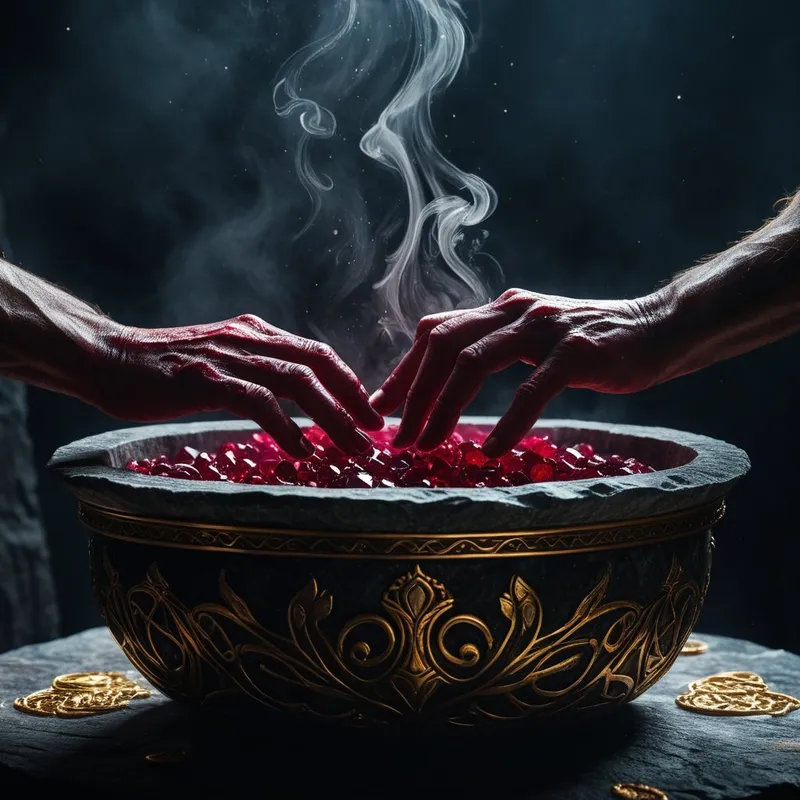
Hark, and let the silence of the hall be your cup. In the time before time was counted, when the worlds hung young upon the great tree Yggdrasil, a peace was forged in blood. The war between the Aesir and the Vanir had scarred the skies and salted the earth. Weary of the clash, the gods gathered. Not with weapons, but with a vessel. Into this great stone bowl, they let their divine essences drip—the bright, stern blood of Odin and Tyr, the rich, fecund ichor of Njord and Freyr. They swore an oath upon it, mingling their might and magic, sealing a truce that would birth a new age.
From this vessel of sacred truce, from the mingled blood of warring tribes, a figure was formed. Not forged in fire like a weapon, nor born of love like a child, but spoken into being. He was the living embodiment of the oath itself, the breath of reconciliation given form. They named him Bragi. His beard was long and wise like the roots of Yggdrasil, and when he opened his mouth, it was not mere words that emerged, but shapes—shapes of light and memory. His tongue was a carver of reality. He could sing a shield into being, chant a wound closed, or weave a story so potent it would outlive stone.
His hall was not of silver or gold, but of living ash, where the wind through the leaves provided the rhythm to his eternal verse. His wife was Idunn, she who holds the apples of youth, and in their union, the fleeting inspiration of the poet was wed to everlasting vitality. Bragi’s task was to greet the heroes who ascended to Valhalla. Not with a horn of mead first, but with a poem. He would recite their deeds, etching their mortal struggles into the immortal tapestry of song. To be forgotten by Bragi was a fate worse than death; to be remembered by him was to become a god in the minds of men.
But the source of his power, the wellspring from which all such poetry flows, has a darker tale. It is the Mead of Poetry, a liquid of such potency it can make a fool a sage and a coward a hero. This mead was not born of gentle fermentation. It was created from the blood of Kvasir, the wisest being, murdered by envious dwarves. Mixed with honey, it became a transformative draught, later stolen through cunning, trickery, and great peril by Odin. This mead, born of murder, theft, and sacrifice, is what Bragi serves in his hall. His most beautiful songs are rooted in a primal crime. His sweetest verses are distilled from blood and betrayal.
Cultural Origins & Context
The figure of Bragi emerges from the rich oral tradition of the Norse skalds—the poet-historians who were the living memory of their people. He is less the subject of a single, grand epic and more a pervasive presence, a personification of the art form itself. His myths are preserved primarily in the Poetic Edda and the later Prose Edda, where Snorri Sturluson codified the fading lore.
In a culture where reputation (orðstír) was the only immortality, the skald held immense power. He could cement a king's legacy or destroy it with a satirical verse. Bragi, as the divine patron of this craft, represents the sacred responsibility of the word. His origin from the peace-oath between the Aesir and Vanir underscores the societal function of poetry: it is a binding force, a means to transmute conflict into shared narrative, to create cohesion from chaos. The feast hall, where Bragi’s praises were sung, was the crucible of community, where identity was forged not just in battle, but in story.
Symbolic Architecture
Bragi is not merely a god who makes poems; he is the archetypal process of Creation through articulation. His birth from the mingled blood of two opposing divine families is the first and most profound symbol.
True creation often begins not in purity, but in the reconciliation of opposites, in the sacred vessel that holds our conflicts until they ferment into something new.
He symbolizes the voice that emerges from integration. The Aesir (order, sovereignty, sky) and the Vanir (fertility, magic, earth) represent fundamental psychic opposites—the conscious and the unconscious, the structured ego and the wild, instinctual self. Bragi is the child of their union, the "word made flesh" that can navigate both realms.
The Mead of Poetry is the core symbol of inspired consciousness. Its horrific origin story is crucial. Wisdom (Kvasir) is murdered; the raw material of genius is often trauma, loss, or a painful insight. This "blood" is then mixed with "honey"—the sweet, attractive form that makes the bitter truth palatable, communicable. Odin’s theft of it represents the immense effort, the psychological ordeal (he seduces a giantess, drills through a mountain) required to bring this transformative knowledge into the realm of the gods—into conscious awareness. Bragi, as the keeper and server of this mead, is the function of the psyche that takes this hard-won, stolen wisdom and turns it into beautiful, life-giving art and speech.
The Dreamer's Resonance
To dream of Bragi, or of his symbols, is to dream of the emergence of one's own authentic voice. It often occurs during periods of internal conflict or after a significant psychological "truce"—perhaps after integrating a shadow aspect or reconciling a long-held inner division.
- Dreaming of a Golden Harp or Rune-Carved Tongue: This points to a somatic feeling of a new capacity for expression. There may be a physical sensation in the throat chakra—a loosening, a warmth. The dreamer is being called to "speak their truth," but a truth that is beautifully crafted, that carries weight and melody.
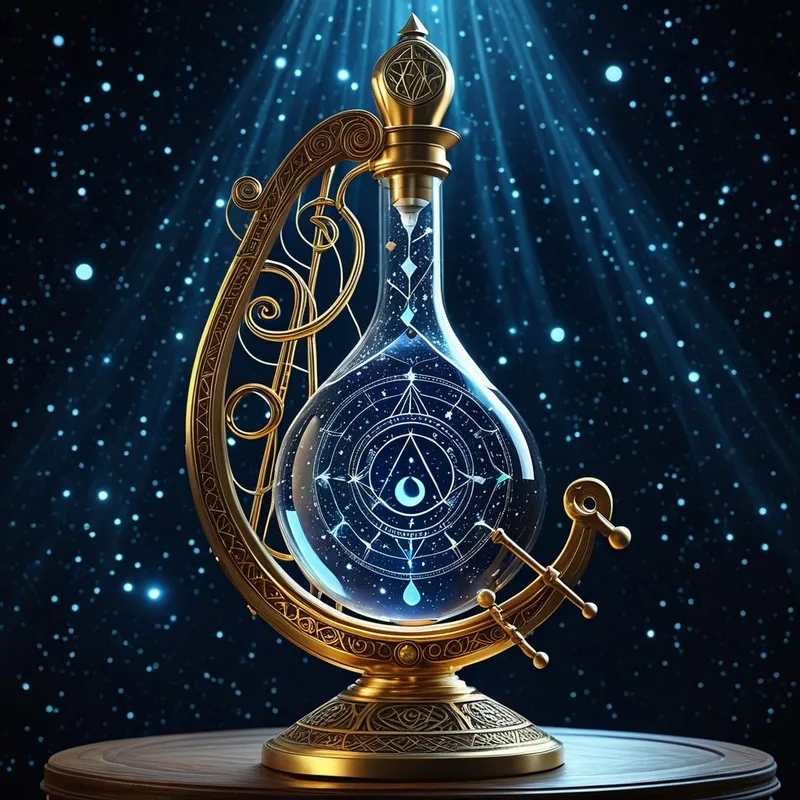
- Dreaming of a Vessel of Mingled Liquids (Blood and Honey, Water and Wine): This is the dream of the alchemical vessel itself. It signifies the dreamer's psyche is currently holding conflicting emotions, memories, or identities. The process is underway, but the final "poem" has not yet been formed. There may be feelings of being a container under pressure.
- Dreaming of Being Offered a Drink that Glows: This is an invitation to partake of the Mead of Inspiration. It suggests a readiness to receive insight, but the dream often tests whether the dreamer is worthy or prepared. Do they take the cup? Does it burn or enlighten? The reaction models the dreamer's relationship to their own creative power and the potentially disruptive truths it may reveal.
Alchemical Translation
The myth of Bragi is a precise map for the individuation process—the journey toward psychic wholeness. It models how we transform the raw, often painful material of our lives into the gold of conscious identity and creative contribution.
Stage 1: The Blood-Oath (Coniunctio Oppositorum). The modern journey begins with the inner war. We have our Aesir and Vanir—our disciplined ambition versus our need for rest and connection; our logical mind versus our emotional body. The "vessel" is the conscious act of holding these opposites in tension without letting one destroy the other. This is the hard work of therapy, reflection, or meditation. The oath is the commitment to one's own wholeness.
Stage 2: The Birth of Bragi (Emergence of the Transcendent Function). From this sustained tension, a third thing emerges—not a compromise, but a new creation. This is Bragi, the transcendent function. In psychological terms, it is the new attitude, the insightful perspective, the creative solution that could not have been predicted by either side of the conflict. It is the moment you write the poem that explains your pain, or find the words that finally bridge a misunderstanding. It is your personal voice, born of your unique struggles.
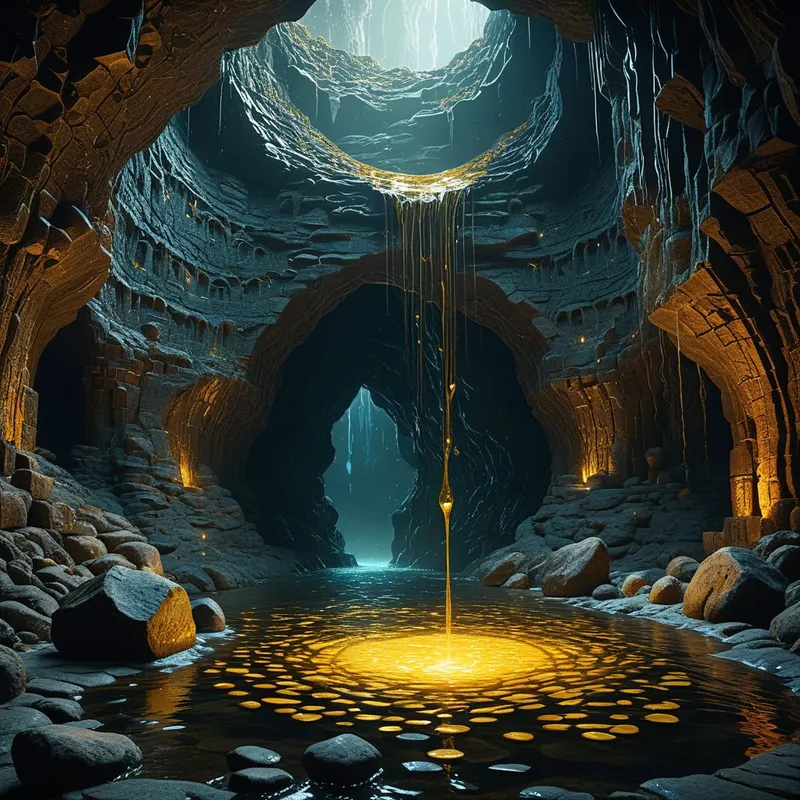
Stage 3: Brewing and Serving the Mead (Transmutation and Contribution). This is the ongoing work. We all have our "Kvasir's blood"—our core wounds, our moments of betrayal, our foolish mistakes. The alchemical task is to not let them fester as poison, but to consciously, courageously (like Odin) retrieve them, mix them with the "honey" of our love, our humor, our compassion, and distill them into our own Mead. This is the act of creating art, offering wise counsel, parenting with hard-earned patience, or leading with integrity forged in failure. Bragi, as the inner creator, then serves this mead—not to glorify the past trauma, but to nourish the present and future self and community.
The ultimate goal is not to become a god on a throne, but to become the hall itself—the space where the raw materials of experience are forever being sung into meaning, where every scar has a verse, and every joy, a refrain.
Associated Symbols
Explore related symbols from the CaleaDream lexicon:
- Presentation
- Instrument
- Microphone
- Singer
- Speaker
- Musician
- Gallery
- Exhibit
- Conductor
- Pierced Tongue
- Sodalite Ring
- Lively Musician
- Musical Score
- Electric Guitar
- Recording Studio
- Violin Bow
- Guitar Pick
- Clarinet
- Accordion
- Clavichord
- Bowed Psaltery
- Mystical Theremin
- Sleek Keytar
- Forgotten Baglama
- Harmonizing Theremin
- Echoing Cello
- Futuristic Synthesizer
- Guitar Hero Controller
- Vinyl Records
- Guitar Picks
- Festive Music
- Bard's Lute
- Mozart's Sheet Music
- Expressionist Color Palette
- Thematic Soundtrack
- Brightly Colored Utensils
- Electric Piano
- Violin
- Musical Saw
- Plectrum
- Vintage Guitar
- Accordion Dreams
- Magic Fretboard
- Vintage Music Room
- Street Musician
- Live Music Venue
- Billboard Advertisement
- Concert Hall
- Harmonizing Chords
- Rhyme
- Narration
- Mediator