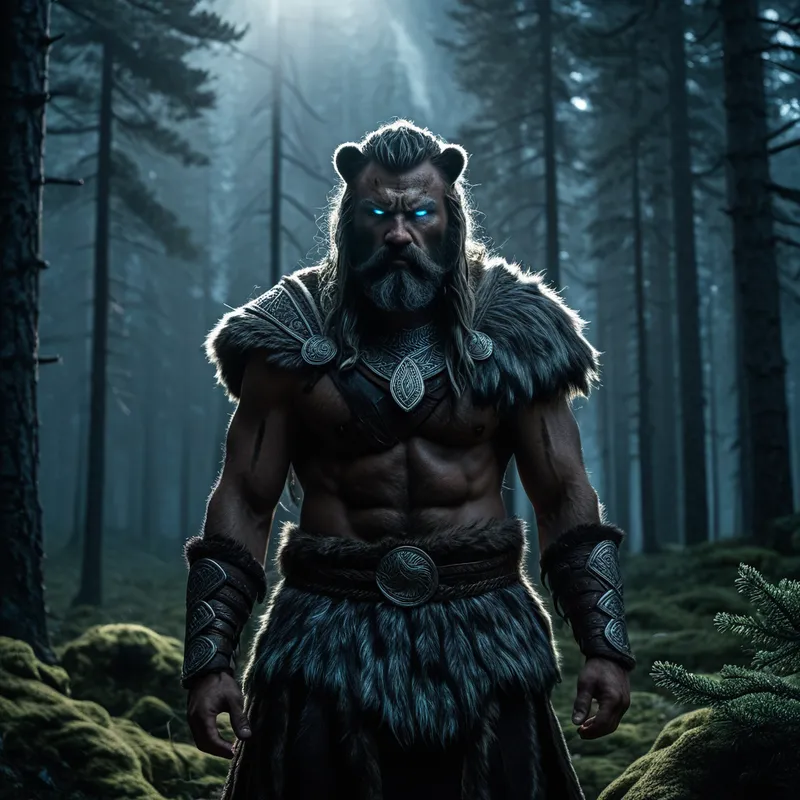
Berserkers Myth Meaning & Symbolism
Warriors who channeled the sacred fury of the bear and wolf, becoming one with the wild god to fight beyond human limits in a trance of ecstatic terror.
The Tale of Berserkers
Listen. The wind does not howl through the pines of the north—it sings. It sings of iron and frost, of the salt spray on the prow, and of the silence that comes before the storm. But there is another song, older and deeper, that rides beneath it. It is the song of the bear from the mountain’s heart, the wolf from the forest’s shadow. And on the eve of battle, certain men learned to sing it back.
They were not like other warriors. In the fire-lit hall, they might sit quiet, their eyes holding a distance, as if listening to a call only they could hear. They wore the pelts, not as mere cloaks, but as second skins. The Berserker wore the shaggy hide of the bear; the Úlfhéðinn the sleek grey of the wolf. They were the chosen, the oath-bound to the one-eyed god who hangs on the Yggdrasil. To Odin, who traded an eye for wisdom and himself knows the ecstasy of the fury.
When the shield-wall formed, a hush would fall. Then, you would see them. At the rear, they would begin to shake. Not with fear, but with a gathering force. Their teeth would gnash, their fingers claw at their own shields until the wood splintered. They would roar, and the sound was not human—it was the cracking of ice, the boom of thunder, the guttural challenge of the beast. Their eyes would roll back, or blaze with a light that held no reason.
Then they would come. Not in formation, but as a force of nature unleashed. They crashed into the enemy line like a tidal wave of fur and iron. Swords and axes bit into them, and they seemed not to feel it. They fought with a terrible, beautiful abandon, strength flowing into them as if from the earth and sky itself. They were the storm made flesh, the forest’s wrath given a sword. When the fury left them, they would fall, spent and trembling, back into the shape of men, weaker than children, their humanity returned as a heavy cloak. The battle-song was over. The bear had returned to its mountain, the wolf to its den, leaving only exhausted men and legends in its wake.
Cultural Origins & Context
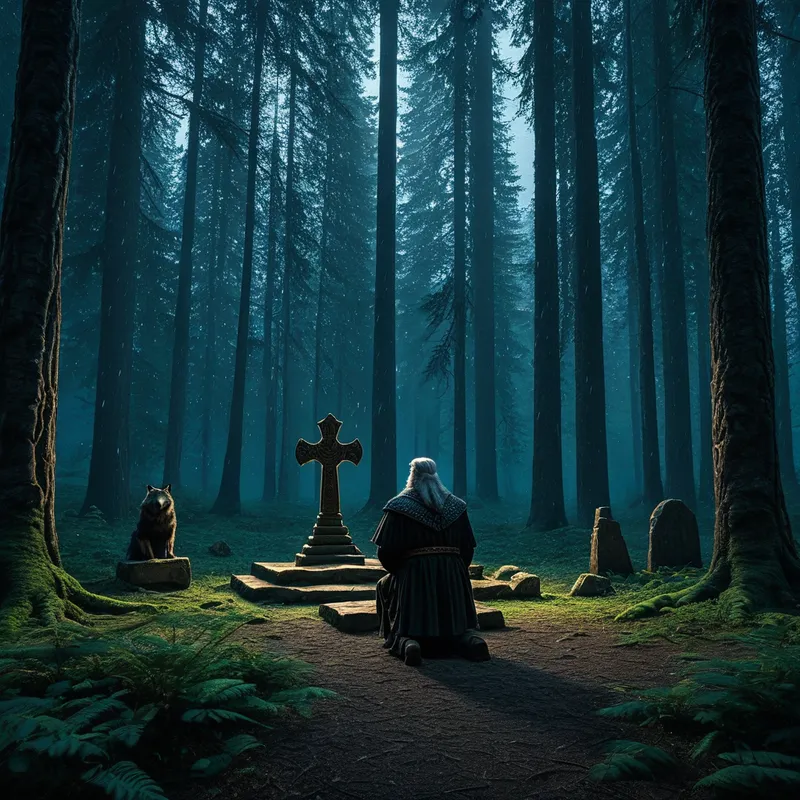
The Berserker is not merely a literary trope, but a deeply embedded historical and religious phenomenon within the Old Norse world. References are found in sagas, skaldic poetry, and even in the wary accounts of neighboring cultures. These warriors belonged to elite retinues, often the personal guards of kings and chieftains, functioning as both terrifying shock troops and as sacred practitioners of a dangerous cult.
Their practice was intrinsically linked to the cult of Odin, the god of the exalted dead, of poetry, and of the ecstatic, shamanistic state known as ódhr (fury, inspiration). The Berserker was an initiate into this mystery—a human vessel for the god’s wild, untamed aspect. Their transformation was a ritual act, likely preceded by specific chants, dances, or the consumption of psychoactive substances. They were not seen as merely insane, but as inspired, filled with a divine and terrible power. In a culture that valued self-control (hjálmr) in the face of fate, the Berserker represented its sacred, controlled inversion: a total surrender to a force greater than the self, for the protection of the community. Their fury had a purpose, a channel, and a price.
Symbolic Architecture
At its core, the Berserker myth is a profound map of the relationship between the human psyche and the raw, untamed forces of nature that reside within it. The bear and wolf pelts are not disguises, but symbols of a conscious invocation.
The Berserker does not become the animal; he allows the animal—the primal, instinctual Self—to become him, temporarily dissolving the ego in service to a greater totality.
The Berserkergang represents the moment when the carefully constructed persona of the civilized individual shatters, revealing the archetypal substrate beneath. This is not a regression, but a ritualized possession. The rage is not petty anger; it is the sacred fury of life itself fighting against entropy, stagnation, and death. It is the force that breaks frozen patterns, both on the battlefield and within the soul. The subsequent exhaustion and weakness symbolize the necessary return, the re-integration of the ego after its transcendent journey. One cannot live perpetually in the fury; the human vessel must recover.
The Dreamer's Resonance
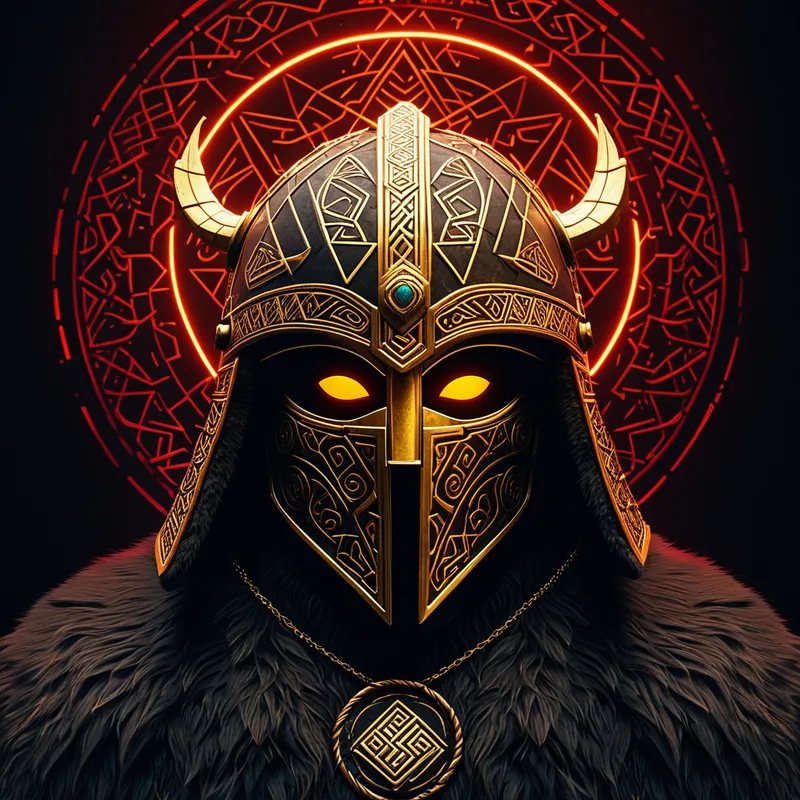
When the Berserker pattern erupts in modern dreams, it rarely appears as a historical Viking. It manifests as overwhelming, uncontrollable rage—at a boss, a family member, or a faceless system. The dreamer may find themselves screaming with a voice that shakes rooms, or possessing impossible strength to break down walls. They may transform into an animal or see their reflection as a beast.
Somatically, this is the psyche’s signal of a dammed-up life force. It indicates a Shadow aspect—often a potent, instinctual power like righteous anger, passionate will, or territorial drive—that has been repressed, denied, and labeled "unacceptable." The body-dream is screaming to move, to act, to express. The Berserker dream is not a call to violence, but a critical alarm: a vital part of the Self is being held in a prison of politeness, fear, or shame, and its pressure threatens to break the conscious personality apart. It is the dream of the caged bear.

Alchemical Translation
The individuation process modeled by the Berserker myth is one of sacred channeling, not of eradication. The goal is not to kill the inner bear, but to learn its language, to make an oath to it, and to learn when and how to invoke its power consciously.
The modern alchemy lies in transforming blind, reactive rage into focused, life-affirming force—to become a conduit for the primal Self, not its victim.
The first step is recognition: acknowledging the seething fury within, the "bear pelt" folded in the dark corner of the soul. The second is ritual containment: creating a symbolic "shield-wall" of practice—through art, physical exertion, conscious dialogue, or therapy—within which the force can be safely met. The third is the controlled invocation: learning to call upon that fierce energy not to destroy, but to protect boundaries, to break through psychological barriers, to fuel creative endeavors, or to defend one’s core values with passionate conviction. The final, crucial step is the return and integration: the post-fury humility, the tending of the exhausted human self, and the reflection on what the power was truly needed for. In this cycle, the destructive potential of the shadow is transmuted into a sacred, protective strength. One becomes, not a mindless beast, but a sovereign who has tamed the wild god within.
Associated Symbols
Explore related symbols from the CaleaDream lexicon:
- Bear — The primary totem of the Berserker, representing immense primal strength, hibernation (latent power), and the solitary, protective fury of the wild.
- Wolf — The pack-hunter spirit of the Úlfhéðinn, symbolizing fierce loyalty to the clan, strategic ferocity, and the untamed instincts of the forest.
- Fury — The ecstatic, trance-like state of the Berserkergang, representing the overwhelming release of repressed life force and instinctual power.
- Shadow — The denied, animalistic aspect of the self that the Berserker ritualistically embodies, making the unconscious conscious through extreme expression.
- Ritual — The sacred practice of invocation through chant, pelt, and oath that transforms mere violence into a divine possession, framing the chaos.
- Sacrifice — The offering of one's civilized ego and physical well-being to the god/goddess of fury, a temporary death for a greater power.
- Warrior — The archetypal container for this energy, one who engages directly with conflict and chaos, both externally and within the psyche.
- Mask — The animal pelt as a sacred interface, a tool for shape-shifting and becoming the other, allowing the human to channel the archetype.
- Rage — The raw, undifferentiated emotional fuel that, when sanctified by ritual intent, becomes the sacred fury of transformation.
- Forest — The primal, untamed realm of the psyche where these instinctual powers dwell, the dark wood outside the ordered village of the ego.
- Odin — The All-Father who grants and governs this ecstatic state, representing the paradoxical union of wild frenzy and poetic wisdom.
- Norse Rune Stone — The enduring marker of this sacred contract, etched with oaths to the gods and memorials to those who walked the path of the bear.
- Werewolf
- Berserker Axe
- Werewolf's Claw
- Werewolf Bite
- Rugby Ball
- Guardian Bear
- Animal Hide
- Bear Claw Necklace
- Animal Skins
- Animal Hide Cloak
- Bear Claw Pendant
- Bear Claw
- Buff
- Frenzy