
Baron Samedi Myth Meaning & Symbolism
The story of the crossroads deity who governs the passage between life and death, demanding irreverent courage and the acceptance of life's final, sacred joke.
The Tale of Baron Samedi
Listen, and let the night air carry the tale. Where the road splits, where the way forward is lost and the way back is forgotten, there the ground grows thin. This is the place of the Loa. And of them all, none claims this liminal dust more fiercely than he who is called Baron.
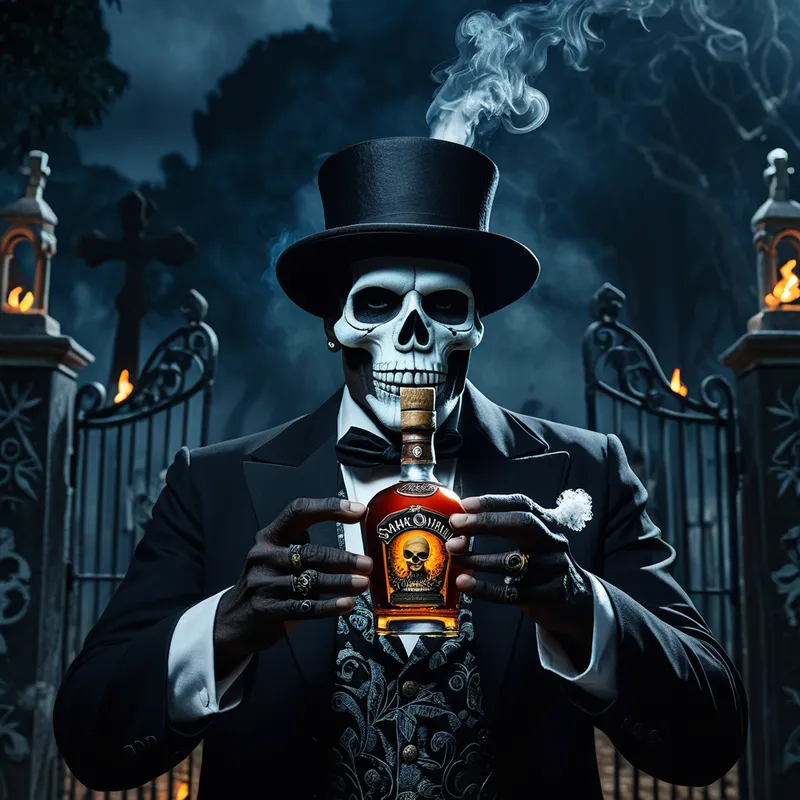
He does not arrive with solemn silence, but with the raucous clamor of life lived to its ragged edge. You hear him first in the clink of a bottle, the scrape of a match, the deep, rattling laugh that echoes from an empty tomb. He steps from the shadows of the crypt, a dandy of the damned. His black tailcoat is impeccable, his top hat tilted at a defiant angle. White powder cakes his face, not to beautify, but to mock the flesh, revealing the grinning skull beneath. Dark glasses hide eyes that have seen the other side of the sun.
He is the master of the crossroads, the final gatekeeper. When a soul trembles on the threshold, caught between the warmth of the living world and the cool silence of Ginen, it is the Baron who decides if the passage is clear. He demands payment—not in somber prayers, but in rum, cigars, and spicy foods. He requires respect, but despises piety. He is obscene, cracking jokes about the most sacred of transitions, dancing a jerky, angular yanvalou on graves.
The conflict is not one of armies, but of essence. Humanity fears his domain, dressing death in quietude and shadow. But the Baron will have none of it. His rising action is a festival at the cemetery gates. He teaches that to truly live, one must sit with him, share his drink, and acknowledge the joke: that life is a frantic, beautiful dance atop a coffin. The resolution he offers is not an end, but a transformation. He holds the key to the cemetery, and with a wink and a shot of clairin, he can lock the gate, holding death at bay for a time, or swing it wide with a celebratory shout. To know him is to feel the coarse grain of the coffin wood and the vibrant pulse of blood in the very same moment.
Cultural Origins & Context
The myth of Baron Samedi is a powerful spiritual synthesis born in the crucible of the African Diaspora, specifically within the Haitian Vodou tradition. His roots are tangled in the soil of West and Central African cosmologies, where deities of the earth, death, and ancestral wisdom—such as the Ori and various Egungun—were revered. Transported across the Atlantic under the brutal system of slavery, these spirits encountered and fused with the imagery and pressures of colonial Catholicism and the harsh realities of plantation life.
Baron Samedi, as a named Ghede Loa, emerged as a master of psychic survival. He was not whispered about in churches but shouted for in secret hounfours and at gravesides. His myth was passed down not through written texts but through ritual possession, song, drumming, and oral narrative. The society that forged him was one intimately acquainted with death—through violence, disease, and oppression. Baron Samedi provided a way to confront that omnipresent force not with cowed submission, but with defiant familiarity and even humor. He gave the people a spiritual technology to negotiate with mortality itself, to protect the journey of the soul, and to reclaim agency in the face of the ultimate unknown.
Symbolic Architecture
Baron Samedi is the ultimate archetype of the threshold. He is not Death as an abstract end, but as the necessary process of change, the guardian of the space between all states of being: life/death, conscious/unconscious, order/chaos.
He represents the psyche's ability to face its own dissolution with ironic detachment, discovering that within the skull's grin lies the secret to authentic vitality.
His skull-face symbolizes the stripping away of persona and ego, revealing the bare architecture of existence. The top hat</ab title> and cane are the trappings of individuality worn even into the void, a statement that style and attitude transcend even finality. His crude humor and lust for life's pleasures are a profound philosophical stance: to fully accept death is to be liberated into a more intense, unapologetic engagement with life. He is the shadow that makes the light meaningful, the end that gives the story its shape.
The Dreamer's Resonance
When the pattern of Baron Samedi manifests in modern dreams, the dreamer is navigating a profound psychic initiation. This is not about literal death, but about the death of an old identity, a defunct life phase, or a crumbling belief system.
Somatically, one might dream of feeling trapped in a coffin-like space yet feeling an unexpected urge to laugh, or of meeting a strangely attractive yet terrifying figure at a crossroads in a cityscape. Psychologically, this signals a confrontation with the Shadow in its most potent form: the part of us that mocks our pretensions, that knows our time is limited, and that urges us to stop taking ourselves so seriously. The dream is an invitation from the psyche's own interior gatekeeper to surrender what is dying, to pay its price (often in sacrificed pride or outdated attachments), and to pass through to a renewed state of being. Resistance to this figure in a dream often manifests as paralysis or terror; acceptance can bring a shocking wave of relief and dark humor.
Alchemical Translation
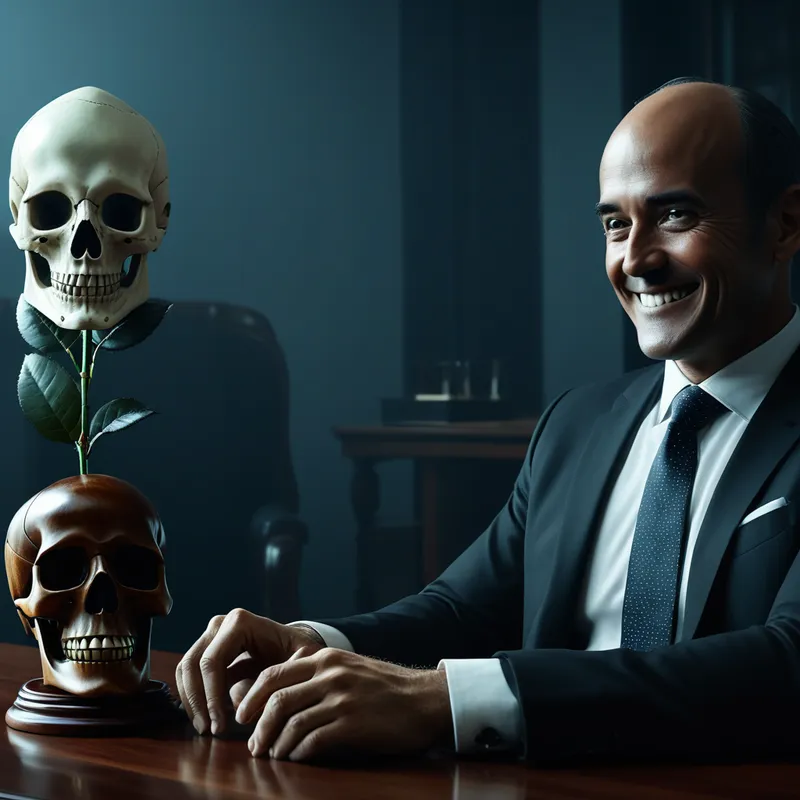
The myth of Baron Samedi models the alchemical stage of nigredo—the confrontation with the black, formless mass of the unconscious, the rotting of old matter to make way for the new. The individuation process requires us to become the master of ceremonies at our own symbolic funeral.
The core transmutation is the conversion of mortal fear into existential courage, and of morbid fixation into life-affirming irreverence.
The modern individual must go to their own internal crossroads—the point between a stale past and an uncertain future. There, they must negotiate with their inner Baron. This means consciously acknowledging mortality, finitude, and failure not as enemies, but as the defining contours of a meaningful life. It involves "paying the Baron" by sacrificing the ego's need for control and perfection, by indulging in authentic desire, and by embracing the absurd. The triumph is not in avoiding the grave, but in learning to dance on it. To integrate this Loa is to gain the key to one's own psychic cemetery, able to respectfully lay to rest what no longer serves, and to protect the vibrant, sacred spark of one's authentic life from being prematurely buried by societal expectations or personal fear.
Associated Symbols
Explore related symbols from the CaleaDream lexicon:
- Crossroads — The central symbol of choice, fate, and meeting between worlds, where Baron Samedi holds court and determines the direction of souls.
- Death — The raw material of his domain, which he reframes not as an end but as the ultimate transformative passage and a reason for intensified living.
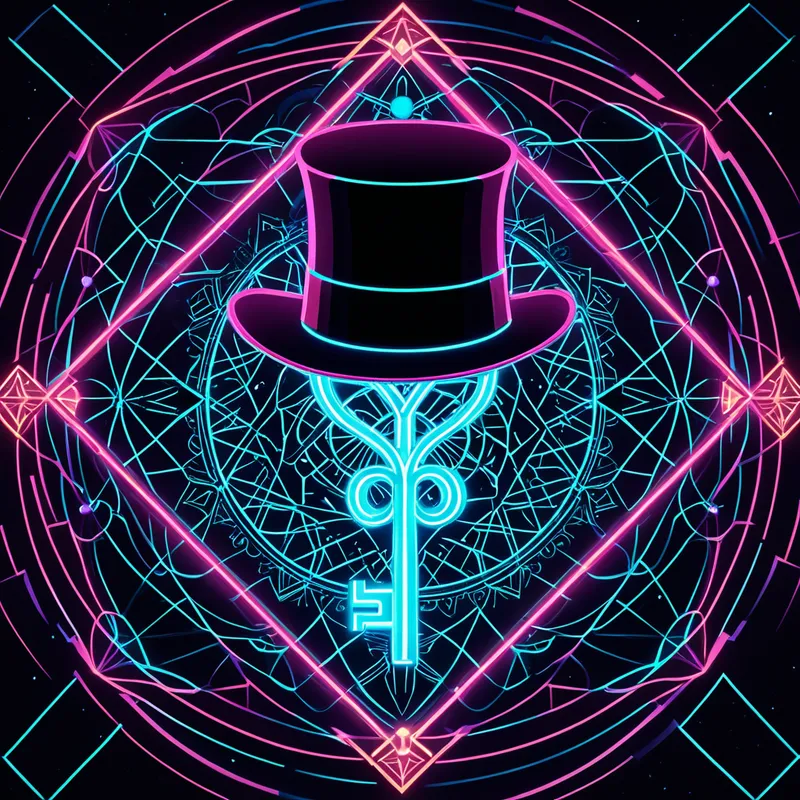
- Key — Represents Baron Samedi's authority to unlock or lock the cemetery gate, symbolizing control over transitions, secrets, and liberation.
- Mask — His skull-face is the ultimate mask, revealing the truth beneath social personas and reminding us that identity itself is a performance before the void.
- Ritual — His worship requires specific, earthy offerings (rum, cigars), modeling that profound transformation is accessed through concrete, sensory acts.
- Spirit — He embodies the ancestral spirit that is irreverent, demanding, and intimately connected to the community's relationship with its past and its mortality.
- Trickster — Baron Samedi is a classic trickster archetype, using humor, obscenity, and chaos to disrupt solemnity and reveal deeper truths about life and death.
- Door — The cemetery gate he guards is the final door, representing all thresholds of psychological and existential change that require courage to pass through.
- Dance — His jerky, provocative dance is a ritual of defiance and celebration, a physical embodiment of finding rhythm and vitality in the face of decay.
- Bone — The ultimate symbol of what remains, the stripped-down, essential truth and structure that persists after all else has fallen away.