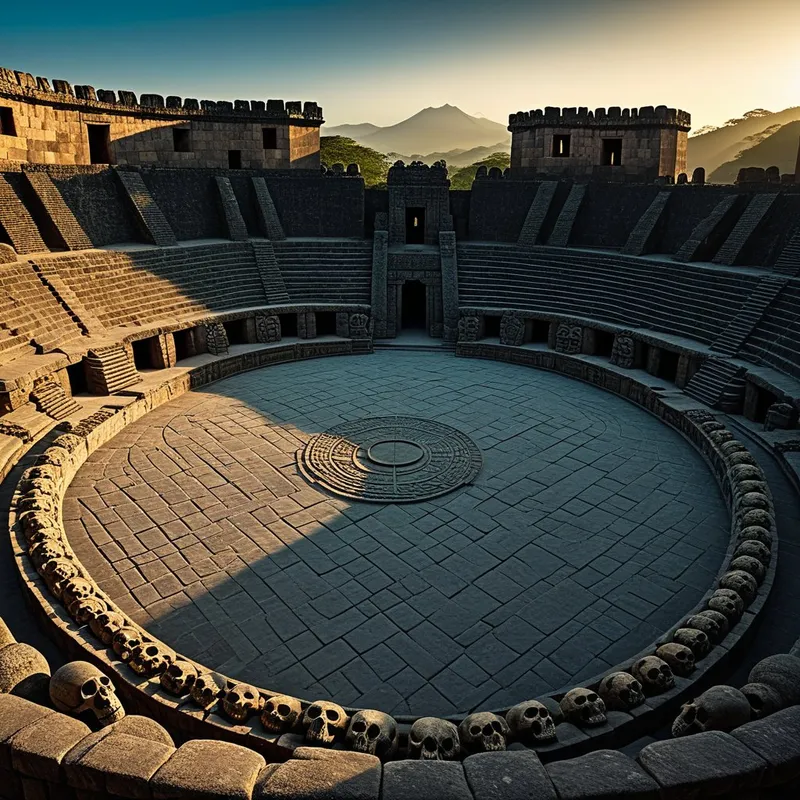
Ballcourt Myth Meaning & Symbolism
A sacred game of life and death, where the movement of the sun is decided by divine sacrifice on the court of fate.
The Tale of Ballcourt
Listen, and hear the echo of the rubber ball on stone. It is not a game for sport, but a game for the world. In the time before time, when the sky was dark and the gods were restless, the great lords of the underworld, the Xibalba, grew jealous of the noise from the world above. They heard the thunderous play of the Hero Twins' father and uncle, the arrogant ballplayers Hun Hunahpu and Vucub Hunahpu, and sent a summons disguised as an invitation to a glorious match.
The brothers descended the treacherous stairs into the blackness, failing every test of the Xibalbans. They were tricked, humiliated, and finally sacrificed. The head of Hun Hunahpu was placed in the fork of a barren calabash tree, which miraculously bore fruit. From this tree, the daughter of a Xibalban lord, Xquic, was drawn. She reached for the fruit, and the skull of Hun Hunahpu spat into her hand, impregnating her with destiny. She fled the underworld and gave birth to the new Hero Twins, Hunahpu and Xbalanque.
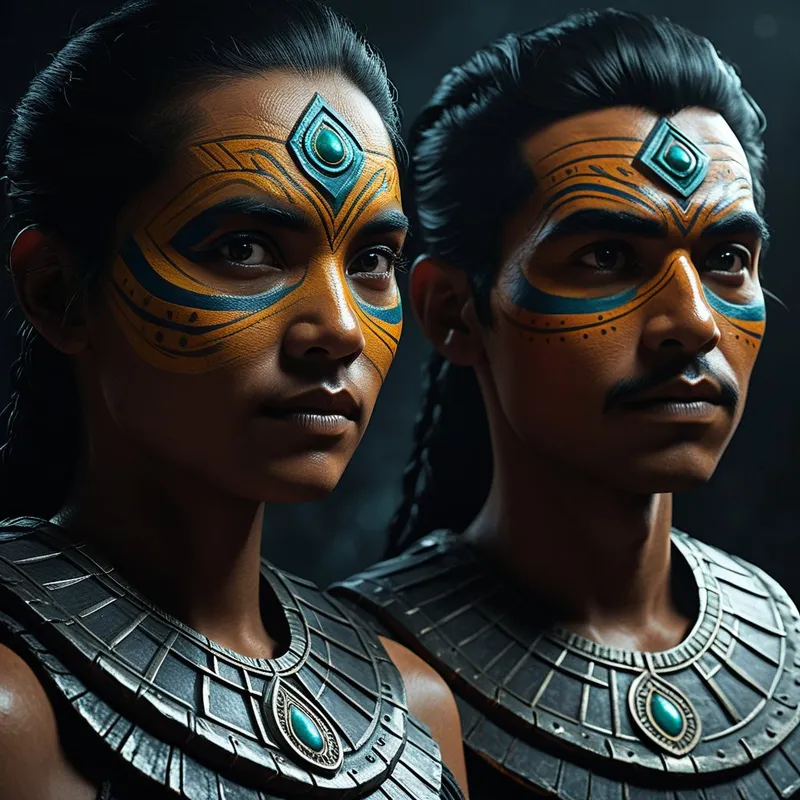
These boys were born to play. They grew mighty, clearing forests with their blows, their ball echoing like a promise of vengeance. Again, the lords of Xibalba heard the sound and issued their challenge. But these Twins were cunning. They sent a mosquito ahead to learn the Xibalbans' names and weaknesses. They survived the Houses of Gloom, Cold, Knives, Jaguars, and Fire, not by brute force, but by wit and magic.
Finally, they stood on the ballcourt of Xibalba, a sunless arena of black stone and whispering ghosts. The game began. The ball was the skull of their father, enchanted to fly true. They allowed themselves to be defeated, to be sacrificed. On the killing stone, their bodies were dismembered and their bones ground into powder and cast into a river. But from the waters they were reborn, first as catfish, then as ragged beggars who performed miraculous dances—burning houses and restoring them, sacrificing each other and returning whole.
Amazed, the lords of Xibalba demanded to be part of this magic. "Sacrifice us!" they cried. "Bring us back to life!" The Twins obliged, but when they sacrificed the proud lords, they left them dead. The order of the cosmos was overturned. The Twins ascended from the darkness, not as conquerors, but as the sun and the moon. Their father was resurrected as the Maize God, and the ballgame was established as the sacred channel where life, death, and rebirth eternally play out their drama.
Cultural Origins & Context
This myth, preserved in the K'iche' Maya text the Popol Vuh, was not mere entertainment. It was the foundational narrative for the ritual ballgame played across Mesoamerica for millennia, from the Olmec to the Aztec. The game, known as Ōllamaliztli in Nahuatl, was a central civic and religious ceremony. The ballcourt itself, the tlachtli, was a cosmogram—a model of the universe. Its long alley represented the path of the sun through the underworld at night, and the two end zones were portals to the celestial and subterranean realms.
The myth was likely recited by priests and elders during festivals and before major games. Its function was profound: to explain the necessity of ritual sacrifice for cosmic and agricultural renewal. The decapitation and dismemberment in the story mirrored the harvesting of maize and the letting of blood, the precious water-of-life that sustained the gods and, by extension, the world. The players, often captives of war, re-enacted the Hero Twins' journey, their fate on the court deciding not a score, but the balance of the cosmos.
Symbolic Architecture
At its heart, the Ballcourt myth is about the necessary confrontation with the Shadow in its most absolute form: death, decay, and the tyrannical powers of the unconscious (Xibalba). The ball, impossible to handle with hands or feet, represents the elusive, bouncing problem of fate, destiny, or the soul's purpose. It is the volatile core of one's life, which must be kept in motion through skill, sacrifice, and relentless effort.
The game is not won by avoiding the underworld, but by descending into it, being broken apart, and learning its rules so completely you can rewrite them.
The Hero Twins embody the archetypal process of conscious development. They are not invulnerable gods; they are tricksters who use intelligence, adaptability, and the acceptance of temporary defeat. Their ultimate sacrifice and resurrection symbolize the alchemical solve et coagula—dissolve and coagulate—the dismantling of the old, arrogant ego (represented by their father) and its reconstitution into a higher, more resilient form of consciousness (the sun, moon, and fertile maize).
The Dreamer's Resonance
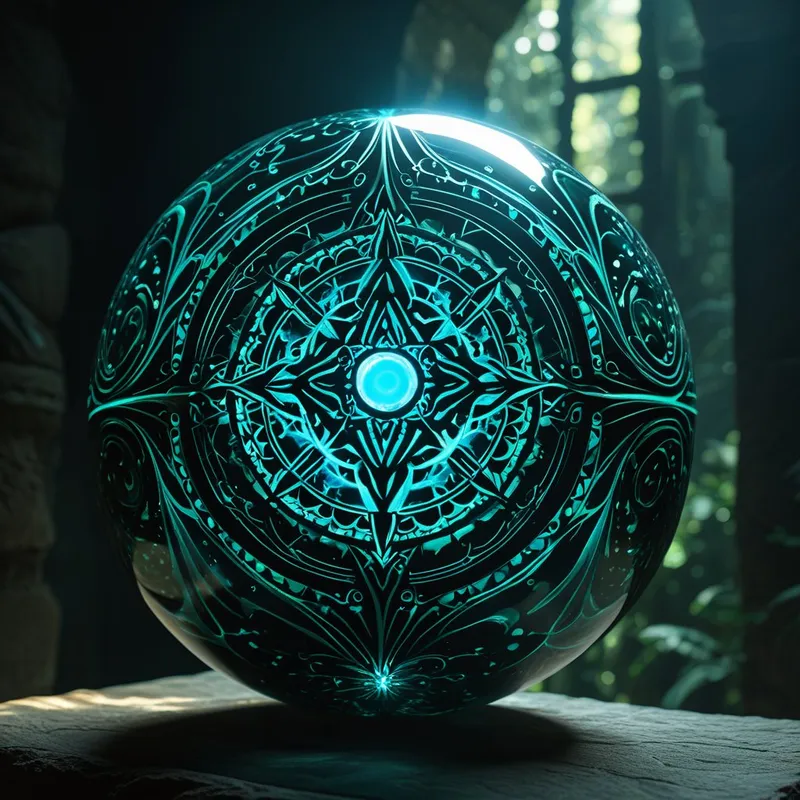
When this myth stirs in the modern psyche, it may manifest in dreams of being in a high-stakes competition or test where the rules are unclear and the opponents are faceless authorities or internal critics. The dreamer might feel they are playing with a heavy, animate object (the ball/skull) that holds immense consequence. The somatic sensation is often one of dread mixed with a driven, ritualistic focus—a feeling that one must perform perfectly in an arena of judgment.
This is the psyche signaling a profound initiation. The dream-ego is being called to face its own Xibalba: a depression, a life crisis, a buried trauma, or a period of intense failure. The dream ballcourt is the psychic container where this confrontation must happen. The feeling of being dismembered in the dream, while terrifying, points directly to the mythic pattern of necessary dissolution before renewal. The psyche is rehearsing the death of an old identity to make way for a new one.
Alchemical Translation
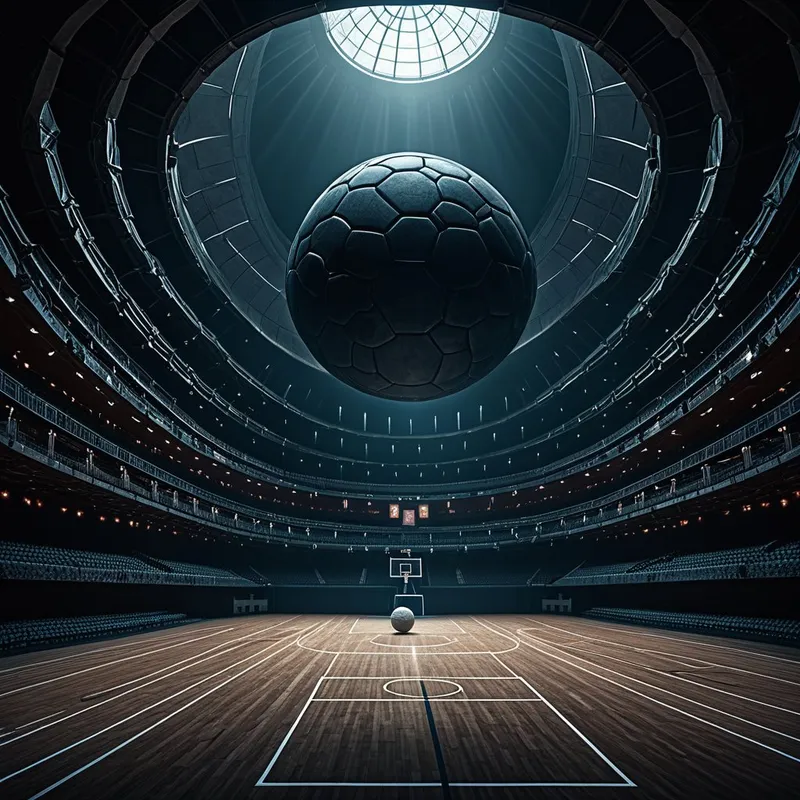
For the individual, the Ballcourt myth maps the path of individuation. The first step is the "call from Xibalba": a life event that shatters our comfortable worldview and drags us into a confrontation with what we have denied—our shadow, our grief, our limitations. This is the defeat and sacrifice of the initial, naive ego.
The second phase is the descent and the game itself. We must learn the rules of this dark new realm (understanding our pain, our patterns) not to submit to them, but to master them through cunning and patience (therapy, introspection, creative expression). We must allow ourselves to be "ground to powder"—to fully feel the breakdown, without resistance.
The rebirth is not a return to what was, but a transmutation into what is essential. The powdered bones become the catfish, the flexible creature of the deep, and then the dancing magician who can destroy and restore.
Finally, the alchemical triumph is not the destruction of the dark lords, but their integration. The oppressive inner authorities (the critical parent, the tyrannical boss within) are not killed but transformed through insight. Their energy is reclaimed. The ego, once a solitary player, now ascends as part of a reconciled whole—the solar consciousness that can see in the light, and the lunar consciousness that can navigate the dark. The individual becomes the court, the player, and the ball, a self-contained system where life's struggles are seen as sacred play, moving the sun of awareness across the inner sky.
Associated Symbols
Explore related symbols from the CaleaDream lexicon: