Bag End Myth Meaning & Symbolism
The myth of a humble, perfect home that anchors a world of adventure, and the hero who must leave it to save it.
The Tale of Bag End
Listen, and hear the tale of the Hill, the Door, and the Hearth that anchors the world.
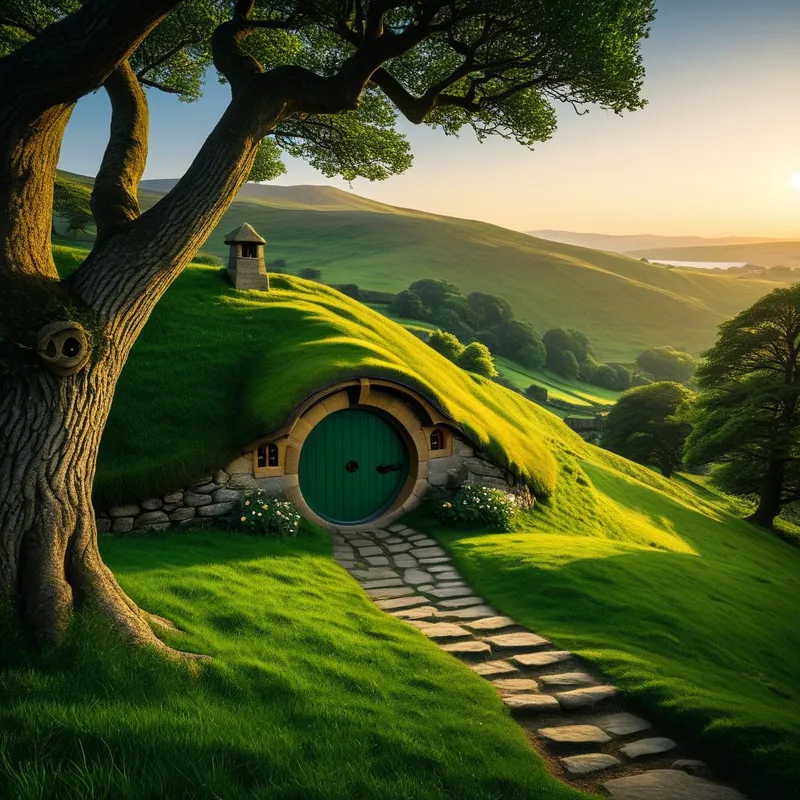
In the quiet, rolling green land of The Shire, under the very eaves of the world, there lay a hill. Not a grand mountain, nor a jagged cliff, but a gentle, perfect hill, clad in grass and flowers. And in its side was a door. A perfectly round door, like a porthole into the heart of the earth, painted a deep, welcoming green. This was Bag End.
Within was not a cave, but a world in miniature. Halls tunneled deep and warm, lined with polished wood and bright paint. The air smelled of pipe-weed, baking bread, and old paper. Every room was a vessel of comfort: pantries that never emptied, cellars that held vintages of peace, a study where maps whispered of distant places, and a hearth whose fire was a small, defiant sun against the gathering dark of the wider world. Here dwelt Bilbo Baggins, a soul content with the music of his kettle and the turning of his own seasons.
But the world beyond the round door does not respect perfection. It sends winds, and with the wind came a knock. Not a neighborly tap, but the thunderous knock of fate in the form of a wandering Wizard and a company of displaced Dwarves. They spoke of dragons, of lost gold, of a mountain stolen. They sang of roads that went ever on, and their song was a hook in Bilbo’s heart he never knew he had. The conflict was not of swords, but of souls: the deep, gravitational pull of the known hearth against the terrifying, melodic call of the unknown path.
The hero of this tale is a reluctant one. He left his handkerchiefs and his armchair, stepping over his threshold without a hat or a walking stick, his heart a turmoil of regret and a faint, kindling spark of something else—Tookishness. His journey was long, through spiders’ lairs and elven dungeons, across plains and under mountains. Yet, in every dark moment, the memory of Bag End was his compass. It was the star he steered by, the promise of a world still right, still ordered, still home. He faced the dragon not for glory, but for the right to return to a quiet hill.
And return he did, though changed, bearing not just treasure but a golden ring of terrible weight. The homecoming was sweet, yet the sanctuary was now also a vault for a secret. Years later, the burden passed to his heir, Frodo. The knock came again. The hearth-fire had to be left to sputter, the door closed and locked, not to keep danger out, but to let the danger within be led away. The final, most profound act of caring for Bag End was to abandon it, to carry its essence—its peace, its simplicity—as a shield into the very heart of the Shadow, so that such a place might continue to exist at all.
Cultural Origins & Context
This is not a myth of the Elder Days, sung by Elven minstrels of Valinor. It is a distinctly Hobbitish legend, passed down not in grand lays but in after-dinner tales, genealogies, and the local history of the Westfarthing. Its primary chronicler was Bilbo and Frodo Baggins themselves, in the Red Book of Westmarch. For Hobbit society, a culture that venerates comfort, family, and good tilled earth above all else, Bag End represents the apotheosis of their values. It is the ultimate smial—not just a home, but a self-contained universe of order and plenty.
The societal function of this tale is foundational. It answers the Hobbit’s deepest, most unspoken fear: that their love of home is a form of cowardice. The myth reframes it. It says the love of home is not a weakness, but the very source of strength. It is what makes one brave enough to leave it. The story validates the centrality of the hearth while also providing a cultural narrative for those rare, unsettling souls who feel the “call of the road.” It tells them they are not broken; they are the protectors. The myth is told to children to explain why some uncles go on adventures, and to adults to remind them that the peace of the Shire is not an accident, but a legacy bought with quiet, reluctant courage.
Symbolic Architecture
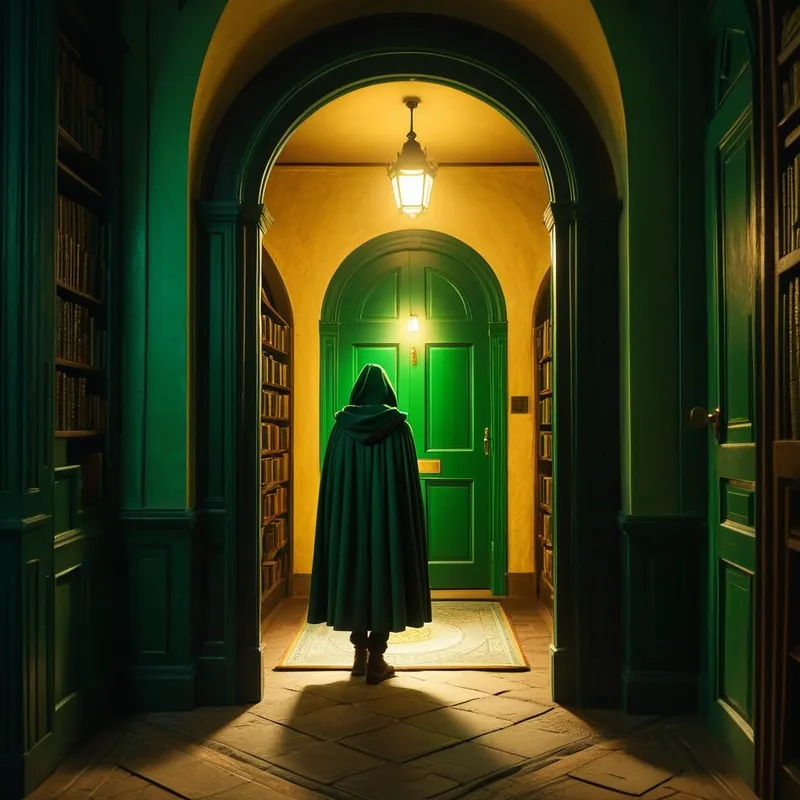
Psychologically, Bag End is the archetypal Ego-complex in its most idealized, integrated form. It represents the conscious personality—orderly, self-sufficient, and boundaried. The round green door is the threshold of consciousness itself, the persona one presents to the world, which is welcoming yet firm.
The true sanctuary is not a place that hides you from the world, but a center within that you carry into the world's chaos.
The conflict of the story is the necessary, painful rupture of this perfect ego-complex by the demands of the Self (the Wizard, the call to wholeness) and the unlived life (the Dwarves, the song of the unknown). The journey is the individuation process: the ego (Bilbo/Frodo) must leave its comfortable, familiar structure to engage with the unconscious (the wild world, the monsters, the Shadow) and retrieve what is lost (the treasure, the need to destroy the Ring). The Ring itself symbolizes the corrosive power of the unintegrated shadow—absolute, lazy power that destroys relationship and ultimately the self. To cling to it in the sanctuary of Bag End would be to poison the well of the soul itself.
The Dreamer's Resonance
When Bag End appears in modern dreams, it rarely manifests as a literal Hobbit-hole. It appears as the dreamer's childhood home, a perfectly organized room that suddenly has a hidden door, or a familiar apartment that feels infinitely deep and safe. Dreaming of being inside Bag End, content, often coincides with a somatic state of deep relaxation and integration—the nervous system is in a state of "rest and digest." The psyche is celebrating a hard-won sense of inner order and self-containment.
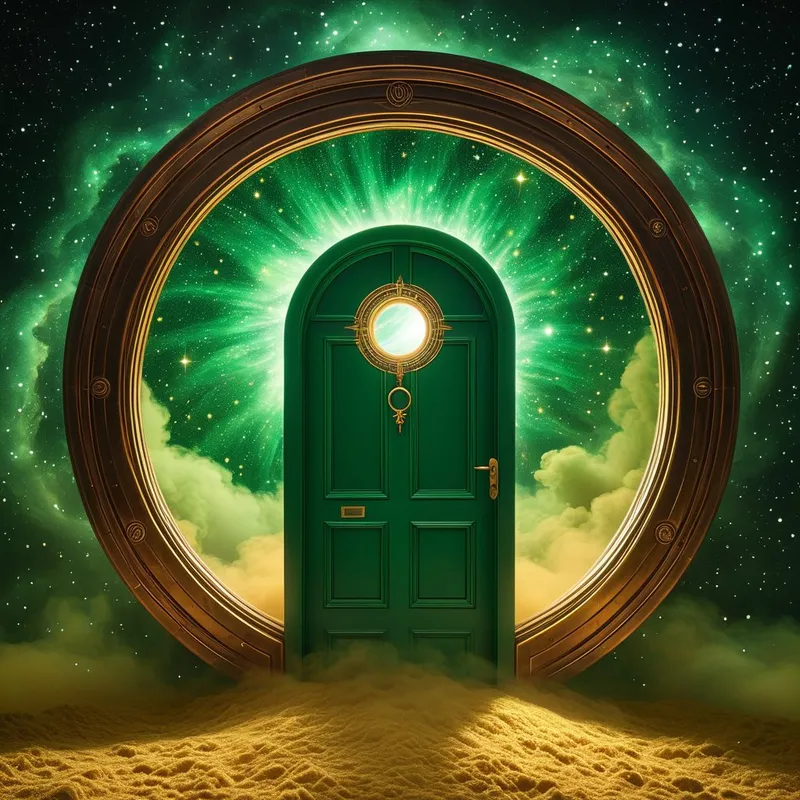
Conversely, dreaming of standing at the threshold, looking in or looking out, signals a profound psychological crossroads. The dreamer is grappling with the call to leave a comfortable but limiting identity, job, or relationship. The knock at the door is the unconscious demanding attention. To dream of the interior becoming dark, cold, or cluttered suggests the dreamer's inner sanctuary is being compromised—perhaps by burnout (the hearth-fire dying) or by harboring a toxic secret or resentment (the Ring in the chest). The dream is a somatic alarm: the core self feels under threat. The healing process involves recognizing what the "Bag End" within you truly needs—not just preservation, but sometimes a courageous evacuation for its own salvation.
Alchemical Translation
The alchemical process modeled here is not the dramatic solve et coagula of the hero, but the quieter, more profound work of the caregiver. The prima materia is the raw, homely comfort of the self. The nigredo, the first darkening, is the knock at the door—the intrusion of chaos and duty that shatters contentment. Bilbo’s journey is the albedo, the whitening: a purification through adventure, where the base "bourgeois" instincts are tested and refined into courage, loyalty, and pity.
The ultimate alchemy is not turning lead to gold, but turning the love of home into the strength to leave it, so that home may endure.
Frodo’s journey represents the rubedo, the reddening or suffering. Here, the work is sacrificial. The Self (Bag End) must be offered up, its comfort immolated in the fires of Mordor (the confrontation with the ultimate shadow). The final stage, the citrinitas or yellowing, is the return—but not as it was. The hero cannot re-enter the perfect vessel unchanged. The scar remains, the memory of shadow is woven into the fabric of the sanctuary. The transmutation is complete when the individual realizes that Bag End was never just a place to live in, but a quality of soul to be lived from. The true gold produced is not material wealth, but a consciousness that has expanded to hold both the perfect peace of the hearth and the terrible responsibility for protecting that peace in a world that knows it not. The individuated self becomes the caretaker of its own inner and outer world.
Associated Symbols
Explore related symbols from the CaleaDream lexicon: