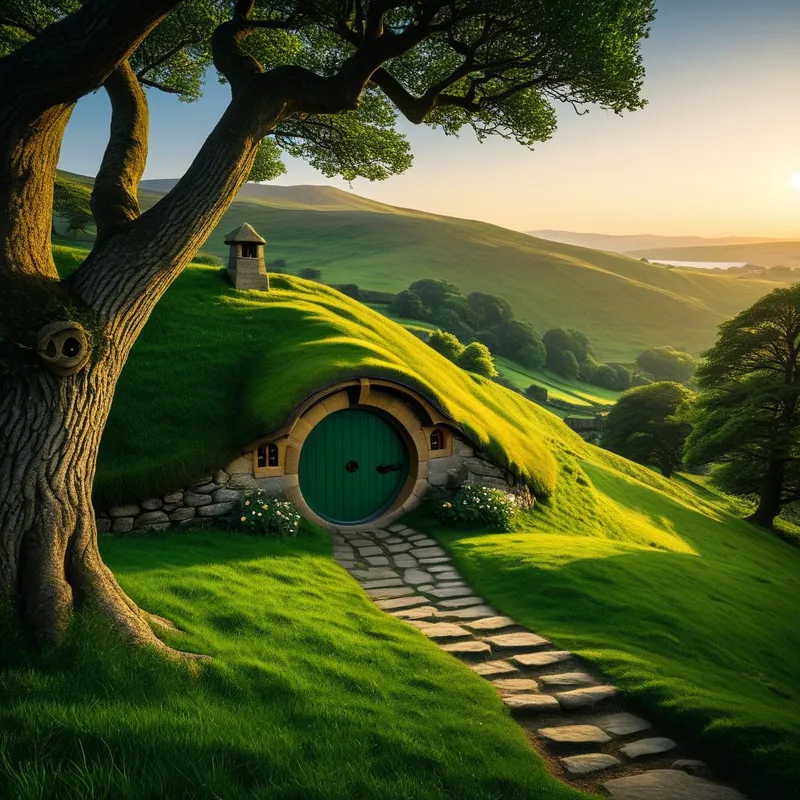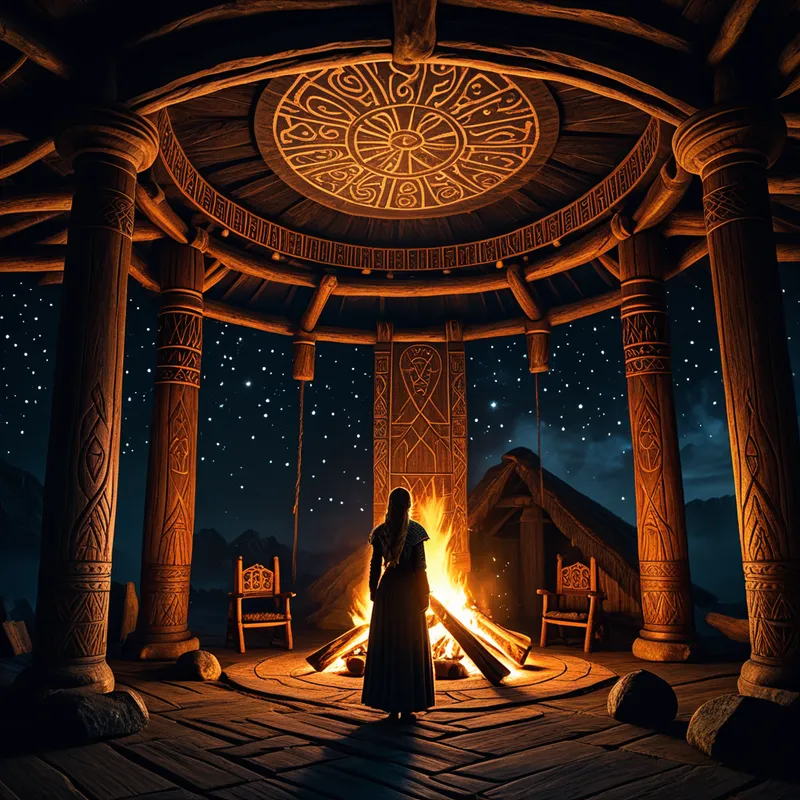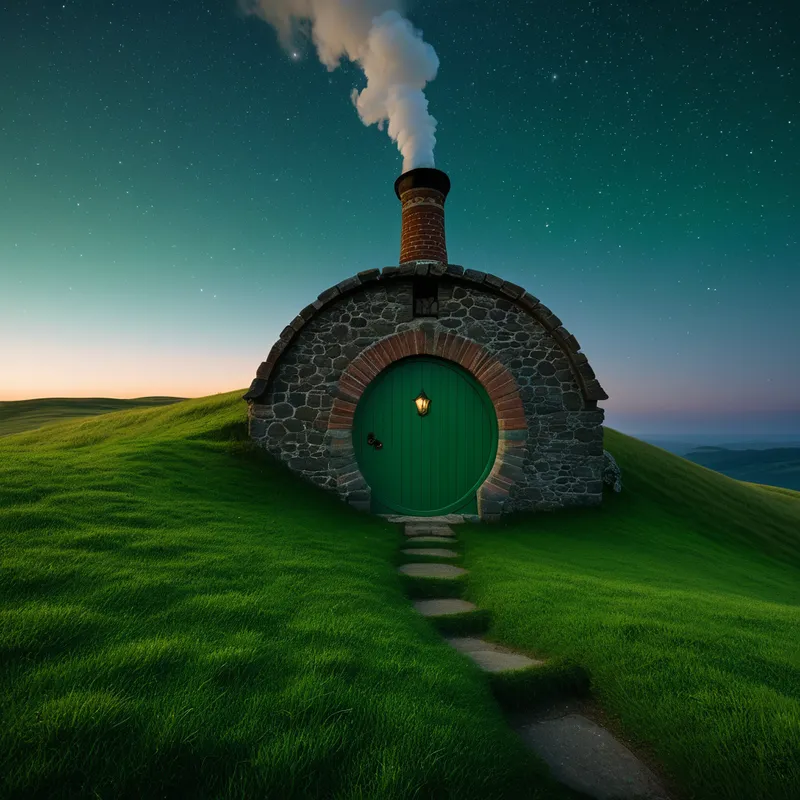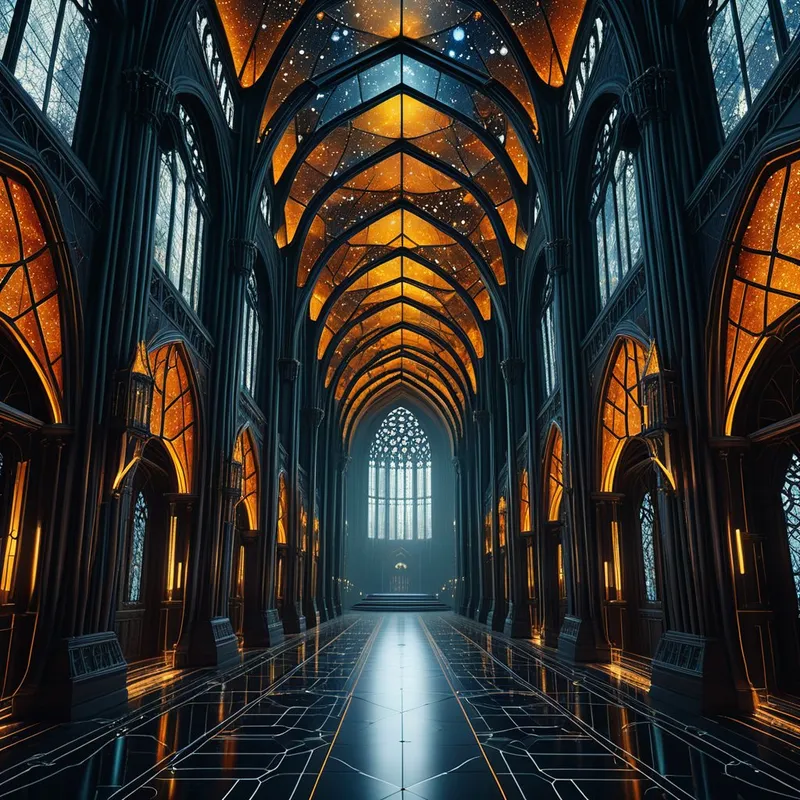
The Somatic Blueprint: Dreams of Home
Before the mind can name it, the body remembers. The dream of home announces itself not as an image, but as a somatic echo. It is the sudden, profound weight in the chest, a gravity that pulls you toward a center you cannot see. It is the visceral warmth that floods the limbs when you cross a threshold that doesn’t exist in waking life, or the cold, hollow ache of standing in a familiar room that has forgotten you. This is the body’s intelligence speaking in the language of architecture—a felt sense of foundation, of shelter, of belonging or its devastating absence. The stomach tightens around an empty space where a hearth should be; the shoulders relax into walls that are not there. This is the pre-verbal map of your internal family systems, the territory of the psyche written in bone and breath before it is ever drawn in brick and mortar.
The Dreamer's Log
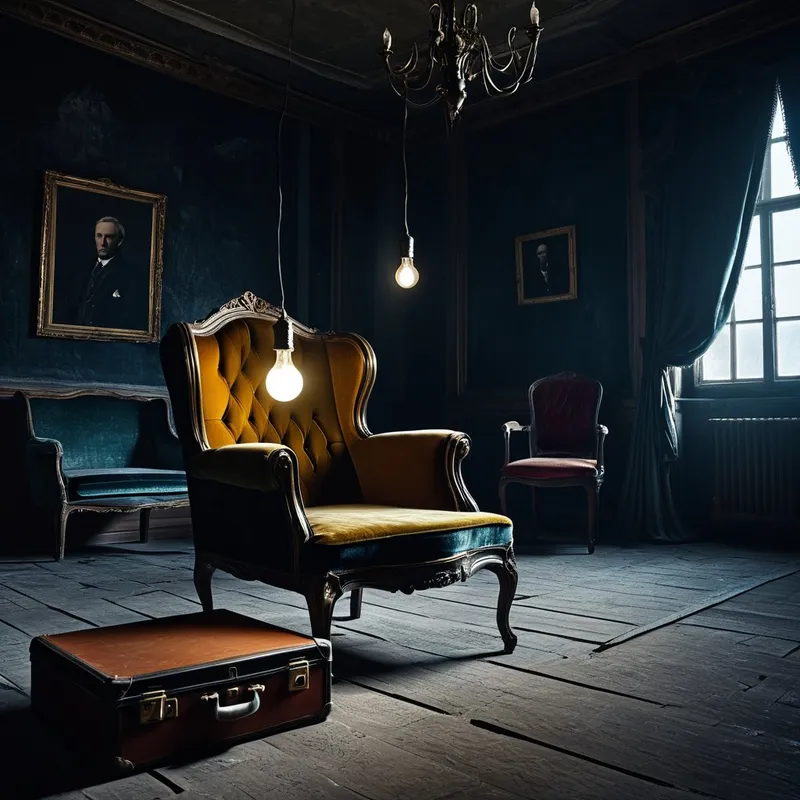
I am in the house I grew up in, but it is endless. I open a familiar closet door and find a vast, silent library I’ve never seen. The books are blank. Downstairs, my family’s voices are muffled, coming from behind a wall that has no door. I am alone, discovering rooms within rooms, knowing I am both the explorer and what is being sought.
This is the alchemy of the psyche expanding beyond its inherited blueprint, seeking the unwritten text of the self in the forgotten annexes of memory.
The False Lead
This theme is not a simple nostalgia for a physical place or a linear yearning for childhood. To mistake the dream-home for the childhood house is to confuse the blueprint with a single, faded construction. It is not about wanting to go back, but about confronting the foundational material—the psychological lumber, wiring, and plumbing—from which all your subsequent shelters have been built. A dream of a decaying home is not a prophecy of bad luck or a failing relationship; it is a direct report on the state of your inner foundations, the integrity of your boundaries, and the livability of your own psychic space. The dream does not mourn a lost location; it diagnoses the current architecture of your being.
Psychological Architecture
To dream of home is to walk the hallways of your own becoming. Each room represents a chamber of the psyche: the attic of stored memories and abandoned selves, the basement of primal fears and instinctual drives, the kitchen where nourishment is prepared (or withheld), the locked room that holds what you cannot yet face. This is the deep Shadow work of individuation—not as a textbook concept, but as the gritty, lived experience of renovation.
You are both the dweller and the dwelling. The work begins when you stop being a passive tenant in the home of your conditioning and pick up the tools of conscious awareness. That strange new wing? It is a nascent aspect of your personality demanding integration. The crumbling foundation? It is an outdated belief system, a loyalty to a family narrative that can no longer bear the weight of who you are now. The process is one of fearless inventory: opening every door, switching on every light, feeling the drafts that seep through the cracks in your persona. It is the reclamation of sovereignty over your inner space, deciding what to restore, what to repurpose, and what must be compassionately demolished to make room for authentic life.
Mythic Resonance
This universal firmware runs through the core of human story. Consider the myth of the Minotaur in the Labyrinth. The labyrinth is not just a prison for the monster; it is a home built by a king to hide his shame, a complex, defensive architecture of denial. Theseus must enter this psychic maze—not to simply slay the beast, but to navigate the convoluted self, to trace the thread of consciousness (Ariadne’s clue) back to his own center. The hero’s journey is, at its heart, a homecoming to a self that has been fortified by the ordeal. Similarly, the Odyssey is not merely a travelogue, but a twenty-year dream of home. Odysseus’s Ithaca is less a geographical point and more a state of integrated sovereignty. He must lose every external marker of identity—ship, crew, name—before he can return not as the conquering king, but as the man who knows the shape of his own hearth in the dark.
Symbolic Nodes
- Doors (Locked/Open/New): Thresholds of opportunity, aspects of the self accessible or forbidden.
- Rooms (Unknown, Changing): Unconscious complexes or developing parts of the personality.
- Basement/Attic: The subconscious (repressed material) and the superconscious (aspirational or spiritual potential).
- Foundations Cracking: Erosion of core beliefs, values, or sense of security.
- Renovation/Construction: Active process of self-redefinition and psychological growth.
- Lost or Searching for a Room: The quest for a missing inner quality or function (e.g., a place of rest, creativity, intimacy).
Archetypal Resonance
The Creator Archetype is the master architect of the home dream. Its energy is not about building houses, but about the profound act of self-creation. The somatic echo—that deep pull toward center or the ache of displacement—is the Creator’s urge to give form to the formless inner world. Its shadow, the Mad Scientist or Self-Centered architect, manifests when we build prisons of perfectionism, nostalgic museums to a frozen past, or fortresses so elaborate we become trapped within them. The alchemical potential here is immense: the Creator holds the power to transmute the raw, inherited materials of our past (the lumber of trauma, the wiring of habit) into a living, breathing structure that is uniquely ours—a home that is not a monument, but an organism, capable of growth, change, and ultimately, of offering true sanctuary to every exiled part of the self.
The Alchemical Process
The transmutation of “home” from a prison of memory into a sanctuary of sovereignty requires the intense heat of conscious confrontation and the pressure of radical responsibility. The prima materia is the grief for the home you never had, the terror of being psychically homeless, and the weight of inherited blueprints. The alchemical fire is lit when you stop blaming the original architects (parents, culture, trauma) and take up the mantle of architect yourself. This is the nigredo, the blackening: sitting in the darkness of the unfamiliar room, feeling the cold of the empty hearth, surveying the damage without flinching.
The pressure is the sustained commitment to rebuild from the inside out. It is the painstaking work of rewiring automatic reactions (the faulty electrical system), replumbing the flow of emotion (the blocked pipes), and reforging boundaries (the weakened walls). The albedo, the whitening, appears when you clean a window and let new light into an old story. The rubedo, the reddening, is the embodied warmth of living in a structure that finally fits—not a perfect, static house, but a dynamic, breathing home that you are in an eternal, loving dialogue with. The gold is the unshakable sense of being grounded in your own being, of belonging fundamentally to yourself.
The Integration Protocol
Question 1: If the home in your dream were a living entity, not a structure, what is its primary emotional atmosphere? Is it anxious, lonely, expansive, watchful, or welcoming?
Question 2: Which room or space in the dream felt most charged? What activity or quality does that room traditionally represent (e.g., kitchen/nourishment, bedroom/rest intimacy, study/knowledge), and how does that reflect a current need or conflict in your waking life?
Question 3: Who, or what parts of yourself, are you allowing to live in this inner home? Who, or what parts, are you keeping in the basement, the attic, or locked outside the door?
Action 1 (Somatic Blueprint): For one week, upon waking, before your mind narrates the dream, place your hand on your chest or solar plexus. Ask your body: “Where did you feel ‘home’ in that dream?” Note the sensation, not the story—a warmth, a tightening, a lightness, a hollow. This grounds the symbol in your corporeal reality.
Action 2 (Unstructured Cartography): Without planning, take a large piece of paper and draw the floor plan of your dream home as it lives in your body. Let it be abstract. Let lines wobble. Label rooms not by name, but by the feeling or memory that inhabits them. This is not art; it is an act of externalizing your internal architecture for witness.
Action 3 (Threshold Ritual): Identify one simple, physical threshold in your waking life—your front door, your bedroom doorway, even the door to your home office. For one week, each time you cross it, pause for one full breath. As you inhale, acknowledge the self you are leaving behind (the worker, the public persona). As you exhale, consciously call forth the self that belongs in this new space (the rester, the creator, the private being). You are practicing sovereignty over your psychic entries and exits.
Final Validation
To dream of home is to engage in the most vulnerable and courageous of excavations. It hurts to find the cracks in your own foundation, to feel the draft from a door you didn’t know was open. That ache is real, and it is honorable—it is the proof that you are no longer sleepwalking through the halls of a borrowed life. This difficult, beautiful work is the opposite of homelessness; it is the sacred labor of becoming your own place of origin. You are not lost. You are the map, the territory, and the builder, all at once. The dream is your blueprint. Now, pick up the tool of your attention, and begin.