
Asibikaashi Myth Meaning & Symbolism
The story of Asibikaashi, the Spider Grandmother who weaves a web of protection and connection, teaching the art of mending what is torn.
The Tale of Asibikaashi
In the time before memory, when the world was young and the people were new upon it, a great forgetting began. The nights, once filled with the gentle songs of the stars, grew troubled. From the shadowed places between the roots of the world, from the forgotten corners of the mind, the bad dreams began to stir. They were formless things of fear and confusion, slipping into the lodges as the fire died to embers, coiling around the sleep of children and elders alike.
The people cried out in their restless sleep. Mothers sang through the night, their voices hoarse with vigilance. Fathers kept watch until their eyes grew heavy, but the dreams were cunning, finding every crack in their guard. The very spirit of the people grew thin, worn by this invisible siege.
Then, from the place where the earth meets the sky, she came. Asibikaashi, the Spider Woman. She was ancient, her form both of the earth and of the air. Some say she descended on a single, silver thread from the first light of morning. Others whisper she emerged from the heart of the grandmother stone, where patience sleeps. She saw the suffering of the people, saw the fragile threads of their peace unraveling.
She did not come with a roar or a flash of light. She came with a quiet, purposeful grace. Taking her place where the lodge culture.") poles crossed, or high in the branches of the protecting tree, she began her work. From her own being, she drew a thread—strong, yet finer than dew, luminous with the first light. In a sacred, spiraling dance, she wove. Round and round, her limbs moving in a rhythm older than the rivers, she spun a perfect circle. Within it, she crafted a web of astonishing complexity, a labyrinth of connection, with a single, open space at its heart.
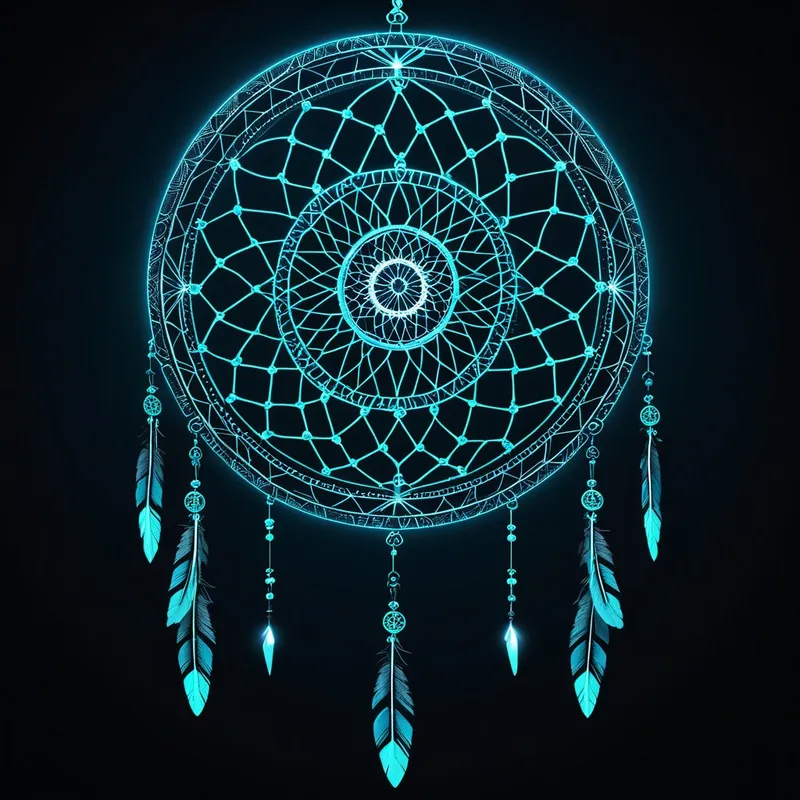
This was her gift: a snare for the bad dreams. As the troubled night winds carried the twisting fears toward the people, they would encounter her web. The chaotic, jagged dreams would catch in the sticky, intricate threads, held fast until the first rays of the sun touched them and turned them to harmless morning mist. But the good dreams—the visions of guidance, the memories of the ancestors, the gentle whispers of the land—knowing the true path, would find the central opening and slide down the single, sacred feather hanging below, descending softly into the sleeper’s mind.
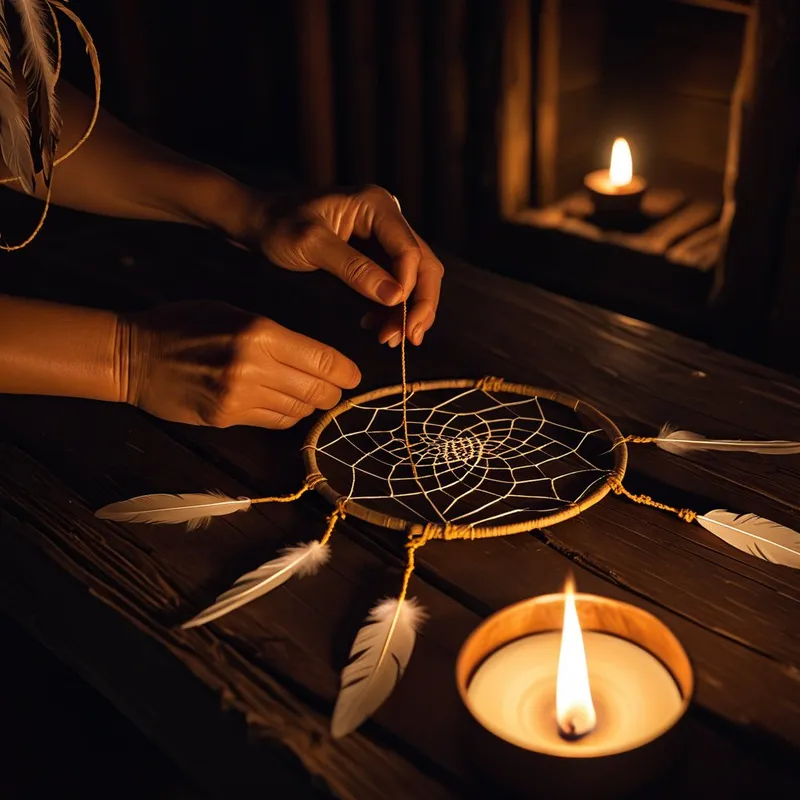
And so, peace returned. The people, seeing her work, learned the pattern. The mothers and grandmothers, the keepers of the hearth and the family spirit, took up the sacred task. They would weave their own webs in her honor, singing prayers of gratitude into each knot, tying feathers of the wise owl or the gentle eagle, creating the dreamcatcher. Asibikaashi, the great grandmother, had taught them not just a charm, but an art: the art of guarding the vulnerable space of the soul, of filtering chaos into peace, of mending the night with conscious care.
Cultural Origins & Context
The story of Asibikaashi is a foundational narrative of the Ojibwe (Anishinaabe) people, part of the rich oral tradition passed down through generations of storytellers, often grandmothers and knowledge-keepers. It is not merely a bedtime story but a cosmological teaching embedded with practical spiritual technology. The myth served a direct societal function: it explained the origin of the dreamcatcher (asabikeshiinh, meaning "spider" or "net-like"), a ubiquitous and powerful protective object in Ojibwe culture, especially for infants and children.
The transmission was intimate and embodied. A grandmother weaving a dreamcatcher for a new grandchild would not just craft an object; she would weave the story into it, imbuing the willow hoop and sinew with the presence and purpose of Asibikaashi. This act transformed childcare into a sacred ritual, linking the protector in the home to the primordial protector in the cosmos. The myth thus reinforced the central role of women as the weavers of social and spiritual safety, grounding abstract concepts of protection in a tangible, daily practice. It taught that safety is not a wall, but a discerning web; not a rejection of the night, but a wise navigation of its contents.
Symbolic Architecture
At its core, the myth of Asibikaashi is a profound map of psychic ecology. The Spider Woman herself is the archetype of the Great Caregiver, but one whose care is active, creative, and intelligent. She does not smother or eliminate the darkness; she processes it. Her web is the ultimate symbol of the connected, discerning mind.
The web is not a shield, but a sieve for the soul. It teaches that true protection lies not in brute force, but in discernment—the ability to hold some things and let others pass.
The web represents the interconnected network of consciousness, family, community, and tradition. The central hole is the crucial symbol of the permeable self, the "I" that remains open to authentic guidance (good dreams) while the peripheral network filters out chaotic, undigested psychic material (bad dreams). The feather is not merely decorative; it is a conduit, a symbol of breath, spirit, and gentle descent—ensuring that what is beneficial arrives with softness, not force. The entire system models a healthy psyche: one that is receptive yet bounded, connected yet centered, capable of transforming raw, frightening psychic content (the nightmares) through the light of conscious awareness (the sun).
The Dreamer's Resonance
When the pattern of Asibikaashi stirs in the modern dreamer, it often signals a process of psychic re-weaving. One might dream of spiders weaving in a corner, of mending torn nets, of finding oneself at the center of a broken or tangled web. These are not necessarily literal calls to craft a dreamcatcher, but somatic metaphors from the deep unconscious.
Such dreams suggest the dreamer is engaged in re-establishing healthy psychic boundaries that have been breached, or in repairing a sense of connection that has been fractured. The feeling is often one of delicate, urgent responsibility—the sense that one must actively participate in creating their own sense of safety and discernment. A dream of a beautifully intact web might speak to a hard-won period of integrated peace and protection. Conversely, dreams of being caught in a sticky web or of a web collapsing point to feelings of entanglement in others' psychic material or the failure of one's own filtering systems. The myth manifests in dreams as the psyche's innate impulse toward self-care that is wise, artistic, and connected to a larger, nurturing order.
Alchemical Translation
The alchemical journey modeled by Asibikaashi is the transmutation of fear into discernment, and of isolation into connected protection. The modern individual's "nightmare" is the barrage of undigested information, societal anxieties, personal traumas, and shadow material that threatens psychic peace. The instinct may be to build walls, to numb out, or to be overwhelmed.
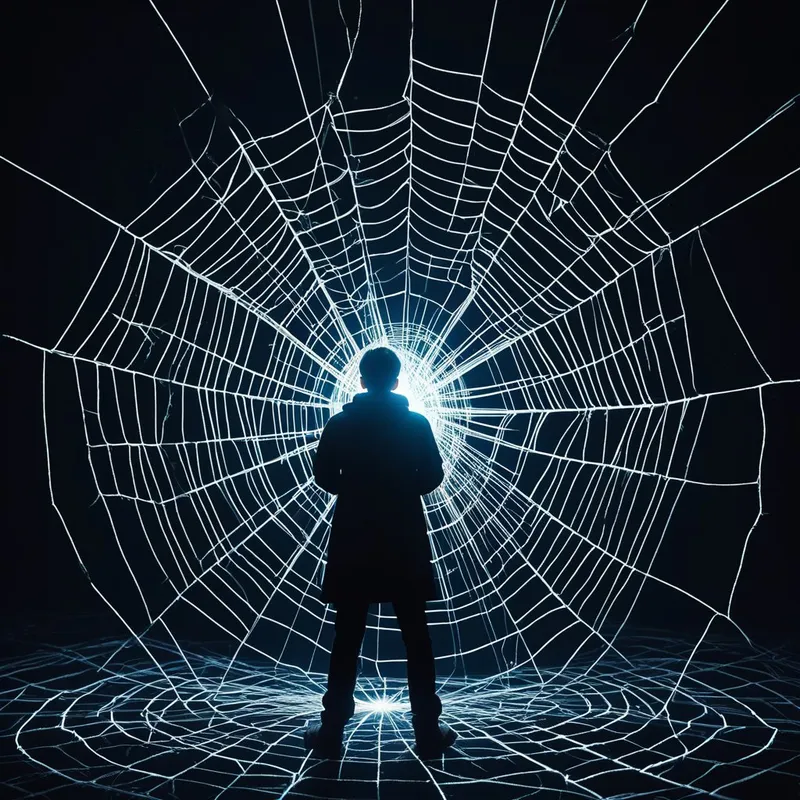
Individuation is the process of becoming your own weaver. You must spin the thread of your own experience into a web of meaning that can hold complexity without collapsing, that can distinguish poison from nourishment in the dark.
The first step is the descent of the Caregiver archetype—the call to actively nurture one's own soul. The "weaving" is the conscious work of therapy, reflection, art, or ritual: creating a structure (a worldview, a practice, a community) that can hold and process life's chaos. The "central hole" is the cultivated openness to intuition, synchronicity, and authentic guidance, while the woven net is the developed critical faculty and emotional boundary. The "sun" that dissolves the caught nightmares is the light of conscious awareness applied to our fears. Ultimately, the myth guides us to not just be passive recipients of psychic content, but active artists of our inner space, weaving a life that is both protected and profoundly open, mending what is torn with threads of conscious attention. We become, in our own way, a center of healing connection, a humble reflection of the Spider Grandmother's eternal, caring work.
Associated Symbols
Explore related symbols from the CaleaDream lexicon: