Ark of the Covenant Myth Meaning & Symbolism
A sacred chest containing divine law, carried through the wilderness, representing the terrifying and awesome presence of the holy among a people.
The Tale of the Ark of the Covenant
Hear now the tale of the most sacred object under heaven, the throne of the unseen. In the vast, whispering silence of the Sinai desert, a people walked, dust on their feet, freedom a strange and heavy garment. Their god, YHWH, was a voice in the thunder and a fire on the mountain. But how does a nation carry a god? How does the infinite dwell with the finite?
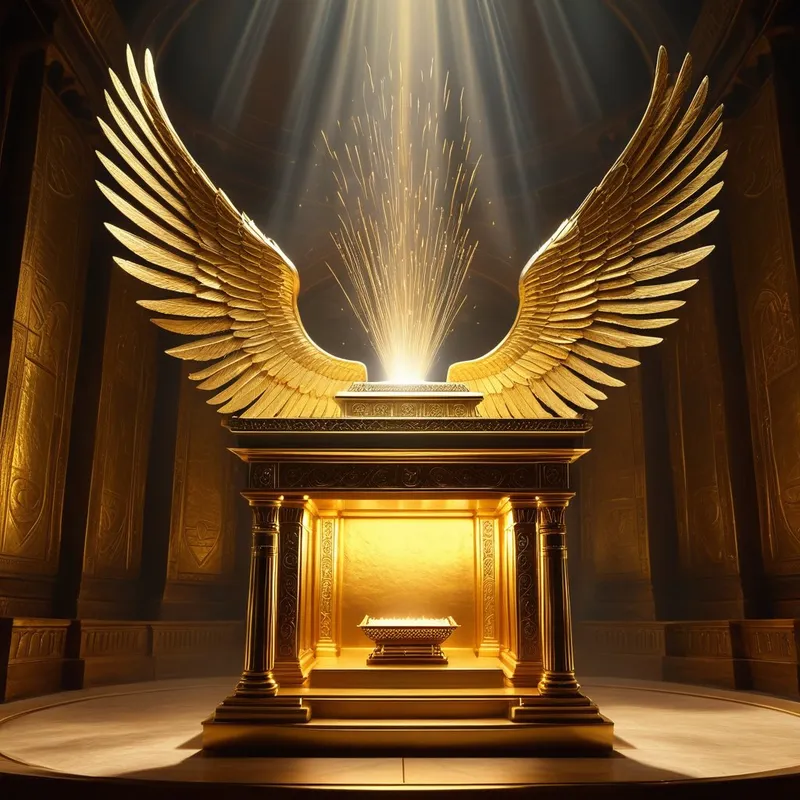
The answer came not as a statue, but as a contract carved in stone, and a box built to hold it. From the mind of the prophet Moses, through the skilled hands of Bezalel, the Ark was born. Acacia wood, incorruptible, formed its core, sheathed inside and out with pure, hammered gold. A crown of gold ran around its top. Upon its lid, the Kapporet, two cherubim of beaten gold faced one another, their wings outstretched and touching, arching over the space between them—the empty space that was not empty.
Into this chest were placed the two tablets of the Testimony, the words of the covenant written by the finger of God. The Ark was no mere reliquary; it was a footstool for the heavens. When the cloud of presence descended upon the Tabernacle, it rested between the cherubim. To approach it unprepared was to invite death. It was carried on poles of acacia wood overlaid with gold, never touched by human hands, a paradox of intimate presence and unapproachable holiness.
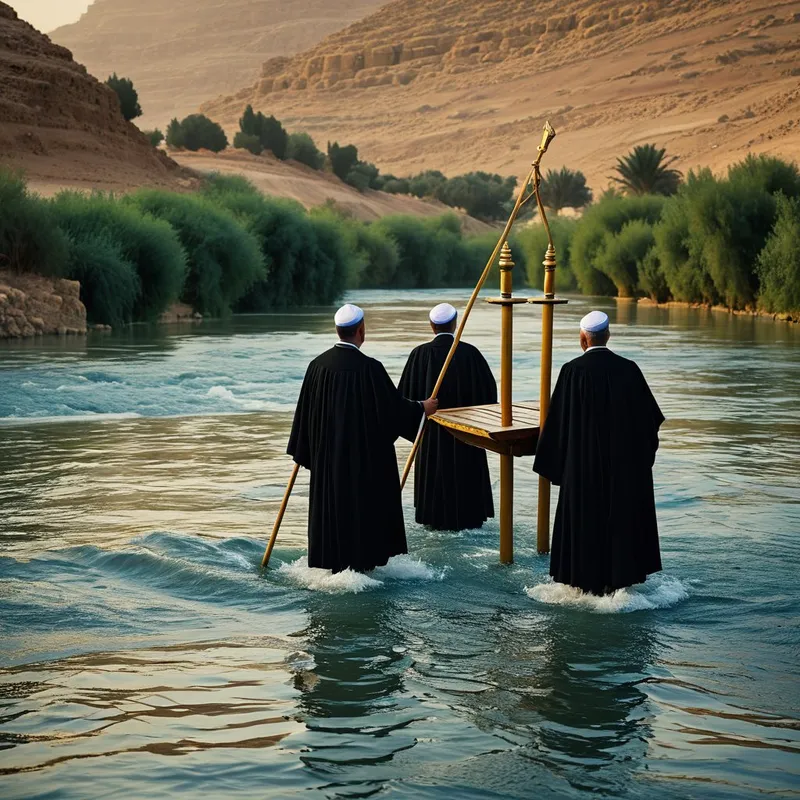
It led them. When the priests bearing it stepped into the flooded Jordan, the waters piled up in a heap. It circled Jericho, and the walls of stone fell flat. In battle, its presence was both shield and terror. Yet, it was also captured by the Philistines, and in their lands it became a plague, toppling their idol Dagon and afflicting the people with tumors, until they sent it back on a cart pulled by milch cows, a guilt offering to a god they did not understand.
It found its rest in Jerusalem, first in a tent, then in the innermost chamber of Solomon's Temple, the Holy of Holies. There, once a year, on Yom Kippur, the High Priest would enter that thick darkness, the air heavy with incense, to sprinkle blood upon the mercy seat, bridging the chasm between a holy God and a fallible people. And then, history grows silent. Before the Babylonians came, the Ark vanished from all record. It was not carried into exile. It simply was gone, leaving behind an empty chamber, a longing, and a legend that has echoed for millennia: a throne waiting for its king, a box holding the law of the universe, lost to the world but not to memory.
Cultural Origins & Context
The mythos of the Ark is woven into the foundational texts of the Torah and the historical narratives of the Hebrew Bible. It is not a folktale from the periphery, but a central national mystery. Its story was preserved and transmitted by the priestly and prophetic lineages, custodians of the temple ritual and the national covenant. Its primary societal function was threefold.
First, it was the ultimate symbol of the Sinai Covenant. The stone tablets within were the tangible terms of the relationship. The Ark was the container of that relationship, making the abstract contract concrete and portable. Second, it served as the focal point of divine immanence for a theologically revolutionary people who forbade graven images. YHWH was transcendent, yet chose to "dwell" (shakhan) in a specific, non-anthropomorphic way—in the empty space above the Ark. This preserved divine mystery while providing a center for worship. Finally, it was a unifying political and military palladium. As the tribes wandered and later fought for territory, the Ark traveling with them signified that YHWH, the divine warrior-king, was leading his people. Its capture was a national catastrophe; its return, a divine vindication.
Symbolic Architecture
The Ark is a masterpiece of symbolic compression. It is not one symbol, but a constellation of them, each layer speaking to a profound psychological and spiritual reality.
At its most fundamental, it is the Container of the Law. It represents the necessary human structure—the ego, the conscious mind, the moral framework—that must be built to hold the awesome and potentially disintegrating power of the Self, the transpersonal core of the psyche. Raw divine impulse or unconscious content, without a vessel, is chaos.
The law is not the opposite of spirit; it is the vessel that makes spirit bearable, the banks that give the river its direction and power.
The materials speak of a dual nature: incorruptible acacia wood (the enduring human substance, the body) overlaid with pure gold (the divine, the spirit). This symbolizes the incarnation of spirit in matter, the sacredness inherent in the created world when it serves as a dwelling for something higher.
The Kapporet, or mercy seat, is the ultimate symbol of reconciliation. The cherubim, often seen as guardians of the sacred, face each other over an empty space. This is the negative capability of the divine—God is present precisely in the space between, in the relationship, in the tension of opposites. It is the place where justice (the Law below) meets mercy (the atonement above).
Finally, its loss is perhaps its most potent symbol. The Ark’s disappearance speaks to the necessary withdrawal of the manifest divine into potential. The mature religious consciousness cannot cling to the physical container forever; it must learn to relate to the content—the covenant, the law, the presence—in its absence, internalizing the throne that once stood in stone and gold.
The Dreamer's Resonance
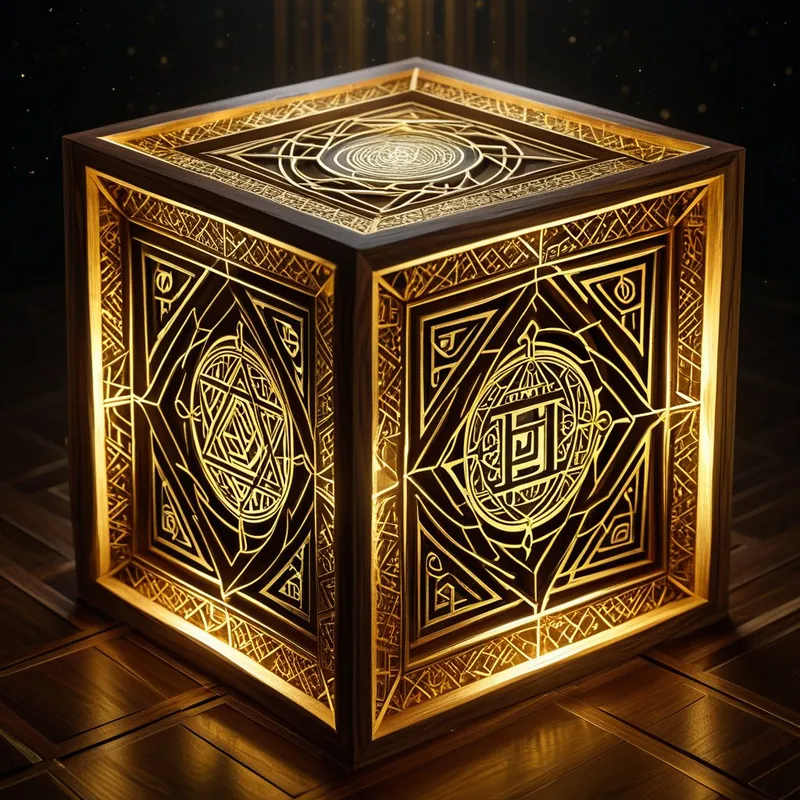
To dream of the Ark is to encounter the psyche’s own most sacred and dangerous core. It rarely appears as a biblical replica. It may be a locked safe, a mysterious briefcase, a glowing crate, or a simple, profoundly significant box in the basement of the dream house.
The somatic experience is key. There is often a palpable atmosphere of awe, dread, and magnetic attraction—a mysterium tremendum et fascinans. The dreamer may feel they are not supposed to look, yet cannot turn away. This mirrors the body’s instinctual response to confronting the Self, which contains both our highest potential and our most repressed shadow material. To open the dream-Ark without reverence (without the "incense" of consciousness) can feel like a psychic explosion, unleashing chaotic energies, plagues of anxiety, or the toppling of inner idols (cherished self-images or outdated beliefs).
Conversely, to bear it carefully on poles—to carry this sacred burden with respect and proper distance—suggests a process of integrating a profound truth or life-direction. The dream may depict crossing a turbulent river (a life transition) with the Ark leading the way, symbolizing that connection to this deep, guiding center can part the waters of confusion. The lost Ark in a dream points to a search for one’s own inner covenant, the central agreement between the conscious personality and the soul’s purpose that feels missing or obscured.
Alchemical Translation
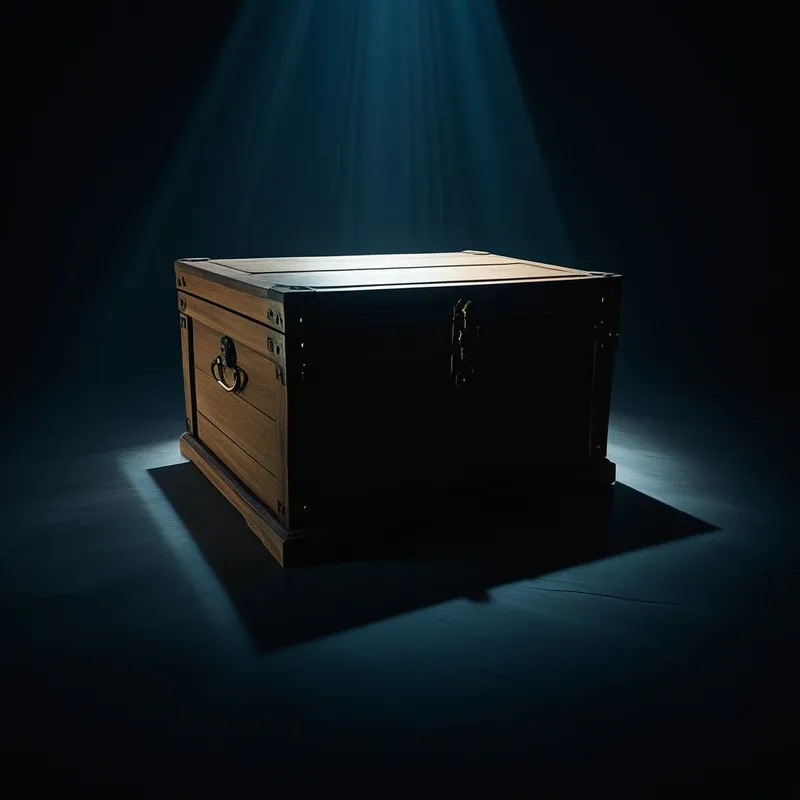
The journey of the Ark models the alchemical process of individuation—the creation of the lapis philosophorum, or philosopher’s stone, which is the integrated Self.
The prima materia, the chaotic starting point, is the liberated but unformed people in the wilderness—the psyche freed from the slavery of the persona (Egypt) but not yet coherent. The divine command to build the Ark is the call to create a vas, a sacred vessel. This is the arduous work of building a conscious personality strong enough, honest enough ("acacia wood" of integrity), and refined enough ("overlaid with gold") to host the totality of the psyche.
The work is not to become divine, but to become a fit container for the divine spark that already is. The goal is not to possess the gold, but to be transformed into the vessel that can hold it.
The tablets within represent the non-negotiable laws of one’s own being—the innate moral and psychological architecture (the archetypes) that, when honored, create order and meaning. The journey through battles and setbacks is the inevitable confrontation with shadow elements (the Philistines) that seek to capture or misuse this central power.
The final stage is the placement in the Holy of Holies. This is the internalization of the sacred center. The outer temple—the persona, the worldly achievements—is built around this inner chamber. The annual atonement ritual becomes the ongoing process of self-reflection and reconciliation, sprinkling the "blood" of lived experience on the "mercy seat" to heal the rift between who we are and who we aspire to be.
And the ultimate disappearance? This is the enantiodromia of the symbol. The successful alchemical work renders the external symbol obsolete. The Ark is lost because its function has been completed; its power has been fully integrated. The holy of holies is now the silent, empty chamber of the heart, where the presence dwells not as an object to be seen, but as a reality to be lived. The covenant is no longer in a box of gold, but written on the tablets of the human heart.
Associated Symbols
Explore related symbols from the CaleaDream lexicon: