Aos Sí Myth Meaning & Symbolism
The story of the Aos Sí, the hidden folk of the hollow hills, who guard the threshold between the human world and the timeless, perilous Otherworld.
The Tale of Aos Sí
Listen now, and let the fire grow low. The wind outside carries more than rain; it carries the memory of a time when the world was not so solid, when the veil was a mere breath. This is the tale of the Aos Sí.
Before the iron and the cross, the land was shared. We walked the green fields, and they walked the same fields, though their feet did not always touch the same earth. They are the People of the Mounds, the Tuatha Dé Danann, who, when the sons of Mil came, did not die. No. They retreated. With a great magic, they folded themselves into the landscape. They became the heart of the hollow hills, the spirit of the ancient oak, the whisper in the deep well. Their kingdoms are the sídhe, grassy knolls that hum with a music only the soul can hear.
Their world is the Tír na nÓg, where time flows like honey and apple trees bear blossom and fruit together. But do not mistake it for a paradise of gentle fancy. It is a world of potent law, where a broken geis—a sacred taboo—unravels fate itself, where beauty can bind you for a hundred years, and a song can break your heart with longing for a home you have never seen.
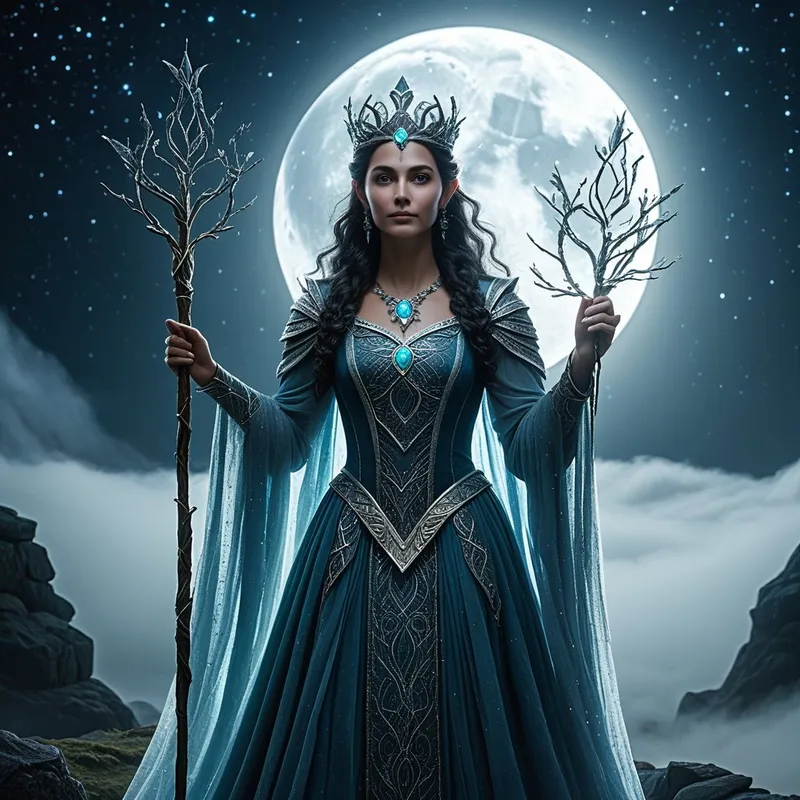
They are not small, winged sprites of children's tales. They are tall, fierce, and dazzling, their nobility etched in faces of unearthly pallor or radiant gold. They are the Keepers of the Threshold. At the liminal hours—twilight, dawn, Samhain—the doors of the sídhe swing open. To stumble upon their revels is to risk being swept away, drawn into a dance that lasts a night in their realm but a century in ours. Their gifts are double-edged: a cauldron of plenty or a curse of withering; healing from a silver cup or madness from a glance.
To encounter them is to stand at the border of all you know. It is to feel the solid ground of your reality become as insubstantial as mist, and to know, in your marrow, that there are older, deeper truths humming just beneath the surface of the world. They are the eternal reminder: this land you walk upon is shared. Tread softly.
Cultural Origins & Context
The myth of the Aos Sí is not a single story but a living tapestry woven from the oral traditions of Ireland, Scotland, and the Isle of Man. These narratives were the province of the fili and the banfheis, custodians of memory who shaped history into epic cycles. The Aos Sí are the cultural memory of the pre-Christian deities, the Tuatha Dé Danann, transformed by the coming of new faiths and new peoples. They were not erased but assimilated, their divinity compressed into the genius loci of the land itself.
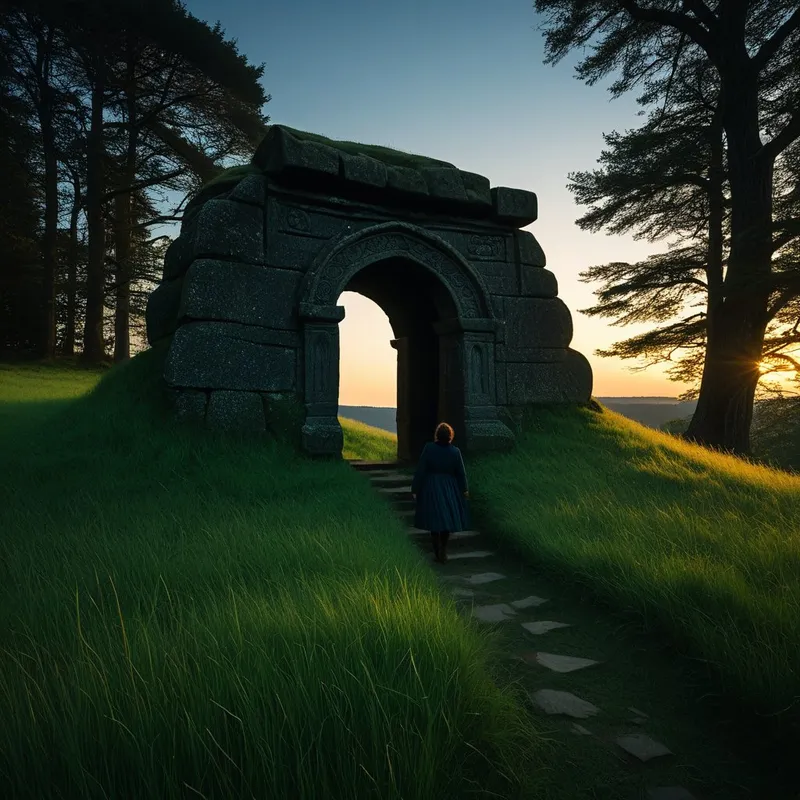
This myth served a profound societal function. It was a map of the psyche of the landscape, encoding ecological wisdom and social law. The sídhe mounds were often real Neolithic tombs or ringforts; to placate the Aos Sí who dwelled there was to respect ancient, ancestral sites. The tales taught caution, hospitality, and the consequences of breaking one's word. They explained misfortune—a blighted crop, a sudden illness—not as random events, but as part of a delicate, reciprocal relationship with the unseen sovereigns of place. The myth enforced a cosmology where humanity was not the center, but a participant in a much older, more mysterious order.
Symbolic Architecture
Psychologically, the Aos Sí represent the autonomous, numinous complexes of the deep unconscious. They are not personal; they are ancestral, archetypal, and utterly other. The sídhe mound is the symbol of the threshold between the conscious ego and this vast, inner Otherworld.
The fairy mound is not a place you find on a map, but a condition of the soul: a moment when the known world cracks, and the old gods of the psyche peer through.
The Aos Sí embody the qualities we have split off from our modern, rational selves: wild intuition, untamed emotion, poetic madness, and a connection to nature that is participatory, not analytical. Their dazzling beauty and terrifying wrath represent the awesome, double-edged power of these unconscious contents. To be "taken" by the fairies is the symbolic equivalent of being possessed by a complex—a mood, an obsession, a depression that feels alien and all-consuming, where time itself distorts.
Their insistence on geasa (taboos) and exacting reciprocity mirrors the laws of the psyche. Break an inner vow, ignore a deep calling, and the unconscious will enforce its balance, often through symptom or synchronicity. The Aos Sí are the guardians of this psychic integrity.
The Dreamer's Resonance
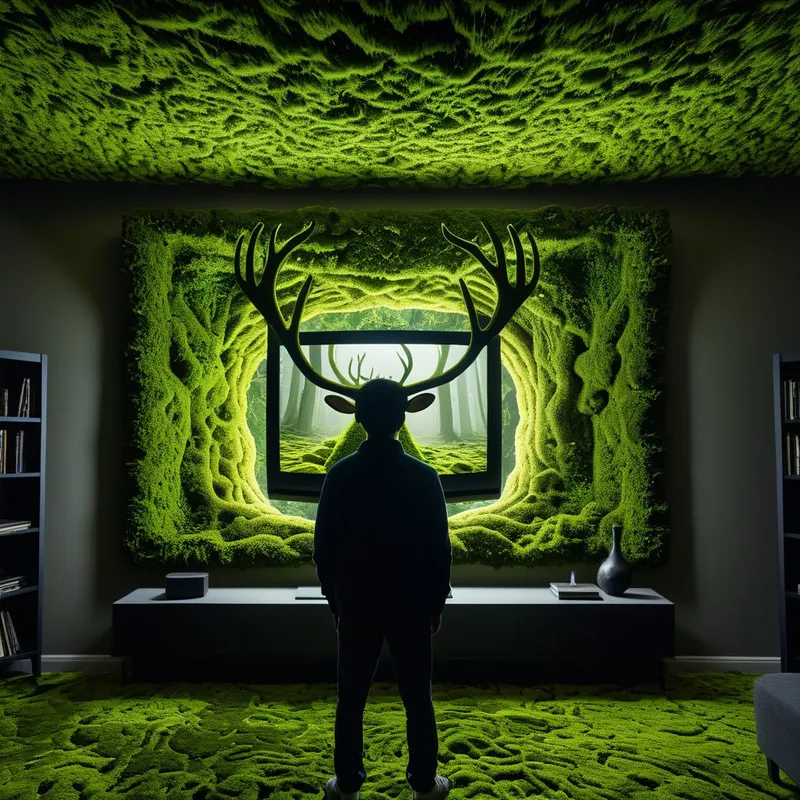
When this myth stirs in modern dreams, it often manifests as encounters with enigmatic, powerful figures in liminal spaces: attics, basements, forgotten rooms in familiar houses, or forests that suddenly feel sentient. Dreaming of being invited into a hidden, brilliantly lit hall, or of being pursued by a silent, regal figure through twilight woods, signals a profound engagement with the unconscious.
Somatically, this might feel like a "prickling" of the skin, a sense of being watched, or the eerie stillness before a storm. Psychologically, it is the process of the ego confronting its own irrelevance in the face of a greater psychic reality. The dreamer is not undergoing a hero's journey of conquest, but a petitioner's journey of recognition. The struggle is to hold consciousness at the threshold without fleeing in terror or being completely dissolved. The resolution, when it comes, is rarely a victory, but a treaty—an acknowledgment of the Other, and a new, more humble way of walking in one's own life and landscape.
Alchemical Translation
The alchemical work modeled by the Aos Sí myth is not the solve et coagula of heroic ego-building, but the more subtle process of mortificatio and relationship. The first stage is the "humbling at the mound": the conscious mind's plans and certainties are stopped dead by an encounter with something it cannot explain or control. This is a necessary death of arrogance.
The gold of the Otherworld is not seized; it is received, always at a cost, and only when the heart has been tuned to its strange frequency.
The transmutation occurs through the careful, respectful observance of the "fairy laws"—the psychic boundaries and rituals that allow for safe commerce with the unconscious. This might be the disciplined practice of active imagination, artistic creation, or somatic awareness. One learns to leave offerings (attention) at the threshold, to listen for the music of the sídhe (intuition), and to accept gifts that are often riddles (symbols).
The ultimate goal is not to live in the Otherworld, but to achieve a state of co-existence, where the conscious life is infused with the depth and vitality of the unconscious. The individual becomes like the wise folkloric figure who can move between the worlds, who respects the Aos Sí, receives their guidance, and tends to the threshold, becoming a bridge between the timeless depths of the soul and the demands of the day. Sovereignty, in the end, is not rulership over the land, but a right relationship with all that dwells within it, seen and unseen.
Associated Symbols
Explore related symbols from the CaleaDream lexicon: