
Ani Earth Goddess Igbo Myth Meaning & Symbolism
The story of Ani, the foundational Earth Mother of the Igbo people, who embodies the sacred covenant between humanity, morality, and the living land.
The Tale of Ani Earth Goddess Igbo
Listen. Before the clamor of markets and the debates of councils, there was a deep, resonant hum. It was the sound of the world breathing. From this primordial breath, from the dark, fecund silence, she arose. Not with a shout, but with the slow, sure unfurling of a root. She was Ani, and the earth was not her domain—it was her very body.
Her skin was the rich, red laterite soil of the riverbanks. Her hair was the whispering grasses of the open plains. Her bones were the ancient, unyielding rocks that cradled the first springs. Where she walked, life erupted in her footprints: thick yam vines coiled from the ground, oil palm trees stretched toward the sky, and the air grew heavy with the scent of blooming udala. She was the womb and the tomb, the giver and the ultimate receiver.
The people, the Igbo, came. They were born from her, shaped from her clay. To them, she gave her first and greatest law: a covenant. "You may take from my body," her voice echoed in the rustle of leaves and the trickle of streams, "but you must give back. Honor me with truth. Honor me with justice. Let no blood of kin soak into my soil, for I will not nourish chaos."
For generations, the people remembered. They poured libations of palm wine onto the ground before drinking. They returned the first yam of the harvest to the earth. The Ezeani, her chosen steward, would watch for her signs—the flight of birds, the pattern of thrown seeds—to discern her will. The land flourished, and the people prospered.
But the human heart is a complex seed. Pride took root. A man, powerful and wealthy from the trade in slaves and guns, built a compound over a sacred grove where the ancestors whispered. He lied in the Oha, swearing false oaths on Ani’s name to seize a neighbor's land. The blood of a brother, spilled in secret envy, seeped into a furrow.
A silence fell. Not a peaceful quiet, but a thick, waiting stillness. The rains did not come. The sun beat down, and the once-fertile soil hardened like pottery. The yam shoots withered before they could climb their stakes. The streams sank into their stony beds. Children’s bellies swelled with hunger. The people gathered, fear a bitter taste on their tongues. The Ezeani, his face etched with grief, went to the Okwensi at the heart of the stricken land.
He did not beg. He confessed. He spoke the names of the transgressors, the hidden crimes, the broken covenants. He offered not just a chicken or a goat, but a profound sacrifice of communal truth. For seven days, the people fasted and cleansed themselves. On the seventh night, as the elders chanted the old songs into the oppressive dark, a low rumble moved through the earth. It was not anger, but a deep, somatic sigh.
Then, a single, fat drop of rain struck the Ezeani’s forehead. Then another. And then the sky opened, not with a violent storm, but with a gentle, soaking rain that fell for a day and a night. In the morning, the air was cool and clean. And where the first tears of the people had fallen onto the cracked earth, tiny, resilient green shoots had already broken through. Ani had spoken. She had been heard. The covenant was remembered, and life, ever-conditional, ever-precious, began again.
Cultural Origins & Context
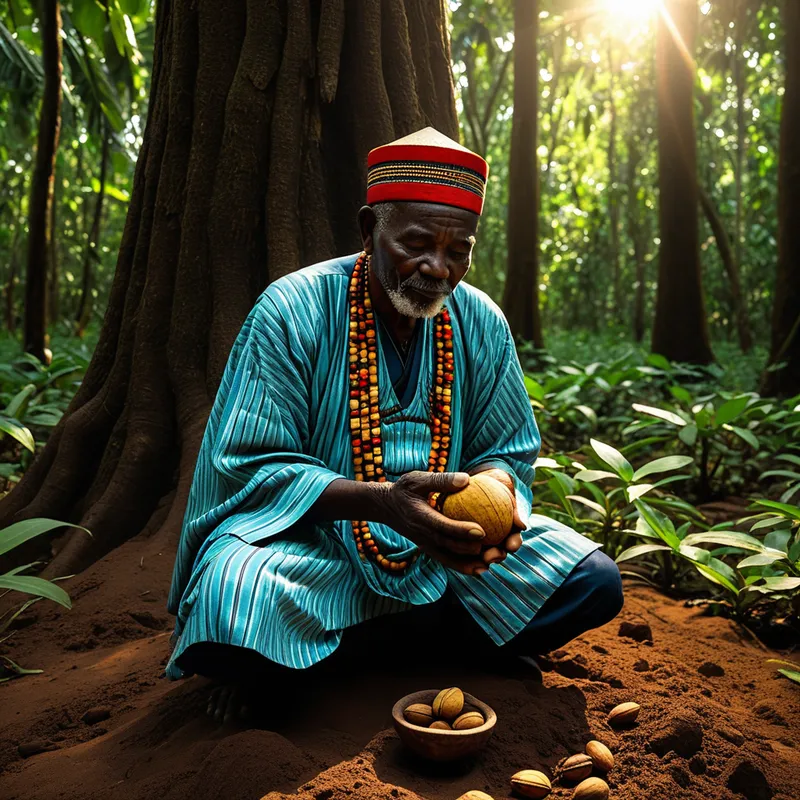
The myth of Ani (also known as Ala) is the bedrock of traditional Igbo cosmology, originating in what is now southeastern Nigeria. This is not a mere story of creation; it is the living constitutional document of a people. Passed down not through written texts but through the oral tradition of the elders, the Oha council gatherings, and the ritual practices of the Ezeani, Ani’s narrative was performed and reaffirmed.
Her societal function was multifaceted and utterly practical. She was the divine witness to all oaths; to swear falsely upon Ani was to invite societal and natural catastrophe. She was the ultimate legal authority. Land disputes, crimes of murder (especially kin-killing, or igbu ọchị), and abominations (aru) were understood as direct offenses against her sacred body. The concept of Aru covered acts from incest to the birth of twins (in some historical periods), all seen as violations of the natural and moral order she embodied.
Thus, the myth of Ani served as the glue of ecological and social order. It encoded sustainable agricultural practices (crop rotation, fallowing) as religious law. It established a theocratic democracy where the priest-king’s authority was derived from his role as mediator with the Earth. The myth was the reason behind the ritual, the story behind the law, and the spiritual principle behind community cohesion.
Symbolic Architecture
At its core, the myth of Ani presents a world where matter and morality are indivisible. The Earth is not an inert resource but a sentient, ethical participant in the drama of life.
The body of the world and the soul of the community are one. To wound one is to hemorrhage the other.
Psychologically, Ani represents the Great Mother archetype in its most foundational form. She is the unconscious ground of being itself—the source of all life and the matrix to which all returns. However, she is not a passive, endlessly nurturing figure. She is the Mother with Conditions. Her fertility is contingent upon right relationship, upon psychological and ethical hygiene. She symbolizes the Self’s demand for integrity: the unconscious will withdraw its energy (creativity, vitality) if the conscious ego becomes corrupt, prideful, or lives a lie.
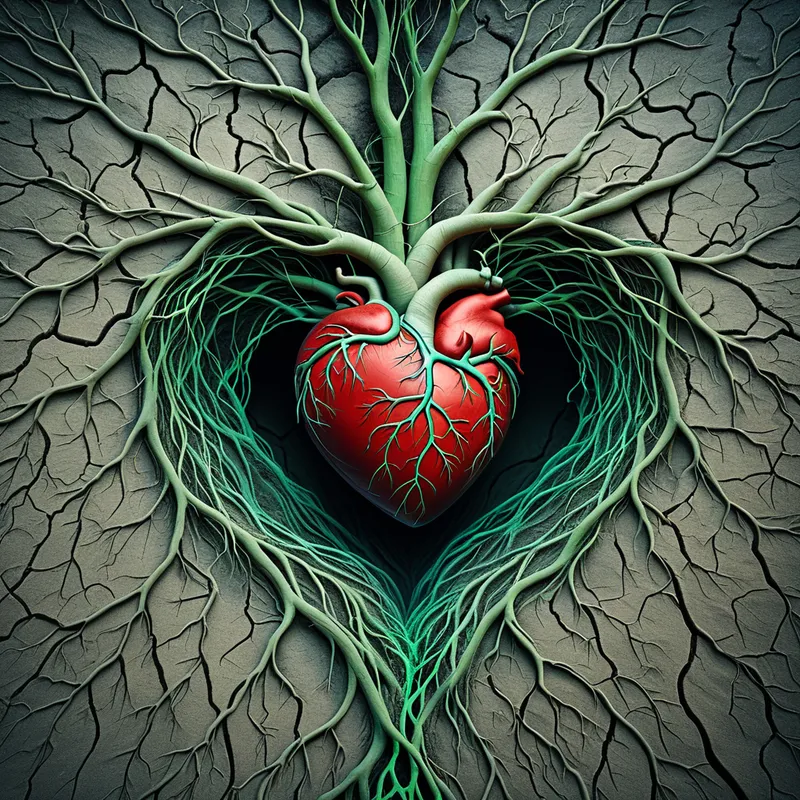
The Aru or abomination is a powerful symbol for repressed guilt, unacknowledged shadow material, and broken inner covenants. The resulting drought is a classic symbol of psychic barrenness, depression, and creative sterility—the direct consequence of an un-lived truth. The ritual confession and cleansing led by the Ezeani symbolize the necessary, often painful, process of bringing shadow contents to light for collective acknowledgment and healing.

The Dreamer's Resonance
When this mythic pattern stirs in the modern dreamer, it often manifests as dreams of ecological or bodily disaster intimately tied to a moral failing. One might dream of a beloved garden turning to dust after telling a crucial lie. Or of the dreamer’s own home cracking and collapsing into a sinkhole following an act of betrayal.
Somatically, this can correlate with feelings of being "ungrounded"—anxiety, dissociation, a lack of vitality. The body itself feels like parched earth. Psychologically, the dreamer is likely at a point where a long-ignored inner value (a personal "covenant") has been consistently violated for the sake of convenience, ambition, or fear. The psyche, in the form of the Ani archetype, is issuing an ultimatum: acknowledge the breach and realign, or face an inner winter.
The dream may present a specific, neglected, or "taboo" part of the dreamer’s own nature (a talent, a grief, a desire) as a poisoned well or a plot of blighted land. This is the personal Aru, the thing walled off from consciousness that is now demanding integration.
Alchemical Translation
The alchemical process modeled by Ani’s myth is that of Nigredo followed by Albedo. The drought represents the Nigredo—the dark night of the soul, the feeling of being cut off from the nourishing matrix of the Self. Everything feels dead, sterile, and meaningless. This is not a punishment, but a severe mercy. It is the necessary death of an old, corrupt way of being.
Individuation requires a famine of the false self to create a hunger for the true one.
The Ezeani’s ritual is the alchemical operation. The confession is the Solutio, the washing away of calcified deceit with the waters of truth. The communal fasting and cleansing represent the Calcinatio, burning away the dross of collective denial. The offering is not a bribe, but a Coniunctio—a symbolic act that re-establishes the connection between the conscious ego and the deep, instinctual Self (Ani).
The gentle, soaking rain that follows is the Albedo—the illumination, the return of psychic moisture and fertility. New life, now rooted in authenticity, can emerge. For the modern individual, this translates to the difficult but liberating work of auditing one’s life: Where have I built my "compound" on sacred ground (my core values)? What oaths have I sworn falsely to myself? The process of stopping, confessing these self-betrayals to oneself or a trusted other (the inner Ezeani), and making tangible amends to one’s own spirit is the ritual that calls the rain. It is how we till the hard-packed soil of our character to once again receive the bounty of our own authentic existence.
Associated Symbols
Explore related symbols from the CaleaDream lexicon:
- Earth — The primary manifestation and literal body of Ani, representing the physical ground of being, fertility, and the ultimate source of all sustenance and law.
- Goddess — Ani embodies the archetypal Goddess as the sovereign, ethical Earth Mother, a divine feminine principle that governs both natural cycles and moral order.
- Mother — She represents the foundational Mother archetype, the womb from which all life emerges and the tomb to which it returns, demanding respect and reciprocity.
- Sacrifice — The ritual offerings to Ani, especially the first fruits, symbolize the necessary return of energy to the source to maintain balance and the sacrifice of ego in confession.
- Order — Ani is the divine principle of Omenala (custom/tradition), establishing the natural and social order that prevents chaos and ensures community survival.
- Drought — In the myth, drought symbolizes the direct consequence of moral and spiritual corruption, a withdrawal of life-force and creativity from the psyche and the land.
- Rain — The returning rain represents forgiveness, renewal, and the restoration of the life-giving connection between humanity and the divine after atonement.
- Ritual — The prescribed ceremonies led by the Ezeani are the practical technology for maintaining the covenant, serving as the bridge between human action and divine response.
- Stone — Symbolizing the unyielding, eternal aspect of Ani’s law and justice, often used in altars (Okwensi) as a focal point for her presence.
- Yam — The premier crop and ultimate symbol of Ani’s bounty; its successful harvest is the visible sign of her favor and the community’s right relationship with her.
- Wound — The blood of kin or the act of building on sacred ground represents a wound inflicted upon the body of the Goddess, mirroring a deep tear in the social and psychic fabric.
- Root — Symbolizes the fundamental, non-negotiable connection to the land and tradition that Ani governs, and the deep, often unseen sources of personal and cultural identity.