The Wilderness: A Somatic Summons to the Uncharted Self
The Somatic Echo
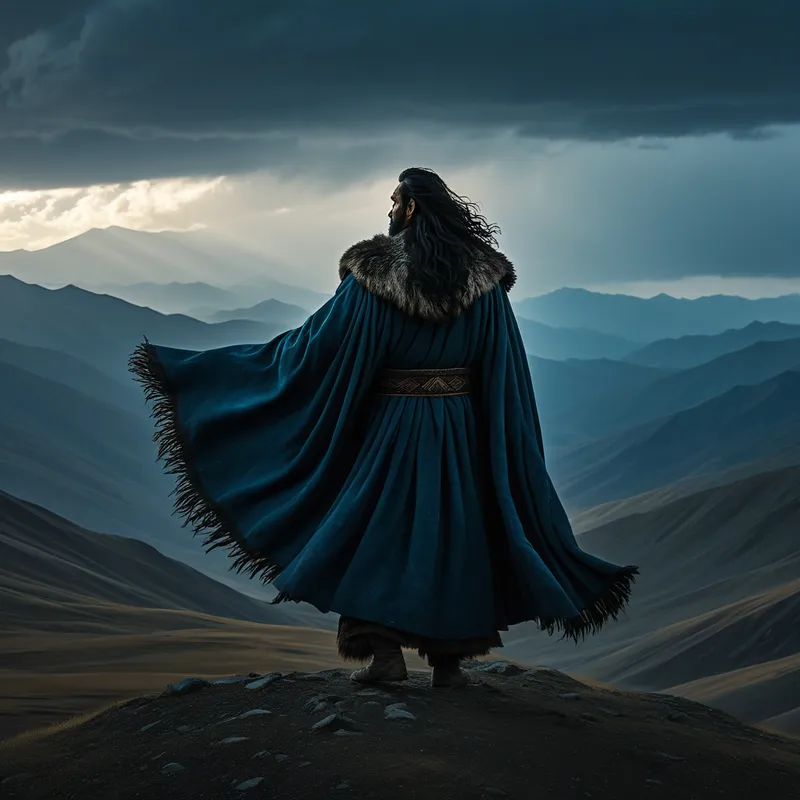
It begins not as an image, but as a texture in the bones. A hollowing out. A sudden, profound silence in the chest cavity where the familiar hum of identity used to resonate. The breath catches, not on fear, but on a vastness—the visceral sensation of scale that renders the personal narrative insignificant. The skin prickles with a cool, ancient air that smells of ozone and damp earth, an atmosphere that predates language. This is the somatic echo of the wilderness: a cellular knowing that you have crossed a threshold where the internal maps have faded, where the curated self you present to the world holds no currency. It is the body’s primal recognition of territory beyond domestication.
The Dreamer's Log
The dreamer stands at the edge of a forest where the trees are woven from coaxial cable and rusted steel, their leaves flickering with dying data-light. A path, not of earth but of fragmented glass, disappears into the thicket. In their hands, they hold not a compass, but their own still-beating heart, which glows with a soft, insistent pulse, the only source of warmth in the chilling air.
This is not a dream of being lost, but of being found by a truth too raw for the polished corridors of the waking mind. The alchemical interpretation: The civilized psyche has been decommissioned; the core organ of intuition now serves as the sole guide through the technological sublime of the unconscious.

The False Lead
The immediate, fearful interpretation is one of abandonment, of being cast out or fundamentally unprepared. This is the false lead. The wilderness dream is not a punishment, nor is it merely a symbol of chaos or “feeling lost” in life. It is not the psyche’s version of bad luck. To mistake it for such is to confuse the demolition of the false shelter with the storm itself. The terror is not of the wilderness, but of the relinquishment it demands—the release of the persona’s carefully constructed village. The dream does not depict a failure of navigation; it announces the glorious, terrifying irrelevance of all old maps.
Psychological Architecture
To enter the wilderness in a dream is to consent, however reluctantly, to a profound act of Shadow integration and Individuation. This is the architecture of becoming. The well-trodden paths of habit, the comfortable roles of parent, professional, partner—these are the cleared settlements of the ego. The wilderness is everything that settlement excluded: the feral emotions, the unpopular thoughts, the creative urges deemed impractical, the grief stored in cellular memory, the rage that could dismantle polite systems. This is Shadow work in its most elemental form. You are not analyzing these exiled parts from the safety of an office; you are walking into their native habitat. Individuation here is not about adding a new skill to your resume, but about encountering the central, animating mystery of your own being—the Self—in the one place it can be met: beyond the border of who you thought you were.
Mythic Resonance
This journey is the oldest story we own. It is Inanna descending through the seven gates of the underworld, stripped of every emblem of her queenship until she stands naked and lifeless before her fierce sister, Ereshkigal—only to be resurrected with deeper, unshakable sovereignty. Each gate is a layer of persona shed in the wilderness. It is also the Hebrew myth of the Exodus, not in the moment of liberation, but in the forty years of wandering in the desert. This was not a pointless detour; it was the necessary wilderness period to let the slave mentality die off, so a people capable of self-governance could be born. The promised land cannot be inhabited by an interiority that still dreams in chains.
Symbolic Nodes
- Untamed Landscapes: Dense forests, vast deserts, trackless moors, uncharted oceans.
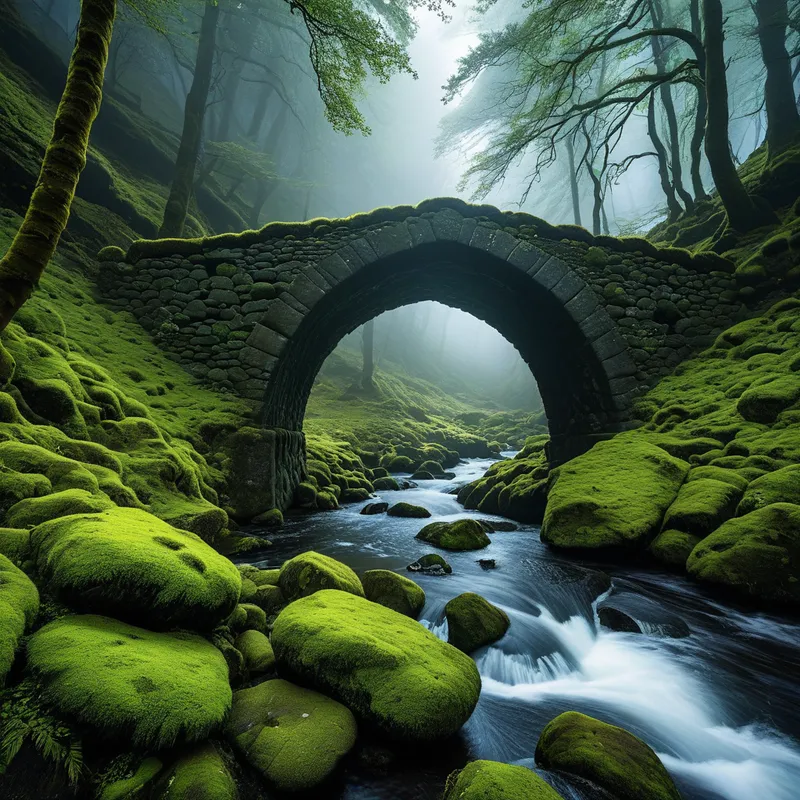
- Border Crossings: Broken fences, crumbling walls, forgotten gates, shorelines.
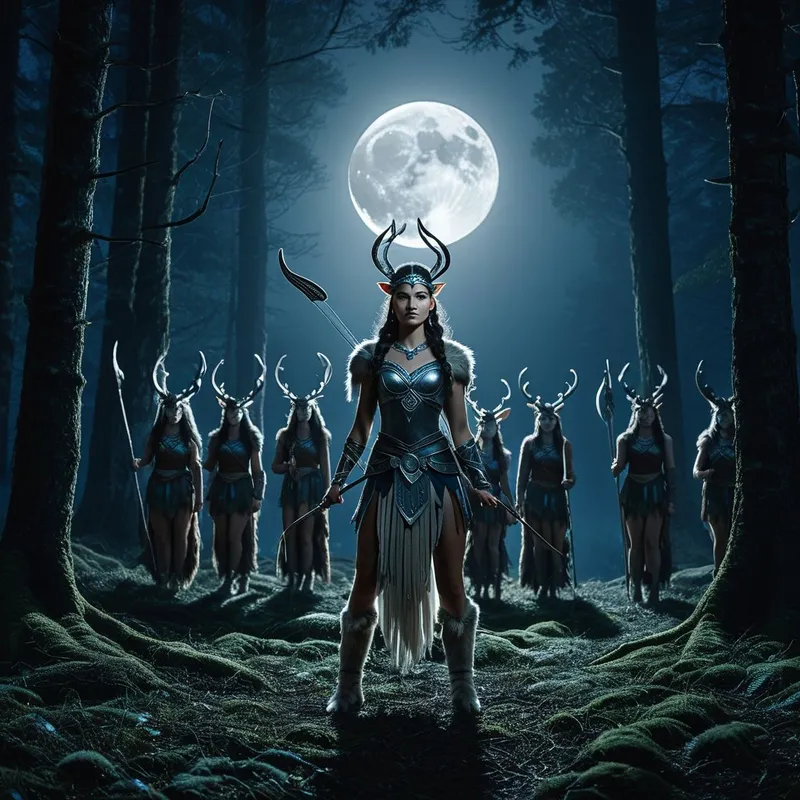
- Feral Guides/Animals: Wolves, hawks, wild horses, or even silent, observing presences in the foliage.
- Archaic Tools: A simple knife, a worn leather pouch, a staff of gnarled wood—implements of direct survival, not complex technology.
- The Abandoned Outpost: A lone cabin, a derelict watchtower, a single campfire—symbols of a temporary, fragile human order within the immense wild.
Archetypal Resonance
The energy of the wilderness dream is most purely that of The Explorer Archetype. This is not the shadow Explorer, who wanders in alienation or aimless escape, but the archetype in its full, potent expression: the Seeker who answers a call from beyond the known world. The somatic echo of hollowness and vastness is the Explorer’s necessary void—the cleared space that makes a new journey imperative. Its core energy is a magnetic pull toward the horizon of the self, a refusal of the pre-fabricated life. The alchemical potential lies in its ruthless authenticity; the Explorer must rely on instinct, resilience, and a direct encounter with reality, transmuting the raw, terrifying data of the uncharted into a unique, hard-won wisdom. The wilderness is the Explorer’s only true home, for it is the only place where the soul’s authentic signature can be fully written.
The Alchemical Process
The transmutation here is of Identity into Essence. The intense psychological heat is supplied by the sheer exposure—the removal of all insulating layers of social identity, achievement, and relational roles. The pressure is the weight of the immense, uncaring silence of the wild, which forces every question back upon the dreamer: Without your name, what are you? Without your story, what persists? This is the nigredo, the blackening, where the old form dissolves in the dark night of the psyche. The terror and grief are for the death of the familiar persona. The transmutation occurs through a paradoxical surrender: you stop trying to find your way and begin to be the way. Sovereignty is forged not by conquering the wilderness, but by recognizing you are made of the same untamed substance. You become a conscious part of the wild system, not a tourist passing through. The gold produced is an unshakable, inner authority born of direct encounter with the core Self.

The Integration Protocol
Question 1: Where in my waking life have I been living in a "settlement"—a role, routine, or belief system—that now feels constricting, artificial, or dead?
Question 2: What "feral" part of myself (an emotion, desire, or truth) have I been treating as a threat that needs to be caged or exiled, rather than a guide that needs to be acknowledged?
Question 3: If my glowing heart in the dream is my core intuition, what one pulse, one insistent knowing, am I currently ignoring because it doesn't align with the map I've been given?
Action 1 (Somatic Reclamation): For 10 minutes, sit or stand in a private space. Close your eyes. Recall the somatic echo of the wilderness—the vastness, the silence. Breathe into that hollow in your chest. Don't try to fill it. Simply let your body remember the feeling of being unmapped. This grounds the experience in your nervous system beyond thought.
Action 2 (Unstructured Cartography): Take a large sheet of paper. Without planning, using any medium (charcoal, ink, paint), let your hand create an abstract map of your internal wilderness. Where are the dense tangles? The open, empty spaces? The hidden springs? Let it be non-representational—a map of feeling, not geography. This creative act externalizes the new, wordless terrain.
Action 3 (Border Ritual): Physically identify a threshold in your home—a doorway, a gate, a property line. Stand at it. Consciously state what persona, what old story, you are leaving behind in the "settlement" as you cross. Step across. On the other side, in silence, spend a moment simply being the unnamed, essential self that exists in the wild. This ritualizes the transition from old identity to raw potential.
Final Validation
To dream of the wilderness is to be chosen for a difficult grace. It means your psyche has deemed you strong enough to withstand the dissolution of the familiar, brave enough to face the magnificent desolation where the soul renews its covenants. The loneliness is real. The disorientation is not a sign of failure, but of fidelity to a process deeper than comfort. This dream is a testament that somewhere within you, a truth has grown too vast for its old container. It is breaking the vessel to become the landscape. You are not being abandoned to the wild; you are being recalled by it. The wilderness you walk is your own becoming, and every step, however hesitant, is a homecoming to a sovereignty you were always meant to claim.