The Dream of Unity: The Alchemy of Becoming Whole
The Somatic Echo
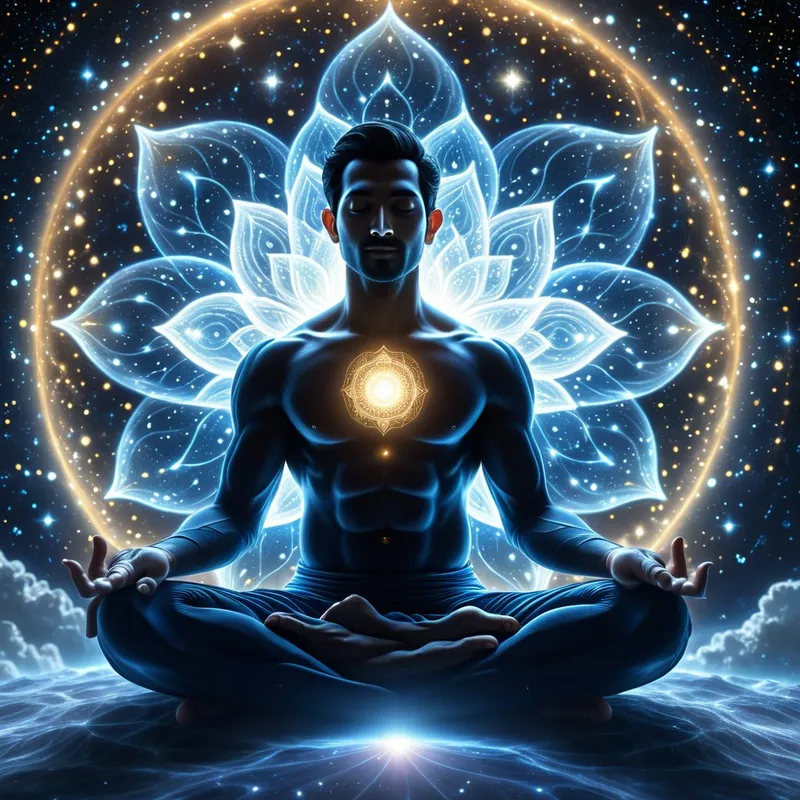
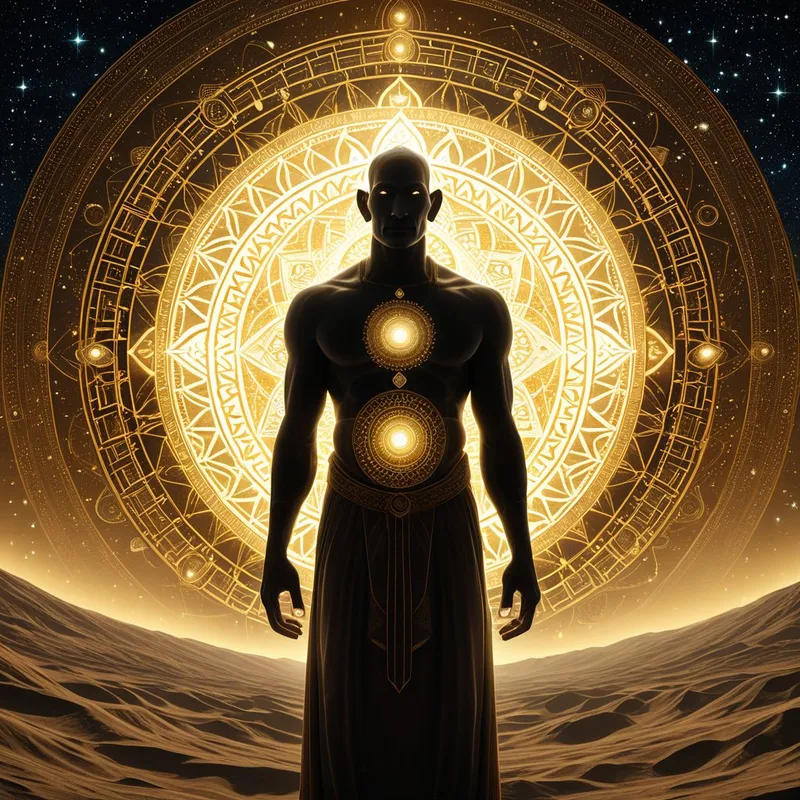
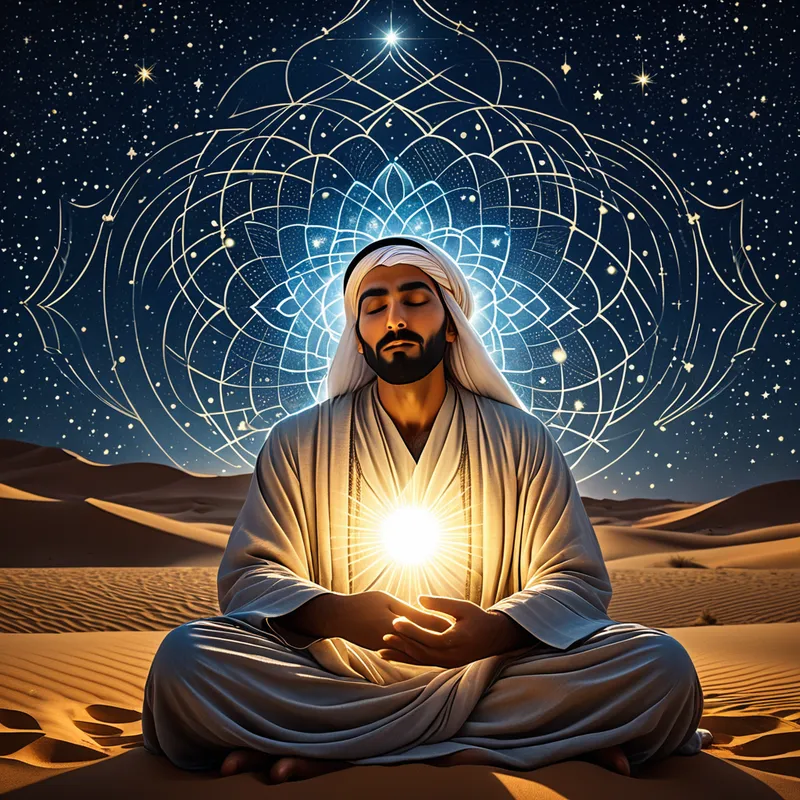
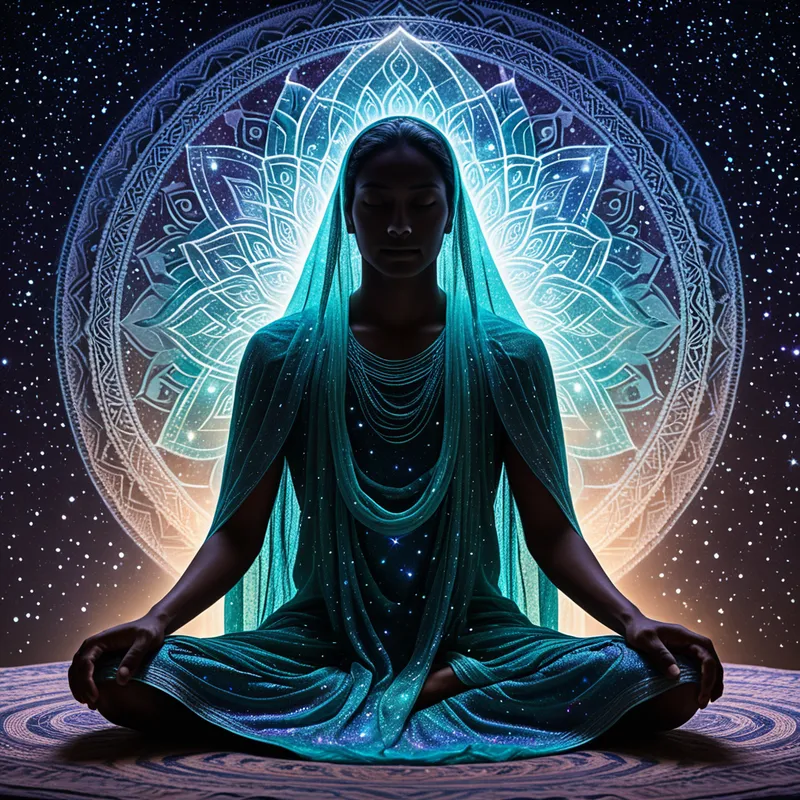
It begins not as a thought, but as a sensation—a deep, resonant hum in the marrow of your bones. It is the feeling of a chord finally resolving after a lifetime of dissonance, a warmth spreading from the center of your chest that dissolves the habitual, icy boundary between “in here” and “out there.” This is the somatic echo of Unity. It is the body’s ancient memory of being an undivided whole, a memory that surfaces in dreams as a profound, wordless knowing. You feel it as a release of tension you didn’t know you carried, the unclenching of a fist you forgot was closed. It is gravity and levitation at once: a grounding pull toward your own center, coupled with a weightless expansion that makes the very air feel like a part of your skin. Before the mind can construct an image of connection, the nervous system sings its old song of belonging.
The Dreamer's Log
You stand in the heart of a vast, silent library that contains every book ever written and every story never told. You are not searching for a single volume, but you feel a magnetic pull. You reach for one, its cover plain and worn. As your fingers brush the spine, the book dissolves into a constellation of golden light. The light does not scatter; it flows like liquid mercury along the shelves, touching other books, which in turn ignite, until the entire library is a single, pulsing neural network of illuminated stories. You are both the reader and the written word.
Alchemical Interpretation: The dream reveals the moment the conscious ego (the seeker) touches a core fragment of the Self (the plain book), triggering a non-linear, systemic awakening where all isolated narratives of identity recognize their inherent interconnection.

The False Lead
Unity is not conformity. It is not the bland homogenization of difference, the silencing of conflict in favor of a polite, featureless peace. This is the False Lead, the spiritual bypass dressed in unity’s robes. True unity does not erase the distinct note of the cello to create the symphony; it requires each instrument’s unique timbre and tension. A dream of unity is not an invitation to lose yourself in the collective, but to find the collective within yourself—to meet your inner tyrant, your orphaned child, your cynical sage, and recognize them as essential players in the same psychic ecology. It is the difference between a dissolved boundary and a permeable, intelligent membrane.
Psychological Architecture
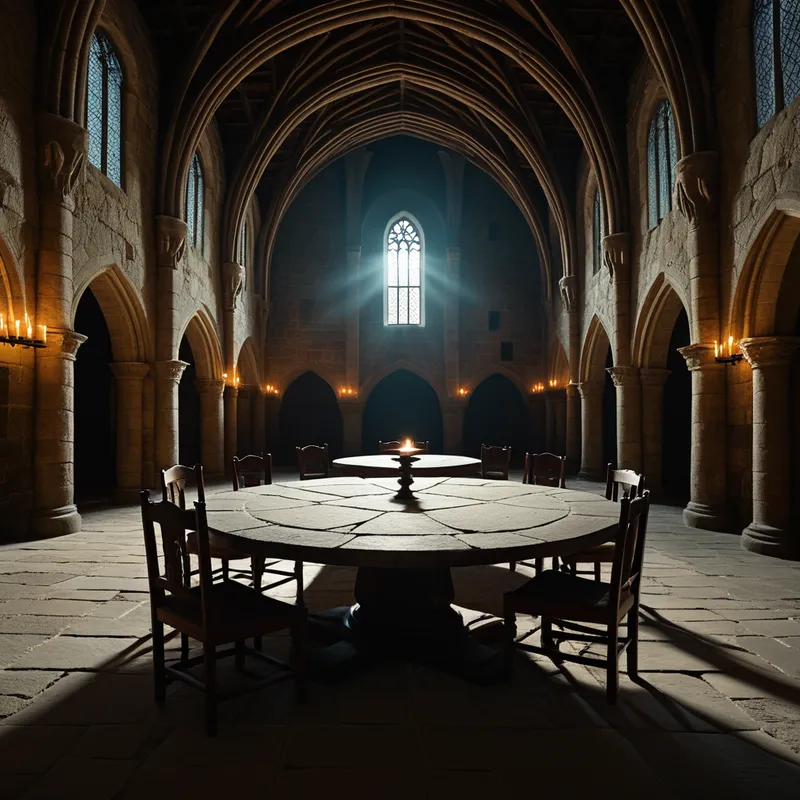
The architecture of unity is built in the shadowlands. It begins with the honest, often brutal, inventory of your internal family: the exiled parts you disown, the managers you over-rely on, the firefighters whose chaos you fear. The dream of unity is the psyche’s blueprint for a council hall where all these members have a seat. The shadow work here is to stop the civil war. It is to turn toward the inner critic not as an enemy to be vanquished, but as a misguided protector whose loyalty is to an old, outdated notion of safety. Individuation, in this context, is not about becoming a perfectly polished, singular being. It is about becoming a competent, compassionate host to the multitude you already are. It is the process where the orphan’s grief, the rebel’s rage, and the ruler’s need for control are heard, honored, and integrated into a functional governance. The sovereign Self emerges not as a dictator, but as the space that holds the dialogue.
Mythic Resonance
We see this in the shattering and remembrance of the Anima Mundi, the World Soul, a concept that whispers through Plato’s writings and the heart of alchemy. It is the original, pristine unity of all things, which fractured, scattering divine sparks into the dense material of creation. Our lives, in this mythic view, are a journey of Tikkun—of gathering these scattered sparks back into a vessel of wholeness. Every act of genuine connection, every moment of profound understanding, is a small reclamation of that original unity. The dream taps directly into this firmware, presenting us not with the pristine whole, but with the visceral process of re-membering. It is also the story of the Norse god Odin, who sacrificed an eye at the Well of Mimir for a drink of wisdom. The unity he gained was not a simple addition, but a transformation born of willing fragmentation—a giving up of one kind of sight (the singular, egoic perspective) to gain another (the deep, interconnected sight of the web of Wyrd).
Symbolic Nodes
- Networks, Webs, or Neural Maps: Visualizations of interconnected systems, often glowing or pulsating with energy.
- Merging Bodies of Water: Two rivers converging, rain falling into the ocean, the disappearance of a shoreline.
- Symbiotic Structures: A tree whose roots are intertwined with crystalline circuits; a machine overgrown with luminous moss.
- Keys Fitting into Locks / Completing a Circuit: A profound sense of “clicking” into place, solving a puzzle you didn’t know was incomplete.
- Echoes and Resonances: A sound you make returning to you changed, or causing a distant, corresponding vibration.
Archetypal Resonance
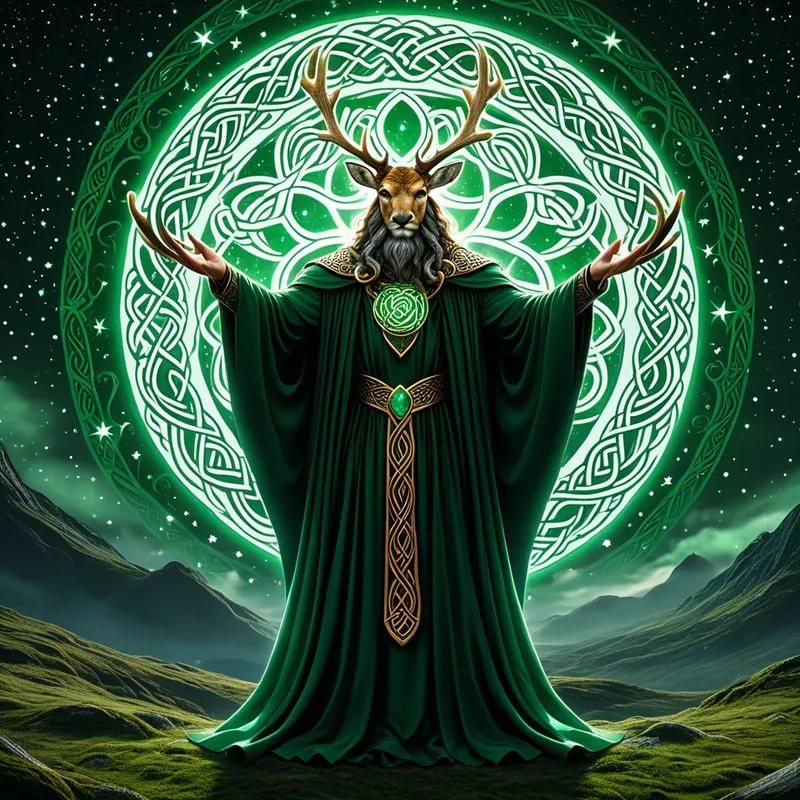
The energy of this theme resonates most powerfully with The Magician Archetype.
The Magician is the archetype of transformation, the knower of the hidden connections between all things. Its core energy is not mere trickery, but the fundamental recognition that reality is malleable because it is interrelated. The somatic echo of unity—that hum of interconnection—is the Magician feeling the latent currents of the psyche’s ecosystem. Where the ego sees separate problems (anxiety, grief, anger), the Magician perceives a dynamic system out of alignment. The alchemical potential here is immense: the Magician does not fight the shadow elements but learns their language, transmuting the lead of inner conflict into the gold of integrated consciousness by revealing the unifying pattern beneath the apparent chaos. The dream of unity is the Magician’s workshop, where the raw materials of the fragmented self are seen as essential ingredients for a greater synthesis.
The Alchemical Process
The alchemy of unity is the process of Solve et Coagula—to dissolve and to coagulate—applied to the very structure of identity. The intense heat required is the unbearable tension of holding opposites. You must hold the love and the rage for the same person, the ambition and the humility, the profound connection and the essential solitude, without allowing one to negate the other. The pressure is the sustained attention on the internal schisms you’ve spent a lifetime avoiding. This is the crucible. The transmutation occurs not when one part wins, but when a third, transcendent perspective emerges—the perspective of the vessel itself, which can contain the contradiction. The grief of lost unity (the orphan’s lament) and the terror of dissolution (the ego’s fear) are the prime materia. Through the heat of conscious, non-judgmental awareness, they are transformed into the profound sovereignty of a self that is no longer at war with itself, a self that can say, “I contain multitudes,” and feel not chaos, but a complex, harmonious order.

The Integration Protocol
Question 1: In your waking life, where do you feel the most profound sense of separation or internal conflict? If that feeling had a texture, a temperature, and a location in your body, what would they be?
Question 2: Recall a moment, however fleeting, of deep connection or “rightness”—with a person, a place, a piece of art, or within yourself. What internal barriers dissolved in that moment to allow that unity in?
Question 3: If your psyche were an ecosystem, what exiled or neglected part is most crucial to invite back to the council table for the whole system to function with greater harmony? What is that part’s primary need?
Action 1 (Grounding the Echo): For five minutes, sit quietly and focus on the physical sensation of your breath. Instead of following it in and out, imagine each inhalation drawing disparate, scattered energies from the periphery of your body and awareness toward your center. On each exhalation, imagine releasing not outward, but deeper inward, as if settling those gathered parts into a common, nourishing ground.
Action 2 (Mapping the Constellation): Engage in unstructured, non-linear writing or drawing. Let a central word or image emerge that represents a current conflict or fragmentation. Without judgment, allow other words, images, or feelings to arise around it. Don’t create a story. Simply place them on the page. Then, with a different colored pen, draw lines, waves, or patterns of energy between these elements. Look not for cause-and-effect, but for resonances, oppositions, and hidden connections. This is a map of your internal system, not a solution.
Action 3 (Ritual of Re-Membering): Choose a small, natural object—a stone, a leaf, a twig. This represents a fragmented or exiled part of yourself. Hold it and speak to it, aloud or silently, not as your therapist, but as a diplomat from your inner council. Acknowledge its existence and its role. Then, take it to a place that feels symbolically “whole” to you—a garden, a body of water, the base of a strong tree—and place it there with the intention of reintegrating its essence back into your internal landscape. Leave it, or keep it as a token of the renewed alliance.
Final Validation
The path to unity is often paved with the sharp stones of acknowledged separation. To feel the ache of disconnection is not a failure, but the first, honest note of the soul’s longing for wholeness. It is a difficult, demanding dream because it calls you to end a war you may have mistaken for peace—the cold peace of exile and division within yourself. Honor that difficulty. Then, remember the dream’s deeper message: the library is already within you, every story already written. The unity you seek is not a distant destination to be reached, but a forgotten language to be remembered. You are not assembling something broken; you are recognizing the luminous, interwoven pattern that has been there all along, waiting for your conscious touch to illuminate the entire, breathtaking network.