
The Alchemy of the Forbidden: Temptation as a Dream of Integration
The Somatic Echo
Before the mind conjures the forbidden fruit, the locked door, or the seductive whisper, the body knows. Temptation announces itself not as a thought, but as a somatic gravity—a pull in the solar plexus that feels like both a hollow ache and a magnetic thrill. It is a quickening of the pulse that is not quite fear, a warmth in the palms that is not quite readiness. The breath shallows, drawn toward the object of focus as if the air itself is thinner, more potent, in that direction. There is a tension in the jaw, the subtle clench of a "no" fighting a deeper, cellular "yes." This is the pre-verbal language of desire meeting prohibition, a civil war waged in the nervous system before the dream’s narrative even begins. It is the echo of a choice your biology has already sensed, waiting for your consciousness to catch up.
The Dreamer's Log
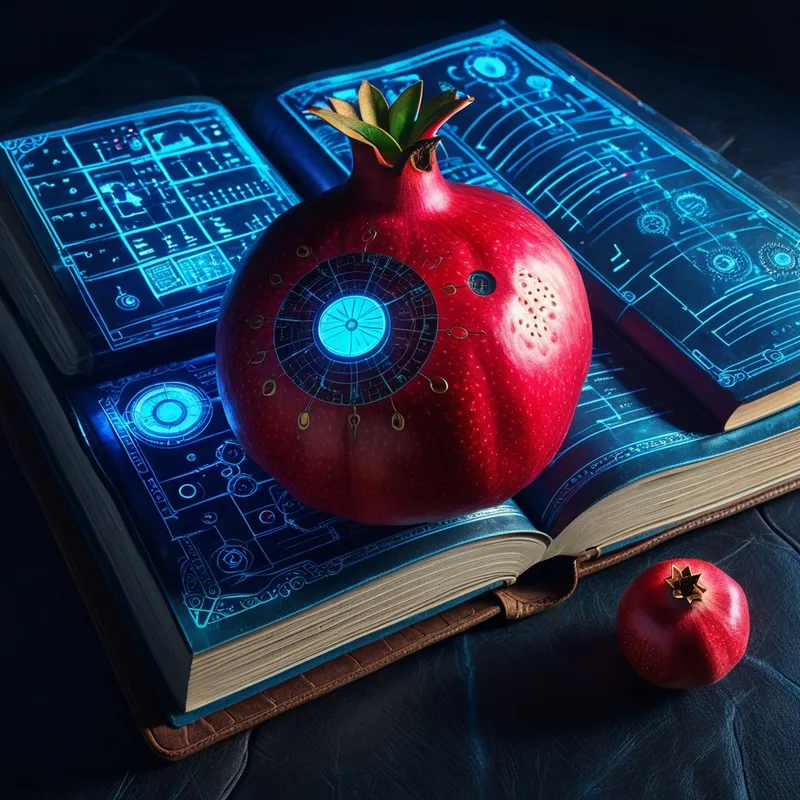
In the dream, I am in my old study, but it is now a hybrid of a library and a server room. My task is clear: to complete a critical systems analysis. On the central terminal, the data streams flow in orderly, sanctioned green lines. But on a forgotten secondary monitor, pulsing in the periphery, is a single, illicit file—labeled only with a shimmering, unknown glyph. I know opening it would corrupt the primary mission, unravel everything I’ve built. My hand hovers over the mouse. The glyph seems to breathe.
The alchemical interpretation: The dreamer is not being tempted toward chaos, but toward an encrypted part of their own genius, a forbidden data-stream of the Self that the conscious "mission" has deemed incompatible.
The False Lead
Temptation is not a test of moral fortitude sent by some external judge. To see it as such is to remain in a child’s cosmology, where gods and devils place baubles in our path. Nor is it merely the id’s crude hunger breaking through the superego’s walls. That reduction misses the poetry. The tempting object in the dream—be it a person, a substance, a secret knowledge, or a reckless action—is rarely the true target. The temptation is a symptom, not the disease. It is a flare sent up from a disowned part of the psyche, a shadow fragment that has taken on a symbolic form to get your attention. The conflict is not between "good you" and "bad you," but between the current, conscious identity and a powerful, excluded energy that demands inclusion. It is a crisis of wholeness, disguised as a crisis of conscience.
Psychological Architecture
When temptation arises in the dreamscape, it signals a profound moment in the Individuation process: the Shadow is not just lurking; it is courting. According to the internal family systems, this is not a monstrous "exile" trying to sabotage the system. It is a part of you that holds a vital resource—a dormant passion, a repressed anger that could be used for boundaries, a wild creativity deemed too risky—that has been locked away by a managerial "firefighter" part obsessed with control and safety. The dream is the negotiation table.
The shadow’s offering feels "tempting" precisely because it is forbidden by the internal ruling council. To taste it would mean to destabilize the entire inner government. This is the architecture: a rigid, conscious self-structure (the study, the mission, the orderly data) is confronted by a numinous, shadow-structure (the glyph, the peripheral monitor). The terror is not of the object itself, but of the psychic reorganization its integration would require. Who would you be if you allowed that forbidden knowledge, that outlawed desire, into your central narrative? The dream forces you to stand at that threshold and feel the cost of both answers.
Mythic Resonance
This universal firmware runs deep. Recall the story of the Garden. The traditional reading paints the Serpent as a deceiver and the Fruit as a corruptive transgression. But from an alchemical depth perspective, the myth reveals a more profound truth: the Fruit was the Catalyst for Consciousness. Before the taste, there was innocent unity, a childlike existence in the garden. The temptation and its consequence—the "fall"—initiated the painful, glorious burden of self-awareness, of knowing duality (good and evil), and thus the capacity for true choice, morality, and ultimately, redemption. The temptation was the necessary rupture that began the human journey toward becoming individuated gods, no longer merely reflections of a divine will. Similarly, in the tale of Odysseus and the Sirens, the hero does not simply resist their call through brute strength; he has himself bound to the mast of his own consciousness so he can hear the full, devastating beauty of the song without being destroyed by it. He integrates the temptation by experiencing it within a held container. The myth teaches that the goal is not to never hear the song, but to learn how to listen without losing your course.
Symbolic Nodes
- Forbidden Fruit/Food: Knowledge, experience, or pleasure deemed illicit by your inner law.
- Locked Doors/Secret Rooms: Aspects of the psyche or potential life paths that are consciously off-limits.
- Seductive Figures (Known or Unknown): Personifications of disowned qualities—power, sensuality, chaos, freedom.
- Peripheral Monitors/Hidden Files: Ignored intuitions, repressed data, or alternative solutions.
- Precipices/High Places: The allure of a radical perspective shift or a destructive release.
- Offered Objects (Keys, Drinks, Contracts): Concrete symbols of a pact or a point of no return.
Archetypal Resonance
The energy of Temptation most powerfully resonates with The Shadow Magician. The Magician archetype is the master of transformation, the wielder of hidden knowledge and unseen forces to manifest change. Its shadow, however, does not merely lack power; it wields power in the shadows. It is the manipulator, the illusionist, the keeper of secrets for personal gain or out of fear of their true impact. In the somatic echo, the Shadow Magician is that magnetic pull toward the forbidden glyph—it is the intoxicating whisper that promises power outside the sanctioned system. Its temptation is the promise of a shortcut to sovereignty, a secret knowledge that will bypass the hard work of integration. The alchemical potential here is immense: to meet this shadow is to reclaim the very power of transformation it hoards, to bring the forbidden magic out of the periphery and into the center of your being, transforming manipulation into conscious manifestation.
The Alchemical Process
The transmutation of temptation is the alchemy of sacred negotiation. The base metal is the polarized conflict between rigid control and chaotic desire. The heat is applied in the sustained, conscious holding of that tension without acting out or repressing. This is the nigredo, the blackening: you must feel the full, scorching pull of the desire and the icy grip of the prohibition simultaneously, allowing the conflict to dissolve your old, brittle identity.
The pressure is the refusal to take the easy path of either indulgence (which disperses the energy) or condemnation (which buries it). Instead, you turn toward the tempting symbol itself and ask, "What part of me do you represent? What resource do you hold?" This dialogue is the albedo, the whitening. The forbidden fruit is slowly seen not as a trap, but as a carrier of a specific nutrient your psyche lacks—perhaps the pomegranate seeds hold not damnation, but the juice of vital passion. The transmutation is complete (rubedo, the reddening) when the energy bound up in the "temptation" is redeemed and repurposed. The outlawed creativity becomes innovative problem-solving; the forbidden anger becomes unwavering personal boundaries; the seductive chaos becomes a capacity for spontaneous adaptation. The shadow is not defeated; it is deputized.

The Integration Protocol
Question 1: When you feel the pull of the tempting object in the dream, what is the very first, visceral emotion? Is it hunger, fear, curiosity, or a potent mix? Follow that thread.
Question 2: If you were to accept the forbidden offer without any negative consequences, what new ability, perspective, or feeling would you gain? Describe the quality, not the object.
Question 3: What current "orderly system" in your waking life (a routine, a belief, a role you play) would be most threatened if you integrated this forbidden quality?
Action 1 (Somatic Cartography): For one week, when you feel a flicker of "temptation" in waking life—a craving, a procrastination, a sudden rebellious thought—pause. Don’t judge or act. Just place your hand where you feel it in your body and breathe into that space for three cycles. Map the sensation without a story.
Action 2 (Glyph Translation - Creative): Recreate the central symbol of temptation from your dream. Draw, sculpt, or digitally design the forbidden fruit, the glyph, the key. As you craft it, ask it, "What is your true name?" Let the answer arise not in words, but in a color you add, a shape that changes, or a material you choose.
Action 3 (The Conscious Pact - Ritual): Write two contracts. On one page, write the old, internal law that forbids the thing. On a second, write a new, conscious pact that allows the energy behind the thing to be expressed in a specific, integrated way (e.g., "I allow my disciplined work to be infused with moments of inspired chaos"). Burn the first page safely. Fold the second and keep it in your space as a reminder of your sovereignty.
Final Validation
To dream of temptation is to feel the exquisite, terrifying friction of your own becoming. It is a sign that you are outgrowing a once-necessary limitation, and that a richer, more complex version of you is seeking birth. The conflict is not a sign of weakness, but of imminent growth. The path is not to silence the call, but to develop the profound inner authority to answer it—not on its terms, but on yours. The fruit was always meant to be tasted; the task is to learn how to digest its wisdom and walk forward, eyes open, into the wild and holy world your choice has created.