The Somatic Echo of Strength
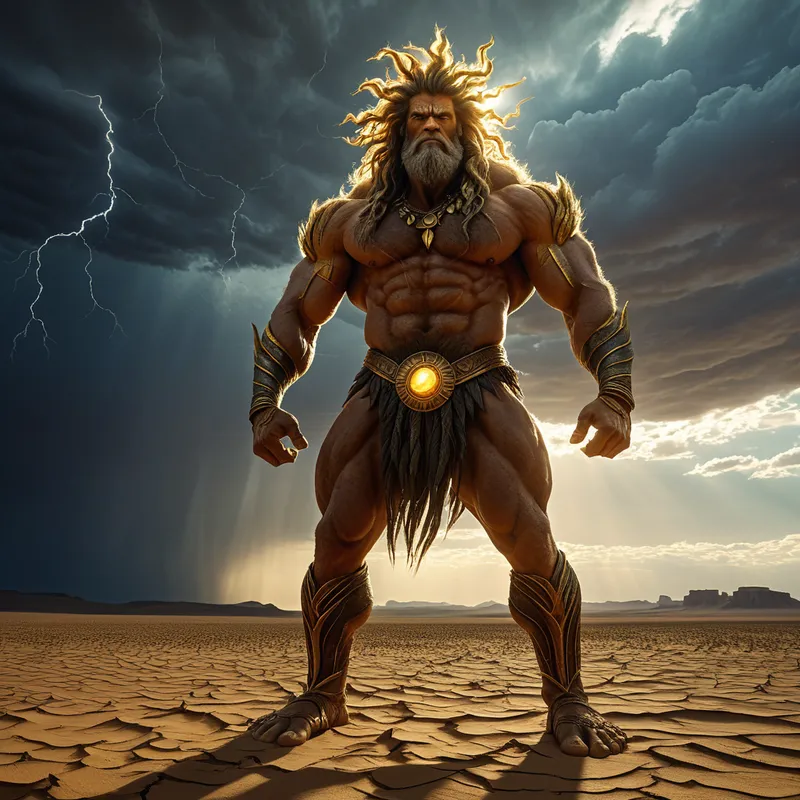
Before the image of a fortress or the myth of a titan, strength announces itself as a somatic truth. It is not a flexing, but a settling. A deep, gravitational pull toward your own center. It feels like the moment after a long-held breath is finally released, and the body remembers it is made of earth and bone, not just air and anxiety. It is the quiet hum in the solar plexus, a low-frequency resonance that says, I am here, and here I will remain. This is not the adrenaline spike of fight-or-flight, but the tectonic certainty of stand-and-witness. The body becomes less a thing to be managed and more a ground to be inhabited—dense, present, and improbably calm amidst the storm. This is the visceral pre-language of a structural integrity being restored from the inside out.
The Dreamer's Log
The dreamer stands in a cavernous, derelict server farm. The air is cool and hums with the ghost of data. All the server racks are dark, their lights dead, cables spilled like entrails. But in the far corner, one single unit glows with a persistent, soft blue light. Its rhythmic pulse is slow, patient, and utterly independent of the dead grid around it. The dreamer walks toward it, not to fix it, but simply to stand beside its quiet, unwavering signal.
This is the alchemy of strength: the discovery of an autonomous power source within the self, operational long after external systems have failed.

The False Lead
Strength is not force. This is the critical misapprehension. Force is external, applied, a tool for domination over an other—whether that other is a person, a circumstance, or a part of yourself. Force shouts. Strength is silent. Force seeks to break what resists it. Strength is what cannot be broken because it has integrated its own fractures. A dream of strength is not a mandate to push harder, arm yourself, or build higher walls. It is often the psyche’s profound correction to a life lived through force—a life of white-knuckled control, relentless striving, and the brittle armor of perfectionism. The dream is showing you the difference between the hammer and the anvil.
Psychological Architecture: The Consolidation of the Core
The shadow work here is the dissolution of the false self—the persona built on borrowed strength. This is the "strong friend," the "unshakeable rock," the one who carries everyone but secretly feels like a hollow statue. The individuation process is the terrifying, liberating act of letting that statue weather. Letting the plaster crack to reveal not weakness, but the rough, authentic material beneath. It is an internal family systems drama where the manager parts, who have been desperately running the show through sheer willpower, finally exhaust themselves. In their surrender, an older, quieter exile is heard: the one who knows how to endure, not just perform. This is not about acquiring a new part, but about the system itself reorganizing around a different, more central principle. The foundation shifts from "I must hold everything together" to "I am together, and from here, I hold what is mine to hold."
Mythic Resonance
We see this not in the myth of Hercules performing his labors, but in the moment Atlas receives a temporary reprieve. The sky is taken from his shoulders. In that moment, what does he feel? Not the rush of freedom, but the profound, shocking memory of his own spine. The weight had become his identity; its removal forces a confrontation with the structure beneath. His strength was never in the holding of the cosmos, but in the architecture that made such holding possible—an architecture now asked to stand for itself. Similarly, the Bodhi Tree is not strong because it fights the wind, but because its roots have delved so deeply into the dark earth that the storm becomes a phenomenon it observes from a place of unassailable belonging. These myths speak of a strength that is relational and rooted, not isolated and imposing.
Symbolic Nodes
- Unbreakable Objects: Diamonds, bedrock, forged steel, ancient trees, mountains.
- Silent Power Sources: Deep wells, dormant volcanoes, humming transformers, nuclear cores, beating hearts.
- Structural Integrity: Bridges that hold, foundations being poured, deep roots, load-bearing walls, spinal columns.
- Calm Centers: The eye of a storm, a still point in a spinning room, a weighted object, a deep pool.
Archetypal Resonance
The energy of this theme resonates most deeply with The Ruler Archetype—not in its shadow expression of control, but in its mature form of sovereignty. The Ruler’s core desire is for order, stability, and a kingdom that thrives. In the somatic echo of strength, we feel the Ruler’s imperative: the inner kingdom must have a stable, just, and resilient core. This archetype activates not to dominate the external world, but to establish rightful governance within. Its shadow—the Tyrant—is the force we mistake for strength, the ego’s desperate control. The alchemical potential lies in the Ruler’s journey from tyrannical control over one’s own emotions and parts, to benevolent sovereignty that allows all inner citizens to exist, yet are held within a secure and defined container of the self.
The Alchemical Process: From Compression to Diamond
The alchemical nigredo, the blackening, for strength is the experience of sheer pressure. It is the weight of responsibility, grief, or circumstance that feels annihilating. This is the necessary heat and pressure. The psyche’s carbon, all its disparate experiences and traumas, is compressed in this crucible. The transmutation does not happen by escaping the pressure, but by surrendering to its central point. One stops trying to distribute the weight evenly (a strategy of force) and instead lets it press directly down upon the core. In that focused, unbearable density, the molecular structure begins to change. The chaotic carbon of suffering slowly, atom by atom, re-orders into the unbreakable lattice of the diamond. The grief is not gone; it has been transformed into a new structural integrity. The terror is not banished; it has become the clarifying agent that burned away everything that could not withstand this specific gravity. The result is not invulnerability, but a clarity and endurance that arises from the very material of your brokenness, now brilliantly reconfigured.
The Integration Protocol
Question 1: Where in my life have I mistaken force (pushing, controlling, striving) for strength (enduring, grounding, containing)? What exhausts me, and what steadies me?
Question 2: If my current sense of self were a structure, what is its foundation made of? Approval? Achievement? Caretaking? What would a foundation made of silent, self-evident presence feel like?
Question 3: When I feel overwhelmed, where in my body do I first flee? Can I imagine that pressure not as something to escape, but as a gravity pulling me back to a single, solid point within?
Action 1 (Weighted Grounding): Find a heavy object—a stone, a thick book, a weight. Sit quietly, place it in your lap or hold it firmly. Do not meditate away from its weight. Meditate into it. Feel its pull downward as an anchor, drawing your awareness into your center of gravity. Breathe as if from that dense, weighted core.
Action 2 (Blueprint of the Core): Engage in unstructured drawing or diagramming. Without planning, let your hand create a visual representation of your "inner architecture." Don't draw a self-portrait. Draw structures: maybe a labyrinth, a tree’s root system, a geometric lattice, a fortress floorplan. Let the image reveal what feels central, what is load-bearing, and what is merely decorative facade.
Action 3 (Sovereign Declaration): Write a simple, one-sentence "law" for your inner kingdom. It is not a goal or an affirmation, but a principle of governance. For example: "In this realm, exhaustion has the right to rest," or "Here, vulnerability is permitted safe passage." Write it on a card. This is not about enforcing the law, but about establishing the Ruler’s presence who decrees it.
Final Validation
It is hard, this work. It is hard because it asks you to stop building fortresses and instead to become the unshakable ground upon which all building and unbuilding happens. It asks you to trade the familiar fatigue of holding it all together for the terrifying responsibility of being together. The dream of strength is your psyche’s deepest vote of confidence. It is not showing you a power you lack, but echoing back a truth you have already earned in the silent, pressurized depths of your living: you are being reconstituted into something that can bear the beautiful, terrible weight of being alive. The strength was always there, not as a weapon to wield, but as a core to inhabit. You are coming home to your own unbreakable foundation.