The Dream of Sacred Space: Architect of the Inner Sanctuary
The Somatic Echo
Before the image forms, the body knows. It is a sensation of profound, cellular stillness. The breath deepens without effort, settling into a rhythm older than thought. The shoulders drop, as if a weight you’ve carried for years has been silently lifted by an unseen hand. There is a warmth in the center of the chest, not of passion, but of presence—a quiet, humming resonance, like a tuning fork struck against the bedrock of your being. This is the somatic echo of sacred space. It is not an emotion, but a state: the visceral recognition of a boundary that protects, a geometry that holds, an emptiness that is profoundly full. It is the feeling of finally being inside yourself, the architecture of your psyche suddenly palpable and safe.
The Dreamer's Log (Case Vignette)
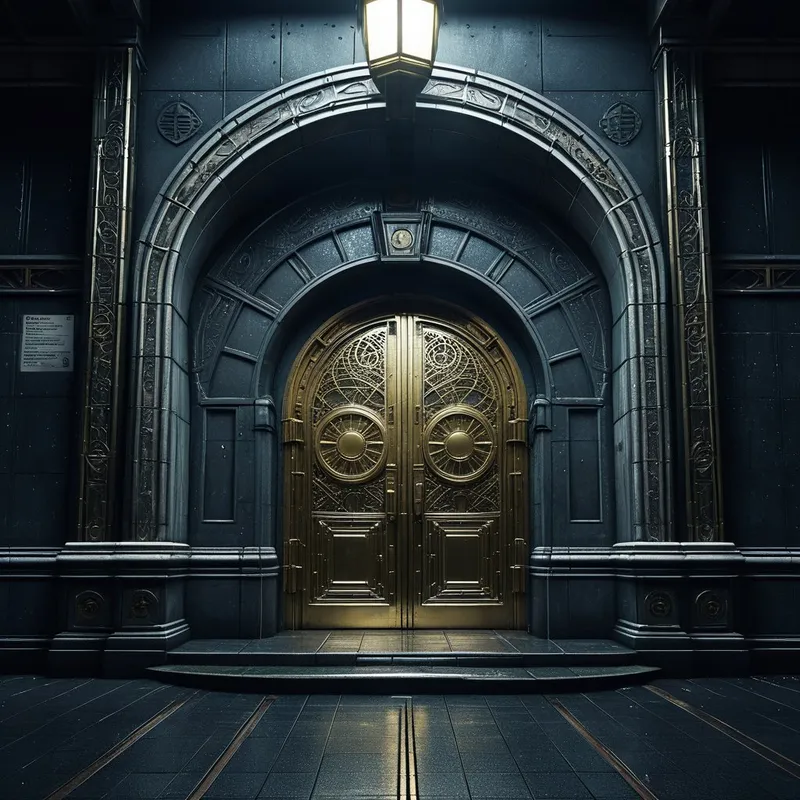
I am in a forgotten, rain-slicked subway station, all echoes and damp concrete. Among the cracked tiles and faded posters, I find a small, ornate door of tarnished brass. It has no handle, but when I place my palm against it, it opens inward. Beyond is not another tunnel, but a vast, silent library. The air is dry and smells of old paper and cedar. Sunlight, from no visible source, falls in perfect columns between endless shelves. I know, with absolute certainty, that every book here is a volume of my own unlived life.
Alchemical Interpretation: The dreamer’s psyche has located the hidden interface—the brass door—between the neglected, communal underworld of daily transit and the meticulously archived, sovereign repository of personal potential.
The False Lead
This theme is not about physical locations of worship, nor is it a mere metaphor for “a happy place” to which one escapes. To mistake it for escapism is to commit a profound error. A sacred space in a dream is not a retreat from the world, but a deeper engagement with the source code of the self. It is not a denial of chaos, but the revelation of the latent order within it. The false lead is to believe the space is out there to be found, rather than recognizing it as an emergent property of an internal alignment that must be built from the raw materials of memory, trauma, and longing.
Psychological Architecture
To dream of constructing, finding, or violating a sacred space is to engage in the most fundamental act of psychological architecture: boundary-making. This is the Shadow work of the Ruler and the Orphan in dialogue. The Orphan within knows every violation, every place where the walls were breached, and it carries the blueprints of those wounds. The Ruler’s task is to take those very blueprints—not to rebuild the same fragile walls, but to design a new citadel using the rubble as its foundation.
The process is one of fierce discernment. What energies are allowed to cross this threshold? Which memories are granted a permanent chapel, and which are respectfully archived in the catacombs? This is not repression, but conscious curation. The terror in these dreams often arrives as defilement—the sacred spring polluted, the temple overrun. This terror is the signal that a core boundary in the psyche’s sovereignty is being, or has been, threatened. The grief is for the sanctuary we forgot we ever had. The work is to become both the mason who builds the wall and the mystic who understands that the true sanctuary is the space between the stones—the conscious, held emptiness.
Mythic Resonance
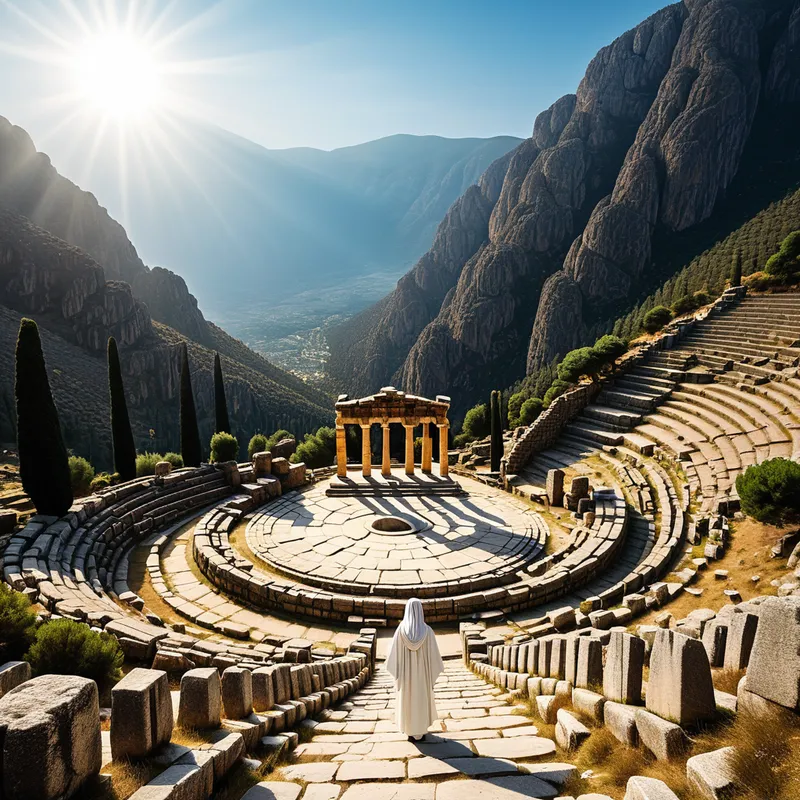
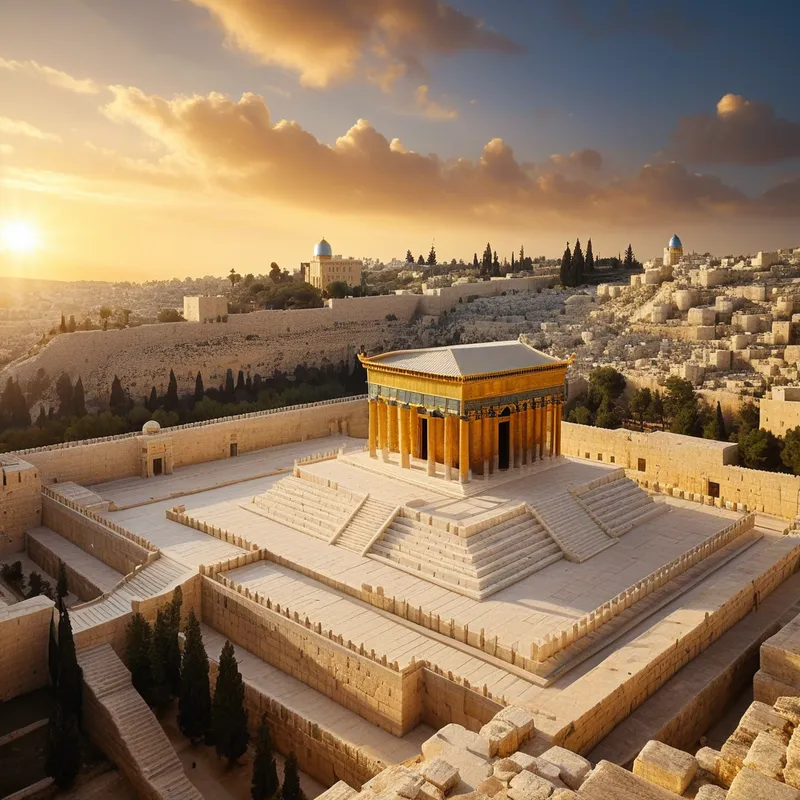
We see this eternal firmware in the myth of the Temenos, the consecrated precinct around a Greek temple. It was not just the building that was holy, but the cleared, marked ground upon which it stood—a space set apart from the profane world. To cross its boundary was to enter a different order of reality. Similarly, in the Arthurian cycle, the Grail Castle appears not on any map, but only to the knight who has been sufficiently purged of his own arrogance and trauma. The castle itself is a sacred space that manifests as a reflection of the seeker’s inner state; it cannot be found by searching, only by becoming. Both myths teach the same alchemy: the outer sanctuary is a projection of an inner condition of worthiness and order.
Symbolic Nodes
- Hidden/Sealed Rooms within a familiar house.
- Ancient Libraries, Archives, or Scriptoriums.
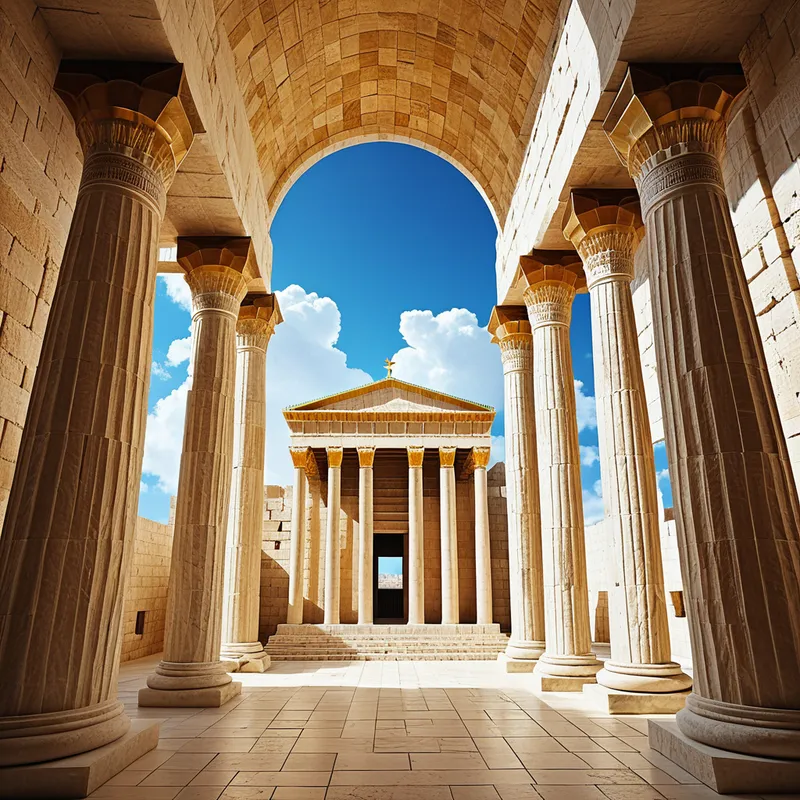
- Geometric Chambers (domed, hexagonal, perfectly circular).
- Cleared Circles in dense forests or overgrown gardens.
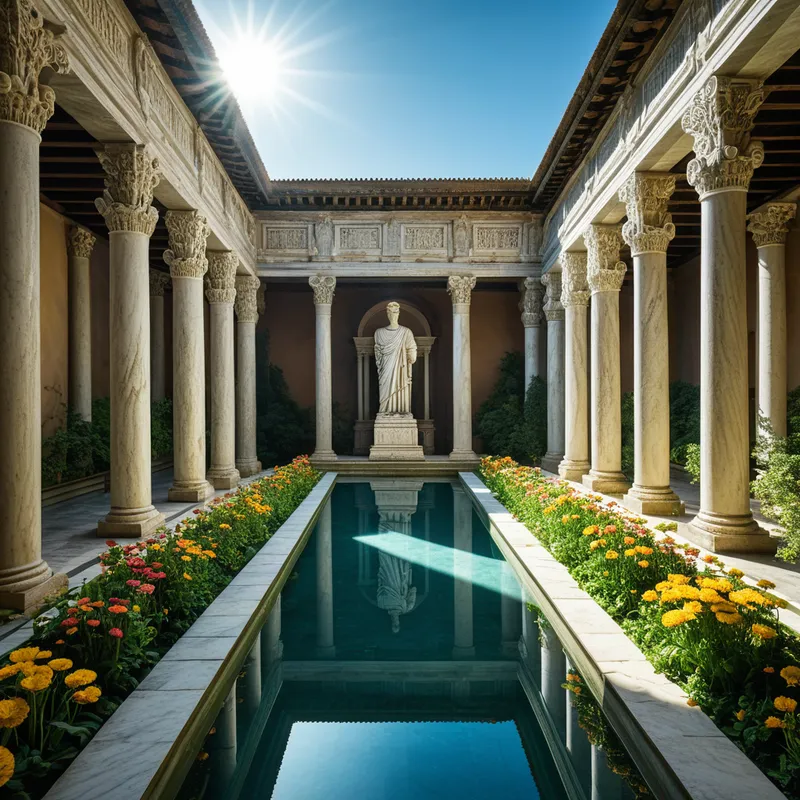
- Walled Gardens or Courtyards.
- Untouched Natural Springs or Caves.
- Empty, Sunlit Halls with perfect acoustics.
- A Single, Illuminated Object in an otherwise dark space (a plinth, a book, a vessel).
Archetypal Resonance
The energy most active in this theme is that of The Ruler Archetype. The Ruler’s core mandate is to create order, structure, and a kingdom where the self can thrive in sovereignty. The somatic echo of sacred space—the deep, calm certainty—is the feeling of the Ruler’s authority established within. This archetype does not seek to control the external world, but first to bring impeccable order to the internal realm. Its shadow, the Tyrant, manifests when this need for order becomes rigid control, turning the sanctuary into a prison. The alchemical potential here is for the Ruler to move from a paradigm of control to one of stewardship, governing the inner landscape with wisdom rather than fear, establishing laws (boundaries) that protect life (potential) rather than merely restrict it.
The Alchemical Process
The transmutation here is from profane scatter to sacred center. The base material is the chaos of unintegrated experience—the psychic debris of a life lived reactively. The heat and pressure required are supplied by a sustained, conscious withdrawal of energy from external validation and drama. This is the negredo, the darkening: the often-lonely work of sitting in the seeming emptiness of your own company.
The fire is the courage to say “this is mine, and that is not,” to perform the constant, subtle surgery of discernment. The sacred space emerges not by building something new on top of the old, but by clearing. It is a subtractive art. You dissolve the clutter of others’ expectations, the moldering trophies of outdated selves, the invasive weeds of unresolved grief. What remains, in that cleared and hallowed ground, is the vas, the vessel of your authentic presence. The terror of emptiness becomes the awe of potential. The grief for lost boundaries becomes the gratitude for a sovereignty hard-won.
The Integration Protocol
Question 1: In your waking life, where do you feel the most profound sense of "permission"—to be silent, to be messy, to be exactly as you are? How does that place's architecture (literal or energetic) reflect or differ from the sacred space in your dream?
Question 2: What one object, memory, or belief currently resides in your inner sanctuary that does not deserve its place of honor? What would it mean to respectfully relocate it?
Question 3: If the sacred space in your dream had a single, immutable law—a primary commandment for all who enter—what would that law be? How are you, or are you not, living by that law now?
Action 1 (Threshold Marking): Physically demarcate a small, consistent space in your home. It could be a corner of a room, a windowsill, a specific chair. Do not fill it. For one week, simply sit at its threshold for five minutes each day. Do nothing but breathe and feel the difference between "here" and "there." You are practicing the somatic act of creating a boundary.
Action 2 (Cartography of the Interior): Without planning, create a visual map of your dream's sacred space. Use any medium—pencil, digital collage, watercolor. Do not aim for accuracy, but for felt sense. Where is the center? Where are the entrances? Where is the light source? Let the drawing reveal the architecture of your own inner governance.
Action 3 (The Ritual of Clearing): Choose one small, physical space you inhabit daily (a drawer, a shelf, your email inbox). Before organizing it, perform a ritual of de-consecration. Acknowledge that it has held energy that no longer serves. As you clear and order it, do so with the intention that you are not just tidying, but actively reclaiming sovereignty over a fragment of your material world, making it a mirror of your desired inner order.
Final Validation
To dream of a sacred space is to feel, acutely, its absence in your waking life. That longing is not a flaw, but a compass. It points toward the most demanding and rewarding construction project you will ever undertake: the building of a self that can truly be a home. The work is slow. The bricks are heavy. You will sometimes feel like a stranger on your own land. This is all part of the architecture. Trust the blueprint that emerges from your deepest dreams. You are not finding a sanctuary. You are, piece by conscious piece, becoming one.