The Alchemy of Seeing: When Dreams Shift Your Perspective
The Somatic Echo
It begins not with an image, but with a sensation. A vertigo that has nothing to do with height. A subtle, internal tilting, as if the gyroscope of the self has been gently, irrevocably nudged. You feel it in the pit of the stomach—a hollow, weightless lurch. In the subtle tension behind the eyes, as if the muscles that focus your reality are straining against a new, unseen lens. This is the body’s first, wordless knowing. It is the somatic echo of a psyche preparing to change its vantage point, long before the conscious mind receives the memo. The old ground of being feels less solid, not because it is crumbling, but because you are being prepared to perceive it from a different angle entirely. The familiar emotional landscape—the well-worn paths of grievance, the comfortable valleys of narrative—suddenly seems like a map you can no longer trust, because you are no longer standing in the spot marked You Are Here.
The Dreamer's Log
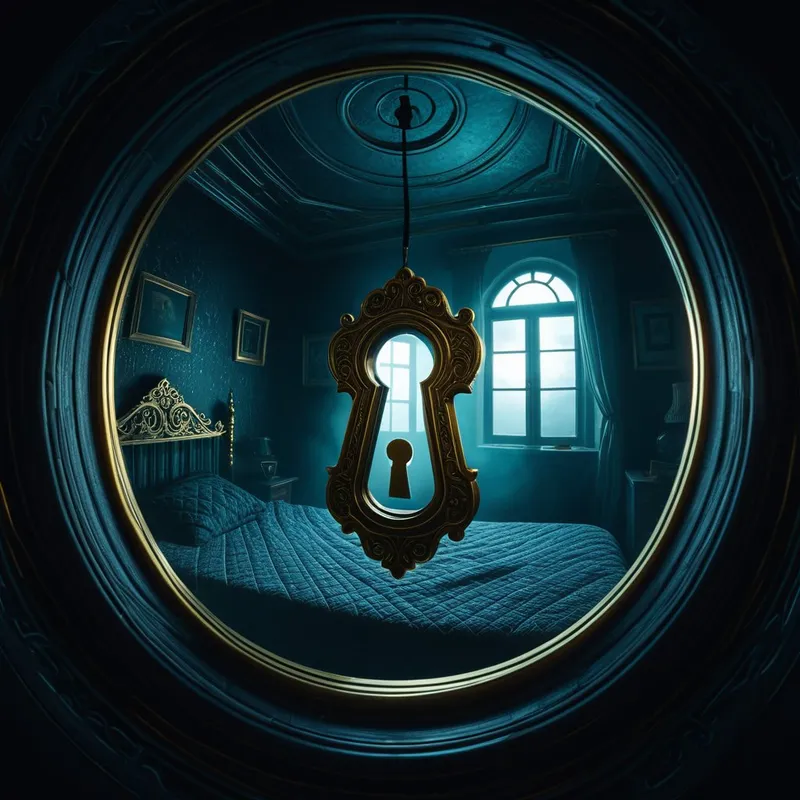
I am floating before a massive, ornate keyhole in a featureless dark wall. When I press my eye to it, I do not see a room, but my own childhood home. Yet the perspective is all wrong—I am viewing it from the ceiling corner, like a security camera, watching a ghost of myself as a child reading on the floor. The scene is silent, distant, and utterly clear.
This is the dream’s alchemical instruction: to witness your own history not from within the remembered feeling, but from a point of compassionate, detached observation. The key is not to enter, but to see.
The False Lead
A dream of shifting perspective is not a dream of mere confusion or “bad luck.” It is not the anxiety of being lost, which speaks to the The Shadow Explorer. Nor is it the simple frustration of obstacles, the domain of the thwarted Hero. The terror here is more fundamental: it is the terror of the witness. It is the chilling, liberating realization that the “I” who suffers, the “I” who triumphs, the “I” who narrates the story of your life, is itself a location—and that location can be moved. To mistake this for chaos is to miss the profound structural invitation. The dream is not dismantling your reality; it is offering you a blueprint from a higher floor.
Psychological Architecture
This is the core of Shadow work disguised as geometry. To change perspective is to willingly de-center the ego’s command post. It requires allowing other, exiled parts of your internal family to come to the viewing window. The furious child, the abandoned lover, the arrogant critic—each holds a piece of the truth, and each sees the world through a lens distorted by its own pain or need. Individuation here is not about building a stronger, singular “I,” but about constructing a perceptual apparatus capable of holding multiple, contradictory points of view simultaneously without shattering. You are not fixing a broken part; you are upgrading the operating system of consciousness from a single, fixed camera to a spherical, omni-directional sensor. The grief that arises is for the loss of a simple, singular story. The terror is the free-fall of relativity before the new ground forms.
Mythic Resonance
Consider the story of the Buddha under the Bodhi tree. The temptation by Mara is not merely an attack, but a final, desperate assertion of every possible perspective from within the ego’s domain: fear, desire, duty, pride. The Buddha’s enlightenment is, at its core, a radical shift in perspective. He does not fight the visions; he changes his relationship to the seer. He touches the earth not for stability, but to anchor a new vantage point—one that encompasses all of reality without being identified with any single part of it. Similarly, in the Greek tale, Zeus releases the Titans from Tartarus. This is not just a political shift; it is a cosmological re-framing, an integration of the deep, chthonic past (the repressed, the foundational) into a new Olympian order (the conscious, the structured). The world itself had to be seen from a new heaven.
Symbolic Nodes
- Drone/Overhead Shots: A sudden, aerial view of your own life.
- Fisheye Lenses & Warped Glass: Reality bending, revealing the curvature of your perceptual field.
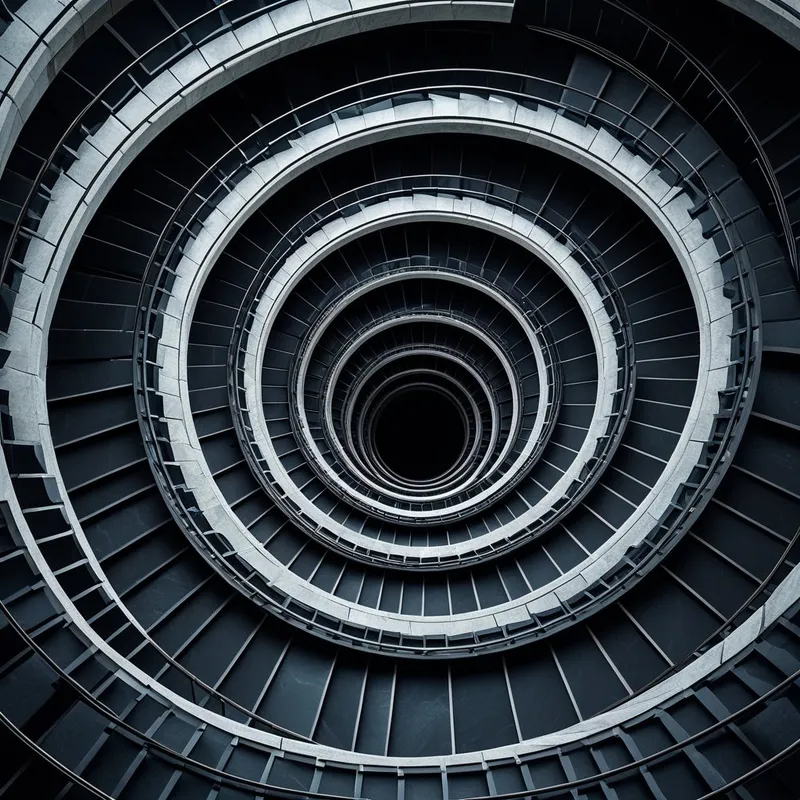
- Shifting Floor Plans & Impossible Architecture: The psychic structures themselves becoming fluid.
- Viewing Portals: Keyholes, windows, screens, or mirrors that show a scene from an impossible angle.
- Being Two Places at Once: The visceral split of simultaneous, disparate awareness.
- Micro/Macro Shifts: Zooming infinitely into a texture of your skin or out to a stellar view of your city.
Archetypal Resonance
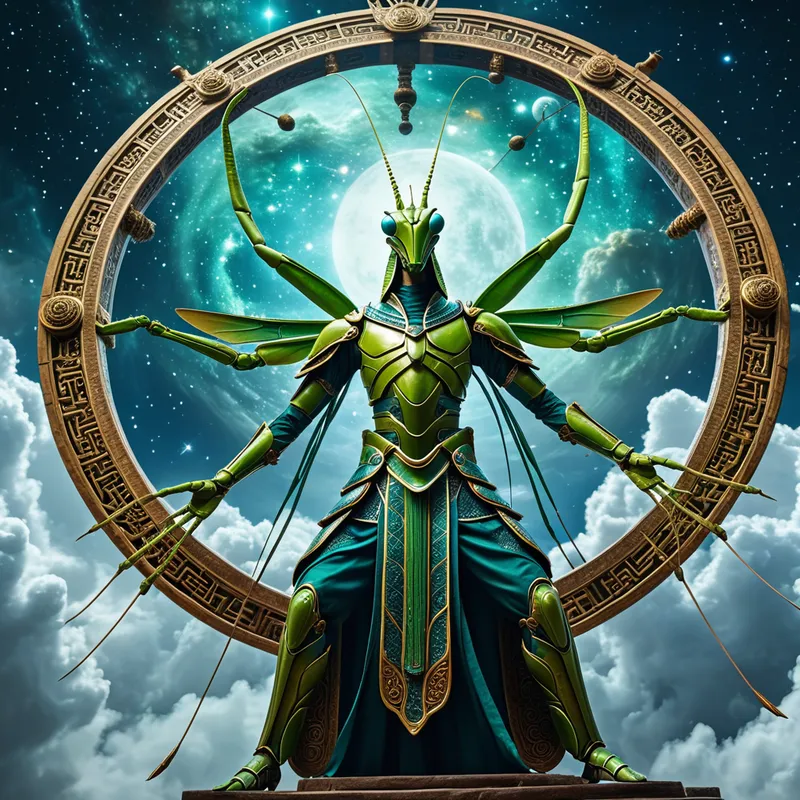
The energy at play here is that of The Sage Archetype. Not the Sage as a mere dispenser of knowledge, but the Sage as the sovereign witness, the one who seeks the perspective that liberates. Its somatic echo is that cool, clear feeling behind the eyes, the quieting of the visceral storm in favor of a wider observation. The Shadow Sage—the Dogmatic, the Judgmental—is what we flee: the part that clings to one “right” way of seeing and uses it as a weapon. The alchemical potential of this theme is the Sage’s ultimate gift: to exchange the heat of being in the story for the light of seeing the story. It is the move from participant to conscious author, from one who is framed to one who holds the frame.
The Alchemical Process
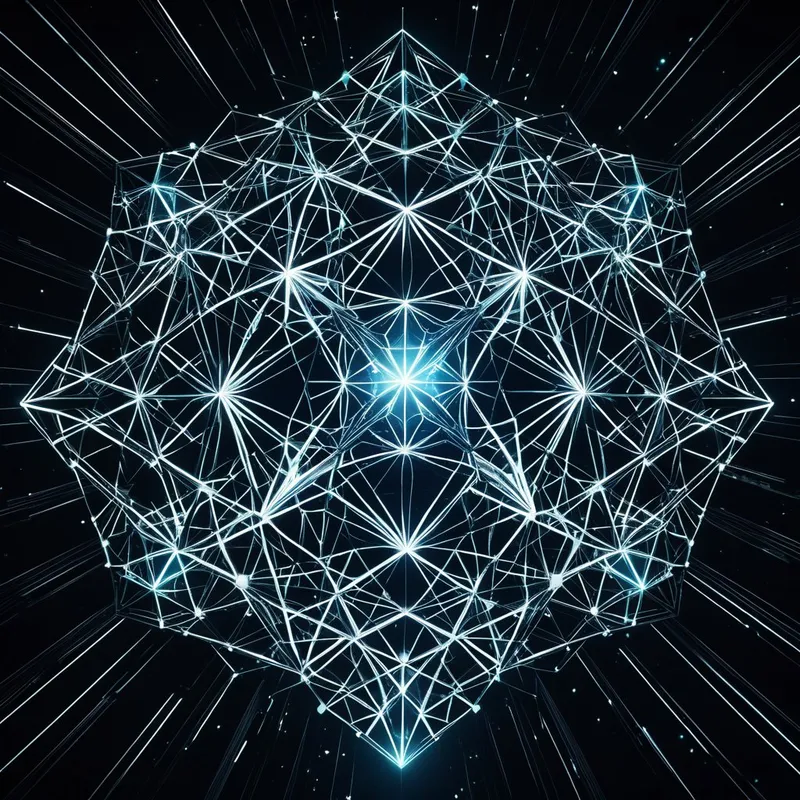
The transmutation here is of identified experience into conscious witness. The prima materia is the raw, subjective pain or fixation—the argument you can’t stop reliving, the loss that defines you, the role you are trapped within. The heat is applied not through forceful analysis, but through the sustained, uncomfortable act of holding the tension of multiple truths. You must allow the victim’s truth and the perpetrator’s truth to exist in the same space. You must let the child’s terror and the adult’s rationale speak in unison. This psychological pressure forces a phase change. Gradually, through this heat, you distill a third thing: not a fact, but a vantage point. You ascend from the content of the experience to the context of awareness itself. The grief of the old, solid identity sublimates into the profound sovereignty of the one who can choose, moment by moment, from where to look.
The Integration Protocol
Question 1: In my waking life, what single situation or relationship feels most "fixed" in its story? If I imagined viewing that scene from three feet above and to the left of my own head, what new detail might enter the frame?
Question 2: Which exiled part of me—the inner child, the critic, the rebel—holds a perspective on my current life that I am actively refusing to see? What truth might they carry, however uncomfortable?
Question 3: If my current sense of self is a location, a "where I stand," what would happen if I willingly vacated that premises for one day? What might I see from the empty space?
Action 1 (Grounding the Witness): For five minutes, sit still and practice shifting your sensory perspective. Listen to the room as if from the ceiling. Feel your body’s contact with the chair as if from the floor’s point of view. This is not visualization, but somatic relocation of awareness.
Action 2 (The Alchemical Sketch): Take a personal photograph—a place or person central to a fixed narrative. Using tracing paper, charcoal, or digital layers, create three abstract overlays: one representing the emotional "texture" of the memory, one representing the factual geometry of the scene, and one representing the empty space around the subject. Layer them. The art is in the juxtaposition, not the rendering.
Action 3 (Ritual of Re-framing): Find a small window or mirror in your home. For one week, place a single, small object (a stone, a feather, a key) on its sill or before it. Each day, as you see it, consciously state: "I am not only the thing seen. I am also the space in which it appears." Move the object slightly each day.
Final Validation
It is terrifying to feel the world tilt. To have the bedrock of your own perception reveal itself as fluid. This disorientation is not a sign that you are breaking, but a signal that you are outgrowing a singular, cramped point of view. Honor the vertigo. It is the price of admission to a larger reality. The integration of this dream theme does not give you answers; it grants you something far more valuable: a higher resolution of seeing. You are not losing your place in the world. You are learning that you contain the world, and are free to choose, with profound and sober sovereignty, the window from which you behold it all.