The Somatic Echo of Inspiration
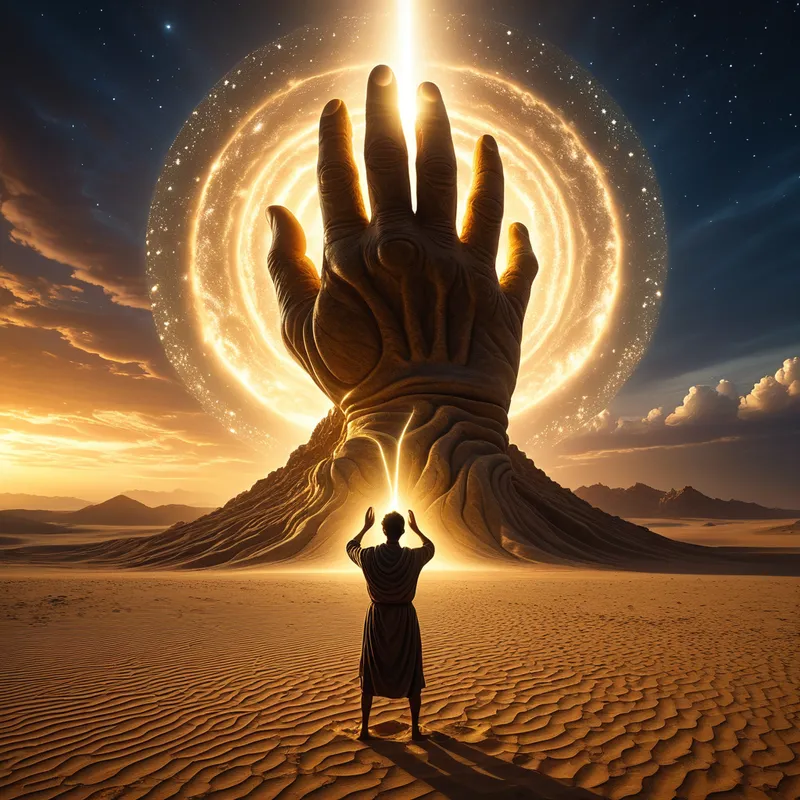
It begins not as a thought, but as a pressure. A subtle, tectonic shift deep in the chest cavity, a hollowness behind the sternum that feels less like an absence and more like a vacuum chamber waiting to be filled. The breath catches, not on fear, but on a precipice. There’s a tingling in the fingertips, a phantom sensation of holding something that is not yet there. The body knows the shape of the arrival before the mind can name it. This is the somatic echo of inspiration—a physiological readiness, a cellular anticipation for a pattern that has not yet landed. It is the feeling of a door swinging open in a windless room.
The Dreamer's Log
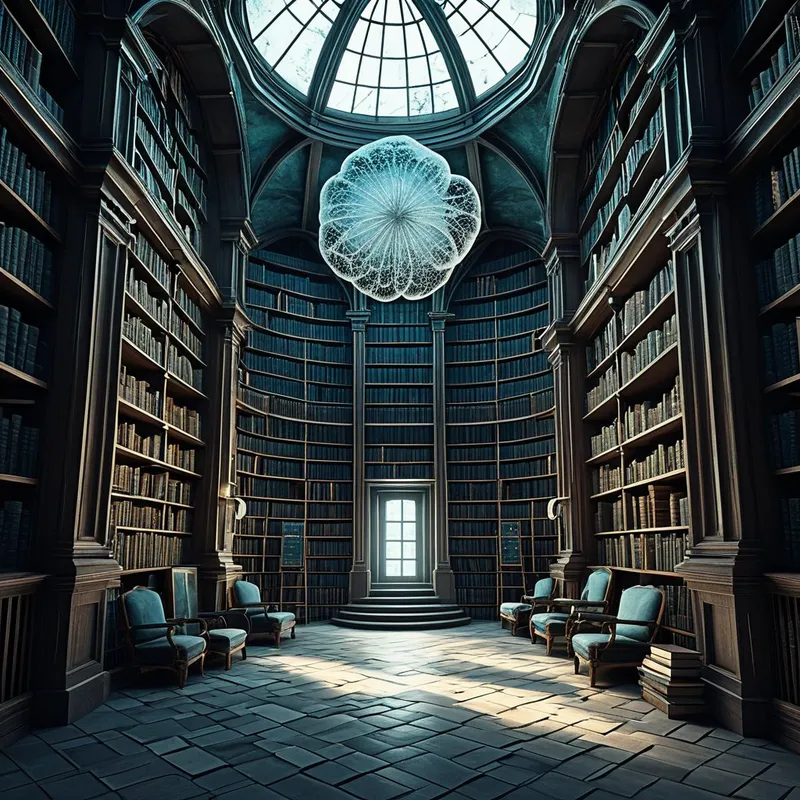
He dreams he is in a vast, silent library, but the books are made of light. He knows he must find a specific passage, a code that will unlock a door in his own mind. He searches frantically, pulling volume after volume, but the luminous text slips away like water. Finally, exhausted, he sits at a stone table. As his palm rests on the cool surface, words begin to rise from the stone itself, etching themselves into his skin.
The alchemical interpretation: The psyche, having exhausted the search for external answers, becomes the very parchment upon which the new truth is inscribed.

The False Lead
Inspiration is not a sudden, convenient download of a finished product. It is not the muse descending to solve your problems while you remain passive. To mistake it for such is to court the shadow of the Creator—the belief that genius is a possession, not a relationship. This theme is not about receiving a gift, but about entering into a covenant. The false lead is the expectation of ease; the true process is one of profound and often destabilizing engagement.
Psychological Architecture
To be inspired is to consent to a temporary dissolution. The old internal structures—the familiar ways of thinking, the comfortable narratives of the self—must soften, must become permeable. This is the shadow work: to hold space for this liquefaction without fleeing into the rigid arms of the known. It is an act of trust in the psyche’s innate, morphogenetic intelligence. The individuation process here is the courage to become a stranger to yourself, to allow the unknown pattern to use your life as its medium. You are not the author of the inspiration; you are the ground in which it takes root and the vessel through which it finds its unique expression. The terror lies in the loss of control; the grief is for the simpler self you must leave behind.
Mythic Resonance
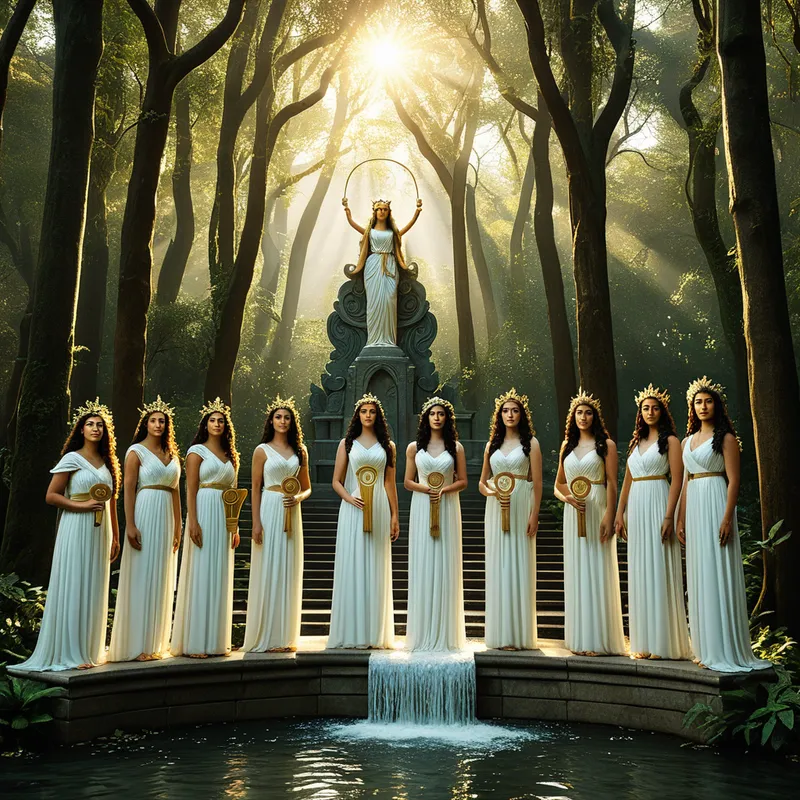
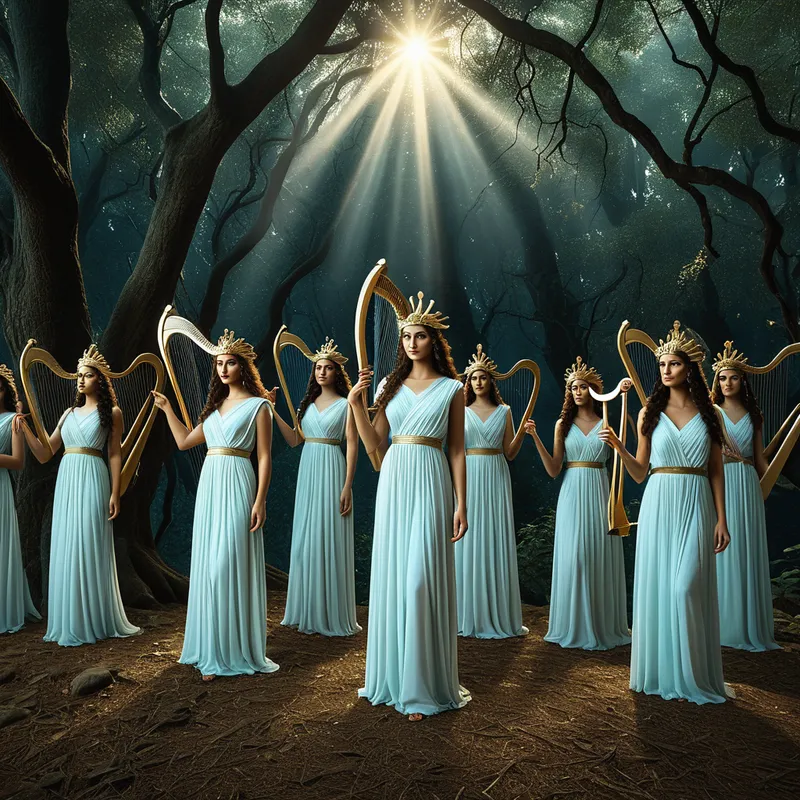
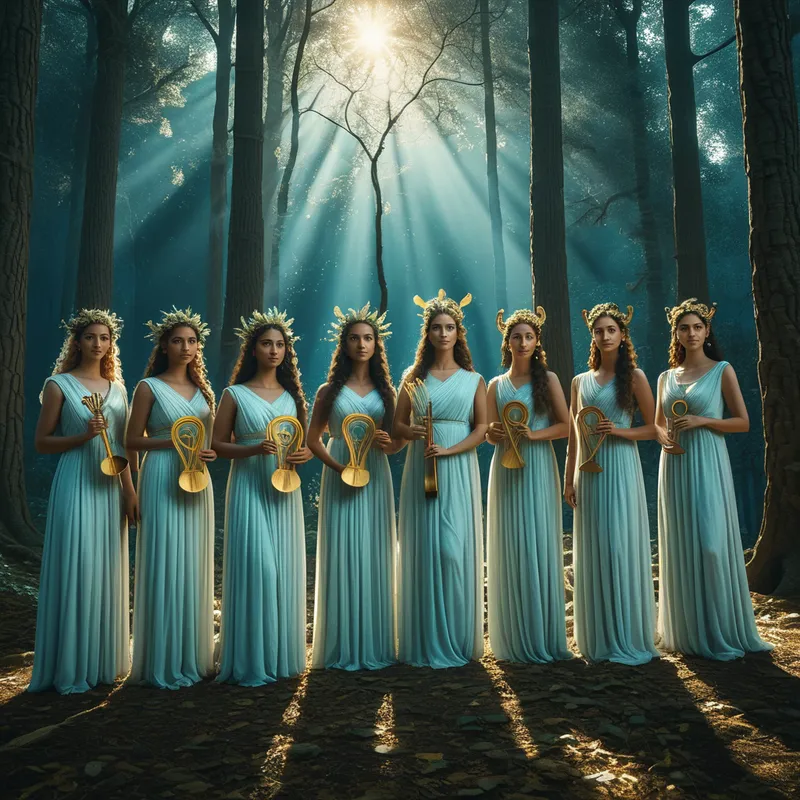
We see this in the story of the Norse god Odin, who did not simply receive the runes. He hung himself on the World Tree, Yggdrasil, pierced by his own spear, for nine nights—a ritual of self-annihilation and extreme vulnerability. Only through this willing sacrifice of his former sovereignty did the secrets of the universe reveal themselves. Similarly, the Greek Muses were not mere dispensers of catchy tunes; they were the daughters of Memory (Mnemosyne). True inspiration, these myths whisper, is always a remembering—a recalling of a pattern buried deep in the soul’s substrate, accessed not through force of will, but through surrendered, often painful, receptivity.
Symbolic Nodes
- Keys, especially broken or missing ones: The search for the precise mechanism of access.
- Empty vessels (cups, bowls, rooms): The somatic echo of readiness, the prepared vacuum.
- Unusual light sources (bioluminescence, light from within objects): Illumination emerging from the substance of the self.
- Wind or breath entering a still space: The animating force from an unseen source.
- Receiving a message in an unknown language: The pattern is present, but translation—integration—is the work that remains.
Archetypal Resonance
The energy of inspiration is most potently channeled through The Magician Archetype. The Magician’s core function is transformation, the application of unseen forces (vision, will, insight) to alter reality. The somatic echo—that charged, anticipatory pressure—is the Magician sensing the latent potential in the field of the psyche, the prima materia ready for change. The alchemical potential lies in the Magician’s ability to serve as a conduit, to hold the tension between the unformed idea and the world of form, and to perform the ritual of bringing it across. The shadow, of course, is the Manipulator or Illusionist, who claims the inspiration as a personal trophy or uses it to craft beguiling falsehoods, rather than serving its authentic emergence.
The Alchemical Process
The transmutation of inspiration is the work of the solve et coagula—dissolve and coagulate. The solve is the intense psychological heat of the initial encounter: the destabilizing rush, the dismantling of old certainties, the feeling of being overwhelmed by a force larger than the ego. This is the pressure. One must not flee this heat. The coagula is the slow, patient, often laborious work of grounding that energy into a new form. It is the encoding of the lightning bolt into language, the shaping of the vision into clay or code, the structuring of the symphony from the single note. The terror of the void (the solve) is transformed into sovereignty only through the committed act of giving the inspiration a body (the coagula). The grief for the lost, simpler self becomes the joy of the more complex one being born.
The Integration Protocol
Question 1: Where in my body did the feeling of inspiration most strongly resonate, and what was the quality of the sensation (e.g., pressure, warmth, vibration, hollow ache)?
Question 2: If the inspired idea or feeling had a purpose beyond my personal use—if it were a medicine, a key, or a tool meant for something larger—what might that be?
Question 3: What familiar part of my identity or routine must I willingly soften or release to make authentic space for this new pattern to grow?
Action 1 (Somatic Anchoring): For three minutes, place your hand on the area of your body where you felt the echo of inspiration. Breathe into that space. Do not try to think or create. Simply feel the aliveness there, the raw, unformed potential, without demanding it take shape.
Action 2 (Unstructured Transcription): Set a timer for ten minutes. With a pen and paper (not a screen), begin writing or drawing from the felt sense in your body, not from your thinking mind. Let it be messy, nonsensical, symbolic. The goal is not a product, but to build a bridge between the somatic echo and symbolic expression.
Action 3 (Ritual of Vessel): Find a physical object—a bowl, a box, a particular stone. This is your "vessel" for this cycle of inspiration. Place it in a significant spot. Each day, for one week, place a small, tangible representation of your commitment to the process inside it (a written word, a found object, a drop of water). You are physically enacting the coagula.
Final Validation
It is a vulnerable and demanding thing, to be chosen by an idea, to feel the foundations of your self-concept shudder to make room for it. The disorientation is real. The temptation to shut the door on that rushing wind is a natural protection. But that pressure in your chest, that tingling in your hands—it is the signature of your own depth, calling you to a larger conversation. You are not being emptied. You are being prepared as a sanctuary for a genesis. The sovereignty you seek is not in controlling the spark, but in having the courage to build the hearth where it can safely, and transformatively, burn.