The Alchemy of Illusion: When the Psyche Dissolves Its Own Stage
The Somatic Echo
It begins not as a thought, but as a tremor in the ground of being. A deep, unsettling resonance, a vibration of wrongness that hums in the marrow before it ever reaches the mind. It is the feeling of walking on a floor you suddenly suspect is glass over an abyss. It is the vertigo of a reflection that winks back with a knowledge you do not possess. The body knows first: a coldness behind the sternum, a tightening at the base of the skull, a sense of atmospheric pressure changing in a room that looks unchanged. This is the somatic echo of illusion cracking—the visceral forewarning that the reality you have inhabited, perhaps for years, is a negotiated settlement, a story you agreed to believe because it was easier than the terrifying freedom of the truth.
The Dreamer's Log
The dreamer stands in a cavernous, silent server farm. Rows of black monoliths hum with cold, blue light. They approach a central terminal, its screen dark. When they place their palm upon the glass, it activates, not with data, but with a perfect, real-time feed of their own waking life—seeing themselves from a third-person perspective, going through the motions of their day. A wave of profound dissociation washes over them as they realize the terminal is not displaying their life; it is the source of it. The simulation is here. They are the avatar.
This is the moment of alchemical ignition: the dream ego confronting the architecture of its own perceived reality, realizing the user interface is also the cage.

The False Lead
An illusion is not a simple mistake or a stroke of bad luck. It is not merely being fooled by another. To interpret it as such is to remain within its grasp. The terror of the illusion dream is not about external deceit; it is the horrifying, liberating suspicion that you are the author of the deceit. The psyche is not crying, “I have been lied to!” but whispering, “What foundational story have I been telling myself to make this prison feel like home?” It is a profound structural shift, not a narrative error. It points to the dissolution of a core identity construct, not to the presence of a villain.
Psychological Architecture
This is the shadow work of deconstruction. Individuation demands we outgrow the personas and complexes that once served as necessary shelters. The illusion is that shelter, now grown rigid, revealed as a stage set. The process feels like a betrayal of the self by the self. One internal part—the loyal citizen, the diligent worker, the perfect partner—has built a convincing world. Another, deeper part—the silent witness, the exiled truth-bearer—begins to short-circuit the lights. The conflict is internal, a civil war within the psyche’s kingdom. To see the illusion is to feel the grief of the innocent who built it and the terror of the orphan who must now step into the unknown. The architecture of illusion is a psychic dam, holding back the waters of a more chaotic, more authentic existence. Its cracking is both catastrophe and genesis.
Mythic Resonance
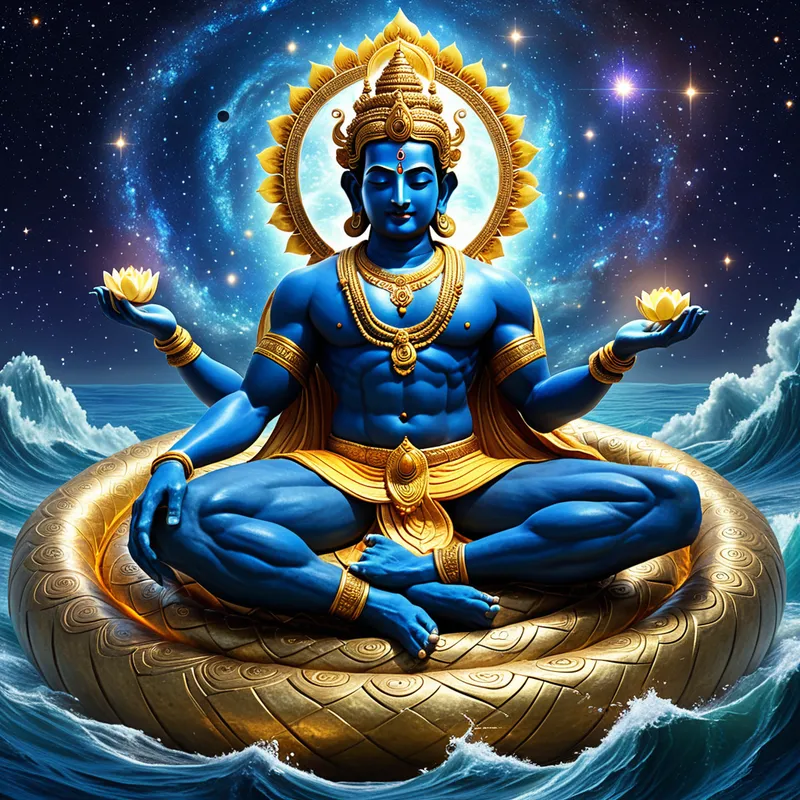
We see this eternal process in the story of the Buddha under the Bodhi tree. Mara, the personification of illusion, does not attack with monsters, but with projections: seductive visions of desire, terrifying armies of fear, the whispered doubts of his own past identities. Mara’s final weapon is to question Siddhartha’s very right to be there: “Who bears witness to your enlightenment?” The Buddha’s answer was to touch the earth, grounding his truth in the somatic, the real, the undeniable ground of being. He did not fight the illusions; he stopped validating them. The myth shows us that the final bastion of illusion is not a fantastical deception, but the deeply personal doubt that you have the sovereignty to perceive what is true.
Symbolic Nodes
- Mirrors that distort or show another scene: The psyche reflecting a truth different from the conscious narrative.
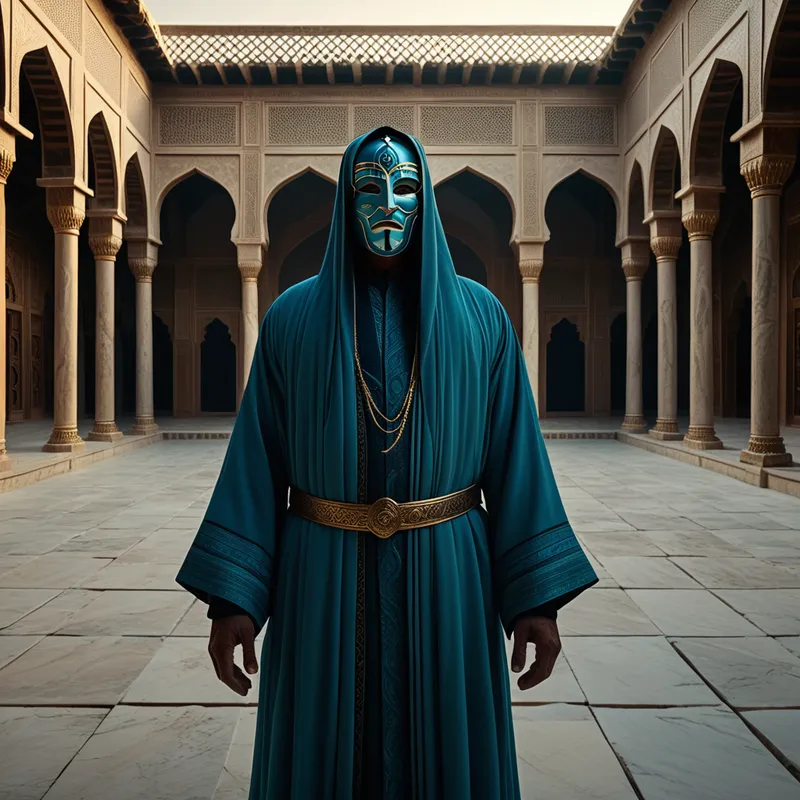
- Masks, costumes, or uniforms that fuse to the skin: Identities that have ceased to be worn and have become mistaken for the self.
- Stage sets, film sets, or holograms: The feeling of life as a performance on a constructed platform.
- Digital interfaces, glitching screens, or A.I. companions: The modern metaphor for a programmable, potentially false, reality.
- Buildings with false fronts or rooms with no doors: A life structure that promises depth but offers only facade.
- People whose faces are blurred, familiar yet unknown: The projection of an archetype or need onto another, obscuring their true nature.
Archetypal Resonance
The energy at the core of the Illusion theme is that of The Shadow Magician. The Magician archetype governs transformation, vision, and the manipulation of reality through will and knowledge. Its shadow, the Illusionist, wields this same power not for authentic transmutation, but for concealment and control—often self-control. It builds the convincing stage, writes the believable script, and casts the spells that keep the dreamer comfortably asleep within their own life. The somatic echo of wrongness is the Shadow Magician’s spell beginning to fray, its energy turning back upon itself. The alchemical potential lies in forcing this archetype through its own fire: to use its profound power of perception and influence not to maintain a pleasing illusion, but to courageously perceive and then re-weave the raw, unvarnished truth of one’s existence.
The Alchemical Process
The transmutation of illusion requires the heat of sustained, uncomfortable awareness—the nigredo, or blackening. This is not an intellectual exercise, but the felt experience of watching your world lose its color and meaning as its false foundations are exposed. The pressure is the weight of the void that appears when the old story dissolves. The process is one of solutio, a dissolving. You must let the certainties melt, allow the identities to soften into potentiality. This feels like madness, like grief, like dying. From this dissolved state, the new form (coagulatio) emerges not as another finished statue, but as a living, responsive practice of perception. Sovereignty is born here: not as the control over reality, but as the unwavering commitment to perceive it without the filter of the old, comforting lie. You become the author of your truth, not the actor on a borrowed stage.
The Integration Protocol
Question 1: Where in my waking life do I feel the faintest tremor of that "atmospheric pressure change"— a situation, relationship, or role that feels real but rings subtly hollow?
Question 2: What cherished story about myself or my world would be the most devastating to discover was an illusion? What fear does that story protect me from facing?
Question 3: If the reality I have known is partly a construction, what raw, unfiltered sensation or truth is it built upon? Can I feel the ground beneath the stage?
Action 1 (Somatic Grounding): For one week, practice this upon waking: before engaging with thought, feel the physical points of contact—the weight of your body on the bed, the texture of the sheets, the air on your skin. Anchor in the undeniable sensorium before the day’s narrative begins.
Action 2 (Creative Unbuilding): Create a "Deconstruction Map." Draw, collage, or write a non-linear representation of a central life role or belief (e.g., "The Good Employee," "The Responsible One"). Then, with a different color, draw the seams, the supports, the hidden wires. Where is the effort to maintain it? What exists in the negative space around it?
Action 3 (Ritual of Release): Find a small object that symbolically represents a facade you are ready to soften (a business card, a particular piece of jewelry, a key). Go to a body of moving water. Hold the object, acknowledge its service and its limitation, then place it in the water and let it go. Do not retrieve it. Witness the dissolution.
Final Validation
To encounter the theme of Illusion in your dreams is to be invited into a profound and terrifying grace. It means your psyche is strong enough now to dismantle the fortresses it once needed for survival. The disorientation is not a sign of breaking, but of a deeper integrity asserting itself. The ground is not disappearing; you are being asked to learn the deeper, more subtle art of standing on what is real, not on what was merely agreed upon. This is the path from being an occupant of a reality to becoming its sovereign.