The Sacred Welcome: Hospitality as the Psyche’s Deepest Protocol
The Somatic Echo
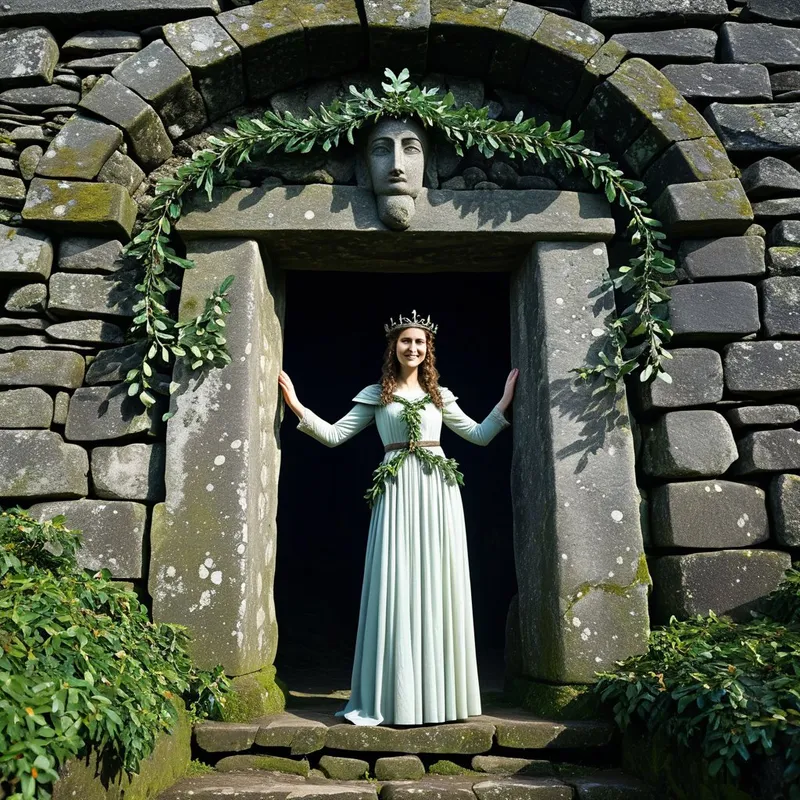
Before the image of an open door, before the dream-table is set, the body knows. It is a specific, paradoxical tension. A hollowing in the solar plexus, a space being cleared—not from emptiness, but from anticipation. It is the visceral pull to prepare, to make room, coupled with a low-grade hum of dread in the jaw and shoulders. Your breath shallows, as if listening for a footfall in a silent house. This is the somatic ground of Hospitality: the body as an innkeeper, sensing a guest long before they cross the threshold. It is the architecture of the self preparing for an encounter, for the arrival of something that will demand sustenance, attention, and a temporary surrender of sovereignty. The echo is one of porousness; your boundaries become not walls, but membranes, tingling with the potential of what they must let in.
The Dreamer’s Log (Case Vignette)
I am the host of a grand, endless banquet in a derelict spaceship. The tables are set with impossible delicacies that glow with inner light, but the chairs are all empty. I am frantic, checking systems, when a heavy airlock door groans open. The guest who enters is my own childhood rage—a figure of crackling, unstable energy, dressed in the torn clothes of my old school uniform. It stands dripping static on the pristine floor, and I know I must offer it the seat at the head of the table.
The alchemy here is the forced invitation of a disowned emotional system, where the act of hosting begins the transmutation of raw, exiled energy into a form that can finally be metabolized.

The False Lead
Hospitality in dreams is not merely about social anxiety or a fear of inadequacy as a host. That is its superficial costume. To mistake this theme for simple performance anxiety—Will I have enough? Will they like me?—is to remain in the antechamber of its meaning. The dream is not critiquing your canapés. It is interrogating the very foundation of your inner estate. It asks: What parts of your own being have you left out in the cold? What emotions, memories, or truths are you refusing to seat at your own table? The tension is not about external judgment, but about the internal civil war that erupts when a long-denied guest finally pounds on the door.
Psychological Architecture
Beneath the dream of the empty banquet hall or the unexpected visitor lies the profound Shadow work of Individuation. Your psyche is not a monolithic kingdom but a complex ecosystem of sub-personalities—what some call your Internal Family. There are exiles here: the furious child, the grieving lover, the terrified failure. These are the parts deemed "unacceptable," locked in basements and forgotten wings. The dream of Hospitality is the Self, the core, compassionate awareness, beginning its sovereign duty. It is the decision to stop being a bouncer at the door of your own consciousness and to become a steward instead.
This is the architecture of integration. It requires you to walk into those inner rooms you sealed shut and to air them out. To set a place not for who you wish you were, but for who you actually are—in all your contradictory, messy, brilliant complexity. The terror of the dream is the terror of this reunion. The grief is for the years of exile. But the process is one of reclamation. By hosting these inner guests, listening to their stories without letting them take over the house, you dissolve the internal apartheid. You move from a psyche at war with itself to one that can hold its own multitudes. Sovereignty is not achieved by force, but by the courageous, gentle welcome of all that resides within your borders.
Mythic Resonance
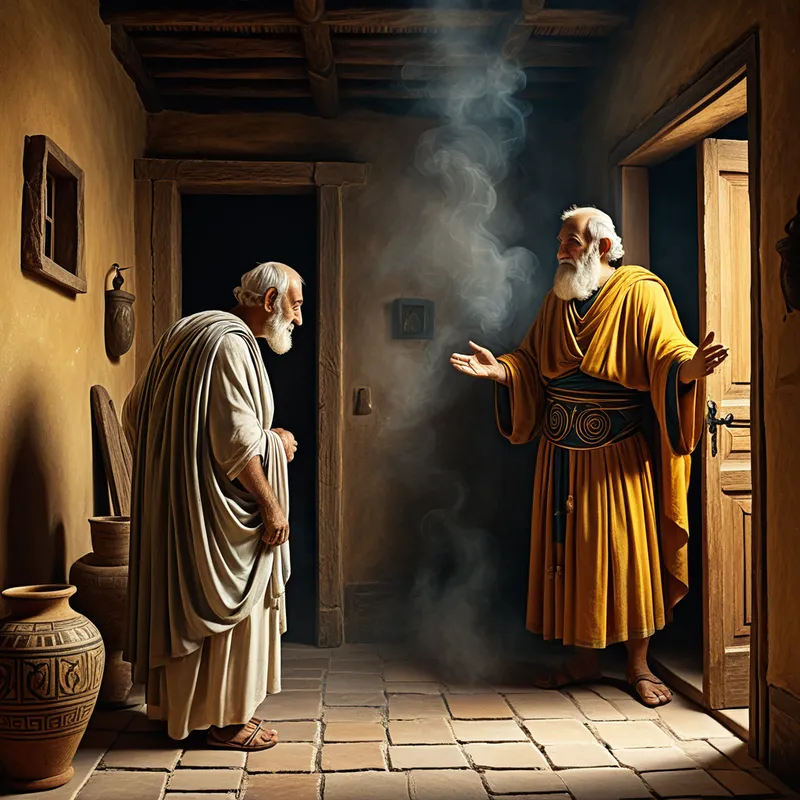
This universal firmware runs deep in our stories. Consider the ancient Greek myth of Baucis and Philemon, two impoverished peasants who, unlike their wealthy neighbors, offer their last food and wine to disguised gods. Their humble, generous hospitality transforms their shack into a glorious temple and grants them the deepest wish: to never be parted. The myth is not about divine reward, but about the alchemy that occurs when the sacred is recognized in the stranger—and, by extension, in the strange parts of the self. Their home becomes a temple not through wealth, but through the quality of their welcome.
Similarly, the Arthurian Grail Quest hinges on a question of hospitality. The Fisher King, wounded and his land laid waste, awaits a knight who will not only find the Grail but ask the healing question: "Whom does the Grail serve?" The wasteland is a direct reflection of his inner state—a kingdom unable to nourish itself or others. The healing comes through an act of perceptive, other-focused attention, a form of spiritual hospitality that restores the flow of life. The land flourishes when the king’s capacity to host the sacred question is restored.
Symbolic Nodes
- Empty Chairs at a Set Table: The prepared space for an awaited, perhaps feared, integration.
- An Unlocked or Opening Door: The permeability of the psyche’s boundaries, a conscious choice to allow entry.
- A Guest You Dislike or Fear: The personification of a disowned Shadow aspect or a repressed complex.
- Running Out of Food/Drink: The fear that your inner resources (compassion, patience, energy) are insufficient for the work of integration.
- A House with Endless, Unknown Rooms: The vast, unexplored territory of the unconscious self, containing both wonders and exiles.
- Offering a Key: The ultimate act of internal trust and surrender, granting access to the most protected chambers of the self.
Archetypal Resonance
The energy of this theme resonates most powerfully with The Caregiver Archetype. At its essence, Hospitality is the Caregiver’s core function: to nourish, to protect, to provide sanctuary. The somatic echo—the hollow of anticipation, the urge to prepare—is the Caregiver’s instinct kicking in, sensing a need before it is voiced. The alchemical potential lies in directing this nurturing energy inward. The Shadow Caregiver manifests as the Martyr, who hosts out of obligation and resentment, or the Smotherer, who cannot let the guest leave. The dream challenges you to move from this shadow into the light: to become the sovereign Caregiver of your own inner world, offering compassionate hospitality to your exiled parts not from a place of exhausted duty, but from a deep, resourceful well of self-love. It is about learning to nourish your own ecosystem.
The Alchemical Process
The transmutation here is from Inner Civil War to Sovereign Sanctuary. The prima materia, the leaden starting state, is the psyche as a fortified castle under siege, where exiled parts are seen as enemies or vermin to be kept out. The alchemical heat is applied through the dream’s intense discomfort—the anxiety of the empty hall, the dread of the unwanted guest. This heat is the friction of contradiction: I am the host, yet I fear what I must host.
The pressure is the sustained, conscious decision to stay at the table. It is to not flee the dream, nor to attack the guest in the dream, but to enact the ritual of welcome within the imaginal space. This is the solve et coagula—dissolve and coagulate—of the psyche. You dissolve the rigid boundary between "acceptable me" and "unacceptable it." You listen. You offer the symbolic bread and wine of your attention. In doing so, the raw, chaotic energy of the exiled part (the grief, the rage, the shame) begins to lose its destructive, autonomous power. It is metabolized. It coagulates into a new form: not an enemy, but an honored, integrated aspect of your history and strength. The gold produced is sovereignty—the peace that comes from no longer being at war within your own skin.

The Integration Protocol
Question 1: In the dream, what was the quality of the space I was hosting in? Was it vast and empty, cramped and cluttered, pristine or decaying? What does this reveal about my current inner landscape?
Question 2: Who or what was the guest? If it was a known person, what single, dominant quality do I associate with them? If it was a stranger or creature, what was my most immediate, visceral feeling upon seeing them?
Question 3: What was offered (or not offered) to the guest? Was there a struggle to provide? Did I willingly give my best, or hide the good china? What does this say about my willingness to resource my own inner work?
Action 1 (The Silent Supper): Set a place at your actual table for an empty chair. For one meal, eat in silence, but with the conscious, internal intention that you are hosting an exiled part of yourself. Simply let the space be held. Notice what emotions or thoughts arise as you sit with this symbolic vacancy.
Action 2 (The Guestbook of the Self): Engage in unstructured, creative writing. Let your hand move without a plan. Title the page "The Guestbook." Begin writing from the perspective of the dream guest. Let it speak. What does it want to say to the host? What does it need? Do not edit or judge the words; your role is merely to record.
Action 3 (Threshold Ritual): At the entrance to your home (or bedroom), pause. Place your hand on the doorframe. With a breath in, acknowledge this as a boundary between outer and inner worlds. With a breath out, make a silent vow: "I choose to be a steward of all that resides within. I welcome what serves growth." This small, somatic ritual reprograms the body's sense of boundary from fortress to sanctuary.
Final Validation
It is profoundly difficult to open the door to what you have spent a lifetime keeping out. The dread is real. The fear that this guest will wreck the house, consume all your resources, and never leave is a legitimate terror of the psyche. Honor that resistance; it once served to protect you. And then, consider this: the guest is already inside. The pounding is coming from the basement, not the street. The dream of Hospitality is not an invasion, but an invitation from your deepest Self to end the exile, to turn and face what has always been there. Your sovereignty is not won by the strength of your locks, but by the profound courage of your welcome. You are not being asked to be a perfect host, only a present one. The first act of integration is simply to pull out the chair and say, "I see you. Sit. Tell me your story."