The Dream of Choice: At the Crossroads of Becoming
The Somatic Echo
Before the mind presents the fork in the road, the body knows. It is a specific, cellular tension—not the sharp pang of fear, but the dense, humming pressure of potential. It feels like standing at the edge of a high dive, the solid platform beneath your feet and the vast, receptive emptiness below both pulling at your center of gravity. Your diaphragm tightens, holding a breath that is also a question. Your hands may feel heavy, as if already holding the weight of consequences not yet chosen. This is the intelligence of the organism sensing a bifurcation point in its own narrative, a moment where the continuity of "you" is about to branch. The echo is not of panic, but of profound listening. The entire system is tuning itself to the frequency of a decision it has not yet consciously made.
The Dreamer's Log
The dreamer stands in a cavernous, forgotten server room. Racks of obsolete hardware hum a low, mournful chorus. Before them, a single terminal glows with indecipherable, scrolling glyphs. They know, with a certainty that bypasses thought, that they must input a command. To press "ENTER" is to initiate a system-wide purge, a cleansing annihilation. To press "ESC" is to preserve the archive, to keep every corrupted and beautiful file forever. Their finger hovers. The weight of the entire silent cathedral of data rests on that single point of contact.
This is the alchemy of choice: the terminal is the liminal self, and the command is not about data, but about which version of history—and thus which future self—you consent to author.

The False Lead
A dream of choice is not a mere simulation of daily indecision, a replay of choosing between job offers or relationships. Those are its costumes. The core process is not logical weighing but ontological selection—the soul confronting which fundamental story of itself it will now inhabit. It is not about avoiding a "bad" path or securing a "good" one in a simplistic sense. The terror or grief present is not a warning about external consequence, but the visceral recognition that to choose one path is to die to the infinite potential of the others. The shadow here is not making the "wrong" choice, but the refusal to choose, which is the choice to remain a ghost haunting your own crossroads.
Psychological Architecture
To understand the depth at work, we must move past the idea of a unitary self choosing between external options. Imagine, instead, your psyche as a council. The Internal Family gathers. The Orphan part pleads for safety, begging to take the known, worn path. The Rebel scoffs, itching to dynamite the crossroads entirely and walk into the wilderness. The Ruler attempts to calculate outcomes on a ledger that has no numbers. The choice presented in the dream is the externalized pressure of this internal stalemate. The Shadow work is to stop looking at the roads and to turn your gaze inward, to the council chamber. Individuation in this context is the agonizing, glorious process of moving from a committee seeking consensus to a sovereign capable of a decisive act. That act is not a victory of one part over others, but a synthesis born of intense listening—a choice that, in its making, creates the sovereign who made it. You do not choose because you are integrated; you become integrated through the irreversible act of choosing.
Mythic Resonance
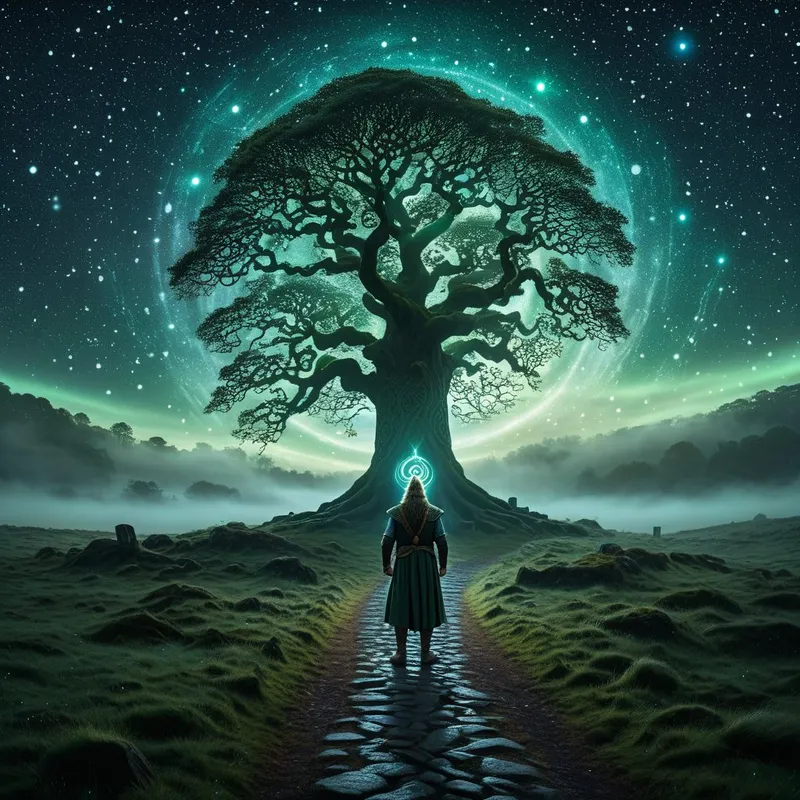
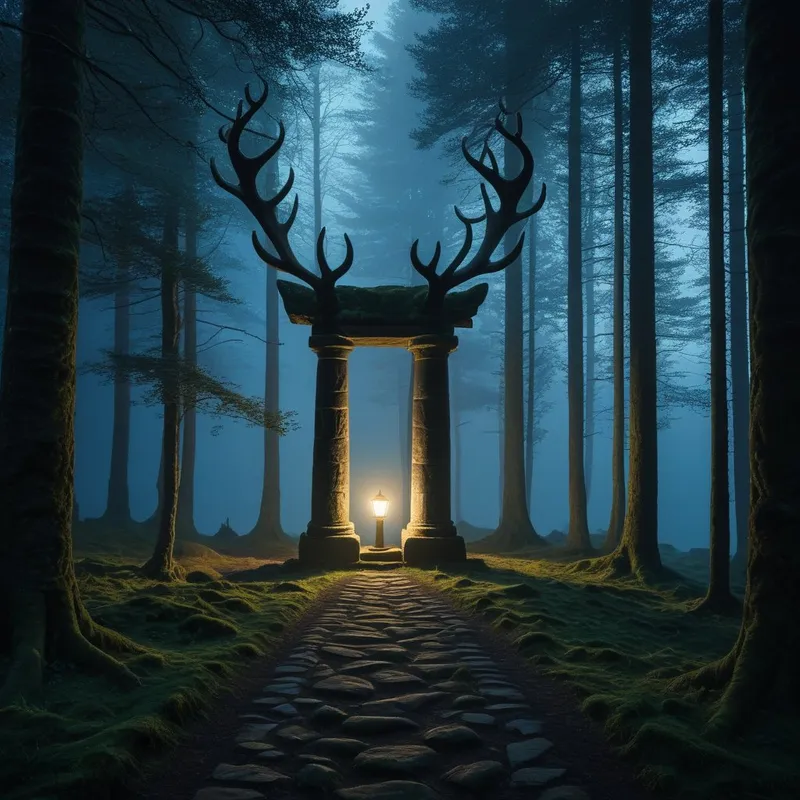
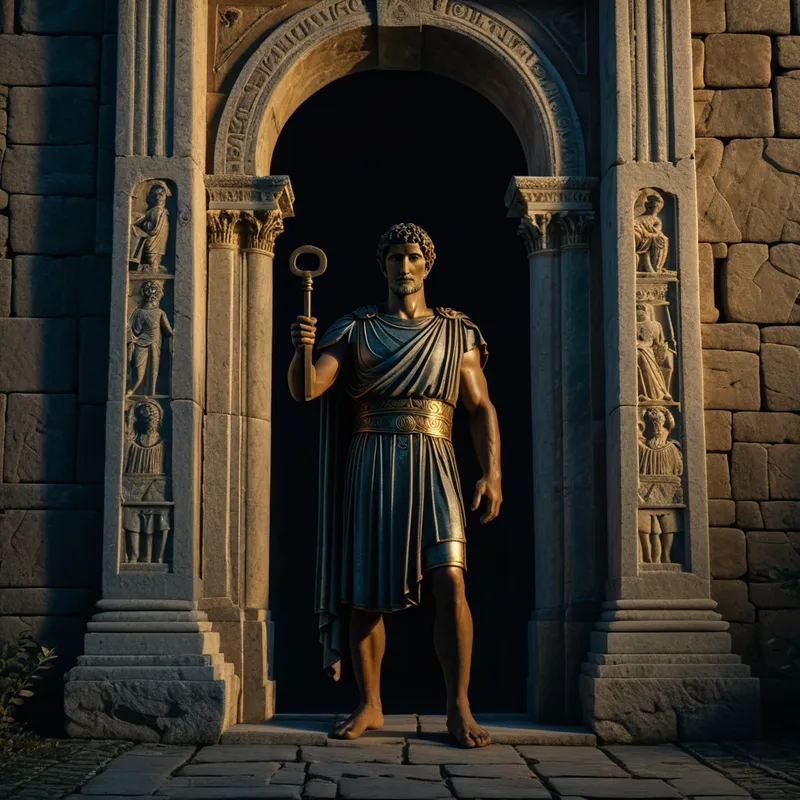
This is the ancient ground of The Two Doors. In the myth, a hero—often at the end of a labyrinth or a life—faces two identical portals. One is framed by words of flattery and promise, the other by grim, honest warnings. The choice is never between obvious good and evil, but between the path of pleasing illusion and the path of harsh truth. The universal firmware here is the understanding that a true choice always involves a sacrifice of a certain kind of comfort, a certain version of reality. Similarly, the Norse mythos of the Norns weaving fate at the foot of Yggdrasil is not a tale of predestination, but of active, moment-by-moment weaving. Each choice is the Norn within you taking up a thread—not from a predetermined basket, but from the living, responsive material of your past actions and present awareness. You are not reading a story; you are the loom, the weaver, and the thread.
Symbolic Nodes
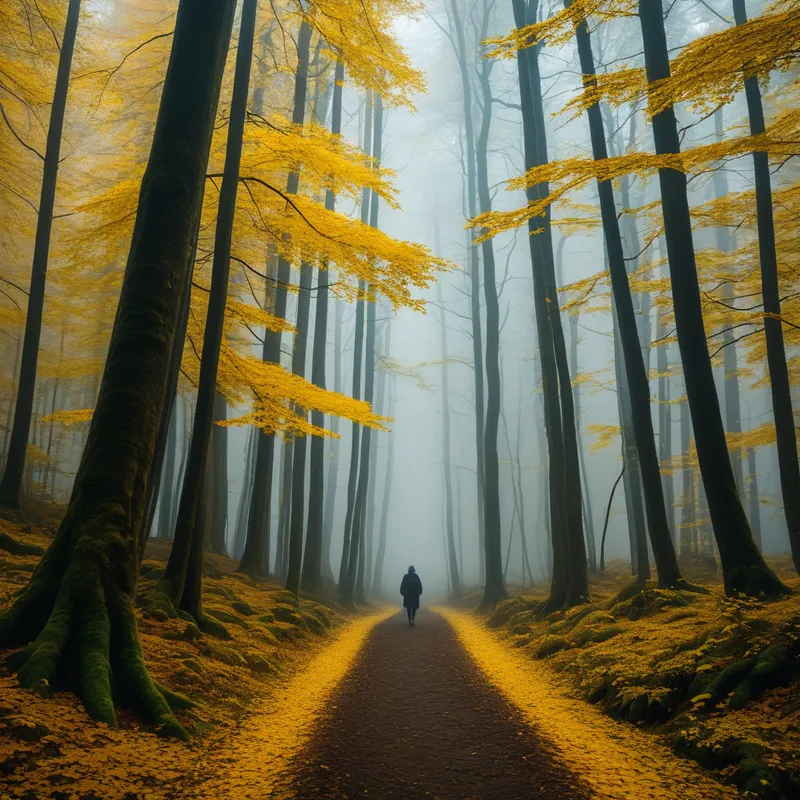
- Crossroads, Forks, Junctions: The classic symbol of divergent futures.
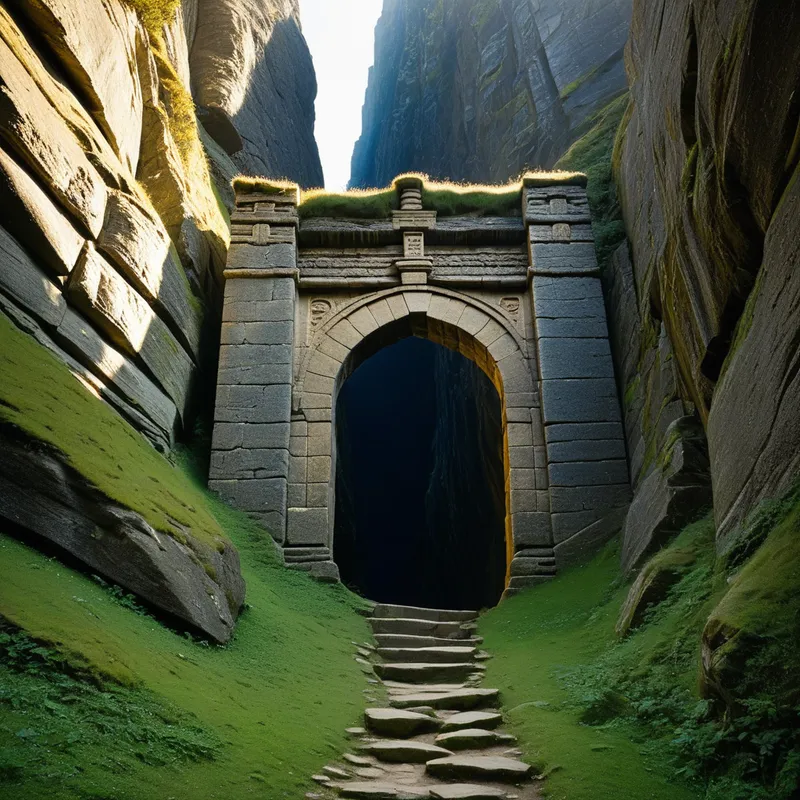
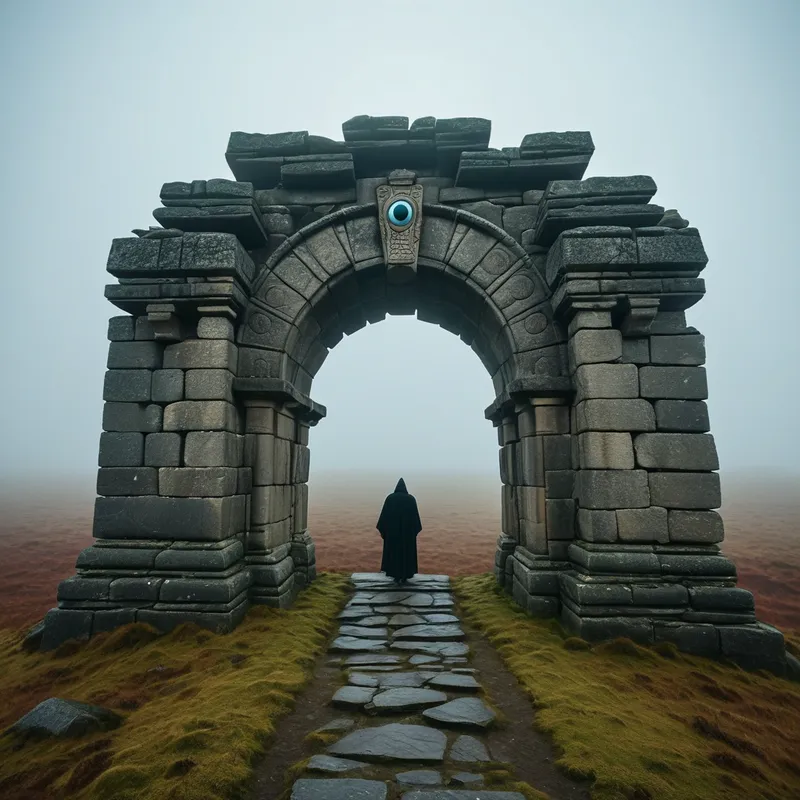
- Doors, Gates, Portals: Especially identical or multiple ones, representing thresholds of being.
- Bridges (to cross or not to cross): The fragile construction over a chasm of change.
- Terminals, Keyboards, Buttons: The modern mythic interface for committing an irrevocable command.
- Weighing Scales in perfect, trembling balance: The futile hope for objective measurement.
- Being asked "The Question" by a figure of authority: The externalized demand for self-definition.
- A path that splits into fractal, crystalline branches: The overwhelming vision of infinite possibility.
Archetypal Resonance
The energy most active in the crucible of choice is The Sovereign Ruler Archetype. Not the Shadow Tyrant who chooses to control others, but the nascent Sovereign whose first and most critical act of rulership is over the inner kingdom of conflicting selves. The somatic echo—the heavy pressure in the hands and chest—is the weight of the scepter you have not yet claimed. This archetype resonates because choice is the ultimate sovereign act: it establishes order, creates consequence, and defines a realm. The alchemical potential lies in moving from the chaos of internal debate (the warring council) to the clarity of a decree that, by its very nature, organizes reality around a center. To choose is to declare, "Here, I rule."
The Alchemical Process
The prima materia here is the paralyzing soup of potential. The heat is applied not through logic, but through the forced collapse of possibility. This is the nigredo, the blackening: the despair of realizing you cannot walk all paths, that you must relinquish infinite "could-be" for a single "is." The pressure is the growing, intolerable tension of the suspended state. The alchemical vessel is your own commitment. Transmutation occurs at the exact moment you internalize that not choosing is also a choice—and a far more corrosive one. The "gold" produced is not a correct outcome, but sovereign will. The grief for the unchosen paths is not waste; it is the necessary humus from which the integrity of the chosen path grows deep roots. You transmute the terror of limitation into the authority of definition.
The Integration Protocol
Question 1: In the dream, what did you feel in your body in the moment before the choice was presented? Was it dread, excitement, numbness, or a strange neutrality? This is the ground from which the crossroads grew.
Question 2: If each possible path in the dream represented a different sub-personality or "part" of you (the Caregiver, the Rebel, the Orphan, etc.), which part was advocating for which road? Which part felt silenced?
Question 3: What familiar life pattern or "old story" does each dream path represent? What new, uncharted territory of being might each one secretly lead to, beyond its initial appearance?
Action 1 (Somatic Grounding): For three minutes, stand with your feet firmly planted. Feel the weight of your body descending into the earth. Then, slowly raise one arm, pointing decisively in any direction. Do not think of a reason. Hold the pose, feeling the muscular commitment of the gesture. Notice the subtle shifts in your balance and breath. This rehearses the physics of decision.
Action 2 (Council of Selves): Write a brief script of the internal debate from your dream or a waking dilemma. Give each "part" a voice—the fearful one, the reckless one, the logical one. Let them argue. Then, write a final statement from a nascent, calm "Sovereign" voice that does not side with any part, but makes a choice that considers all and belongs to none.
Action 3 (Path Ritual): Find two stones. Hold one in each hand. Assign each a symbolic meaning from your crossroads (e.g., "security" vs. "adventure"). Walk to a literal fork in a path, a stream, or even your backyard. Feel the weight of each. Choose one stone to carry forward with you, placing it in your pocket. For the other, find a respectful place to leave it—under a tree, in a nook—acknowledging its value as you consciously release its claim on your journey.
Final Validation
The paralysis is real. The grief for the lives you will not live is valid. It is the proof you are not skimming the surface, but touching the profound machinery of your own becoming. This difficulty is not a flaw in you; it is the signature of a soul that takes its own potential seriously. Do not seek to escape the crossroads. The power is not in finding the one "right" path, but in realizing that the act of choosing—with all its fear and finality—is what forges the spine of your sovereignty. The path is made by walking, but the walker is made by the first, irrevocable step.