The Dream of Autonomy: Reclaiming the Inner Throne
The Somatic Echo
Before the dream images form, the body knows. It is a specific, hollow ache in the solar plexus—not the flutter of anxiety, but the deep, resonant silence of an empty chamber. It feels like a phantom limb for a will you’ve forgotten you possessed. The breath becomes shallow, held captive by an invisible ribcage of expectation. There is a weight, not on the shoulders, but within them, as if your own skeleton has been loaned out to another’s posture. This is the somatic echo of a psyche preparing to reclaim its governance. It is the quiet, cellular rebellion against an internalized occupation, a longing for the visceral truth of a choice that originates in the marrow and radiates outward, unmediated.
The Dreamer's Log
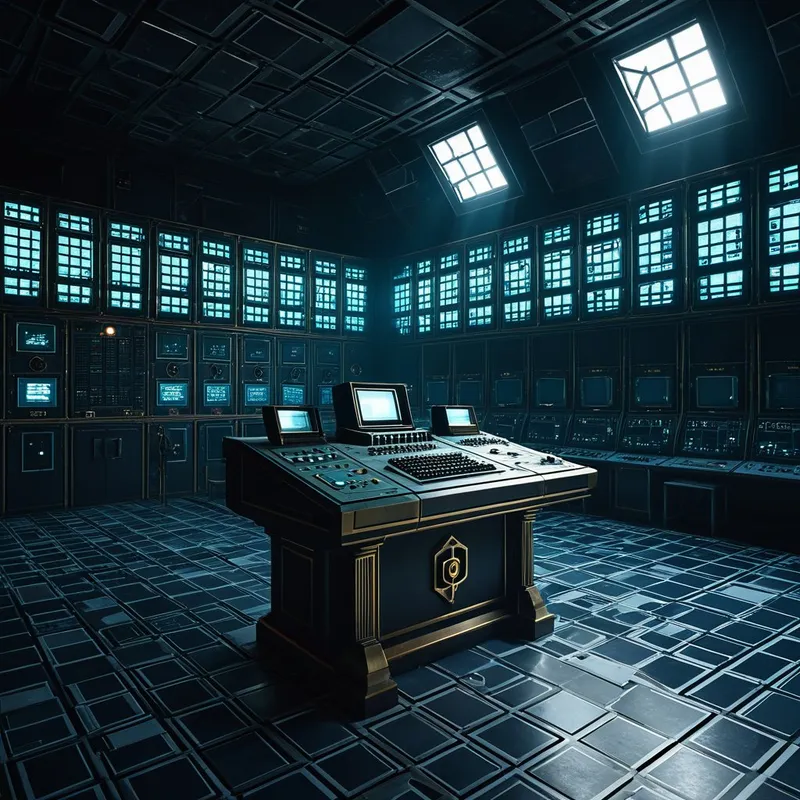
I am standing in the heart of a vast, abandoned control room, all polished obsidian and dormant crystalline screens. A voice, synthesized and omnipresent, narrates my every movement and probable thought. I see a single, ornate brass key on the central console. I do not pick it up. I simply look at it, and the voice stutters into static. The silence that follows is deafening and complete.
Alchemical Interpretation: The dreamer is not fighting the external system of control, but withdrawing the internal consent that gives it power, moving from reaction to pure, silent authorship.
The False Lead
Autonomy is not the adolescent fantasy of rebellion without cause, nor is it the brittle insistence on doing everything alone—that is merely the shadow of the Orphan, mistaking isolation for independence. It is not about the absence of influence or connection, but the conscious, fluid integration of them. A dream of autonomy does not signify you are surrounded by tyrants; it signals that you have internalized a parliament of old voices—parental scripts, cultural mandates, the ghost of past failures—and mistaken their debates for your own will. The terror is not of external punishment, but of the terrifying freedom and responsibility of an empty throne you must now, yourself, occupy.
Psychological Architecture
This is the core work of Individuation: the dissolution of the persona as a governing body and the reclamation of the Self as sovereign. It is Shadow work of the highest order, for the parts of us that resist autonomy are often cleverly disguised as protectors. The inner Caregiver who says, “Comply, for safety.” The inner Ruler who says, “Follow this map, for certainty.” These are internal family systems that once served a purpose but now operate as a junta, preserving a fragile peace at the cost of your essence. The shift is architectural. It is not about adding a new wing to the psyche, but about feeling for the load-bearing walls that are not your own and, with a breath that originates in that hollow ache, allowing them to dissolve. The foundation that remains is yours, singular and undeniable.
Mythic Resonance
We see this in the story of Theseus, not in the slaying of the Minotaur, but in the moment before. He arrives in Crete, another potential sacrifice to a system not his own. His autonomy is not won with the sword, but with the decision to volunteer, to enter the labyrinth as an active author of his fate, holding the thread not as a lifeline to the old world, but as a tool to navigate the new one he is consciously choosing to face. His journey inward becomes an act of supreme will, transforming him from a pawn of a king’s tribute into the architect of his own myth.
Symbolic Nodes
- Empty Thrones, Unoccupied Chairs: The seat of power awaiting its true sovereign.
- Forgotten Keys, Unused Tools: Latent authority and capability waiting for conscious claim.
- Silenced Speakers, Muted Microphones: The end of external narration and the beginning of internal voice.
- Custom-Built Rooms, Personal Sanctuaries: Psychic spaces constructed entirely by the dreamer’s own design.
- Erasing or Rewriting a Prescribed Map: Altering the fundamental narrative of one’s journey.
Archetypal Resonance
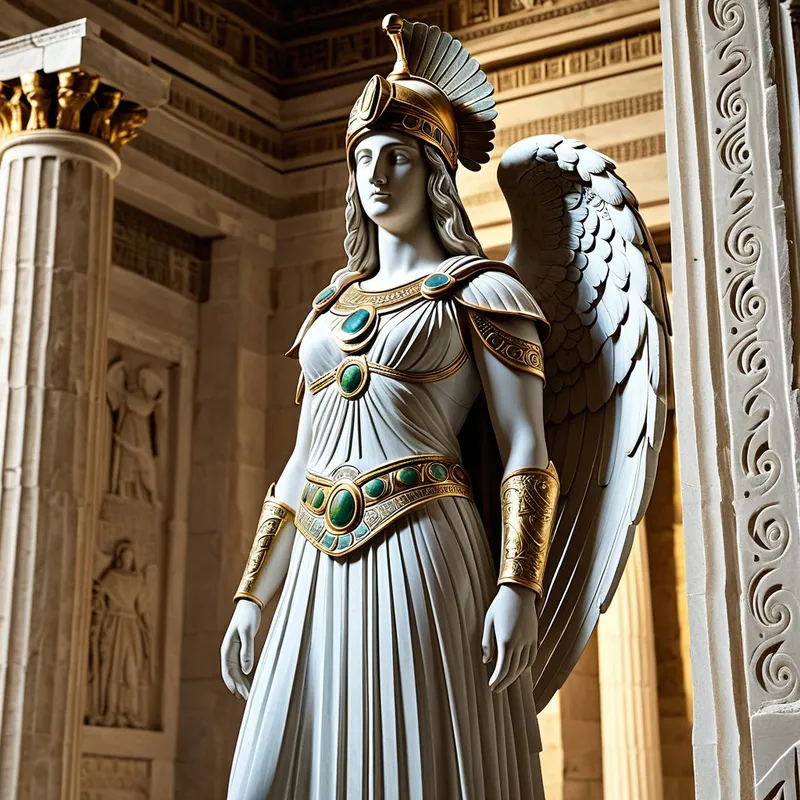
The energy of autonomy resonates most powerfully with The Ruler Archetype. This is not the Ruler as an external authority, but the Ruler as the internal sovereign—the one who establishes order, sets boundaries, and takes ultimate responsibility for the kingdom of the Self. Its somatic echo is the feeling of sitting upright in that inner throne, spine aligned with purpose, the hollow ache replaced by a calm, central density. The alchemical potential lies in the Ruler’s capacity to integrate all other archetypal energies—the Creator’s vision, the Caregiver’s compassion, the Rebel’s fire—into a cohesive, self-governed whole, transforming internal chaos into a conscious, creative order.
The Alchemical Process
The transmutation here is from reactant to agent. The required heat is the intense discomfort of pausing in the space between stimulus and response—that eternal, pressurized moment where every conditioned fiber screams to react, to comply, to rebel predictably. The alchemical vessel is your conscious attention held in that pause. The pressure is the weight of the unknown outcome. Within this vessel, the base metal of conditioned behavior—the automatic “yes,” the reflexive “no”—is held until it liquefies. In that liquid state, it can be reformed. The grief released is for the simpler life of the puppet; the terror is of the blank page of true choice. The gold forged is sovereignty: the unshakeable, quiet knowledge that your actions, even the imperfect ones, are authentically yours.
The Integration Protocol
Question 1: Where in my life does my “yes” feel like a sigh, and my “no” feel like a rebellion? What is the quieter, third option that belongs solely to me?
Question 2: Which internal voice (the critic, the pleaser, the martyr) speaks with the most borrowed authority, and what is it truly afraid would happen if it fell silent?
Question 3: If my will were a physical space in my body, where would it reside? What does its environment look and feel like right now?
Action 1 (The Sovereign's Pause): For one day, institute a mandatory five-breath pause before agreeing to any request, large or small. In that pause, do not think. Feel. Locate the origin point of the impulse to respond. Is it in your throat, your chest, your gut? Note its geography without judgment.
Action 2 (Cartography of Consent): Take a blank page. Draw a simple circle to represent your sphere of energy and attention. Without overthinking, sketch or write the names of people, projects, and obligations currently within it. Now, with a different colored pen, gently draw a boundary line, moving any item that feels like it exists there out of habit, obligation, or unseen pressure to a space outside the circle. You are not deciding to act, merely visually acknowledging the current state of your psychic territory.
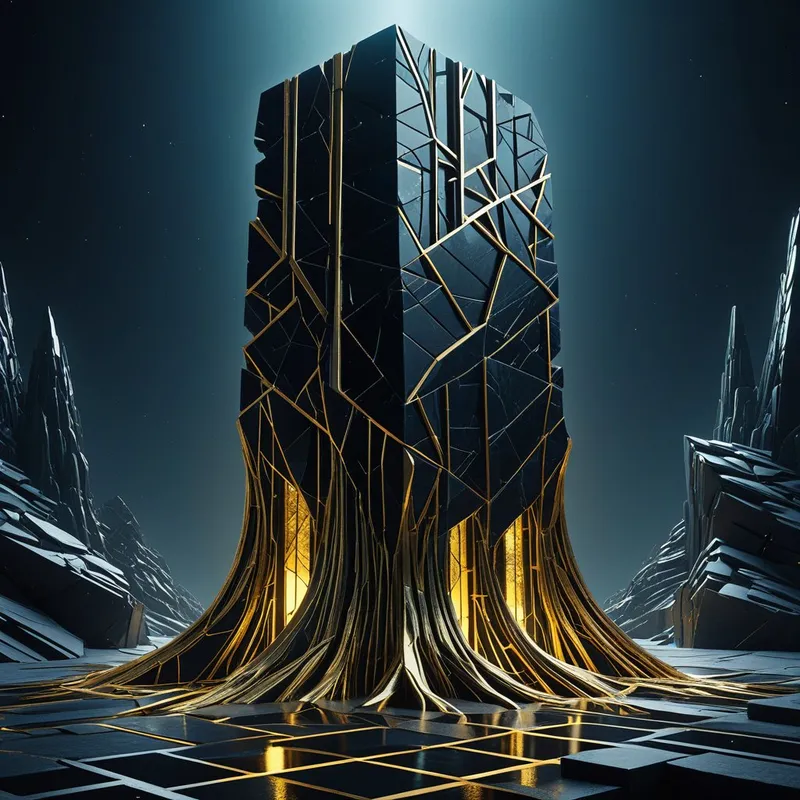
Action 3 (Forging the Personal Sigil): Engage in unstructured creative expression to materialize your autonomy. This is not about art skill. Using any medium—clay, ink, digital pixels, gathered stones—create a simple, abstract sigil or small object that feels like your own uncorrupted will. Let it be non-verbal, a shape or form that symbolizes pure, internal authority to you. Place it where you will see it as a tactile anchor to your sovereignty.
Final Validation
It is terrifying to become the final authority. To feel the last chain fall away is to feel the vastness of the sky with no net. This fear is not a sign you are wrong; it is the proof you are touching the real thing. Honor the ache, the silence, the static. They are the birth pangs of a will being forged in the deepest forge you possess. The throne is not waiting for a perfect ruler. It is waiting for the only one who can possibly sit in it: you, in your flawed, authentic, and sovereign entirety. The control room is empty. The key is glowing. The profound, world-shifting act is not to seize power, but to finally, quietly, turn and inhabit the authority that has always been yours.