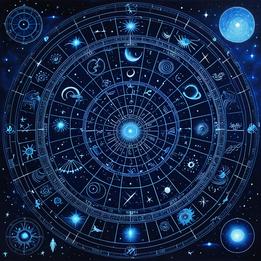
Zodiac
A celestial coordinate system dividing the sky into twelve signs, representing archetypal patterns, cycles of time, and cosmic influences on human life.
Zodiac Dream Meaning
A celestial coordinate system dividing the sky into twelve signs, representing archetypal patterns, cycles of time, and cosmic influences on human life.
Interpretive Themes
Mythological Resonance
The Twelve Labors of Heracles
GreekEach labor corresponds to a zodiac sign, representing the hero's journey through cosmic archetypes to achieve immortality.
MUL.APIN
BabylonianThe ancient Babylonian star catalog that established the zodiac as a celestial coordinate system for tracking time and celestial events.
Cultural Lenses
Jungian Perspective
View Context →Represents archetypes of the collective unconscious—universal psychic patterns like the Hero, Anima/Animus, and Shadow, projected onto celestial symbols for self-integration and individuation.
Freudian Perspective
View Context →Symbolizes repressed desires and unconscious conflicts, with zodiac signs acting as displacement for sexual or aggressive impulses, often relating to parental figures or childhood fixations.
Gestalt Perspective
View Context →Seen as a projection of the dreamer's fragmented self—each sign represents an unintegrated aspect of personality, urging wholeness through awareness of polarities and unfinished business.
Cognitive Perspective
View Context →Functions as a mental schema for organizing life experiences, reducing uncertainty through pattern recognition, and may reflect cognitive biases like the Barnum effect in self-perception.
Evolutionary Perspective
View Context →Rooted in adaptive mechanisms for tracking seasonal cycles and social coordination, with zodiac symbols serving as memes that enhance group cohesion and survival through shared narratives.
Global/Universal Perspective
View Context →A cross-cultural system for mapping human experience onto the cosmos, found in Babylonian, Greek, Indian, and Chinese traditions, reflecting universal human need for order and meaning.
East Asian Perspective
View Context →In Chinese zodiac, twelve animal signs cycle yearly, tied to lunar calendar, embodying traits like diligence (Ox) or wisdom (Snake), used in matchmaking and fortune-telling since Han Dynasty.
South Asian Perspective
View Context →Vedic astrology (Jyotish) uses sidereal zodiac with 27 nakshatras, deeply integrated into Hindu rituals, marriage compatibility, and karma, emphasizing spiritual destiny over personality.
Middle Eastern Perspective
View Context →Originated in Babylonian astronomy, later Islamic scholars like Al-Birni refined it, blending with Arabic lunar mansions for navigation and agricultural timing, while modern use varies by region.
European Perspective
View Context →Greco-Roman tradition popularized tropical zodiac, medieval Europe linked it to humors and alchemy, Renaissance revived it in art, now a blend of esoteric tradition and pop culture.
Modern Western Perspective
View Context →Mainstream astrology focuses on sun-sign horoscopes in media, blending psychology with entertainment, often criticized as pseudoscience but valued for self-reflection and community building.
Latin American Perspective
View Context →Syncretizes indigenous Mesoamerican calendars (e.g., Aztec tonalpohualli) with Spanish astrology, used in folk healing (curanderismo) and daily life for guidance on love and health.
Historical Authorities
Want a deeper analysis?
Get a personalized interpretation of your entire dream including this symbol.
Interpret My DreamThe Oracle's Prediction
Combine multiple symbolsMeeting someone who reflects or complements your archetypal patterns.
Timeframe
Seasonal (~3 Months)
Intensity
Deep
Deeper understanding of your life's thematic patterns and cycles.
Timeframe
Lunation (~29 Days)
Intensity
Deep
Common Appearances & Contexts
| Context | Emotion | Interpretation |
|---|---|---|
| Context Reading horoscope | Emotion hopeful | Interpretation Seeking future guidance. |
| Context Zodiac wheel spinning | Emotion anxious | Interpretation Feeling life's unpredictability. |
| Context Meeting zodiac animals | Emotion curious | Interpretation Exploring personality facets. |
| Context Zodiac constellations fading | Emotion fearful | Interpretation Losing cosmic connection. |
| Context Drawing zodiac symbols | Emotion creative | Interpretation Crafting personal identity. |
| Context Zodiac clock ticking | Emotion urgent | Interpretation Time pressure awareness. |
| Context Zodiac map navigation | Emotion adventurous | Interpretation Journey through life. |
| Context Zodiac signs arguing | Emotion conflicted | Interpretation Internal personality conflicts. |
| Context Birth chart calculation | Emotion introspective | Interpretation Deep self-analysis. |
| Context Zodiac temple visit | Emotion reverent | Interpretation Spiritual seeking. |
| Context Zodiac puzzle solving | Emotion determined | Interpretation Decoding life's mysteries. |
| Context Zodiac storm brewing | Emotion apprehensive | Interpretation Anticipating change. |
Interpret Your Full Dream
Beyond this symbol, every dream carries a unique story. Share your dream for a personalized AI-powered interpretation.