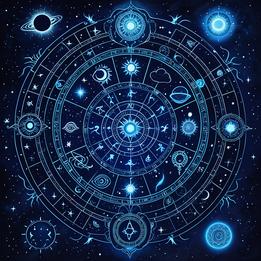
Astrology
A symbolic system linking celestial patterns to human affairs, representing cosmic order, fate, and self-understanding through planetary archetypes.
Astrology Dream Meaning
A symbolic system linking celestial patterns to human affairs, representing cosmic order, fate, and self-understanding through planetary archetypes.
Interpretive Themes
Mythological Resonance
The Zodiac
GreekA band of constellations through which the sun passes, each sign representing archetypal forces and myths that shape human character and destiny.
Nakshatras
HinduThe 27 lunar mansions in Vedic astrology, each associated with deities and symbols that refine predictions and spiritual insights.
Cultural Lenses
Global/Universal Perspective
View Context →Ancient cross-cultural practice observing celestial patterns to understand human experience, from Babylonian omen texts to modern horoscopes, representing humanity's attempt to find meaning in cosmic order.
Jungian Perspective
View Context →Archetypal symbolism of the collective unconscious, where planets represent psychological functions and zodiac signs embody universal human patterns, used for individuation and self-realization through symbolic integration.
East Asian Perspective
View Context →Chinese zodiac's 12-year animal cycle integrated with Five Elements philosophy, used for compatibility assessment, fortune-telling, and timing important events, deeply embedded in cultural festivals and personal identity.
South Asian Perspective
View Context →Vedic astrology (Jyotish) as sacred science calculating precise birth charts (kundali) for life path guidance, karma analysis, and ritual timing, integrated with Hindu cosmology and temple practices.
Middle Eastern Perspective
View Context →Historical birthplace in Mesopotamia with sophisticated Babylonian observational systems, later developed by Islamic scholars who preserved and advanced astrological knowledge while distinguishing it from astronomy.
European Perspective
View Context →Medieval and Renaissance court astrology blending Ptolemaic tradition with Christian symbolism, used for medical diagnosis (iatromathematics) and political counsel, later marginalized by scientific revolution.
African Perspective
View Context →Dogon people's sophisticated Sirius observations integrated with creation mythology, while various traditions use celestial patterns for agricultural timing, initiation rituals, and understanding ancestral connections.
North American Perspective
View Context →Native star knowledge for navigation and seasonal cycles, combined with modern New Age adoption of Western astrology for personal growth and alternative spirituality movements.
Latin American Perspective
View Context →Syncretic blend of indigenous Mesoamerican calendar systems (like Maya tzolk'in) with Spanish colonial astrology, now expressed through popular horoscopes and spiritual consultations.
Oceanian Perspective
View Context →Polynesian wayfinding using star compasses for navigation across vast oceans, with celestial knowledge transmitted orally through chants and practical seafaring application.
Modern Western Perspective
View Context →Psychological astrology emphasizing self-help and personality insight over prediction, popularized through social media, dating compatibility apps, and mainstream entertainment references.
Freudian Perspective
View Context →Projection of unconscious desires onto cosmic patterns, where planetary symbolism represents repressed wishes or childhood fixations, and horoscope reading serves as wish-fulfillment fantasy.
Gestalt Perspective
View Context →All astrological elements represent aspects of self; planets are internal drives, signs are personality expressions, and houses are life areas needing integration for wholeness.
Cognitive Perspective
View Context →Barnum effect in action: general statements perceived as personally specific, with confirmation bias reinforcing beliefs, while pattern-seeking cognition finds meaning in random celestial arrangements.
Evolutionary Perspective
View Context →Adaptive pattern-recognition mechanism for predicting seasonal changes and social coordination, now repurposed for modern anxiety reduction through perceived cosmic order in chaotic environments.
Historical Authorities
Want a deeper analysis?
Get a personalized interpretation of your entire dream including this symbol.
Interpret My DreamThe Oracle's Prediction
Combine multiple symbolsA period of heightened self-awareness and archetypal integration will emerge.
Timeframe
Lunation (~29 Days)
Intensity
Deep
Common Appearances & Contexts
| Context | Emotion | Interpretation |
|---|---|---|
| Context Reading horoscope | Emotion anticipation | Interpretation Seeking future guidance. |
| Context Planetary alignment | Emotion awe | Interpretation Cosmic significance felt. |
| Context Birth chart calculation | Emotion curiosity | Interpretation Self-discovery process. |
| Context Zodiac wheel spinning | Emotion anxiety | Interpretation Fate overwhelming choice. |
| Context Astrologer consultation | Emotion hope | Interpretation External validation sought. |
| Context Celestial map studying | Emotion wonder | Interpretation Pattern recognition attempt. |
| Context Planets colliding | Emotion fear | Interpretation Chaos threatening order. |
| Context Zodiac symbols glowing | Emotion reverence | Interpretation Sacred knowledge accessed. |
| Context Horoscope contradicting reality | Emotion confusion | Interpretation Prediction versus experience. |
| Context Creating astrology chart | Emotion focus | Interpretation Personal meaning construction. |
| Context Planets retrograde | Emotion frustration | Interpretation Delays perceived cosmically. |
| Context Zodiac animals arguing | Emotion amusement | Interpretation Inner conflicts personified. |
Interpret Your Full Dream
Beyond this symbol, every dream carries a unique story. Share your dream for a personalized AI-powered interpretation.