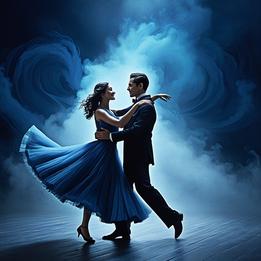
Waltz
A graceful, structured dance symbolizing harmony, partnership, and life's cyclical rhythms. Represents balance between control and surrender.
Waltz Dream Meaning
A graceful, structured dance symbolizing harmony, partnership, and life's cyclical rhythms. Represents balance between control and surrender.
Interpretive Themes
Mythological Resonance
Terpsichore
GreekMuse of dance and choral song who inspires harmonious, structured movement that elevates the soul.
Round Table
ArthurianKnights moving in perfect, circular unity, each partner equal in the dance of chivalry and shared purpose.
Cultural Lenses
Jungian Perspective
View Context →Symbolizes the dance between conscious and unconscious, anima/animus integration. Represents the individuation process—finding harmony between opposing aspects of self through rhythmic, archetypal movement.
Freudian Perspective
View Context →Represents sexual union through rhythmic motion—the three-beat pattern symbolizing sexual intercourse. The close embrace signifies repressed desires for intimacy and physical connection with parental figures.
Gestalt Perspective
View Context →The dreamer IS the waltz—exploring how different parts (lead/follow, rhythm/movement) interact. Each element represents aspects of self seeking integration through coordinated expression.
Cognitive Perspective
View Context →Brain processing social coordination, pattern recognition, and procedural memory. The waltz represents mental rehearsal of complex social interactions or problem-solving through structured sequences.
Evolutionary Perspective
View Context →Ritualized mating display demonstrating fitness through coordination, rhythm, and cooperation. Symbolizes pair-bonding behaviors essential for reproductive success and social cohesion in human evolution.
European Perspective
View Context →Originating in 18th century Austria, represents aristocratic elegance and social order. Historically symbolized romance and courtship rituals, now evokes nostalgia for classical tradition and cultural heritage.
East Asian Perspective
View Context →In Chinese context, may represent yin-yang balance—the lead/follow dynamic mirroring complementary forces. In Japan, symbolizes Western influence and adaptation of foreign traditions while maintaining harmony.
Latin American Perspective
View Context →Though distinct from local dances, represents formal celebration and family traditions. Often associated with quinceañeras and weddings, symbolizing transition into adulthood and community bonding.
Modern Western Perspective
View Context →Represents either outdated formality or rediscovered elegance. In competitive ballroom, symbolizes discipline and artistry; in popular culture, often romanticized as ideal partnership.
Middle Eastern Perspective
View Context →Viewed as European import representing foreign sophistication. In some contexts, symbolizes cultural exchange, while traditionalists may see it as departure from local dance forms and values.
African Perspective
View Context →Colonial legacy dance representing cultural imposition and adaptation. In contemporary context, may symbolize pan-African identity through fusion with traditional rhythms and movements.
Global/Universal Perspective
View Context →Cross-cultural symbol of partnership and rhythm found in all human societies. Represents fundamental human need for synchronized movement, whether in dance, work, or social coordination across civilizations.
Historical Authorities
Want a deeper analysis?
Get a personalized interpretation of your entire dream including this symbol.
Interpret My DreamThe Oracle's Prediction
Combine multiple symbolsA deepening partnership or harmonious collaboration will emerge.
Timeframe
Seasonal (~3 Months)
Intensity
Deep
Common Appearances & Contexts
| Context | Emotion | Interpretation |
|---|---|---|
| Context Dancing alone | Emotion lonely | Interpretation Missing partnership. |
| Context Leading confidently | Emotion empowered | Interpretation Taking control. |
| Context Following gracefully | Emotion trusting | Interpretation Surrendering to guidance. |
| Context Tripping mid-waltz | Emotion anxious | Interpretation Fear of failure. |
| Context Perfect synchronization | Emotion euphoric | Interpretation Achieving harmony. |
| Context Changing partners | Emotion confused | Interpretation Relationship transitions. |
| Context Waltz in darkness | Emotion mysterious | Interpretation Unknown path ahead. |
| Context Speeding up tempo | Emotion frantic | Interpretation Life accelerating. |
| Context Slow, deliberate waltz | Emotion peaceful | Interpretation Mindful progression. |
| Context Waltz with stranger | Emotion curious | Interpretation New connections forming. |
| Context Teaching someone | Emotion patient | Interpretation Guiding others. |
| Context Waltz without music | Emotion determined | Interpretation Creating own rhythm. |
Interpret Your Full Dream
Beyond this symbol, every dream carries a unique story. Share your dream for a personalized AI-powered interpretation.