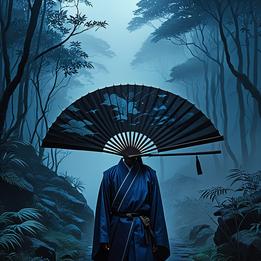
Tessen
A Japanese iron war fan used for signaling, defense, and concealed weaponry, symbolizing hidden strength and strategic elegance.
Tessen Dream Meaning
A Japanese iron war fan used for signaling, defense, and concealed weaponry, symbolizing hidden strength and strategic elegance.
Interpretive Themes
Cultural Lenses
Jungian Perspective
View Context →Represents the persona - the elegant social mask concealing the shadow's defensive aggression. Symbolizes integration of anima (beauty) and animus (strength) in balanced self-presentation.
Freudian Perspective
View Context →Phallic symbol of concealed aggression and sexual power. The folding/unfolding represents repression and release of primal urges through socially acceptable channels.
Gestalt Perspective
View Context →Represents the dreamer's ability to be both gentle and strong simultaneously. The tessen is an extension of self that manages conflicting needs for connection and protection.
Cognitive Perspective
View Context →Mental schema for strategic thinking and threat assessment. Represents cognitive flexibility in switching between social grace and defensive readiness based on environmental cues.
Evolutionary Perspective
View Context →Symbolizes evolved social intelligence - using deception and signaling for survival advantage. Represents the adaptive value of appearing harmless while maintaining defensive capabilities.
East Asian Perspective
View Context →Japanese samurai weapon representing bushido virtues - concealed strength, strategic intelligence, and aesthetic discipline. Historically used by nobility for self-defense without obvious weaponry.
European Perspective
View Context →Parallels to concealed weapons like sword-canes in aristocratic culture. Symbolizes the gentleman's ability to maintain civility while prepared for necessary violence when honor demands.
Modern Western Perspective
View Context →Metaphor for professional competence masked by pleasant demeanor. Represents the modern ideal of being formidable without appearing threatening in corporate or social settings.
Middle Eastern Perspective
View Context →Echoes of concealed daggers in traditional dress. Symbolizes the cultural value of hospitality masking preparedness, where guests are welcomed but threats are anticipated.
South Asian Perspective
View Context →Relates to concepts of maya (illusion) in Hindu philosophy - the beautiful appearance concealing defensive reality. Symbolizes the spiritual practice of non-violence with capability.
African Perspective
View Context →Parallels to ceremonial objects with hidden functions in many traditions. Represents the wisdom of elders who maintain peace through strategic authority rather than overt force.
Global/Universal Perspective
View Context →Cross-cultural symbol of the warrior-scholar ideal - combining aesthetic refinement with practical capability. Represents humanity's universal tension between civilization and self-preservation instincts.
Want a deeper analysis?
Get a personalized interpretation of your entire dream including this symbol.
Interpret My DreamCommon Appearances & Contexts
| Context | Emotion | Interpretation |
|---|---|---|
| Context Receiving a tessen | Emotion Pride | Interpretation Recognition of hidden talents. |
| Context Opening a tessen | Emotion Revelation | Interpretation Unveiling concealed capabilities. |
| Context Using tessen defensively | Emotion Protectiveness | Interpretation Intelligent self-protection. |
| Context Tessen breaking | Emotion Vulnerability | Interpretation Defense mechanism failing. |
| Context Gifting a tessen | Emotion Trust | Interpretation Sharing secret strength. |
| Context Concealing a tessen | Emotion Secrecy | Interpretation Hiding true intentions. |
| Context Master wielding tessen | Emotion Awe | Interpretation Skillful control admired. |
| Context Tessen as fan only | Emotion Deception | Interpretation Misleading appearances. |
| Context Forging a tessen | Emotion Creation | Interpretation Crafting personal defense. |
| Context Tessen in battle | Emotion Determination | Interpretation Strategic combat approach. |
| Context Ancient tessen discovered | Emotion Discovery | Interpretation Unearthing ancestral wisdom. |
| Context Tessen transforming | Emotion Transformation | Interpretation Adapting to threats. |
Interpret Your Full Dream
Beyond this symbol, every dream carries a unique story. Share your dream for a personalized AI-powered interpretation.