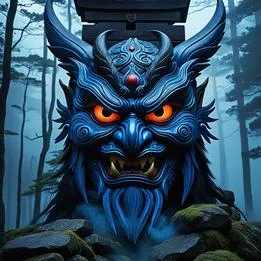
Tengu Mask Dream Meaning
A Japanese mask representing supernatural mountain spirits, symbolizing both protective power and disruptive mischief.
Common Appearances & Contexts
| Context | Emotion | Interpretation |
|---|---|---|
| Wearing the mask in a forest | Empowerment | Connecting with wild, untamed aspects of self. |
| Seeing the mask on a shrine | Reverence | Acknowledging spiritual guidance or protection. |
| The mask is chasing you | Terror | Confronting fears or repressed shadow aspects. |
| Carving or painting the mask | Focus | Crafting a new identity or persona. |
| The mask is speaking | Awe | Receiving wisdom from the unconscious or ancestral. |
| Mask at a festival | Joy | Celebrating tradition or community connection. |
| Trying to remove the mask | Anxiety | Struggling with a false self or role. |
| The mask is broken | Relief | Release from a constraining identity or fear. |
| Giving the mask to someone | Responsibility | Passing on knowledge, power, or a burden. |
| The mask is watching silently | Unease | Feeling judged or observed by higher self. |
| Multiple identical masks | Confusion | Questioning authenticity or losing individuality. |
| Mask transforming into a face | Wonder | Integration of persona with true self. |
Interpretive Themes
Cultural Lenses
Jungian Perspective
View Context →Represents the shadow archetype—the repressed, wild, or morally ambiguous aspects of the psyche that must be integrated for wholeness.
Freudian Perspective
View Context →Symbolizes the superego's punitive aspect or a repressed desire for rebellion against societal and paternal authority, often with sexual undertones.
Gestalt Perspective
View Context →The mask is an aspect of the self you are projecting; ask what part of you it represents and what message it holds for your awareness.
Cognitive Perspective
View Context →A mental schema representing threat, transformation, or cultural knowledge; its appearance may signal cognitive processing of identity or fear.
Evolutionary Perspective
View Context →Taps into innate fear responses to predator-like features (long nose, fierce eyes) and social signaling about status, deception, or group identity.
East Asian Perspective
View Context →In Japanese folklore, Tengu are mountain goblins or deities, originally disruptive but later seen as protective spirits of martial arts and ascetic discipline.
Modern Western Perspective
View Context →Often exoticized in media as a symbol of mysterious Eastern spirituality or villainy, detached from its complex cultural and religious origins.
European Perspective
View Context →Parallels exist with trickster figures like Puck or forest spirits; may be interpreted through a lens of medieval demonology or romanticized folklore.
Global/Universal Perspective
View Context →A mask archetype representing the interface between human and spirit worlds, used globally in rituals for transformation, protection, and communication with the divine.
South Asian Perspective
View Context →Comparable to Rakshasa masks in Hindu tradition—supernatural beings that can be malevolent or protective, symbolizing the duality of cosmic forces.
African Perspective
View Context →Resonates with traditional mask rituals where masks embody ancestors or spirits, mediating between community, nature, and the supernatural realm.
North American Perspective
View Context →In Indigenous contexts, similar to transformation masks of Pacific Northwest cultures, representing ancestral spirits, clan identities, and stories of metamorphosis.
Interpret Your Full Dream
Beyond this symbol, every dream carries a unique story. Share your dream for a personalized AI-powered interpretation.