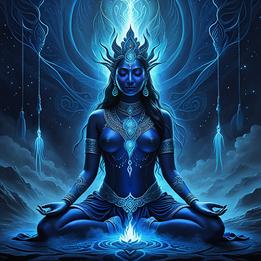
Tantra
An ancient spiritual tradition emphasizing energy, sacred union, and the integration of physical and divine realms through ritual and consciousness.
Tantra Dream Meaning
An ancient spiritual tradition emphasizing energy, sacred union, and the integration of physical and divine realms through ritual and consciousness.
Interpretive Themes
Mythological Resonance
The Union of Shiva and Shakti
HinduThe supreme tantric myth: the embrace of pure consciousness (Shiva) and dynamic creative energy (Shakti), from which all manifestation arises and into which it dissolves.
Coniunctio
AlchemicalThe sacred marriage, the union of opposites (Sol and Luna, King and Queen), which produces the philosopher's stone or enlightened consciousness, paralleling tantric non-dual realization.
Cultural Lenses
Jungian Perspective
View Context →Symbolizes individuation through coniunctio oppositorum—union of conscious/unconscious, anima/animus. Represents psychic wholeness and Self-realization via sacred marriage archetype.
Freudian Perspective
View Context →Manifestation of libidinal energy sublimated into spiritual experience. Ritualized sexuality masks repressed desires; union symbolizes Oedipal or primal fantasies.
Gestalt Perspective
View Context →Projection of inner polarities seeking integration. Each element (energy, deity, partner) represents disowned parts of self needing acknowledgment and dialogue.
Cognitive Perspective
View Context →Schema for processing transcendence or intimacy. Mental model organizing spiritual experiences; may reflect cognitive dissonance between earthly and divine aspirations.
Evolutionary Perspective
View Context →Adaptive mechanism promoting bonding and meaning-making. Ritualized union enhances social cohesion and reproductive success through sacred narrative reinforcement.
South Asian Perspective
View Context →Rooted in Hindu/Buddhist traditions as path to moksha via deity yoga and kundalini. Historically esoteric, now popularized globally with varied authenticity.
Modern Western Perspective
View Context →Often commercialized as sexual wellness or mindfulness practice. Blends with therapy and neo-spirituality, sometimes divorcing from original ritual contexts.
Global/Universal Perspective
View Context →Archetype of sacred marriage across cultures—energy union in Taoism, hieros gamos in mysticism. Represents universal human yearning for divine connection.
East Asian Perspective
View Context →Parallels Taoist dualism (yin-yang) and esoteric Buddhism. Viewed as advanced spiritual discipline, less sexualized than Western interpretations.
European Perspective
View Context →Historically linked to alchemy and Christian mysticism (e.g., bridal mysticism). Modern esoteric groups adapt it as path to gnosis.
North American Perspective
View Context →New Age adaptation emphasizing personal transformation and holistic health. Often detached from traditional lineages, focusing on experiential workshops.
African Perspective
View Context →Resonates with indigenous practices of energy harmony and ancestral connection. Some syncretic traditions incorporate it into healing rituals.
Historical Authorities
Want a deeper analysis?
Get a personalized interpretation of your entire dream including this symbol.
Interpret My DreamThe Oracle's Prediction
Combine multiple symbolsA deepening of intimacy or the arrival of a significant partnership.
Timeframe
Seasonal (~3 Months)
Intensity
Deep
A breakthrough in perceiving the unity behind apparent duality.
Timeframe
Lunation (~29 Days)
Intensity
Deep
Common Appearances & Contexts
| Context | Emotion | Interpretation |
|---|---|---|
| Context Temple ritual | Emotion Awe | Interpretation Spiritual calling emerges. |
| Context Energy rising | Emotion Euphoria | Interpretation Awakening process begins. |
| Context Sacred union | Emotion Bliss | Interpretation Integration of opposites. |
| Context Broken mandala | Emotion Anxiety | Interpretation Spiritual fragmentation feared. |
| Context Teacher appears | Emotion Reverence | Interpretation Guidance is needed. |
| Context Chanting sounds | Emotion Peace | Interpretation Vibrational harmony sought. |
| Context Energy blocked | Emotion Frustration | Interpretation Inner obstacles present. |
| Context Divine embrace | Emotion Love | Interpretation Union with higher self. |
| Context Ritual failure | Emotion Shame | Interpretation Fear of inadequacy. |
| Context Cosmic dance | Emotion Joy | Interpretation Life force celebrated. |
| Context Forbidden practice | Emotion Guilt | Interpretation Taboo desires surface. |
| Context Awakening shock | Emotion Fear | Interpretation Change overwhelms psyche. |
Interpret Your Full Dream
Beyond this symbol, every dream carries a unique story. Share your dream for a personalized AI-powered interpretation.