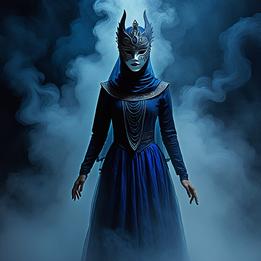
Masked Dancer
A figure performing ritual movement while concealing identity, representing the interplay between revealed and hidden aspects of self or spirit.
Masked Dancer Dream Meaning
A figure performing ritual movement while concealing identity, representing the interplay between revealed and hidden aspects of self or spirit.
Interpretive Themes
Identity Concealment
highCore tension between public and private.
Ritual Transformation
highDance alters state or reality.
Shadow Integration
mediumMask may reveal unconscious content.
Social Performance
mediumAdapting self to expectations.
Mystical Revelation
lowParadox of concealment revealing.
Mythological Resonance
Dionysus & Maenads
GreekThe god of ecstasy and his followers who performed ritual masked dances to transcend ordinary consciousness and connect with primal energies.
Noh Theater Performers
JapaneseHighly stylized masked dancers who channel spirits and archetypes through precise movements, with specific masks representing specific characters and emotions.
Gelede Masquerade
AfricanYoruba ritual dances where masked performers honor female ancestors and deities, using masks to channel spiritual forces during ceremonial performances.
Cultural Lenses
Jungian Perspective
View Context →Represents the Persona archetype—the social mask concealing the true Self. The dance symbolizes the dynamic relationship between conscious presentation and unconscious contents seeking integration through symbolic movement.
Freudian Perspective
View Context →Manifestation of repressed desires or childhood memories. The mask represents superego constraints, while the dance embodies id impulses seeking expression through disguised, socially acceptable physical symbolism.
Gestalt Perspective
View Context →Projection of disowned aspects of self. The masked dancer represents parts of personality the dreamer avoids acknowledging, with the dance showing how these parts seek integration through movement and expression.
Cognitive Perspective
View Context →Mental simulation of social performance or identity exploration. The brain processes identity concealment scenarios, using dance as metaphorical movement through complex social or personal decision-making processes.
Evolutionary Perspective
View Context →Ancient ritual behavior for group cohesion or mating display. The mask represents anonymity in tribal ceremonies, while dance signals fitness, social status, or spiritual connection through coordinated movement patterns.
Global/Universal Perspective
View Context →Cross-cultural symbol of ritual transformation found in shamanic traditions, carnival celebrations, and theatrical performances worldwide. Represents the human universal of identity play and spiritual expression through concealed movement.
East Asian Perspective
View Context →In Noh theater and traditional festivals, masked dancers channel spirits or ancestors. The mask transforms performer into deity, with precise movements conveying spiritual messages and maintaining cosmic balance through ritual dance.
South Asian Perspective
View Context →In Kathakali and classical dance dramas, elaborate masks and makeup transform performers into gods, demons, or heroes. The dance (natya) becomes sacred offering, with mudras conveying spiritual truths through disciplined movement.
Middle Eastern Perspective
View Context →In Sufi whirling and folk traditions, veiled or masked dancers achieve spiritual ecstasy (hal). The concealment facilitates divine connection, with circular movements representing cosmic cycles and the soul's journey toward unity.
European Perspective
View Context →Carnival and Commedia dell'arte traditions feature masked dancers as social commentary. The mask allows temporary freedom from class constraints, with dance serving as both celebration and subtle critique of social structures through symbolic movement.
African Perspective
View Context →In ritual masquerades, masked dancers embody ancestral spirits or natural forces. The transformation through mask and movement mediates between human and spirit worlds, with specific dances invoking protection, healing, or community guidance.
North American Perspective
View Context →Indigenous ceremonial dancers wear masks representing animal spirits or ancestors in potlatches and healing rituals. The dance maintains cultural continuity, while contemporary interpretations explore identity, heritage, and resistance through masked performance art.
Historical Authorities
Want a deeper analysis?
Get a personalized interpretation of your entire dream including this symbol.
Interpret My DreamThe Oracle's Prediction
Combine multiple symbolsA revelation about someone's true nature or intentions.
Timeframe
Immediate (Next 48h)
Intensity
Deep
A breakthrough in understanding your own multifaceted nature.
Timeframe
Lunation (~29 Days)
Intensity
Deep
Common Appearances & Contexts
| Context | Emotion | Interpretation |
|---|---|---|
| Context Crowded festival | Emotion Joy | Interpretation Celebratory communal expression. |
| Context Empty theater | Emotion Loneliness | Interpretation Unseen performance anxiety. |
| Context Forest clearing | Emotion Awe | Interpretation Nature ritual connection. |
| Context Mirrored room | Emotion Confusion | Interpretation Identity fragmentation reflection. |
| Context Chasing dancer | Emotion Frustration | Interpretation Elusive truth pursuit. |
| Context Dancer approaches | Emotion Fear | Interpretation Confronting hidden self. |
| Context Mask removal | Emotion Relief | Interpretation Authenticity revelation moment. |
| Context Multiple dancers | Emotion Overwhelm | Interpretation Role confusion multiplicity. |
| Context Dancer transforms | Emotion Wonder | Interpretation Metamorphosis through movement. |
| Context Silent performance | Emotion Peace | Interpretation Wordless spiritual communication. |
| Context Competitive dance | Emotion Anxiety | Interpretation Social comparison pressure. |
| Context Guiding dancer | Emotion Trust | Interpretation Hidden mentor figure. |
Interpret Your Full Dream
Beyond this symbol, every dream carries a unique story. Share your dream for a personalized AI-powered interpretation.