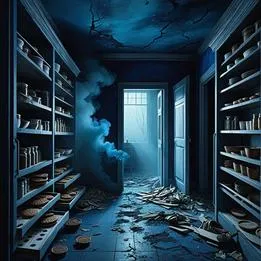
Stale Dream Meaning
Represents loss of vitality, missed opportunities, or emotional/spiritual stagnation. Often signals neglect or the passage of time without renewal.
Common Appearances & Contexts
| Context | Emotion | Interpretation |
|---|---|---|
| Eating stale food | Disgust | Consuming unsatisfying experiences. |
| Finding stale bread | Disappointment | Missed nourishment opportunity. |
| Smelling stale air | Anxiety | Environment feels stagnant. |
| Touching stale objects | Revulsion | Contact with decay. |
| Offering stale food | Shame | Inadequate giving. |
| Receiving stale gift | Resentment | Feeling undervalued. |
| Stale in pantry | Regret | Wasted resources. |
| Stale water | Thirst | Unsatisfied needs. |
| Stale relationship | Loneliness | Connection has faded. |
| Stale ideas | Boredom | Mental stagnation. |
| Stale routine | Restlessness | Life lacks freshness. |
| Reviving stale item | Hope | Attempting renewal. |
Interpretive Themes
Cultural Lenses
Jungian Perspective
View Context →Represents psychic stagnation or neglected aspects of the Self. The stale object symbolizes an archetype or personal quality that has lost its vitality and needs conscious integration for wholeness.
Freudian Perspective
View Context →May symbolize repressed desires or memories that have 'gone bad' due to neglect. Could relate to oral fixation or anxieties about nourishment (literal or emotional) being withheld or spoiled.
Gestalt Perspective
View Context →The dreamer likely projects their own feeling of being 'stale' onto an object. Interpretation focuses on what part of the dreamer's life feels neglected, outdated, or in need of refreshment.
Cognitive Perspective
View Context →Represents a mental schema about waste, expiration, or missed opportunities. The brain processes concerns about time management, resource utilization, or fear of becoming irrelevant.
Evolutionary Perspective
View Context →Triggers ancient aversion to spoiled food for survival. Metaphorically extends to avoiding stagnant social situations or outdated knowledge that reduces adaptive fitness.
East Asian Perspective
View Context →In Confucian-influenced cultures, may symbolize neglect of duty or ritual. In Taoist context, represents blockage of Qi (vital energy) or deviation from the natural flow of life.
South Asian Perspective
View Context →In Hindu context, could represent tamas guna (quality of inertia) dominating. In Ayurveda, relates to ama (toxins) - accumulated waste that needs cleansing for health.
Middle Eastern Perspective
View Context →In Islamic dream interpretation, stale food may warn against haram (forbidden) sustenance or indicate spiritual nourishment has become impure. Could signal need for renewal of faith.
European Perspective
View Context →In traditional folk interpretation, stale bread specifically might predict poverty or hardship. In Christian symbolism, could represent spiritual dryness or loss of grace.
African Perspective
View Context →In many traditions, represents broken reciprocity in community relationships. Stale food offered to ancestors would be serious neglect of ancestral veneration duties.
North American Perspective
View Context →In consumer culture, often symbolizes planned obsolescence or wastefulness. In individualistic context, represents personal stagnation or failure to 'refresh' one's life narrative.
Latin American Perspective
View Context →In Day of the Dead traditions, stale offerings would dishonor ancestors. In Catholic context, could represent Eucharist that has lost its sacred meaning through routine.
Interpret Your Full Dream
Beyond this symbol, every dream carries a unique story. Share your dream for a personalized AI-powered interpretation.