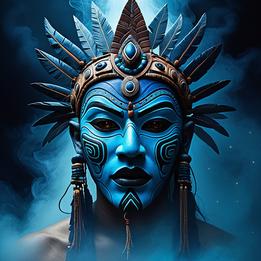
Shaman's Mask
A ritual object representing transformation, spiritual connection, and the mediation between human and spirit worlds.
Shaman's Mask Dream Meaning
A ritual object representing transformation, spiritual connection, and the mediation between human and spirit worlds.
Interpretive Themes
Transformation
highMask enables crossing boundaries.
Spiritual Connection
highFacilitates communication with spirits.
Hidden Truths
mediumUnveils subconscious or spiritual insights.
Power and Authority
mediumRepresents sanctioned spiritual power.
Protection and Boundary
lowCreates safe ritual container.
Mythological Resonance
Shamanic Journey
SiberianThe ritual practice where shamans travel to upper, middle, and lower worlds using masks and drums to retrieve lost souls or gain healing wisdom.
Dionysus
GreekThe god of ecstasy and transformation whose followers wore masks in rituals to experience altered states and commune with divine madness.
Cultural Lenses
Jungian Perspective
View Context →Represents the persona or archetypal self; a tool for accessing the collective unconscious and integrating shadow aspects through symbolic transformation in individuation.
Freudian Perspective
View Context →Symbolizes repression and disguise of unconscious desires; may represent hidden sexual or aggressive impulses masked by social conformity and superego constraints.
Gestalt Perspective
View Context →Represents parts of self projected outward; the mask becomes a dialogue partner revealing disowned aspects of personality needing integration and awareness.
Cognitive Perspective
View Context →Functions as a mental schema for spiritual experience; represents cognitive frameworks for understanding altered states and ritual behavior as meaningful constructs.
Evolutionary Perspective
View Context →May reflect evolved social signaling for group cohesion; ritual objects that enhance status, facilitate healing practices, and strengthen community bonds through shared symbolism.
Global/Universal Perspective
View Context →Cross-cultural symbol of spiritual mediation; appears in indigenous traditions worldwide as ritual object for connecting with spirit realms, healing, and community ceremony.
East Asian Perspective
View Context →In Japanese Noh and Korean shamanism, masks mediate between human and kami/spirits; represent specific deities or ancestral spirits in ritual performances and folk traditions.
South Asian Perspective
View Context →In Hindu and tribal traditions, masks represent deities in festivals; used in Chhau dance and ritual exorcisms to channel divine energy and protect communities.
Middle Eastern Perspective
View Context →Ancient Mesopotamian and Persian ritual masks connected to deity worship; modern Sufi and folk traditions use symbolic face coverings in spiritual practices and ceremonies.
European Perspective
View Context →Pagan and folk traditions featured ritual masks for seasonal festivals; medieval mystery plays used masks to represent spiritual concepts in Christian context.
African Perspective
View Context →Central to many indigenous spiritual systems; masks embody ancestors, nature spirits, or deities in initiation rites, healing ceremonies, and community governance rituals.
North American Perspective
View Context →Indigenous nations use ceremonial masks in potlatches, healing rituals, and seasonal ceremonies; represent animal spirits, ancestors, and natural forces in cultural preservation.
Historical Authorities
Want a deeper analysis?
Get a personalized interpretation of your entire dream including this symbol.
Interpret My DreamThe Oracle's Prediction
Combine multiple symbolsA significant personal transformation or identity shift will occur.
Timeframe
Seasonal (~3 Months)
Intensity
Deep
Beware of false spiritual guides or inauthentic transformations.
Timeframe
Immediate (Next 48h)
Intensity
Deep
Common Appearances & Contexts
| Context | Emotion | Interpretation |
|---|---|---|
| Context Wearing mask | Emotion Empowered | Interpretation Embracing spiritual role. |
| Context Seeing mask | Emotion Awe | Interpretation Encountering spiritual presence. |
| Context Mask speaking | Emotion Fear | Interpretation Receiving direct message. |
| Context Creating mask | Emotion Purposeful | Interpretation Crafting spiritual identity. |
| Context Mask breaking | Emotion Anxious | Interpretation Spiritual protection failing. |
| Context Trading mask | Emotion Curious | Interpretation Exchanging spiritual knowledge. |
| Context Mask in nature | Emotion Reverent | Interpretation Natural spiritual connection. |
| Context Multiple masks | Emotion Confused | Interpretation Multiple spiritual roles. |
| Context Ancient mask | Emotion Humbled | Interpretation Connecting with ancestors. |
| Context Mask in mirror | Emotion Startled | Interpretation Seeing hidden self. |
| Context Mask ceremony | Emotion Sacred | Interpretation Participating in ritual. |
| Context Mask rejected | Emotion Isolated | Interpretation Spiritual role denied. |
Interpret Your Full Dream
Beyond this symbol, every dream carries a unique story. Share your dream for a personalized AI-powered interpretation.