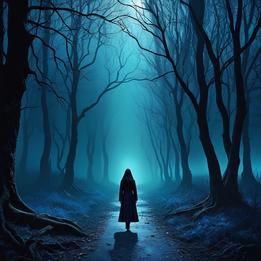
Nocturnal
Relating to night, darkness, and the unconscious realm where hidden truths emerge.
Nocturnal Dream Meaning
Relating to night, darkness, and the unconscious realm where hidden truths emerge.
Interpretive Themes
Cultural Lenses
Global/Universal Perspective
View Context →Universally represents the unconscious, mystery, and transition. Historically feared for predators and celebrated for celestial observation. Modernly associated with shift work and digital disruption of circadian rhythms.
Jungian Perspective
View Context →The shadow realm where archetypes emerge. Night represents the collective unconscious—a storehouse of ancestral memories and symbols needing integration for individuation through dream analysis.
Freudian Perspective
View Context →Repressed desires and unconscious wishes surface at night. Dreams as wish-fulfillment where id impulses bypass superego censorship. Night symbolizes libidinal energy and hidden sexual content.
Gestalt Perspective
View Context →The nocturnal represents unfinished business and polarities. Dreamer projects aspects of self onto night elements—darkness as rejected parts needing integration for wholeness and self-awareness.
Cognitive Perspective
View Context →Brain's information processing during sleep cycles. Night represents memory consolidation, problem-solving, and emotional regulation. Dreams as cognitive simulations preparing for waking challenges.
Evolutionary Perspective
View Context →Adaptive threat simulation during vulnerable periods. Night historically dangerous—dreams rehearse survival scenarios. Modern remnants include anxiety dreams about social threats and predator avoidance.
East Asian Perspective
View Context →Yin energy—passive, feminine, receptive. Historically associated with moon deities and ancestor worship. Modernly valued for meditation and intuition development in Taoist and Buddhist practices.
South Asian Perspective
View Context →Time of Shiva's dance of destruction and creation. Ayurveda emphasizes night for healing and dosha balance. Historically, night vigils for spiritual practices and temple rituals continue today.
Middle Eastern Perspective
View Context →Night journeys (Isra) in Islamic tradition—Muhammad's ascension. Historically, desert navigation by stars. Modern Ramadan night prayers (Taraweeh) maintain spiritual significance across generations.
European Perspective
View Context →Medieval fear of witches and supernatural. Romantic era celebrated night for poetry and mystery. Modern gothic subcultures embrace nocturnal aesthetics while science studies sleep disorders.
African Perspective
View Context →Time for storytelling, ancestor communication, and initiation rites. Historically, night protected secrets and rituals. Modern urban nightlife blends tradition with contemporary music and social gatherings.
North American Perspective
View Context →Colonial fears of wilderness dangers evolved into entertainment culture. Historically, night travel restrictions; modernly, 24/7 economy and nightlife. Indigenous traditions maintain moon ceremonies and dreamcatcher use.
Want a deeper analysis?
Get a personalized interpretation of your entire dream including this symbol.
Interpret My DreamCommon Appearances & Contexts
| Context | Emotion | Interpretation |
|---|---|---|
| Context Walking alone | Emotion Fearful | Interpretation Facing inner fears. |
| Context Stargazing peacefully | Emotion Awe | Interpretation Connecting with cosmos. |
| Context Lost in darkness | Emotion Confused | Interpretation Uncertain life direction. |
| Context Creatively inspired | Emotion Excited | Interpretation Unconscious ideas flowing. |
| Context Meeting shadow figure | Emotion Terrified | Interpretation Confronting repressed self. |
| Context Animal encounters | Emotion Curious | Interpretation Instinctual guidance emerging. |
| Context Flying freely | Emotion Liberated | Interpretation Transcending limitations. |
| Context Searching for light | Emotion Hopeful | Interpretation Seeking clarity. |
| Context Ancient ritual | Emotion Reverent | Interpretation Connecting to tradition. |
| Context Time distortion | Emotion Disoriented | Interpretation Reality perception shifting. |
| Context Healing sleep | Emotion Peaceful | Interpretation Emotional restoration occurring. |
| Context Forbidden activity | Emotion Guilty | Interpretation Hidden desires surfacing. |
Interpret Your Full Dream
Beyond this symbol, every dream carries a unique story. Share your dream for a personalized AI-powered interpretation.