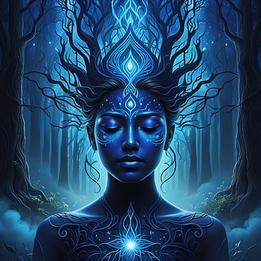
Self Symbol
A representation of one's inner essence, soul, or higher consciousness, often appearing as a guide, mirror, or divine figure in dreams.
Self Symbol Dream Meaning
A representation of one's inner essence, soul, or higher consciousness, often appearing as a guide, mirror, or divine figure in dreams.
Interpretive Themes
Mythological Resonance
Atman
HinduThe eternal, true self that is identical with Brahman, the ultimate reality.
Divine Spark
GnosticThe fragment of divine light trapped within material existence, seeking return to the Pleroma.
Cultural Lenses
Jungian Perspective
View Context →The Self as archetype of wholeness and center of personality, representing the psyche's totality. Individuation process goal, balancing conscious/unconscious. Modern therapy uses it for integration work.
Freudian Perspective
View Context →Ego ideal manifestation, representing wish-fulfillment of perfected self. Often parental introject symbol. Modern psychoanalysis views as superego expression of moral aspirations.
Gestalt Perspective
View Context →Holistic self-concept emerging from awareness integration. Empty chair technique explores self-dialogue. Modern therapy emphasizes present-moment self-awareness and responsibility.
Cognitive Perspective
View Context →Self-schema activation during REM sleep, processing identity information. Memory consolidation of self-concept. Modern research links to default mode network activity during dreaming.
Evolutionary Perspective
View Context →Adaptive self-representation for social navigation and survival planning. Theory of mind development. Modern perspective: threat simulation of identity challenges.
South Asian Perspective
View Context →Atman in Hinduism - eternal soul identical with Brahman. Jainism's jiva - conscious essence. Modern yoga/meditation practices aim for self-realization (moksha) through spiritual disciplines.
East Asian Perspective
View Context →Daoist 'true self' (zhenwo) in harmony with Dao. Buddhist anatman (no-self) as liberation from ego. Modern mindfulness practices cultivate non-attachment to self-concept.
Middle Eastern Perspective
View Context →Sufi nafs - stages of soul purification toward divine unity. Islamic fitrah - innate human nature. Modern practices include dhikr (remembrance) for self-transcendence.
European Perspective
View Context →Platonic soul recollection of ideal forms. Christian imago Dei - self as God's image. Modern existential philosophy explores authentic self versus social conditioning.
African Perspective
View Context →Vital force (ashé, ntoro) connecting to ancestors and community. Ubuntu philosophy: self through others. Modern diaspora spirituality emphasizes ancestral self-connection.
North American Perspective
View Context →Indigenous concepts of dreaming self as spirit journeyer. Vision quest traditions for self-discovery. Modern Native spirituality maintains ceremonial practices for self-knowledge.
Global/Universal Perspective
View Context →Cross-cultural archetype of inner divinity or essential nature. Near-death experiences commonly report self-encounters. Modern transpersonal psychology studies universal self-transcendence experiences.
Historical Authorities
Want a deeper analysis?
Get a personalized interpretation of your entire dream including this symbol.
Interpret My DreamThe Oracle's Prediction
Combine multiple symbolsA profound inner revelation or awakening.
Timeframe
Lunation (~29 Days)
Intensity
Deep
Common Appearances & Contexts
| Context | Emotion | Interpretation |
|---|---|---|
| Context Meeting a guide | Emotion Awe | Interpretation Spiritual awakening moment. |
| Context Mirror reflection | Emotion Curiosity | Interpretation Self-discovery process. |
| Context Divine encounter | Emotion Reverence | Interpretation Sacred connection. |
| Context Inner dialogue | Emotion Clarity | Interpretation Wisdom integration. |
| Context Transformation scene | Emotion Liberation | Interpretation Ego dissolution. |
| Context Ancient temple | Emotion Peace | Interpretation Soul's sanctuary. |
| Context Light being | Emotion Joy | Interpretation Divine essence. |
| Context Voice within | Emotion Certainty | Interpretation Inner truth. |
| Context Merging with nature | Emotion Unity | Interpretation Cosmic self. |
| Context Past life memory | Emotion Nostalgia | Interpretation Eternal identity. |
| Context Sacred geometry | Emotion Wonder | Interpretation Universal pattern. |
| Context Empty throne | Emotion Anticipation | Interpretation Self awaiting. |
Interpret Your Full Dream
Beyond this symbol, every dream carries a unique story. Share your dream for a personalized AI-powered interpretation.