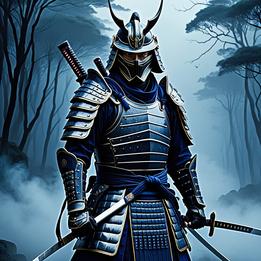
Samurai Armor
Represents discipline, honor, protection, and the warrior's code. It symbolizes both external defense and internal psychological armor.
Samurai Armor Dream Meaning
Represents discipline, honor, protection, and the warrior's code. It symbolizes both external defense and internal psychological armor.
Interpretive Themes
Discipline & Control
highArmor as a container for controlled action.
Protection & Vulnerability
highWhat is being shielded? Physical or emotional danger?
Identity & Role
mediumArmor as a uniform defining one's duty.
Sacrifice & Burden
mediumProtection comes at a cost of mobility and comfort.
Aesthetics & Presentation
lowHow one wishes to be perceived in conflict.
Mythological Resonance
Yamato Takeru
JapaneseLegendary prince whose armor and sword represented both martial prowess and the burden of imperial responsibility.
Athena
GreekGoddess of wisdom and strategic warfare who wore the aegis, representing protective authority guided by intelligence rather than brute force.
Cultural Lenses
Jungian Perspective
View Context →The Persona—the social mask or identity presented to the world. It can indicate an over-identification with a rigid role, or the need for conscious, disciplined self-presentation.
Freudian Perspective
View Context →May symbolize repression or defense mechanisms (like reaction formation) protecting the ego from unacceptable impulses, particularly aggressive or sexual drives.
Gestalt Perspective
View Context →A projection of the dreamer's own rigidity or defenses. Ask: 'What part of me is this armor? What am I trying to keep in or out?'
Cognitive Perspective
View Context →Represents schemas related to protection, duty, or conflict. May indicate cognitive rigidity or the application of a 'warrior' script to a waking-life situation.
Evolutionary Perspective
View Context →Symbolizes in-group cooperation, status display, and predator/prey dynamics. Armor signals preparedness for conflict and investment in group survival.
East Asian Perspective
View Context →Deeply tied to Bushido—the way of the warrior—emphasizing loyalty, honor, and death before dishonor. Modernly, it symbolizes corporate loyalty and disciplined craftsmanship.
European Perspective
View Context →Historically signifies chivalry, feudal duty, and social class. In modern context, it can represent heraldic pride, historical reenactment, or stoic resilience.
Modern Western Perspective
View Context →Often aestheticized; represents extreme discipline, minimalist philosophy, or 'armoring up' for competitive environments like business or sports.
Global/Universal Perspective
View Context →A near-universal symbol of protection in conflict, representing the human need for physical and psychological safety, and the burden such safety requires.
South Asian Perspective
View Context →May connect to Kshatriya (warrior) dharma in Hinduism—righteous duty and protection. Can also symbolize the spiritual armor (Kavacha) mentioned in scriptures.
Middle Eastern Perspective
View Context →Evokes historical Islamic warriors and concepts of chivalry (Futuwwa). Can symbolize steadfast faith as a spiritual armor against temptation or adversity.
African Perspective
View Context →Varies by region; can symbolize the warrior's role in community defense, rites of passage into manhood, or the spiritual protection offered by ancestors and rituals.
Historical Authorities
Want a deeper analysis?
Get a personalized interpretation of your entire dream including this symbol.
Interpret My DreamThe Oracle's Prediction
Combine multiple symbolsA test of professional integrity requiring disciplined boundaries.
Timeframe
Immediate (Next 48h)
Intensity
Deep
Emotional isolation may result from excessive self-protection.
Timeframe
Lunation (~29 Days)
Intensity
Deep
Common Appearances & Contexts
| Context | Emotion | Interpretation |
|---|---|---|
| Context Putting on the armor | Emotion determination | Interpretation Preparing for a challenge, consciously adopting a defensive or combative stance. |
| Context Armor feeling heavy or restrictive | Emotion burdened | Interpretation Feeling weighed down by responsibilities or a rigid role. |
| Context Armor being damaged or broken | Emotion vulnerable | Interpretation Defenses are failing; feeling exposed or betrayed. |
| Context Polishing or maintaining armor | Emotion pride | Interpretation Caring for one's defenses, reputation, or sense of honor. |
| Context Seeing armor on a stand (empty) | Emotion awe | Interpretation Contemplating the ideal of discipline or a role not currently filled. |
| Context Being unable to remove armor | Emotion trapped | Interpretation Feeling stuck in a defensive or combative role in waking life. |
| Context Armor is ornate and beautiful | Emotion admiration | Interpretation Pride in one's role or the aesthetic of one's defenses. |
| Context Armor is ill-fitting or borrowed | Emotion discomfort | Interpretation Struggling with an inauthentic role or borrowed authority. |
| Context Fighting in armor | Emotion focused | Interpretation Engaged in a conflict where principles or honor are at stake. |
| Context Taking off armor with relief | Emotion liberated | Interpretation Letting down one's guard, finding safety to be vulnerable. |
| Context Armor is rusted or neglected | Emotion shame | Interpretation Neglecting one's duties, principles, or self-protection. |
| Context Gifting or receiving armor | Emotion solemn | Interpretation Taking on or bestowing a duty, responsibility, or code. |
Interpret Your Full Dream
Beyond this symbol, every dream carries a unique story. Share your dream for a personalized AI-powered interpretation.