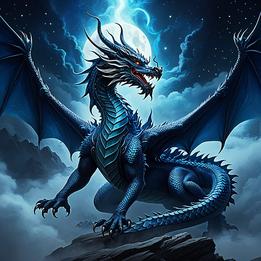
Samjok-o Dragon
A three-legged celestial dragon from Korean mythology representing cosmic balance, imperial authority, and divine protection.
Samjok-o Dragon Dream Meaning
A three-legged celestial dragon from Korean mythology representing cosmic balance, imperial authority, and divine protection.
Interpretive Themes
Cosmic Order
highRepresents the triadic structure of heaven, earth, and humanity.
Divine Authority
highHistorically linked to Korean kings and emperors.
Spiritual Protection
mediumOften invoked for safety and warding off evil.
Transcendence
mediumThe three legs symbolize ascent to higher states.
Cultural Identity
highA distinctly Korean mythological symbol.
Mythological Resonance
Azure Dragon
ChineseCelestial dragon of the east, symbol of spring, imperial power, and divine protection.
World Tree
GlobalAxis mundi connecting heaven, earth, and underworld, representing cosmic balance.
Cultural Lenses
East Asian Perspective
View Context →In Korean mythology, it's a three-legged celestial dragon embodying the Emperor's power, cosmic balance (heaven-earth-humanity), and protection. Modernly, it's a national symbol in art and media.
Jungian Perspective
View Context →An archetype of the Self or the transcendent function, representing the integration of opposites (three legs) and the drive toward wholeness and individuation.
Freudian Perspective
View Context →Could symbolize paternal authority (the emperor/dragon as father figure) or potent primal instincts (the dragon's power), possibly relating to psychosexual development and power dynamics.
Gestalt Perspective
View Context →The dreamer may project aspects of themselves onto the dragon—perhaps their own authority, protective instincts, or a powerful, untamed part of their personality seeking integration.
Cognitive Perspective
View Context →May reflect schemas related to power, protection, or cultural identity. The brain processes these concepts through the familiar, culturally-loaded image of the dragon.
Evolutionary Perspective
View Context →Taps into innate threat-detection systems (large predator) and social hierarchy recognition (authority figure), while also engaging our capacity for awe at powerful, non-human agents.
Global/Universal Perspective
View Context →As a dragon, it shares the global archetype of a powerful, serpentine being often associated with creation, chaos, protection, and hidden knowledge across many mythologies.
Modern Western Perspective
View Context →Often viewed through a lens of fantasy or cultural appreciation. May symbolize exotic power, ancient wisdom, or a connection to Eastern spirituality and philosophy.
South Asian Perspective
View Context →Could be loosely associated with Nāgas, serpent deities associated with water, fertility, and protection, but also with hidden treasures and esoteric knowledge.
European Perspective
View Context →Contrasts with Western dragons often depicted as hoarding, fire-breathing beasts to be slain. The Samjok-o is a benevolent, celestial authority figure.
North American Perspective
View Context →In contemporary contexts, it might be interpreted as a spirit animal or totem representing power, leadership, and a connection to ancestral roots or cultural heritage.
African Perspective
View Context →While not directly analogous, it shares thematic space with powerful serpent deities like Damballah (Vodou) or Aido-Hwedo (Fon), representing cosmic order, creation, and wisdom.
Historical Authorities
Want a deeper analysis?
Get a personalized interpretation of your entire dream including this symbol.
Interpret My DreamThe Oracle's Prediction
Combine multiple symbolsAn ascent to a position of greater authority, responsibility, or recognition.
Timeframe
Lunation (~29 Days)
Intensity
Deep
A significant moment of personal integration and inner balance.
Timeframe
Seasonal (~3 Months)
Intensity
Deep
Common Appearances & Contexts
| Context | Emotion | Interpretation |
|---|---|---|
| Context Flying alongside the dragon | Emotion exhilaration | Interpretation May indicate a desire for spiritual elevation or guidance. |
| Context Being protected by the dragon | Emotion security | Interpretation Suggests a need for safety or support in waking life. |
| Context The dragon bestowing a gift | Emotion gratitude | Interpretation Could symbolize receiving wisdom, power, or a blessing. |
| Context Fighting or fleeing the dragon | Emotion terror | Interpretation May represent confronting overwhelming authority or power. |
| Context Observing the dragon from afar | Emotion awe | Interpretation Indicates respect for a powerful, distant force or ideal. |
| Context The dragon transforming shape | Emotion wonder | Interpretation Suggests adaptability or undergoing a significant change. |
| Context Riding the dragon | Emotion control | Interpretation May symbolize mastering a powerful aspect of oneself. |
| Context The dragon speaking or communicating | Emotion reverence | Interpretation Could represent receiving divine messages or intuition. |
| Context The dragon in a celestial setting | Emotion peace | Interpretation Points to spiritual harmony or connection to the cosmos. |
| Context The dragon in a terrestrial or mundane setting | Emotion confusion | Interpretation May indicate spiritual forces intruding on daily life. |
| Context The dragon appearing wounded or weakened | Emotion concern | Interpretation Suggests a perceived threat to tradition or authority. |
| Context Multiple Samjok-o dragons | Emotion overwhelm | Interpretation Could indicate competing sources of power or guidance. |
Interpret Your Full Dream
Beyond this symbol, every dream carries a unique story. Share your dream for a personalized AI-powered interpretation.