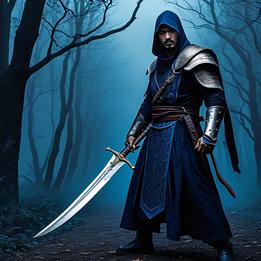
Scimitar
A curved sword historically associated with Middle Eastern and Asian warriors, symbolizing power, swift action, and cultural identity.
Scimitar Dream Meaning
A curved sword historically associated with Middle Eastern and Asian warriors, symbolizing power, swift action, and cultural identity.
Interpretive Themes
Cultural Lenses
Jungian Perspective
View Context →An archetypal symbol of the warrior animus, representing assertive masculine energy, the shadow's capacity for aggression, and the need to integrate power with consciousness in the individuation process.
Freudian Perspective
View Context →A phallic symbol representing masculine power, sexual aggression, and unresolved Oedipal conflicts. The curved shape may suggest repressed desires or a sublimation of aggressive instincts.
Gestalt Perspective
View Context →Represents a part of the self that is sharp, curved, or cutting. Ask: 'What in my life needs to be cut away or decisively acted upon?' The dreamer may be projecting their own aggression or power.
Cognitive Perspective
View Context →A schema for conflict, danger, or cultural exoticism activated during sleep. May reflect waking concerns about assertiveness, threat perception, or processing media/images involving similar weapons.
Evolutionary Perspective
View Context →Triggers ancient threat-detection systems related to predators or human adversaries. The curved blade may be cognitively tagged for efficient slashing attacks, activating survival-based fear or preparedness responses.
Middle Eastern Perspective
View Context →Deeply embedded in history from Persian shamshirs to Ottoman kilijs, symbolizing martial honor, sovereignty, and religious duty (e.g., Zulfiqar). Modernly, a complex icon of heritage, sometimes politicized.
South Asian Perspective
View Context →Associated with Mughal warriors and Sikh kirpans, representing divine justice, sovereignty, and protection. The talwar is both a weapon and a spiritual symbol of standing against oppression.
European Perspective
View Context →Historically viewed as the 'exotic' weapon of Saracens or Ottomans, symbolizing the feared 'Other.' In heraldry and romance, it denotes Eastern prowess or crusader trophies, carrying Orientalist connotations.
East Asian Perspective
View Context →Less central than straight swords, but curved blades like the dao share concepts of fluidity, precision, and moral discipline. May be associated with nomadic steppe cultures influencing China.
African Perspective
View Context →In North Africa (e.g., nimcha) and Swahili coast, it signifies trade, warrior status, and Islamic influence. The shape is practical for cavalry, symbolizing mobility, trade power, and cultural syncretism.
Modern Western Perspective
View Context →Often appears in fantasy media (e.g., D&D, video games) as a trope for 'exotic' warriors, pirates, or villains. Can symbolize romanticized violence, escapism, or superficial engagement with other cultures.
Global/Universal Perspective
View Context →A near-universal symbol of lethal force, authority, and craftsmanship. The curve distinguishes it from straight swords, globally suggesting fluidity, slashing attacks, and often cultural specificity in design.
Want a deeper analysis?
Get a personalized interpretation of your entire dream including this symbol.
Interpret My DreamCommon Appearances & Contexts
| Context | Emotion | Interpretation |
|---|---|---|
| Context Wielding in battle | Emotion empowered | Interpretation Taking control actively. |
| Context Being threatened | Emotion terrified | Interpretation Feeling overpowered by others. |
| Context Polishing scimitar | Emotion focused | Interpretation Preparing for challenges. |
| Context Receiving as gift | Emotion honored | Interpretation Accepting power or legacy. |
| Context Broken scimitar | Emotion defeated | Interpretation Loss of strength or identity. |
| Context Hanging on wall | Emotion nostalgic | Interpretation Past glory remembered. |
| Context Swinging at air | Emotion frustrated | Interpretation Ineffective action taken. |
| Context Forging scimitar | Emotion creative | Interpretation Crafting personal power. |
| Context Dropping scimitar | Emotion anxious | Interpretation Fear of losing control. |
| Context Multiple scimitars | Emotion overwhelmed | Interpretation Too many conflicts. |
| Context Ceremonial use | Emotion reverent | Interpretation Honoring tradition deeply. |
| Context Selling scimitar | Emotion regretful | Interpretation Letting go of power. |
Interpret Your Full Dream
Beyond this symbol, every dream carries a unique story. Share your dream for a personalized AI-powered interpretation.