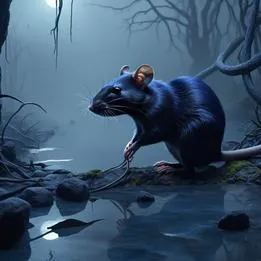
Rat Dream Meaning
Rats are often seen as symbols of survival and adaptability, but they can also evoke feelings of betrayal and deceit in various cultural interpretations.
Common Appearances & Contexts
| Context | Emotion | Interpretation |
|---|---|---|
| Seeing a rat in the house | Fear | May indicate feelings of betrayal within personal relationships. |
| Being chased by a rat | Anxiety | Could represent avoidance of confronting unpleasant truths. |
| Rats in a sewer | Disgust | Reflects feelings of being overburdened by hidden problems. |
| Rats fighting each other | Curiosity | Suggests a need to examine competitive or hostile situations in life. |
| Taming a rat | Empowerment | Represents taking control over fears or adapting to difficulties. |
| Feeding rats | Guilt | Indicates potential shortcomings in handling responsibilities. |
| Rats gnawing on something | Worry | May symbolize anxiety related to problems consuming your thoughts. |
| Seeing a rat in food | Disgust | Reflects fears of contamination or unwanted aspects in life. |
| Rats scurrying away | Relief | May symbolize escaping from bad influences or past traumas. |
| Holding a rat | Conflicted | Could represent accepting one’s flaws or messy realities in life. |
Interpretive Themes
Survival Instinct
ConfidenceRats are known for their resourcefulness and ability to survive in adverse conditions.
Deceit and Betrayal
ConfidenceIn many cultures, 'rat' is synonymous with someone who betrays their friends.
Social Dynamics
ConfidenceRats display intricate social behaviors that can reflect human social dynamics.
Fear and Stigma
ConfidenceRats are often unfairly demonized and can represent societal fears of disease and uncleanliness.
Resourcefulness
ConfidenceRats are clever creatures that often find ways to access resources, mirroring human ingenuity.
Cultural Lenses
Global/Universal Perspective
Full Hub →Often symbolizes resourcefulness, survival, and adaptability due to its global presence. Historically associated with plague carriers, creating fear. Ritually seen as clever tricksters in folklore. Emotionally evokes disgust or admiration for resilience.
Jungian Perspective
Full Hub →Represents the shadow self—unconscious fears, repressed instincts, or hidden aspects of personality. Symbolizes cunning intelligence in the collective unconscious. Historically linked to underworld archetypes. Emotionally triggers anxiety about hidden vulnerabilities.
East Asian Perspective
Full Hub →First zodiac animal symbolizing wealth, intelligence, and fertility. Historically revered in Chinese culture; associated with the god of wealth. Ritually celebrated during Lunar New Year. Emotionally signifies prosperity and clever opportunism.
South Asian Perspective
Full Hub →Vehicle of Lord Ganesha in Hinduism, symbolizing wisdom and removal of obstacles. Historically worshipped in temples like Karni Mata. Ritually fed as sacred creatures. Emotionally represents devotion and humble service to divinity.
Middle Eastern Perspective
Full Hub →Traditionally viewed as unclean and destructive in Islamic and pre-Islamic contexts. Historically associated with disease in arid regions. Ritually avoided in dietary laws. Emotionally evokes revulsion and impurity taboos.
European Perspective
Full Hub →Medieval symbol of plague, death, and witchcraft. Historically demonized during Black Death. Ritually exterminated in folk traditions. Emotionally linked to betrayal (as in 'ratting someone out') and urban decay.
African Perspective
Full Hub →In some traditions, symbolizes intelligence and survival in harsh environments. Historically part of creation myths (e.g., Akan folklore). Ritually used in divination. Emotionally represents adaptability and resourcefulness in community narratives.
North American Perspective
Full Hub →Native American views vary: some see as industrious, others as thieves. Modern urban symbolism associates with filth and poverty. Historically linked to colonial ship infestations. Emotionally conveys resilience or societal neglect.
Freudian Perspective
Full Hub →Symbolizes repressed sexual desires or anal-stage fixations. Historically interpreted as phallic or excremental imagery. Emotionally linked to guilt about hidden urges. Represents unconscious conflicts about cleanliness and control.
Gestalt Perspective
Full Hub →Represents parts of self perceived as 'unwanted' or invasive. Historically seen as projections of self-criticism. Emotionally signifies feelings of being overwhelmed by small annoyances. Symbolizes neglected aspects needing integration.
Cognitive Perspective
Full Hub →Triggers threat detection schemas from evolutionary history. Historically associated with disease avoidance mechanisms. Emotionally activates disgust response. Modern relevance: symbolizes urban stressors or financial anxieties in dream cognition.
Evolutionary Perspective
Full Hub →Represents adaptive responses to parasites and food competitors. Historically shaped fear responses to disease vectors. Emotionally hardwired disgust protects against pathogens. Symbolizes survival instincts in resource-scarce environments.
Zhou Gong Perspective
Full Hub →In Zhou Gong's Dream Interpretation, rat symbolizes thieves, loss of wealth, or hidden enemies. Historically used in Chinese divination for warning signs. Emotionally indicates anxiety about betrayal or financial insecurity.
Interpret Your Full Dream
Beyond this symbol, every dream carries a unique story. Share your dream for a personalized AI-powered interpretation.