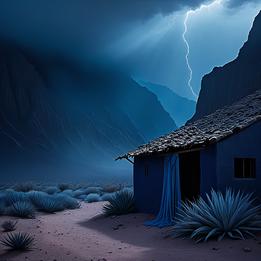
Rainshadow
A dry area on the leeward side of a mountain where precipitation is blocked, representing shelter, contrast, and unseen protection.
Rainshadow Dream Meaning
A dry area on the leeward side of a mountain where precipitation is blocked, representing shelter, contrast, and unseen protection.
Interpretive Themes
Protection
highSymbolizes emotional or psychological refuge.
Duality and Contrast
highHighlights life's opposing conditions.
Hidden Influence
mediumRepresents subconscious protective mechanisms.
Isolation and Separation
mediumCan indicate emotional dryness.
Natural Order
lowSurrendering to life's cycles.
Mythological Resonance
Yggdrasil
NorseThe world tree's roots create protected realms like Niflheim, where frost persists in shadowed isolation from cosmic storms.
Noah's Ark
BiblicalThe ark served as a rainshadow during the flood, preserving life while the world was submerged in chaos.
Cultural Lenses
Jungian Perspective
View Context →Represents the shadow self—protected areas of psyche where emotional 'rain' (conscious content) cannot reach, creating dry zones of unconscious material needing integration for wholeness.
Freudian Perspective
View Context →Symbolizes defense mechanisms blocking emotional 'precipitation' (repressed desires), creating dry areas where libidinal energy is redirected, often representing sexual sublimation or avoidance.
Gestalt Perspective
View Context →The figure-ground relationship between storm and shelter, highlighting how perception creates reality—what we focus on (rain) defines what we miss (shadow).
Cognitive Perspective
View Context →Mental model of cause-and-effect relationships, representing how we predict outcomes based on environmental patterns, with the shadow area showing cognitive biases in risk assessment.
Evolutionary Perspective
View Context →Adaptive advantage recognition—identifying sheltered microclimates for survival, representing innate ability to find protection from environmental stressors through pattern recognition.
East Asian Perspective
View Context →In Taoist thought, represents yin-yang balance—the dry shadow complements the wet rain, both necessary for harmony. In modern Japan, symbolizes workplace refuge from social pressures.
South Asian Perspective
View Context →In Hindu mythology, mountains like Meru create cosmic rainshadows separating realms. In Ayurveda, represents dosha imbalances where certain energies are blocked, requiring restoration.
Middle Eastern Perspective
View Context →In desert cultures, represents Allah's mercy—divine protection creating oases. Historically, caravan routes followed rainshadows for safe passage, symbolizing guided journeys.
European Perspective
View Context →In Celtic tradition, fairy forts created spiritual rainshadows. Alpine cultures saw them as God's hand shielding valleys. Modern Europeans view them as climate change indicators.
African Perspective
View Context →In Sahel cultures, represents ancestral protection during droughts. Rainmakers would identify shadow areas for ceremonies. Modern interpretations include political refuge from conflict 'storms'.
North American Perspective
View Context →For Native tribes like Pueblo, represented spiritual boundaries. Pioneers saw them as God's provision. Today symbolizes tech industry 'unicorn' companies thriving in economic shadows.
Latin American Perspective
View Context →In Andean cultures, Apu mountain spirits created rainshadows for agriculture. In modern context, represents political asylum or economic zones protected from global market 'storms'.
Historical Authorities
Want a deeper analysis?
Get a personalized interpretation of your entire dream including this symbol.
Interpret My DreamThe Oracle's Prediction
Combine multiple symbolsYou will find unexpected protection from workplace turbulence.
Timeframe
Seasonal (~3 Months)
Intensity
Deep
A period of recovery will follow recent stress.
Timeframe
Lunation (~29 Days)
Intensity
Deep
Common Appearances & Contexts
| Context | Emotion | Interpretation |
|---|---|---|
| Context Mountain crossing | Emotion Relief | Interpretation Finding safe passage. |
| Context Desert oasis | Emotion Gratitude | Interpretation Unexpected sanctuary. |
| Context Storm avoidance | Emotion Security | Interpretation Diverted danger. |
| Context Barren landscape | Emotion Loneliness | Interpretation Emotional drought. |
| Context Weather watching | Emotion Awe | Interpretation Nature's power. |
| Context Shelter seeking | Emotion Anxiety | Interpretation Urgent protection. |
| Context Boundary crossing | Emotion Transition | Interpretation Life phase shift. |
| Context Garden contrast | Emotion Wonder | Interpretation Microclimate marvel. |
| Context Map reading | Emotion Clarity | Interpretation Understanding patterns. |
| Context Rain approaching | Emotion Anticipation | Interpretation Impending change. |
| Context Dry riverbed | Emotion Nostalgia | Interpretation Past abundance. |
| Context Mountain shadow | Emotion Solitude | Interpretation Peaceful isolation. |
Interpret Your Full Dream
Beyond this symbol, every dream carries a unique story. Share your dream for a personalized AI-powered interpretation.